

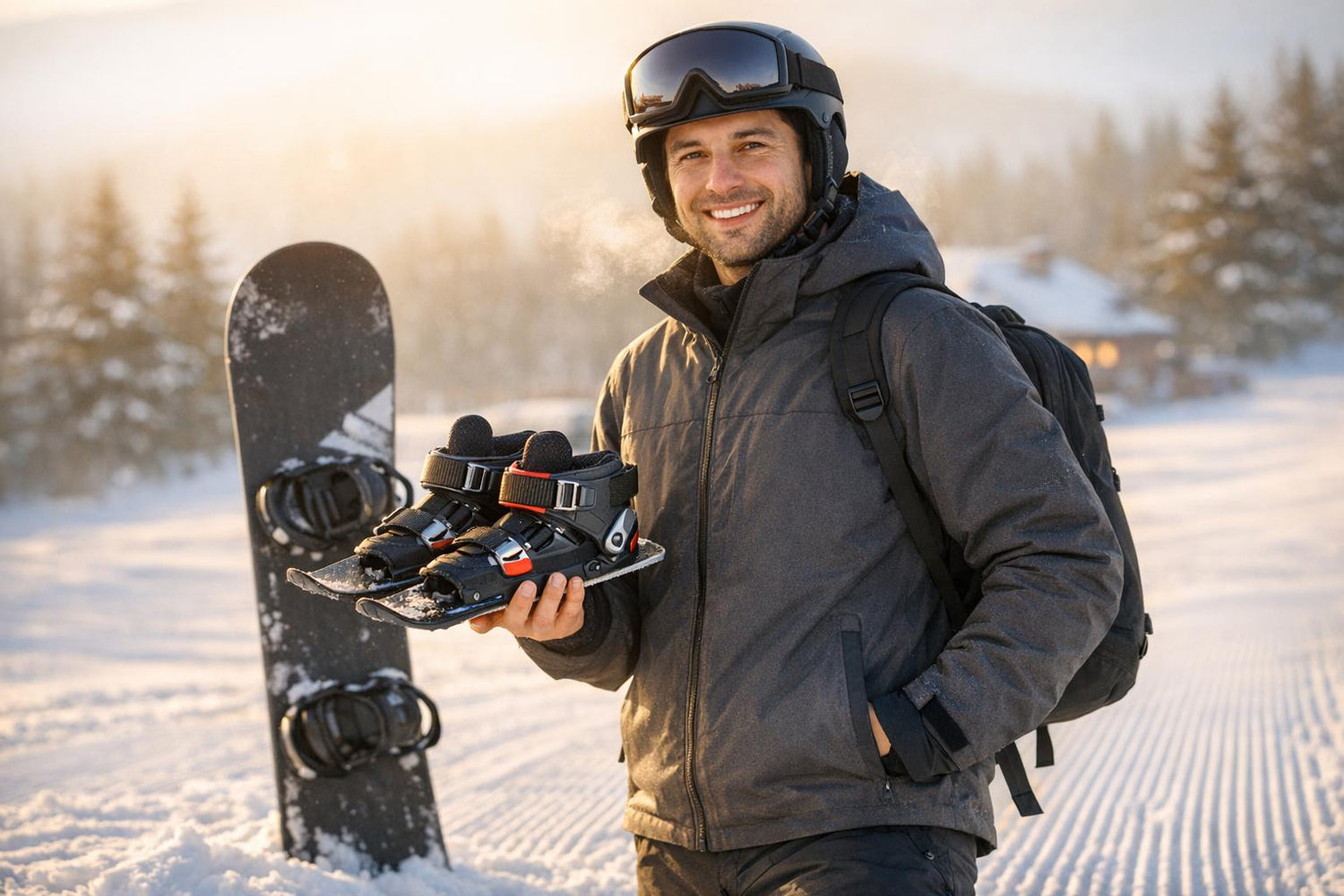
Skiskates are a compact, lightweight winter sports option blending ice skating and inline skating movements for snowy slopes. Unlike snowboards, skiskates are portable (fit in a backpack), easier for beginners (forward-facing stance), and compatible with both ski and snowboard boots. They're ideal for smaller slopes, flat terrain, and lift lines but lack the speed stability and edge control needed for steep or icy conditions. Snowboards, while bulkier and harder to learn, excel in high-speed stability, powder performance, and advanced tricks. Pricing for skiskates starts at $490, making them a mid-range choice compared to snowboards ($400–$800).
Quick Comparison:
| Feature | Skiskates | Snowboards |
|---|---|---|
| Learning Curve | Easier for beginners | Steeper, more structured |
| Portability | Lightweight, backpack-sized | Bulkier with bindings |
| Footwear | Standard ski/snowboard boots | Specialized snowboard boots |
| Speed Stability | Moderate speeds | High-speed control |
| Terrain Focus | Flat/gentle slopes | Full mountain versatility |
| Trick Potential | Limited | Excels in advanced tricks |
| Powder Performance | Minimal flotation | Excellent flotation |
Skiskates are perfect for beginners and casual riders prioritizing convenience, while snowboards suit those seeking performance across varied terrains.
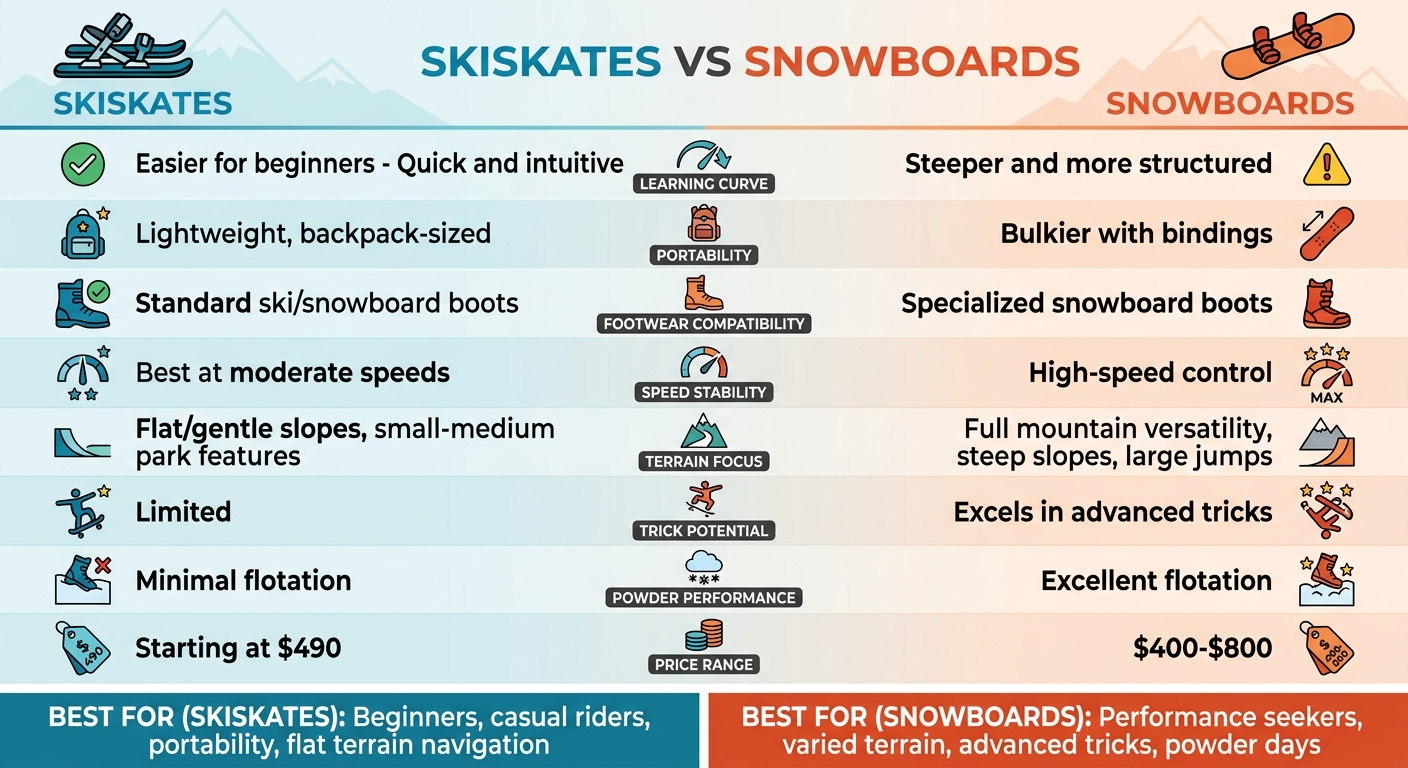
Skiskates vs Snowboards: Complete Feature Comparison Chart
1. Skiskates
Learning Curve
Skiskates offer an easier entry point for beginners compared to snowboarding. Why? They let you face forward - a natural position for most people. Beginners can quickly pick up the "pizza" or wedge technique to control speed and stop. In contrast, snowboarding requires a sideways stance and a more complex coordination of movements. While starting out is straightforward with skiskates, mastering advanced moves takes time and practice, just like any sport.
Now, let’s take a look at their portability.
Portability
Skiskates are designed to be compact and lightweight, making them easy to carry in a standard backpack. Whether you're commuting via public transit, packing them in your car trunk, or taking them on a trip, they’re incredibly convenient. At $490.00 for a complete setup, skiskates fall in the middle range of winter sports gear. For comparison, starter snowboard setups generally cost between $400 and $800, while traditional ski packages range from $500 to $1,200. This pricing reflects the balance of quality and performance you'd expect from cutting-edge winter equipment.
Their portability pairs perfectly with how they perform across different terrains.
Terrain Versatility
One standout feature of skiskates is their adaptability to flat terrain and gentle slopes. Their design allows for forward skating without the need to unstrap, making it a breeze to navigate lift lines, connect trails, or move through parking areas. This is a clear advantage over snowboarding, where riders often have to unstrap one foot to move forward on flat surfaces.
Boot Compatibility
Skiskates come with quick-adjust bindings available in two models: one for ski boots and another for snowboard boots. This flexibility means you can choose your preferred footwear - opt for snowboard boots if comfort is your priority or ski boots if you want greater control.
sbb-itb-32287b2
2. Snowboards
Snowboards require a completely different approach compared to skiskates, both in terms of physical skills and equipment.
Learning Curve
The first few days of snowboarding can be tough - physically and mentally. Beginners often face frequent falls due to the unfamiliar sideways stance and the inability to move legs independently. Common injuries include wrist fractures and shoulder dislocations, making protective gear like wrist guards, helmets, and impact shorts a must for the first 10 days on the slopes.
By around day four, most beginners start linking turns, unlocking the basic mechanics of snowboarding. As SnowboardLogic puts it, "Snowboarding is harder to learn but easier to master". With dedication, many snowboarders can reach a solid skill level within one or two seasons - comparable to skiers who may need several years to achieve similar proficiency. This steeper learning curve sets snowboarding apart from the more beginner-friendly skiskates.
Portability
Snowboards are bulkier and heavier, requiring rigid-soled boots and bindings. However, snowboard boots are often more comfortable for walking around resorts compared to traditional ski boots. While the gear adds some heft, the comfort factor can make up for it when you're off the slopes.
Terrain Versatility
Snowboards shine as versatile tools for all-mountain conditions. They deliver excellent stability at high speeds and maintain strong edge control across varying terrains. Their larger surface area also makes them ideal for floating on powder. When it comes to steep terrain and big mountain features, snowboards offer precision and control that’s hard to beat.
On the downside, snowboards can be frustrating on flat terrain. Long, flat "catwalks" are especially challenging for beginners, as snowboards tend to lose momentum and become unstable. Riders often have to unstrap and walk. Adding a stomp pad can help by providing better grip for the unattached foot during transitions, like exiting chairlifts.
Performance for Tricks
Snowboards are built for tricks, excelling in big jumps and advanced terrain park features. Their size and stability give riders exceptional control during high-air maneuvers - something smaller equipment can't replicate. Interestingly, snowboarding is easier on the knees compared to skiing, as both feet are secured in a single plane, reducing the twisting forces that often cause ACL injuries. However, it does demand more from your core and abdominal muscles. This combination of stability and trick performance makes snowboarding a favorite for those looking to push their limits.
Advantages and Disadvantages
This section breaks down how skiskates and snowboards cater to different riding styles, summarizing their main strengths and weaknesses.
Skiskates shine in terms of portability and ease of use. They’re lightweight, fit in a backpack, and work with standard winter boots. Their design makes bailing out simple and reduces rotational stress during falls. As Nordzflow puts it, "Snowskating is intuitive for basic turning and balance." Experienced snowboarders often find that their existing skills transfer quickly to skiskates, leading to rapid progression. However, skiskates aren’t ideal for high-speed stability or precise edge control on steep or icy terrain. This makes them better suited for smaller park features and gentle slopes.
On the other hand, snowboards excel in stability and edge control, especially at high speeds or on challenging terrain. Their larger surface area provides great flotation in powder and handles steep slopes and big jumps with ease. However, snowboards come with a steeper learning curve and rely on fixed bindings, which can increase the risk of joint injuries during falls.
Ultimately, the choice depends on your priorities. If you value freedom, portability, and a quick learning process, skiskates are a great option. But if you’re looking for power, precision, and versatility across varied terrain, snowboards are the way to go - though they require more commitment upfront.
Here’s a quick comparison of the two:
| Feature | Skiskates | Snowboards |
|---|---|---|
| Learning Curve | Quick and intuitive | Steeper and more structured |
| Portability | Lightweight; fits in a backpack | Bulkier, with boots and bindings |
| Footwear | Standard winter boots | Specialized snowboard boots |
| Speed Stability | Best at moderate speeds | High stability at speed |
| Terrain Focus | Small slopes, medium park features | Full mountain, steep slopes, large jumps |
| Injury Risk | Lower; easier to bail | Higher; bindings can twist joints |
| Powder Performance | Limited flotation | Excellent flotation |
Conclusion
Skiskates bring a level of convenience and quick adaptability to the slopes that’s hard to beat. They’re particularly appealing to beginners, thanks to their forward-facing stance, which feels natural and easy to pick up from the start.
Their strengths shine on flat terrain and in lift line scenarios. With independent foot placement, skiskates offer excellent control on groomed runs and make tackling moguls easier without the hassle of constant strapping or stopping for adjustments. Compared to a single board, they allow for smoother navigation across uneven terrain and bumps.
That said, snowboards still dominate in extreme conditions. For powder days, high-speed descents, or tackling big mountain terrain, the snowboard’s larger surface area and stability make it the go-to choice.
For travelers and newcomers, skiskates provide unmatched ease of use and quick readiness for small to medium terrains. Their straightforward learning curve pairs perfectly with their ability to move effortlessly around the resort.
If your priority is seamless mobility - whether crossing flat sections, hopping on and off lifts, or exploring various mountain areas - skiskates make it all feel effortless.
FAQs
What size skiskates should I buy?
The right skiskate size depends on your experience and personal preference. If you're a beginner, go for skiskates that reach about chin height or shorter. This makes them easier to control and maneuver. On the other hand, advanced users might lean toward longer skiskates for added stability and speed. However, shorter skiskates are usually a safer choice when you're just starting out. Always prioritize your comfort and skill level when deciding on the size.
Do I need lessons to start using skiskates?
Learning how to use skiskates is usually quite simple and easy to pick up. Since they combine elements of skiing and skating, most beginners don’t need formal lessons to get started. While professional instruction can help fine-tune your skills, many people prefer to dive in with self-guided practice, experimenting with basic drills and gradually building up their confidence.
What safety gear should I wear for skiskates?
When using skiskates, there's no mandatory safety gear, but wearing protective equipment is highly recommended - just like with other skating sports. Consider using a helmet, wrist guards, knee pads, and elbow pads. These can offer extra protection and help reduce the risk of injuries while maintaining balance and controlling edges.


Leave a comment
This site is protected by hCaptcha and the hCaptcha Privacy Policy and Terms of Service apply.