

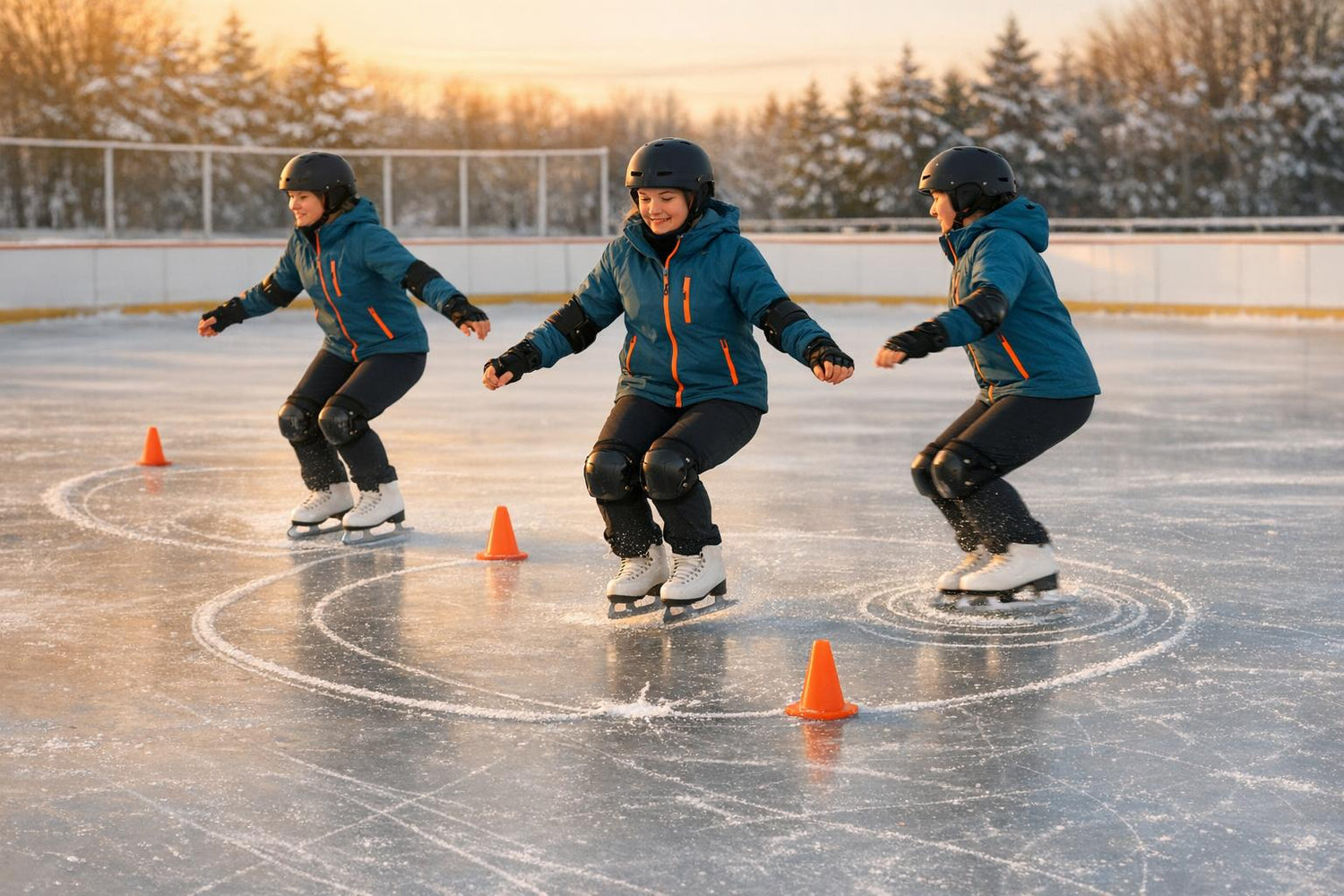
Skiskating combines skiing and skating into one fun activity, using compact Skiskates that are easier to control and perfect for beginners. This guide introduces simple tricks like the snowplow stop, swizzles, and bunny hop, helping you build confidence and balance. Skiskates are lightweight, work with ski or snowboard boots, and are easy to carry, making them ideal for learning. Safety gear, like helmets and knee pads, is a must, along with starting on flat, groomed terrain. Practice regularly - 30 minutes, three times a week - and track your progress to improve quickly. With patience and consistency, you'll master these moves and enjoy the slopes in no time.
Basic Skiskating Movements
Before diving into tricks, it’s crucial to nail down the basics. One of the most important beginner skills is the snowplow stop, a safe and effective way to control your speed. Once you’ve got this move down, it becomes much easier to learn other skiskating techniques.
Snowplow Stop for Slowing Down
The snowplow stop is your go-to method for slowing down while skiskating. To perform it, angle your toes inward to create an upside-down "V" shape. This stance increases friction with the snow, helping you come to a gradual stop. Keep your knees bent, distribute pressure evenly, and maintain enough space between your feet to avoid straining your ankles. Start practicing on flat, open areas to build confidence. Notably, tutorials for this technique have garnered over 410,970 views as of February 2026.
sbb-itb-32287b2
First Tricks for Beginners
Once you've got the hang of the snowplow stop and basic movements, it's time to level up with some beginner-friendly tricks. These moves are designed to improve your control and coordination, setting the stage for more advanced skiskating techniques.
Swizzles for Control and Speed
Swizzles are a great way to practice edge control and rhythm. For forward swizzles, position your heels together with your toes forming a "V" shape. Push your feet outward, then bring them back together in a smooth, controlled motion to glide forward. The movement looks a bit like a fish tail or windshield wipers sweeping across the snow. For backward swizzles, reverse the starting position - bring your toes together and heels apart - then push out and pull back in to move backward.
"Think of it like windshield wipers or a fish tail. Toes in, toes out, toes in, toes out. The motion is small and controlled, not big and wild." - Adults Skate Too LLC
Keep your knees bent and your stance steady throughout the motion. Look straight ahead when moving forward, and glance over your shoulder when going backward - try not to stare down at your skates. Start with small, consistent movements. With regular practice, most adult beginners can pick up basic backward swizzles in 2–4 weeks.
Bunny Hop for Small Jumps
Building on the swizzle technique, the bunny hop introduces a jumping element to your practice. This move uses forward momentum to lift both feet off the snow at the same time. As you glide forward, press into the front of your skiskates and perform a small hop. Focus on keeping the jump controlled and landing softly. Bend your knees deeply on the landing to absorb the impact and maintain balance.
Keep your head up and eyes forward to maintain good posture. Practice in open areas where you have plenty of space, and position your hands slightly forward and out to the sides to help with balance.
Two-Foot Spin for Rotation
The two-foot spin is all about improving your balance and rotational control. Start by centering your weight evenly over both feet, keeping your knees bent and your core engaged. Rotate your shoulders and hips in the direction you want to spin.
"Your head must remain directly over your hips and your torso upright, not leaning to keep your weight perfectly centered between your skates at all times." - Liz Miller, Author and Skating Instructor
Avoid leaning forward or locking your knees, as that can throw off your balance or make you dizzy. Keep your head up and focus on a fixed point to stay steady. Begin with slow, deliberate spins and gradually pick up speed as your confidence grows.
How to Practice and Get Better
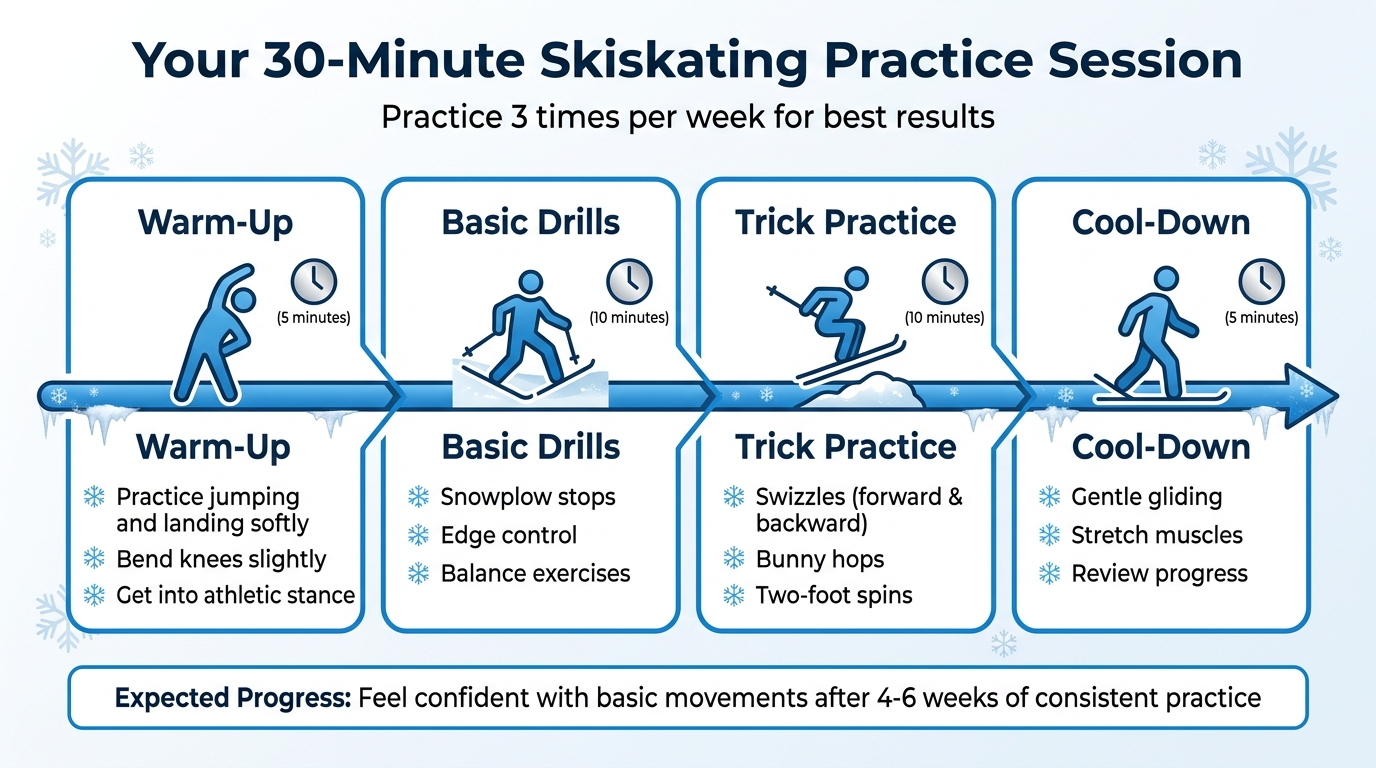
30-Minute Skiskating Practice Session Structure for Beginners
Creating a Practice Schedule
To improve steadily, aim for 30-minute practice sessions, three times a week. This approach helps you build muscle memory while avoiding fatigue. Many beginners start feeling confident with basic skating movements after 4–6 weeks of consistent effort. A structured session might look like this: begin with a 5-minute warm-up, spend 10 minutes on basic drills, dedicate 10 minutes to tricks, and finish with a 5-minute cool-down.
Start practicing on flat, open, and groomed terrain to reduce the risk of falling uncontrollably. Once you’re comfortable, gradually progress to gentle slopes. Before strapping on your skiskates, try jumping and landing softly on the balls of your feet with slightly bent knees. This helps you develop a stable, athletic stance that translates well to movement on snow.
"A stiff, upright skier falls easily while a relaxed, poised skier absorbs terrain changes with less issue."
– Carrie McCusker, Level 2 TrainingPeaks Coach
This kind of preparation and routine on safe terrain will help you refine your skills and build confidence.
Common Beginner Mistakes
Even with a solid practice schedule, avoiding common pitfalls can speed up your progress. One frequent mistake is leaning backward (often called "sitting on the back chair"), which reduces control over the front of your skates. To correct this, focus on maintaining constant pressure from your shins against the tongues of your boots[2, 13]. Another issue is looking down at your feet, which can make your shoulders and back stiff, limiting smooth turns. Keep your head up and your eyes forward to maintain balance and fluidity.
Additionally, avoid locking your knees or leaning backward, as both make it harder to absorb motion and adapt to terrain changes. If you notice your upper body twisting or your hips swaying, try holding your poles horizontally across your hips. If the poles shift around, it’s a sign to focus on keeping your torso and hips aligned forward[2, 13].
"Movements incorrectly carried out at a beginning level, very quickly develop into habits and essentially prevent further perfection of skills."
– Leonid Feldman, Ski Instructor
Tracking Your Progress
Tracking your progress helps you identify areas for improvement and stay motivated. During practice, record 2–3 attempts every 10 minutes to spot patterns in your mistakes. Take notes on specific details, like the number of successful landings versus attempts, and rate your confidence on a scale of 1 to 10. Breaking down complex tricks into smaller components - stance, approach, timing, and landing - can make the learning process more manageable and rewarding.
Set achievable timelines for mastering tricks; expect to spend 4–12 weeks of focused practice on more technical moves. Use a simple journal or your phone’s notes app to document what you work on during each session, along with any breakthroughs or challenges. For additional support, consider joining local skating groups or online communities. Sharing clips and getting feedback from experienced skaters can be incredibly helpful[7, 15].
"The fastest learners are those who accept failure as data, not identity."
– Jordan Reyes, Senior Skateboarding Content Strategist & Coach
Start Your Skiskating Journey
Now that you've got the basics and safety tips down, you're ready to dive into skiskating tricks. Start by building a strong foundation: nail the snowplow stop and basic jumps before moving on to more advanced spins or aerial moves. Keep your knees bent, shoulders relaxed, and eyes focused forward - this athletic stance is key to maintaining balance and control on the snow. Once you're comfortable with the fundamentals, it's time to hit the slopes and put these skills to work.
Make sure you're wearing proper safety gear, like a helmet and protective pads. These not only keep you safe but also help you feel more confident as you practice. Begin on flat, groomed terrain and gradually challenge yourself as your skills improve.
Consistency is your best friend here. Practicing three 30-minute sessions a week can help you build muscle memory and see noticeable progress in just 4–6 weeks. Structure your sessions to include a warm-up, drills to reinforce foundational skills, trick practice, and a cool-down. This approach keeps your learning focused and effective.
"Just getting outside and having fun is always more important than having perfect technique."
– Charlotte Ogden, Retired Nordic Ski Team Member, Bivo
The most important thing is to simply get out there and enjoy the process. Whether you're on downhill slopes, snow parks, or even hiking trails, consistent practice will help you gradually develop your skills. Celebrate each small victory, stay consistent, and most importantly, have fun on your skiskating journey!
FAQs
What boots work with Skiskates?
Currently, there isn’t detailed information on which boots work best with Skiskates. To ensure you have the best fit and experience, it’s a good idea to review the product guidelines or reach out to customer support for tailored advice.
How do I pick a safe place to practice?
Choose a secure, open area such as a gentle hill or a flat surface with plenty of room to move. Stay away from spots with heavy foot traffic, obstacles, or uneven terrain. Great options include local parks, ski resorts, or Nordic centers that are kept in good condition for safe use. Before starting, check that the surface has consistent snow or ice and is free of debris. Always wear safety gear like helmets and pads, and stick to well-lit, open spaces for practice.
How do I stop falling backward?
To keep from falling backward while skiskating, it’s all about balance and control. Start by bending your knees deeply - this lowers your center of gravity and gives you more stability. Keep your body relaxed; tension can throw off your movements. If you’re feeling unsteady, slow down. Moving at a controlled pace makes it easier to stay balanced.
Practicing in a safe setting can make a big difference. Try skating near boards for extra support or use your peripheral vision to stay aware of your surroundings. These small adjustments can boost your confidence and help you avoid those backward tumbles.


Leave a comment
This site is protected by hCaptcha and the hCaptcha Privacy Policy and Terms of Service apply.