


Skiskates combine skiing and skating, letting you glide over snow using skating techniques. Yes, you can go fast on skiskates! Speeds depend on your skill, equipment, terrain, and snow conditions. Skilled users average 44.5 ± 11.7 km/h (27.6 mph), while beginners typically reach 19.9 ± 7.2 km/h (12.4 mph).
Key Factors That Impact Speed:
- Equipment: Lightweight, narrow, and stiff skiskates with sharp steel edges improve speed and control.
- Terrain & Snow: Hard-packed snow and groomed trails provide the best glide. Gentle slopes (-2° to 4°) are ideal for maintaining momentum.
- Technique: Proper weight transfer, a low stance, and engaging your core enhance efficiency. Techniques like V2 and V1 help in different terrains.
Tips for Going Faster:
- Fully commit to each skating push by shifting your weight completely.
- Lean forward with bent knees to reduce wind resistance and improve stability.
- Practice on gradual slopes and maintain your skiskates with regular waxing and sharpening.
With the right setup, technique, and practice, skiskates can deliver impressive speeds rivaling traditional skiing.
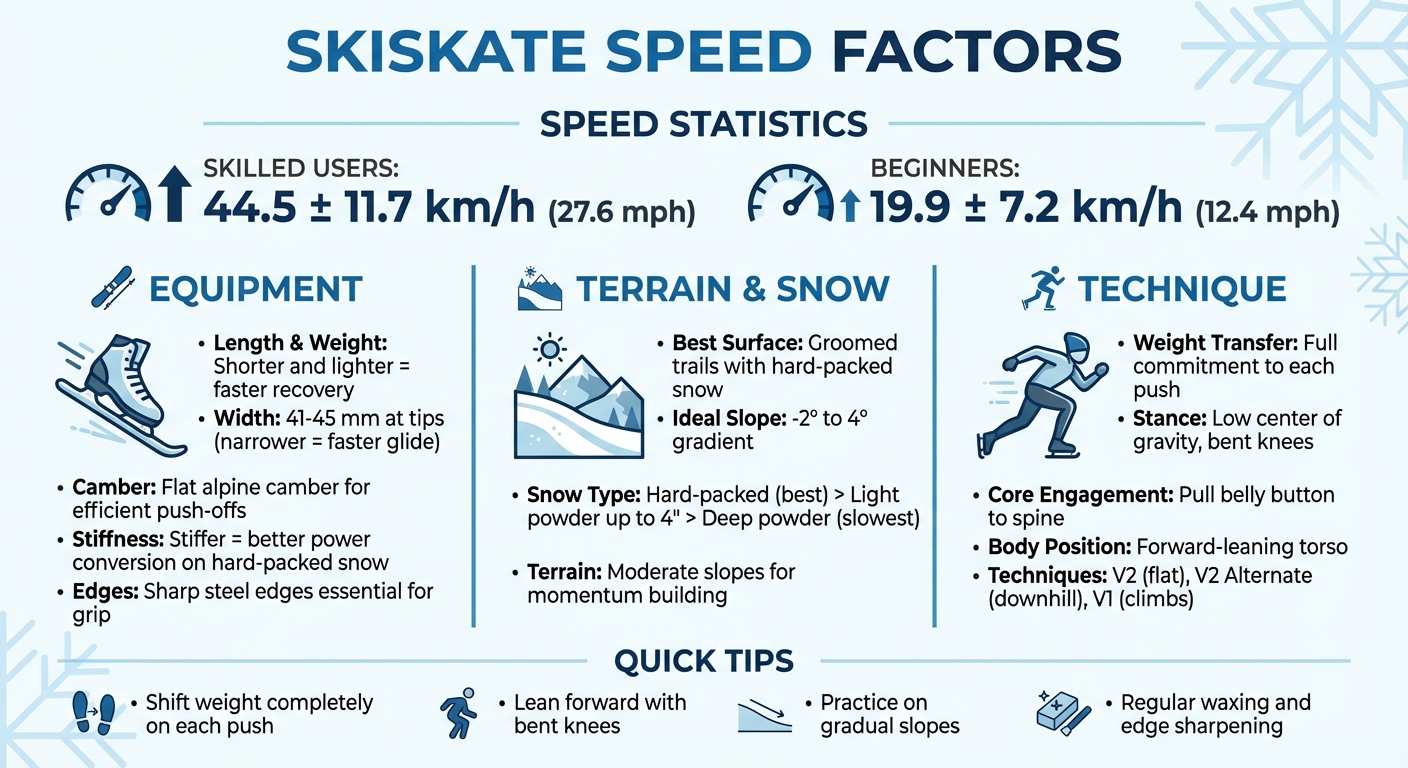
Skiskate Speed Factors: Equipment, Terrain, and Technique Comparison
Snowfeet* Skiskates TUTORIAL - Skiskating Technique & Tricks
What Affects Speed on Skiskates
How fast you go on skiskates comes down to three main factors: your equipment, the surface you're skating on, and your technique. Together, these elements determine whether you glide smoothly or pick up serious speed.
How Skiskates Design Impacts Speed
The design of your skiskates plays a huge role in how fast you can go. Shorter and lighter skiskates make it easier to recover between strides, helping you skate faster . Width is another key factor - narrow skates, usually between 41 mm and 45 mm at the tips, are better for gliding over packed snow. As REI Expert Advice explains, "The narrower a ski is, generally, the faster it moves".
The shape and stiffness of the skates also matter. A flat alpine camber ensures efficient push-offs, allowing you to build momentum quickly . Stiffer skiskates are especially effective on hard-packed snow, converting your leg power into forward motion . And don’t overlook the steel edges - they’re essential for grip. Without sharp edges biting into the snow, you can’t push off effectively. Chris Needham, Development and Partnerships Director at US Speedskating, compares it to "having a race car with bald tires".
Terrain and Snow Conditions
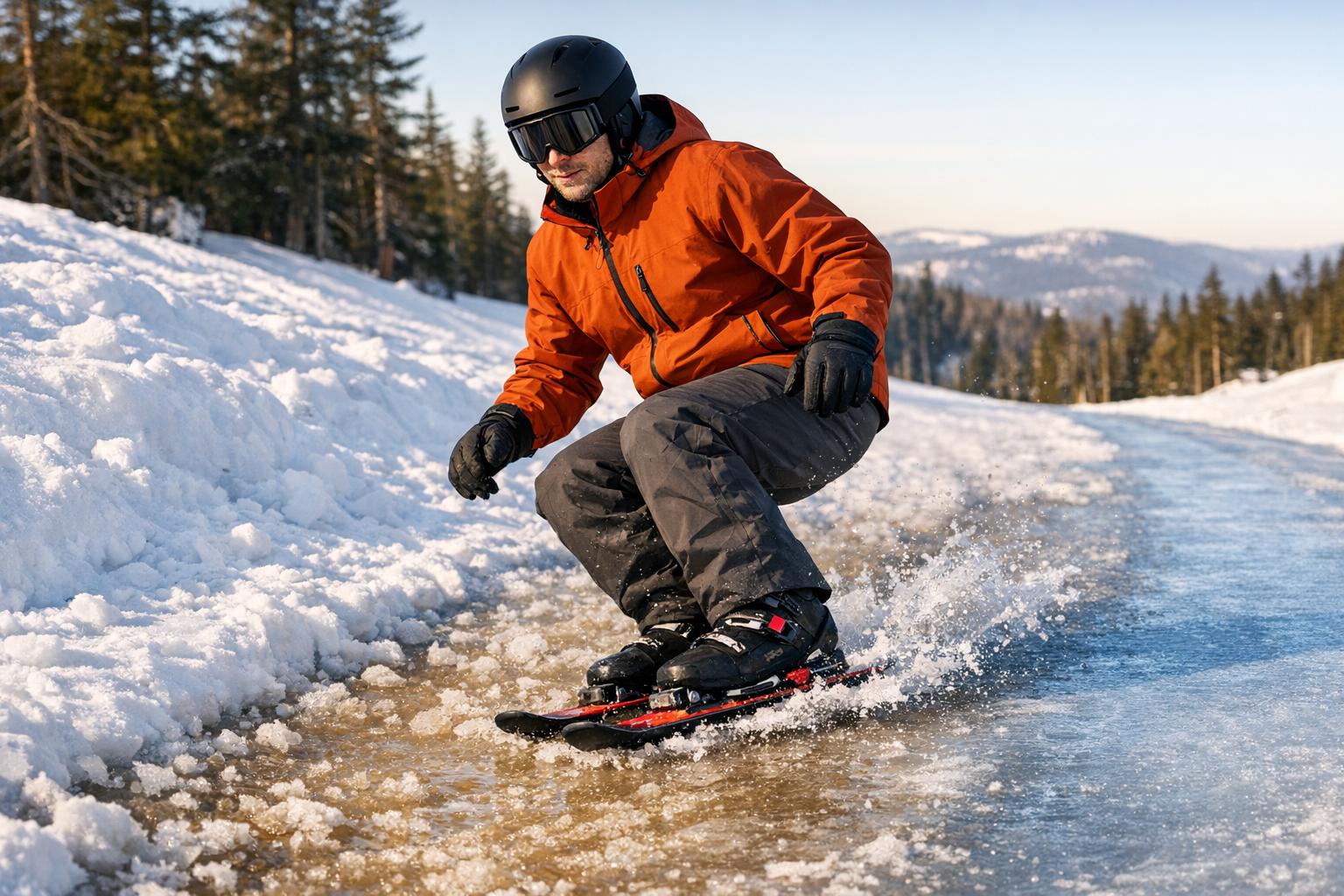
The surface you skate on can make or break your speed. Groomed trails and hard-packed snow offer the best glide . On icy terrain, sharper edges and stiffer skiskates are a must to maintain control and speed.
The slope of the terrain also plays a role. Flat or moderately sloped areas (between -2° and 4°) are ideal for high-speed techniques. On gentle downhill sections, crouching to reduce wind resistance lets gravity work in your favor. Steeper slopes, however, often require more power-focused techniques. While these may slow you down slightly, they help you keep your momentum .
Technique and Skill Level
Your technique can make all the difference. Proper weight transfer and balancing on one leg allow for longer, more efficient strides . Engaging your core muscles improves power transfer, giving you a stronger push-off .
If you’ve done ice or inline skating before, you’ll likely pick up skiskating techniques faster. Keeping a low center of gravity by bending your knees and ankles enhances both stability and power . Adjusting your "gears" based on the terrain - using higher gears for moderate slopes and lower ones for uphill climbs or when you’re tired - can also help you maintain speed efficiently.
These tips provide a solid foundation for improving your skiskating speed.
How to Go Faster on Skiskates
Now that we've covered the factors that influence your speed, it's time to fine-tune your technique. Small adjustments can make a big difference in how efficiently you glide. Here’s how to get the most out of your skiskates.
Using Skating-Style Pushes
One of the best ways to increase your speed is by fully committing to each push. Shift your entire weight onto one skiskate at a time. As Lisa Jhung, Writer and Editor, explains:
"Commit to a full transfer of weight on one ski, and then the opposite ski, to increase the glide you'll get out of each ski".
This weight transfer helps maintain balance and maximizes your glide. Push off using the inside edge of your skiskate to gain the grip you need for propulsion. On flat terrain, try the V2 technique with inline pole plants. For slight downhill slopes, switch to the pendulum-like V2 Alternate. And when tackling climbs, use the staggered V1 technique.
Your core plays a key role here. Pull your belly button toward your spine to keep your body stable and ensure an efficient power transfer from your legs. Engage both your core and upper body for stronger pole drives, which give you extra momentum.
A solid push also sets you up for a stable, aerodynamic stance - something we’ll dive into next.
Body Position for Speed
Your stance is just as important as your push. A slightly forward-leaning torso with bent knees helps lower your center of gravity and reduces wind resistance. Keep your shoulders aligned with your direction of travel and lean forward to maintain balance.
Distribute your weight onto the balls of your feet while shifting your hips forward to generate momentum. A relaxed posture allows you to adapt to changes in the terrain, while a stiff, upright stance can throw you off balance. When carving turns, lean into the curve and use your inside edges to maintain speed and precision.
Practicing on Gradual Slopes
Starting on gentle slopes is a great way to build confidence and polish your technique. Flat terrain and low gradients are perfect for mastering the offset skating technique before moving on to steeper descents. This approach reinforces the terrain principles we discussed earlier. Stagger your skates to keep continuous contact with the snow.
To improve leg strength and balance, practice on flat terrain without using poles. Keep your focus on the trail ahead to enhance your awareness and stability. Once you’re comfortable, coordinate your pole plants with your leg movements, using your upper body to drive the poles backward as you push off.
sbb-itb-32287b2
Best Conditions for High-Speed Skiskating
Once you've nailed the technique, having the right setup is crucial for reaching top speeds. The combination of proper gear, ideal terrain, and well-maintained equipment can make all the difference in pushing your limits.
Choosing the Right Skiskates Model
The skiskates you choose play a huge role in how fast and stable you’ll feel. Longer models, like the Snowfeet Skiblades 99 CM (priced at $590.00), are great for stability and high-speed carving. On the other hand, mid-length options offer more agility, making them versatile for different conditions. Picking the right model not only boosts your speed but also complements the advanced techniques you’ve worked on.
Finding the Right Terrain
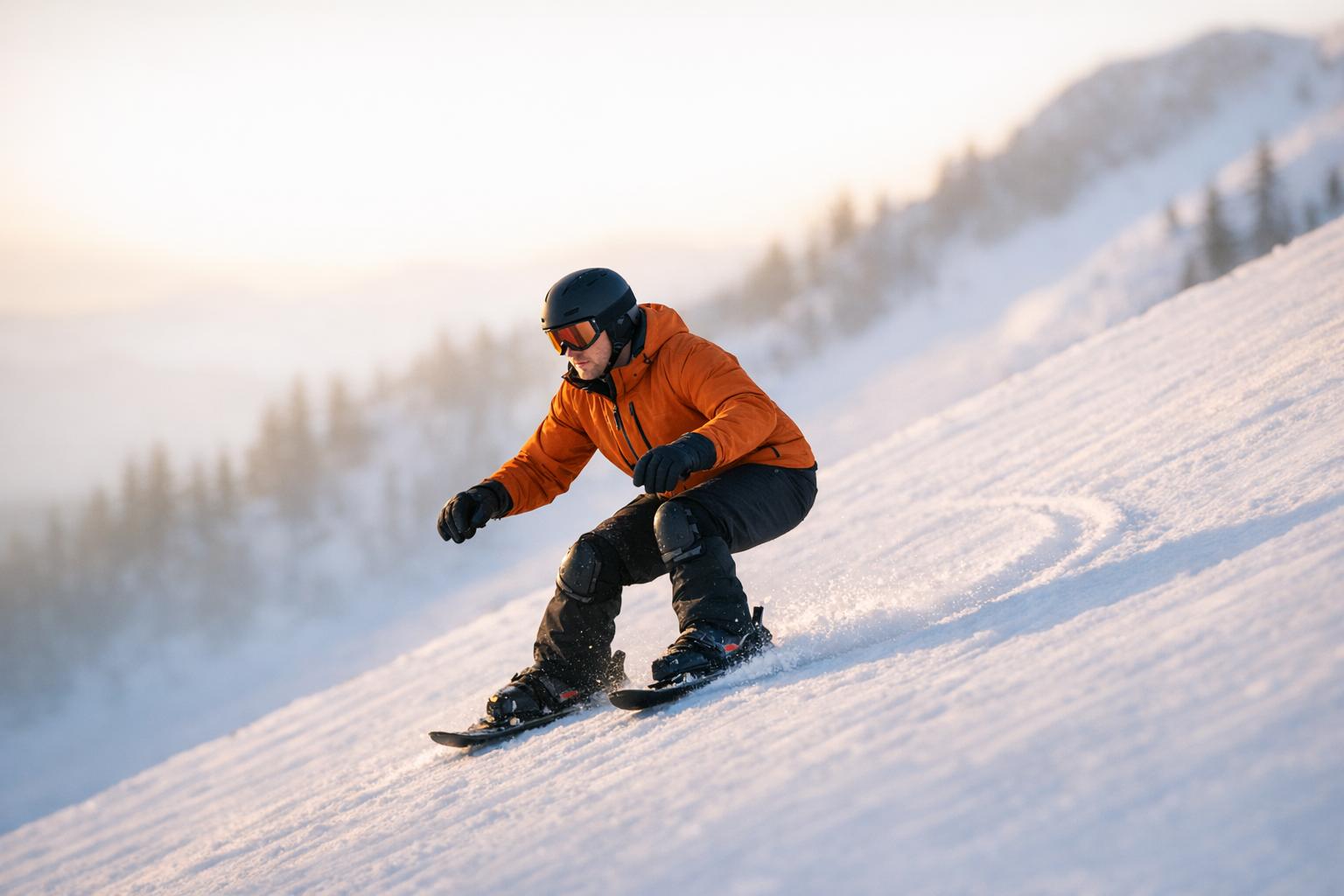
For high-speed skiskating, groomed slopes with moderate to steep gradients are your best bet. These slopes naturally help you build momentum, while snow parks with hard-packed snow conditions give you superior glide. Hard-packed snow is ideal, as it provides much better glide compared to soft or fresh powder. If you’re dealing with light powder - up to 4 inches (10 cm) - you’ll still be fine, but anything deeper can slow you down due to the reduced surface area of skiskates.
Steer clear of extremely steep slopes or ungroomed terrain filled with obstacles. These conditions force you to make constant adjustments, which can quickly drain your momentum and limit your speed.
Maintaining Your Equipment
To get the most out of your skiskating sessions, keeping your gear in top shape is non-negotiable. Sharp edges and regular waxing are essential, especially for fiberglass-reinforced models. As the Snowfeet team advises:
"We recommend waxing the fiberglass reinforced polyamide models for extra speed and smooth glide."
Even if you’re using wood core models like the 99 CM, which come pre-waxed, periodic maintenance is still important to maintain that smooth glide.
Don’t forget to check your bindings before hitting the slopes. Properly adjusted bindings ensure a secure fit, giving you the precise control and power transfer you need for high-speed performance.
Conclusion
Skiskates can hit impressive speeds when you combine the right gear, ideal terrain, and solid technique. Longer skiskates offer better stability for carving at high speeds, while groomed runs with hard-packed snow provide the smooth, low-friction surface needed for maximum glide. Together, these factors create the perfect recipe for fast-paced skiskating.
A low, forward-leaning stance helps transfer power efficiently, and shifting your weight fully from one skiskate to the other ensures a smooth, effective glide. Your core plays a crucial role in keeping you balanced, especially when tackling steeper slopes or pushing your limits.
Keeping your skiskates in top condition is key. Sharp edges and regular waxing make a big difference, particularly on icy or firm surfaces. As Tom Eddy, Hill Safety Supervisor at Schweitzer, explains:
"The more experienced you are, the faster you tend to ski or ride".
Practice is the real game-changer in skiskating. Start on gentle slopes to get comfortable with skating-style pushes, then work your way up to steeper terrain as your confidence and technique improve. With time and effort, you can unlock thrilling speeds on skiskates that rival those of traditional skiing.
FAQs
How can I increase my speed on skiskates?
To get faster on skiskates, it’s all about fine-tuning your technique and body positioning. A low, balanced stance with your weight evenly distributed is key to staying stable and moving efficiently. Engaging your core and focusing on smooth, controlled strides can help you generate more power and maintain momentum.
Techniques like double poling, where strong arm movements drive you forward, and offset skating, which allows for smoother, energy-saving strides, can make a big difference. With regular practice and a focus on form, you’ll not only increase your speed but also keep better control and avoid wearing yourself out too quickly.
How does the design of skiskates impact their speed and performance?
The design of skiskates is crucial to their speed and overall performance. Key aspects like length, width, and weight are thoughtfully crafted to improve glide, stability, and agility. For example, their shorter length enables faster, more precise movements, while a slimmer profile cuts down on drag, helping you reach higher speeds. Plus, the use of lightweight materials makes each stride less tiring, boosting efficiency and reducing fatigue.
Together, these features create a design that delivers top performance, especially on the right terrain. Skiskates are an excellent option for those who want to combine speed, control, and maneuverability in their winter adventures.
What do I need to do to maintain my skiskates and keep them in top shape?
To keep your skiskates in top shape, regular care is essential. Start by storing them in a cool, dry place to prevent rust from forming. After each use, take a moment to clean them thoroughly - wipe away any dirt or debris, paying extra attention to the edges and moving parts.
Don’t forget to lubricate the bearings from time to time. This keeps everything running smoothly. Also, check all screws and bolts to make sure they’re secure - loose parts can cause trouble on the go. Rotating the edges or components when needed helps spread out wear evenly, which can make them last longer and perform better. Follow these simple steps, and your skiskates will be ready for your next ride!

Leave a comment
This site is protected by hCaptcha and the hCaptcha Privacy Policy and Terms of Service apply.