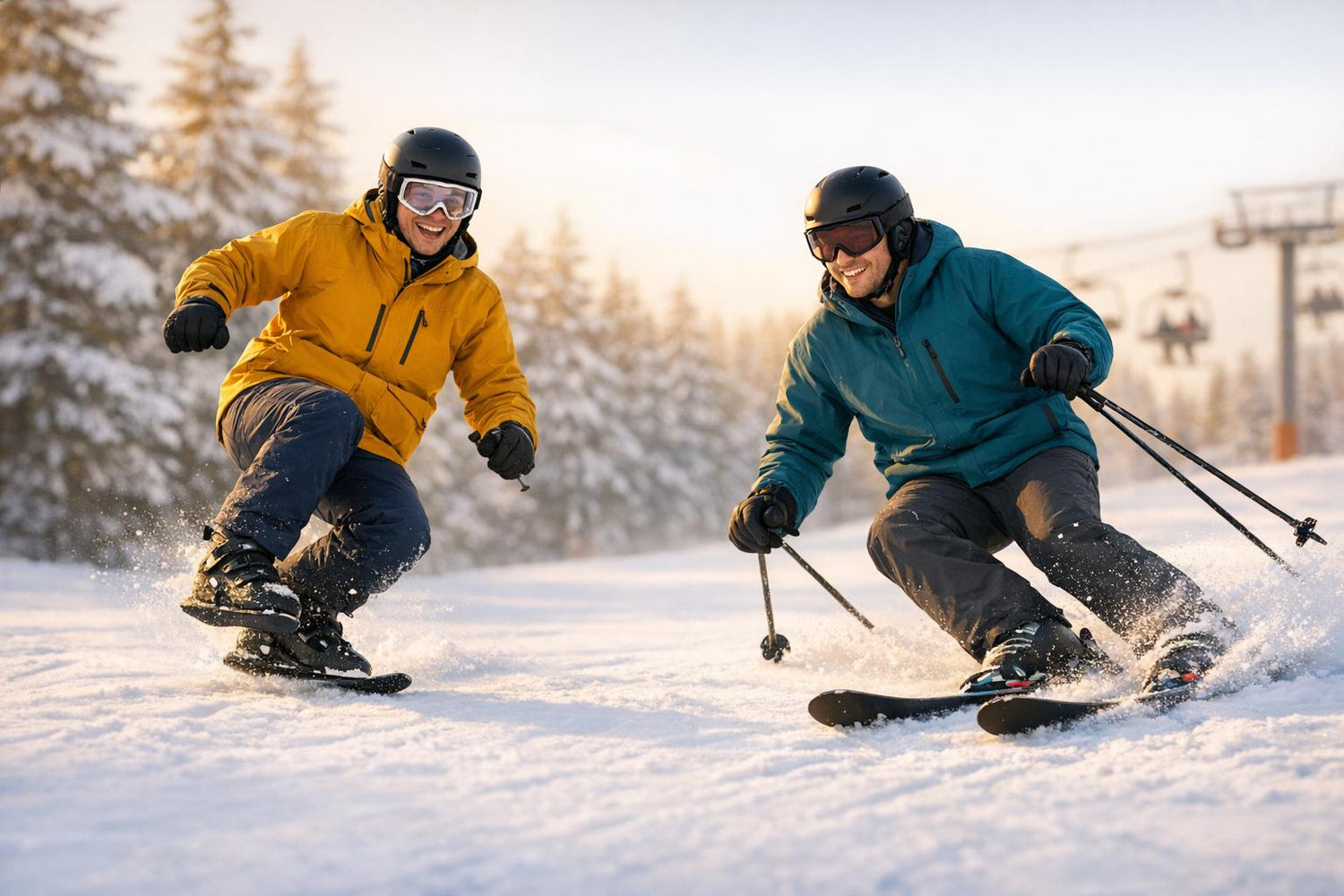
When deciding between skiskates and rental skis, it all boils down to what kind of experience you want on the slopes. Skiskates are compact, lightweight, and great for tricks, tight turns, and playful rides. Rental skis, on the other hand, offer a more classic downhill experience, with stability for beginners and high-speed performance for advanced skiers.
Key Points to Consider:
- Skiskates: Small (24–39 inches), portable, easy to learn, and perfect for freestyle moves. Cost: $490.
- Rental Skis: Standard-length (55–71+ inches), available on-site, suited for groomed trails and speed. Cost: $40–$60/day.
Quick Comparison:
| Feature | Skiskates | Rental Skis |
|---|---|---|
| Size | 24–39 inches | 55–71+ inches |
| Portability | Fits in a backpack | Requires ski bags or racks |
| Learning Curve | Quick and intuitive | Longer, requires traditional techniques |
| Best Use | Tricks, tight spaces, fun rides | Groomed trails, high-speed runs |
| Cost | $490 (one-time) | $40–$60/day |
If you value portability and a playful vibe, go for skiskates. If you prefer a steady, downhill-focused experience, rental skis might be better. Choose based on your style, budget, and how often you ski.
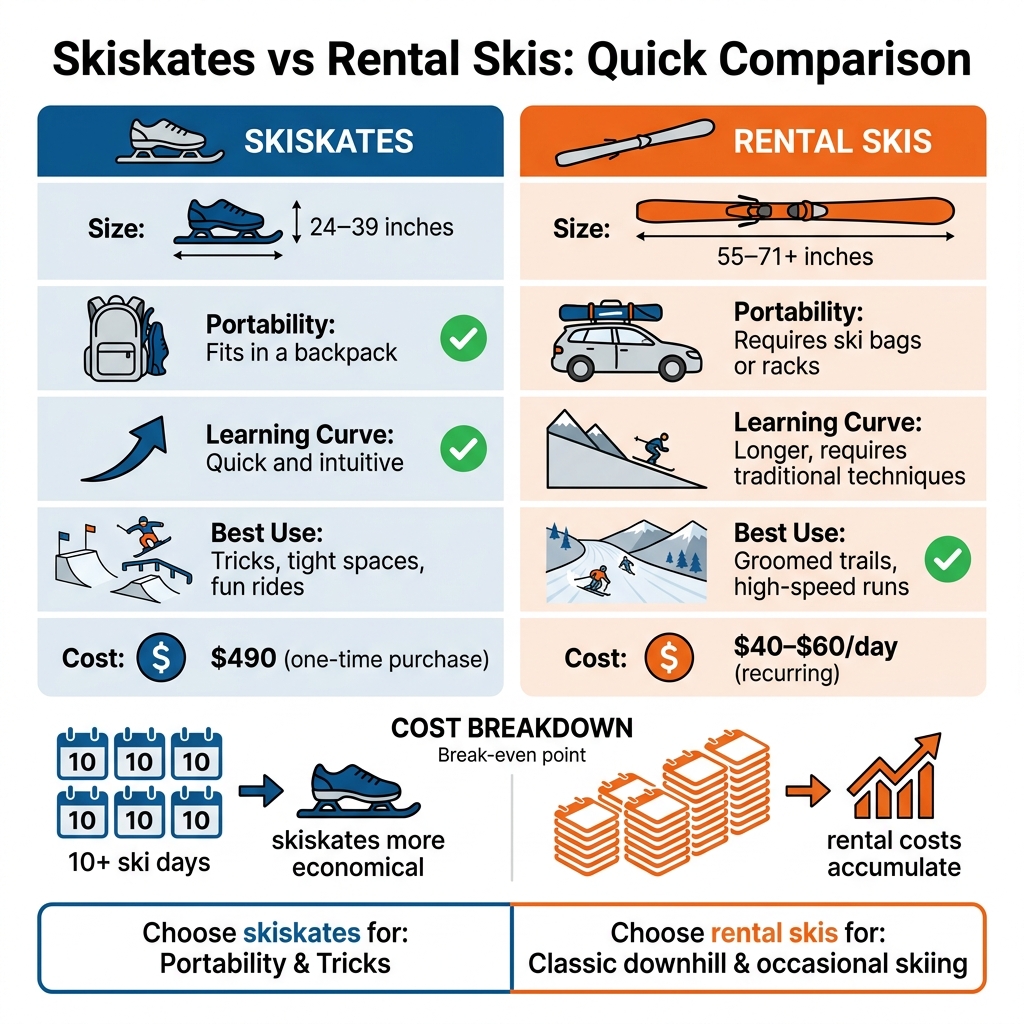
Skiskates vs Rental Skis Comparison Chart
The Basics: Skiskates and Rental Skis Explained
What Are Skiskates?
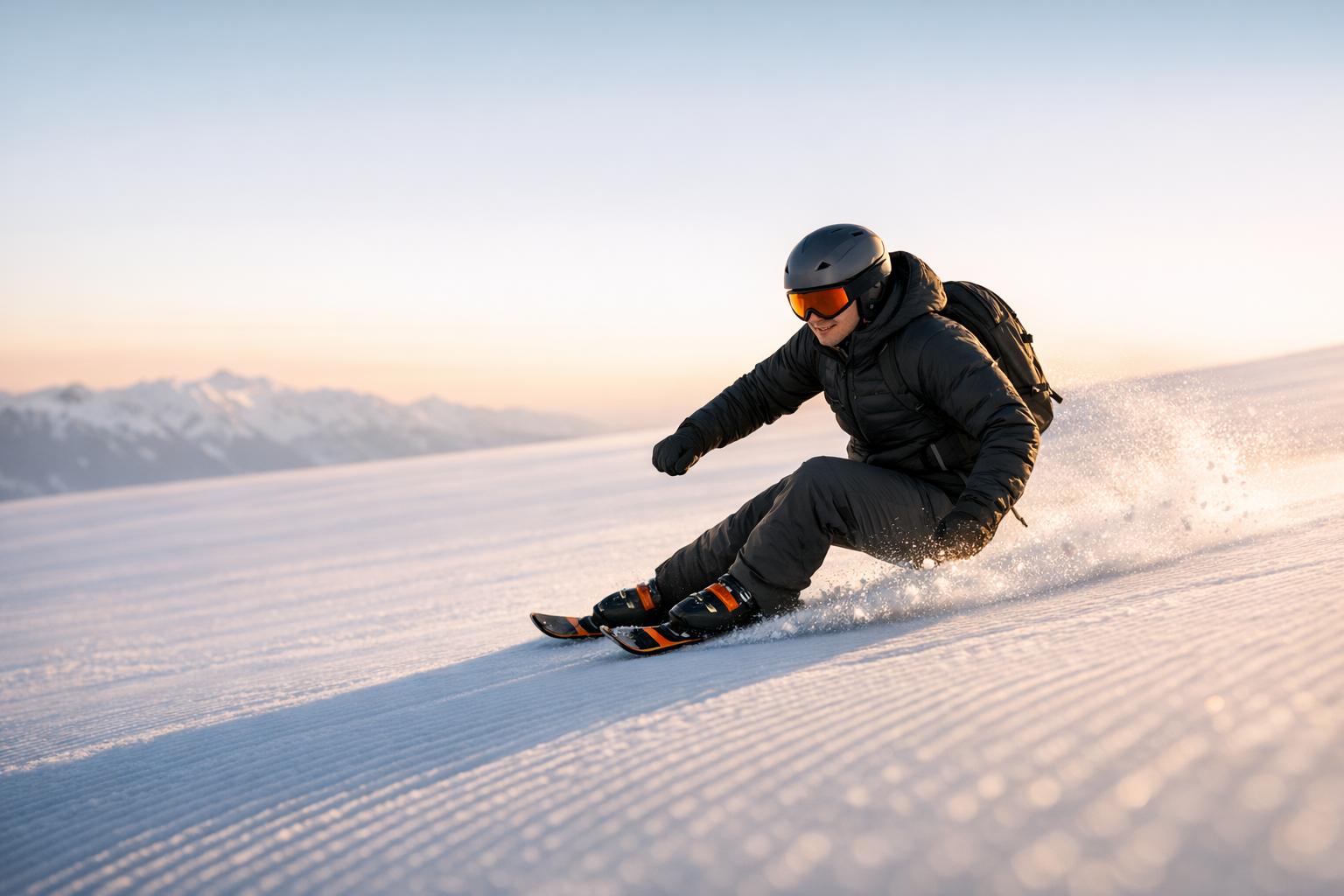
Skiskates are compact, hybrid skis that bring a skate-like vibe to the slopes. Measuring just 24-39 inches in length, they’re small enough to fit in a backpack and are much lighter than traditional skis. Their adjustable bindings are compatible with both standard ski boots and snowboard boots. Built with durable materials like wood cores, steel edges, and cap construction, they’re designed for agility, tricks, and a playful ride. If traditional skis are like a car, skiskates are more like a skateboard - perfect for tight turns and freestyle moves. On the other hand, rental skis cater to a more conventional downhill skiing experience.
What Are Rental Skis?
Rental skis are the standard-length skis you’ll find at most resort shops and ski areas. They’re usually offered in two categories: Sport skis for beginners and intermediates, and High Performance (or "Demo") skis for advanced skiers. Sport skis are great for building confidence, offering stability and forgiveness on groomed trails. High Performance skis, often featuring the latest designs, are built for carving and handling various terrains.
Chris Norwood, Ecommerce Manager at Jans, explains:
"Sport skis are designed to make skiing easier - not faster. They prioritize balance, stability, and confidence so newer skiers can progress without fighting their equipment".
Main Differences in Design and Use
Skiskates and rental skis differ significantly in length, construction, and purpose. Rental skis typically range from 140 to over 180 cm, depending on height and skill level, while skiskates max out at about 99 cm. Rental skis use alpine-specific bindings and boots, whereas skiskates are more flexible, accommodating different boot types.
Rental skis are built for traditional downhill skiing, excelling on groomed runs and various terrain. Skiskates, on the other hand, are all about portability and fun, offering a skate-like experience ideal for tricks, tight spaces, and snow parks. While rental skis are made for durability and classic performance, skiskates focus on being lightweight and versatile. These differences shape how each is used, offering distinct experiences for skiers looking to explore the slopes in their own way.
sbb-itb-32287b2
Portability and Ease of Transport
Skiskates: Lightweight and Easy to Carry
Skiskates are a dream when it comes to portability. Measuring just 24-39 inches in length, they fit snugly into a standard backpack, making them a breeze to bring along. Whether you’re hopping on a plane or heading out for a quick day trip, there’s no need for bulky extras like ski bags, roof racks, or additional storage space at home.
Their lightweight build means you can effortlessly carry them from your car to the slopes or stash them in a small closet when not in use. Planning a hiking adventure? No problem - skiskates won’t weigh you down. For those who value convenience and the freedom to explore without hassle, this compact design is a game-changer. Unlike traditional skis, which demand more effort to transport, skiskates make the entire experience - from packing to hitting the slopes - much simpler and more enjoyable.
Rental Skis: Larger but On-Site Convenience
Rental skis, on the other hand, pose a different set of challenges. With lengths ranging from 55-71 inches or more, they require ski bags for flights or roof racks for your car. Air travel with rental skis often means dealing with airline fees and lugging oversized gear through busy airports. As The Ski Monster highlights:
"Renting at your destination saves airline baggage fees and spares you the hassle of lugging skis through airports and shuttles".
That said, rental skis are conveniently available at most ski resorts, so you don’t have to bring anything from home. However, this convenience comes with trade-offs, like waiting in line at the rental shop to pick up and return your gear. For frequent flyers or those with limited vehicle space, renting can be a practical choice. But it also locks you into the rental shop’s schedule and equipment options, which might delay your start on the slopes compared to the grab-and-go ease of skiskates.
How Easy Are They to Learn?
Skiskates: Quick to Pick Up and Simple to Control
Skiskates are designed with a short learning curve, making it easy to hit the slopes and have fun almost immediately. Thanks to their compact size, they’re much easier to maneuver than full-length skis. You won’t need to worry about mastering complicated techniques like weight transfers or parallel turns right away. Many users report being able to glide down beginner slopes with ease, relying on intuitive movements. The lightweight design gives you instant feedback, helping you feel more in control. Even if you're a total beginner, you can start trying out small tricks, riding backward, or making quick direction changes after just a few runs. This simplicity makes skiskates a standout option for newcomers.
Rental Skis: Traditional Techniques and a Longer Learning Curve
Rental skis, on the other hand, require more time and practice to get the hang of. Learning to ski with rental equipment means focusing on traditional techniques like proper stance, weight distribution, and turning. The longer length of rental skis - typically between 55 and 71 inches or more - demands more precise body control, which can be challenging for beginners.
Another factor that can complicate learning is the quality of rental gear. Rental boots are often sized based on shoe measurements rather than a professional fit, which can affect your balance and comfort on the slopes. As The Ski Monster explains:
"That sloppy fit means your heel won't stay locked in the pocket, your toes jam into the front, and your feet claw for balance, which pushes you into the backseat. The result? Aching feet, shin pain, and skiing that feels harder and less fun than it should".
Additionally, rental skis are built for durability rather than performance. This focus on toughness over quality can impact how they handle on the snow. As The Ski Monster points out:
"Rental skis are built to be as durable as possible so shops can rent them out repeatedly and turn a profit. They're not built to ski well".
For those who want to improve their skiing experience, investing in well-fitted boots - usually costing around $550–$600 - while continuing to rent skis can make a noticeable difference. These variations in learning curves and equipment quality play a big role in how enjoyable each option feels for beginners and those looking to progress.
Performance Across Different Terrain
Skiskates: Perfect for Tricks and Tight Spots
Skiskates are ideal when agility and quick movements are your top priorities. Thanks to their compact size, they’re a great choice for snow parks, narrow trails, or busy slopes where sharp turns and fast reactions are essential. Their smaller design lets you maneuver through tight spaces and tackle obstacles effortlessly.
This shorter length also makes skiskates a favorite for freestyle tricks and creative riding. Whether you’re spinning, jumping, or riding backward, the minimal equipment makes everything feel easier and more controlled. While skiskates excel in agility and freestyle fun, rental skis are better suited for speed and groomed terrain.
Rental Skis: Designed for Speed and Groomed Trails
Rental skis are built with groomed slopes and high-speed descents in mind. Sport rental models focus on providing balance and stability, making them a forgiving option for beginners learning the ropes on maintained trails.
For experienced skiers, high-performance rental skis step up the game, especially in tougher conditions. On hard-packed snow and icy surfaces, they offer excellent grip for precise carving. In powder, they deliver "dramatically easier flotation", while sport models, though usable, can feel "tiring – not wide enough to float". The longer length of rental skis adds stability at higher speeds, making them a top pick for long, fast runs on wide-open slopes.
Cost Analysis: Buying vs. Renting
Upfront Purchase vs. Repeated Rental Fees
When deciding between buying or renting Skiskates, it all comes down to how often you hit the slopes. If you're skiing more than 10 days a season, buying is likely the smarter financial choice. For less frequent trips, renting might make more sense.
Skiskates are priced at $490.00, which is quite competitive compared to traditional ski setups. Standard skis typically cost between $500–$900, with boots adding another $550–$600. On the other hand, renting gear costs $40–$60 per day, meaning frequent skiers could quickly spend as much on rentals as they would on buying their own gear.
Another advantage of Skiskates is avoiding those pesky extra baggage fees that often come with full-sized skis. While renting at your destination eliminates baggage fees, those daily rental costs can pile up fast.
Maintenance Costs and Durability
The ongoing costs of maintaining your gear are another factor to consider. Owning Skiskates means you'll need to handle regular upkeep, like seasonal tuning and waxing, which usually runs between $30–$50 per tune-up.
Rental skis are built to last under heavy use, but that often comes at the expense of performance. When you own Skiskates, you have full control over their condition, ensuring they perform consistently and meet your expectations every time you hit the slopes.
Which Option Is More Fun?
Skiskates: Lightweight and Full of Possibilities
Skiskates take a fresh spin on enjoying the slopes. Thanks to their lightweight and compact design, you can easily pack them into a backpack and bring them along wherever you go. These mini skis turn any hill into a playground, encouraging tricks like spins, jumps, and even backward rides - even if you're just starting out. With a short learning curve, you can dive into experimenting with fun moves almost immediately. Whether you're hitting snow parks, hiking trails, or sledding hills, skiskates offer a playful and versatile experience. On the other hand, rental skis provide a more traditional and steady way to navigate the slopes.
Rental Skis: The Tried-and-True Option
Rental skis stick to the classic skiing experience that most people think of when they picture the sport. They’re perfect for downhill runs on groomed trails and are a great choice for beginners trying out skiing without committing to a big upfront cost.
However, because rental gear is built for durability to withstand repeated use, performance can sometimes take a backseat. Many skiers find rental boots uncomfortable due to their wider and longer fit, which might make the experience less enjoyable. For those looking for a better ride, demo skis are a step up - they offer retail-quality performance, making each trip down the mountain feel smoother and more exciting.
Conclusion: Making Your Choice
Deciding between skiskates and rental skis comes down to the kind of skiing experience you're after. Skiskates are lightweight, easy to pack, and perfect for those who enjoy freestyle moves and quick, agile rides. With their fast learning curve, they’re a great choice if portability and trying something new appeal to you. At $490.00, they can also save frequent skiers money compared to recurring rental fees.
On the other hand, rental skis are the go-to option for a classic downhill experience. They’re ideal for beginners or occasional skiers who want to avoid the upfront cost and hassle of owning and transporting gear.
When making your decision, think about your skiing frequency and budget. If you hit the slopes only a few times a year, rentals make sense. But for regular skiers looking for consistent performance and freedom from rental shop lines, skiskates could be a worthwhile investment.
Your choice also depends on your favorite terrain. Skiskates excel in tight spaces, snow parks, and areas where you can experiment with spins and jumps. Meanwhile, rental skis are better suited for groomed runs and traditional high-speed descents. If playful agility and creative moves are your style, go for skiskates. If you prefer steady, classic downhill skiing, rental skis might be the better fit. Ultimately, the decision should reflect your skiing preferences and how you like to enjoy the slopes.
FAQs
Are skiskates allowed at most ski resorts?
Currently, it’s unclear whether most ski resorts allow skiskates. To avoid any surprises, it’s best to contact the resort you’re planning to visit and check their specific rules about skiskates.
What boots do I need for skiskates?
You’ll need skate ski boots specifically designed for skate skiing. Look for boots that match your binding system and provide a good mix of support and flexibility to help you skate efficiently.
Can skiskates handle icy snow or powder?
Currently, there’s no detailed information about how skiskates handle icy snow or powder. Without specific data, it’s unclear if they are well-suited for these types of conditions.


Leave a comment
This site is protected by hCaptcha and the hCaptcha Privacy Policy and Terms of Service apply.