

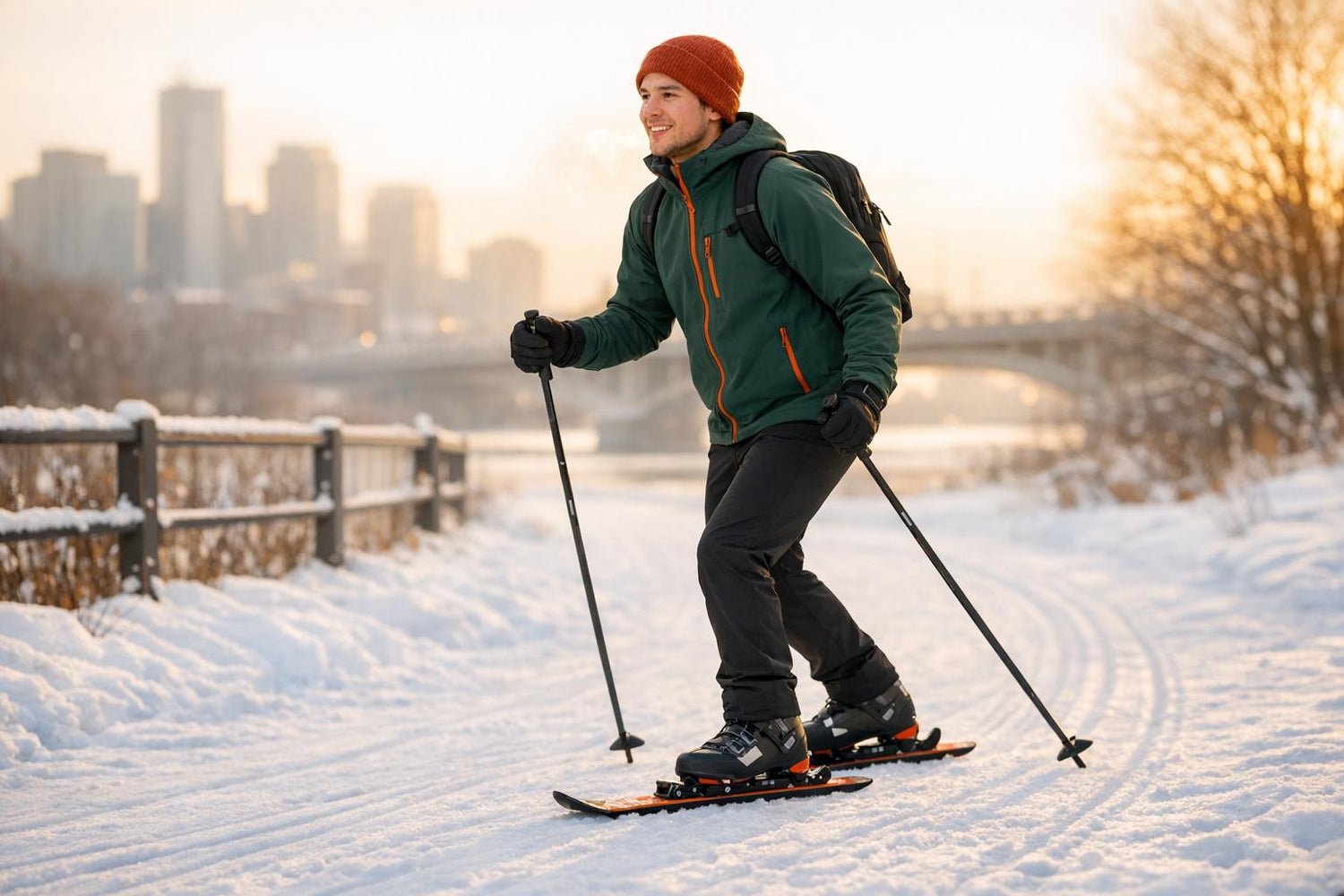
Skiskating is a compact, city-friendly alternative to traditional skiing, designed for urban skiers and those with limited time. Using short skis that pair with ski or snowboard boots, skiskating makes winter sports more accessible by eliminating bulky gear and long trips to resorts. Here's why it's gaining popularity:
- Compact & Portable: Skiskates fit in a backpack, making them easy to carry on public transit or store in small spaces.
- Beginner-Friendly: Easier to learn compared to traditional skiing, perfect for quick outings or casual riders.
- Versatile Terrain Use: Works on sledding hills, park trails, and frozen waterfronts, not just ski resorts.
- Fitness Benefits: Burns 600–900 calories/hour while providing a low-impact workout.
- Affordable Options: Models range from $299 to $690, with choices for different skill levels and terrains.
Skiskating is ideal for quick winter adventures, offering a fun, practical way to stay active without the hassle of traditional skiing logistics.
Benefits of Skiskating for City Dwellers and Casual Riders
Compact and Portable Design
Skiskates are tailor-made for city life. Their compact size means they can easily fit into a backpack, making them perfect for public transit. Forget about lugging around bulky gear or dealing with car rentals - these are ideal for urbanites with limited storage space. Imagine stashing them in your work locker, hopping on the subway, and hitting a nearby hill during lunch or after work. Plus, their lightweight build lets you switch seamlessly between walking and skiing, adding to their convenience.
Easy to Learn
One of the best things about skiskating is how beginner-friendly it is. The design helps new riders gain balance quickly, reducing the frustration often associated with learning traditional skiing. For experienced skiers, skiskates offer a fun, low-pressure way to enjoy quick winter outings. They’re perfect for squeezing in a mini adventure, even on a packed schedule.
Works on Different Terrains
Skiskates shine in places where traditional skis might not. They’re great for sledding hills, narrow forest paths, and park trails, opening up a world of possibilities beyond standard ski resorts. Many urban locations even offer short-term passes - hourly or three-hour options - that pair perfectly with a quick outing and are easy to reach via public transit. Whether you’re navigating tight turns in a park or gliding along a frozen waterfront, skiskates adapt to a variety of terrains, turning any snowy area into your personal playground.
"Urban backcountry is not a formal ski classification. It's a practical idea: places where city residents, commuters, and travelers can access snow sports quickly without a major mountain transfer."
- High-Tide.us
sbb-itb-32287b2
Choosing the Right Skiskates for City Use
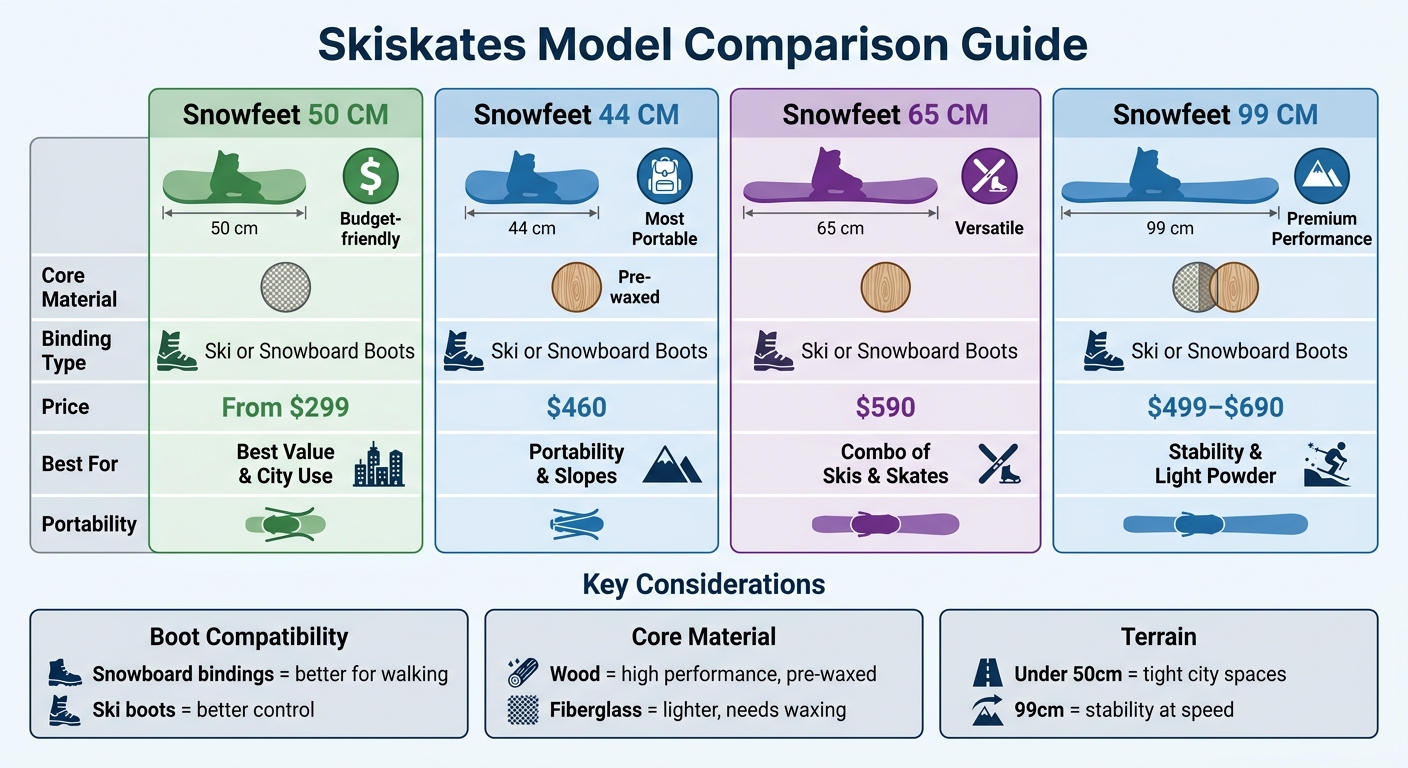
Skiskates Model Comparison: Features, Prices, and Best Uses
For city riders, getting the most out of your skiskating experience starts with choosing the right gear. The best skiskates for you will depend on how and where you plan to use them.
Skiskates Models Compared by Features
Skiskates are celebrated for their portability and ease of use, but selecting the right model means considering your specific needs. Both the 44 cm and 50 cm models are compact enough to fit in a standard backpack, making them ideal for city commuters.
- Snowfeet 50 CM: Starting at $299, this model features a fiberglass core and is a great option for casual weekend riders or urban adventurers.
- Snowfeet 44 CM: Priced at $460, it comes with a wood core, is pre-waxed for better performance, and offers a more professional feel.
- Snowfeet 99 CM: For those seeking extra stability at higher speeds or in light powder, this model comes in two versions - fiberglass ($499) and wood core ($690).
| Model | Length | Core Material | Binding/Boot Type | Price (From) | Best For |
|---|---|---|---|---|---|
| Snowfeet 50 CM | 50 cm | Fiberglass | Ski or Snowboard Boots | $299 | Best Value & City Use |
| Snowfeet 44 CM | 44 cm | Wood | Ski or Snowboard Boots | $460 | Portability & Slopes |
| Snowfeet 65 CM | 65 cm | Wood | Ski or Snowboard Boots | $590 | Combo of Skis & Skates |
| Snowfeet 99 CM | 99 cm | Fiberglass / Wood | Ski or Snowboard Boots | $499–$690 | Stability & Light Powder |
With this breakdown, you can match the features of each model to your urban riding style.
What to Consider When Buying Skiskates
A few key factors should guide your decision when purchasing skiskates:
- Boot Compatibility: If you’ll be walking between urban spots - like hopping off public transit or strolling a few blocks - snowboard bindings are a better choice. They’re more comfortable for walking compared to plastic ski boots. On the other hand, ski boot bindings provide superior control for more aggressive riding styles.
- Core Material: Wood cores deliver high performance and come pre-waxed, making them a solid choice for those seeking a professional edge. Fiberglass cores, while lighter and more affordable, require regular waxing to maintain their performance.
- Terrain Type: For tight spaces like narrow city trails, park paths, or sledding hills, models under 50 cm are ideal. They offer better control in compact areas. Additionally, all skiskates include metal ski edges, which are crucial for gripping icy or hard-packed snow often found in busy city parks.
"Far more portable and affordable than traditional skis or snowboards." - Uncrate
Once you’ve chosen the right skiskates, the next step is mastering techniques tailored for urban environments.
Skiskating Techniques for Compact and City Settings
Urban skiskating requires a slightly different approach compared to open trails. The shorter length of skiskates makes them perfect for navigating tight spaces, but mastering a few core techniques is essential for confidently gliding through city parks, narrow trails, and crowded pathways.
Basic Skiskating Movements
Let’s start with the essentials: gliding, turning, and stopping. To maintain balance and momentum, keep your ankles and knees bent, with your hips leaning slightly forward. This posture allows gravity to do most of the work for you. As Charlotte Ogden, a retired Nordic ski racer, puts it:
"The key to skate skiing fast is preserving your forward momentum and letting gravity do all of the work for you, even if you are heading up a hill".
For tight turns, try passive bowing - lift your inner ski and angle it inward, then let your outer ski follow through. If you need to maintain speed while turning, switch to active bowing, which involves a double pole thrust on the inner ski to power through the curve. When it’s time to stop, the classic snowplough (wedge position) is your go-to technique, just like in alpine skiing.
Proper core engagement is a game-changer. Using a "crunch" motion with your core and arms during pole plants can amplify your power while reducing strain on your legs. Ogden emphasizes:
"To maximize the power that you can create from your legs and upper body, you need to keep your upper body steady".
Think of your torso as a "box" between your hips and shoulders - keeping it steady helps prevent energy loss from twisting. Once you’ve got these basics down, you’ll be ready to tackle urban obstacles.
Handling Narrow Trails and City Obstacles
Urban skating comes with its own set of challenges, but a few specialized techniques can make all the difference. The V1/Offset technique (or guide arm technique) is particularly effective on uneven or narrow trails. It’s an asymmetrical method that uses your "guide arm" to stabilize your glide and prioritize balance over speed. For steep climbs or tight passages where gliding isn’t an option, switch to diagonal skating, which mimics a walking motion.
To handle sharp corners or quick direction changes, master the jump skate. This involves lifting your ski to shift direction between the glide and push, making it ideal for dodging obstacles or navigating tight turns. A helpful exercise is the "Magic Moment Drill", which teaches you to unweight your ski and point it in a new direction - a critical skill for maneuvering around city hazards.
When approaching cracks or gaps, scan ahead 10–15 feet and tackle them diagonally to avoid catching your ski edges. For curbs, step up or down one foot at a time in a controlled walking motion instead of attempting to roll or jump. Keep your knees bent and your posture relaxed to absorb shocks from uneven terrain. On busy paths, stay to the right and announce "On your left!" clearly when passing others. Once you’ve nailed these techniques, you can start experimenting with tricks.
Adding Tricks for Fun and Style
Once you’re confident with the basics, you can spice up your skating with tricks like 180-degree turns, skiing backward (known as skiing switch), and the "Ollie" motion - a forward lean followed by rocking back onto your ski tails to clear small obstacles.
For jumping onto narrow features, use counter-rotation between your upper and lower body to align your skis properly. Ollie Barbour from Ski Addiction advises:
"Absorbing the impact while hopping on and off the bar will dramatically help you when it comes to maintaining your balance".
When sliding down features, keep your weight on your front foot to avoid slipping and focus your gaze on the end of the feature or your path ahead, not your feet. Start with low, ground-level features to reduce the risk of injury while practicing. Once you’re ready, you can add flair with moves like lipslides, where you pop high enough to bring your ski tails over the feature first instead of the tips. But as Barbour warns:
"Patience is a virtue. Rushing the pop, failing to 'Ollie' properly or counter rotating too soon, may cause you to catch your tips on the feature".
These tricks not only add style but also improve your ability to navigate urban obstacles with confidence and creativity.
Gear Setup and Maintenance for Skiskating
Once you've nailed the techniques of urban skiskating, keeping your gear in top shape is essential for smooth, reliable performance every time you hit the pavement or trail.
How to Set Up Skiskates
Start by adjusting the tool-free bindings to fit your ski or snowboard boots snugly. This ensures a secure, wobble-free connection, which is crucial for quick transitions between urban transit and trail skating. To double-check the fit, bend your knees slightly - this helps confirm that the bindings stay locked during movement.
Proper body alignment is just as important as the gear itself. Keep your ankles and knees bent, lean your hips slightly forward to maintain momentum, and stabilize your upper body to maximize power transfer. When using poles, engage your core, biceps, and triceps during each plant to gain an extra burst of speed and control.
Maintenance Tips for Longer Life
Regular waxing is key to extending the life of your skiskates. It protects the base from cracking and keeps it from drying out, which can reduce its ability to absorb wax. Before waxing, always clean the base with a specialized cleaner to remove dirt, oil, or industrial grime - like chairlift grease - that you might pick up in urban environments.
At the end of the season, apply a thick layer of storage wax and leave it on to shield the base during the off-season. For the metal edges, use a light coat of oil before storing to prevent rust. Store your skiskates in a cool, dry spot, and address any damage, like core shots or blemishes, right away to avoid further issues. G3 Genuine Guide Gear sums it up perfectly:
"The best way to get back into shape is to never get out of shape".
Useful Accessories for Skiskating
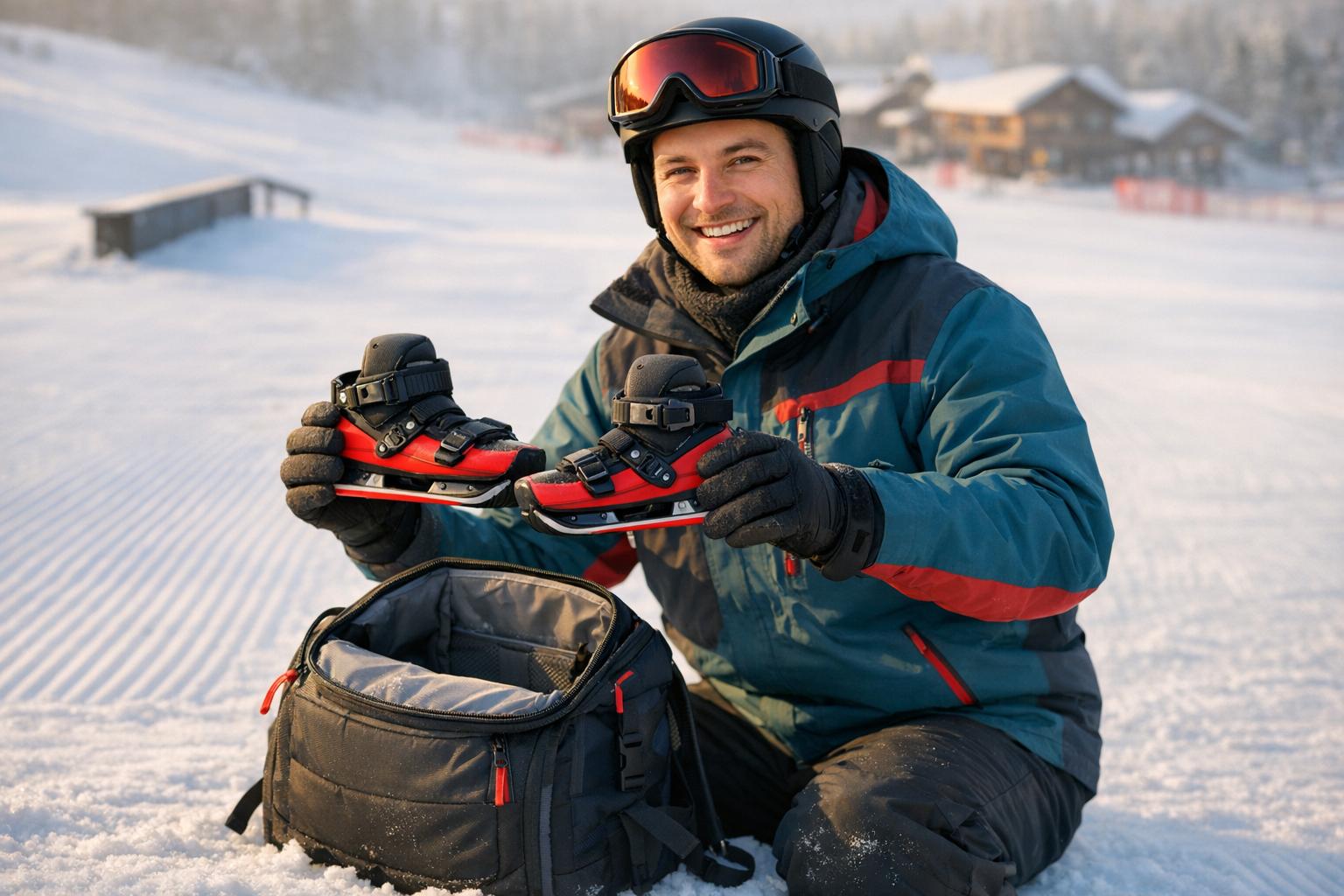
The right accessories can make a big difference in both performance and convenience. A dedicated carrying bag makes transporting your lightweight skiskates a breeze. Safety gear like wrist guards, knee pads, and a helmet is a must, especially when practicing tricks or navigating crowded city paths. Ski poles offer added stability and control during pole plants, while a portable waxing kit - including base cleaner, wax, and a scraper - lets you handle basic maintenance on the go. These small but practical additions ensure you're always ready for your next urban skiskating adventure.
Conclusion
Skiskating offers a practical way for urban and weekend riders to stay active during the winter months without the hassle of planning trips to distant resorts. Its compact, portable design makes it easy to carry your gear on public transit, slip it into a backpack, and head to nearby hills or groomed trails within minutes of leaving work or home. This city-friendly approach removes the need for car rentals or long drives, turning winter recreation into quick, manageable adventures that can fit into your lunch break or after-work routine.
With skiskating, you can burn between 600 and 900 calories per hour while enjoying a low-impact workout that engages your arms, legs, core, and back. Beyond the physical benefits, spending time outdoors in winter can help combat Seasonal Affective Disorder (SAD), which affects about one in 20 people, by increasing exposure to natural light and releasing mood-boosting endorphins.
Having the right gear is crucial for a smooth experience. Tool-free bindings make setup a breeze, and keeping your equipment well-maintained with regular waxing and proper storage ensures peak performance. A few extras - like a carrying bag, safety equipment, and a portable waxing kit - can make it even easier to enjoy everything from city trails to pop-up snow parks.
Skiskating thrives on its flexibility and ease of use. Whether you're gliding along park paths, exploring river trails, or squeezing in a quick session before your next meeting, it seamlessly fits into your schedule and skill level. By focusing on accessibility over altitude and removing the stress of resort planning, skiskating turns winter into a season to embrace, not just endure.
FAQs
Where can I skiskate in a city?
You can try skiskating in places like skateparks, city streets, and public spaces built for wheeled sports. Skateparks are a great option because they provide a safer, more controlled environment while also encouraging a sense of community among skaters. In some cities, underused spaces are being transformed into vibrant spots for skating, creating areas where people can enjoy recreation and connect socially. For the best experience, stick to locations that emphasize safety and are easy to access.
Do I need ski boots or snowboard boots?
Skiskating doesn’t require traditional ski boots or snowboard boots. Instead, it relies on short skis that are purposefully designed to offer easy maneuverability, especially in urban or compact areas.
What skiskates length should I buy?
The perfect length for skiskates is influenced by your height and skill level. Shorter skiskates are easier to maneuver, making them ideal for city outings or casual weekend use. For adults, skiskates generally fall between 150–170 cm, but the exact size should align with your body size and experience. Aim for a length that offers a good mix of control and comfort to suit your style.

Leave a comment
This site is protected by hCaptcha and the hCaptcha Privacy Policy and Terms of Service apply.