

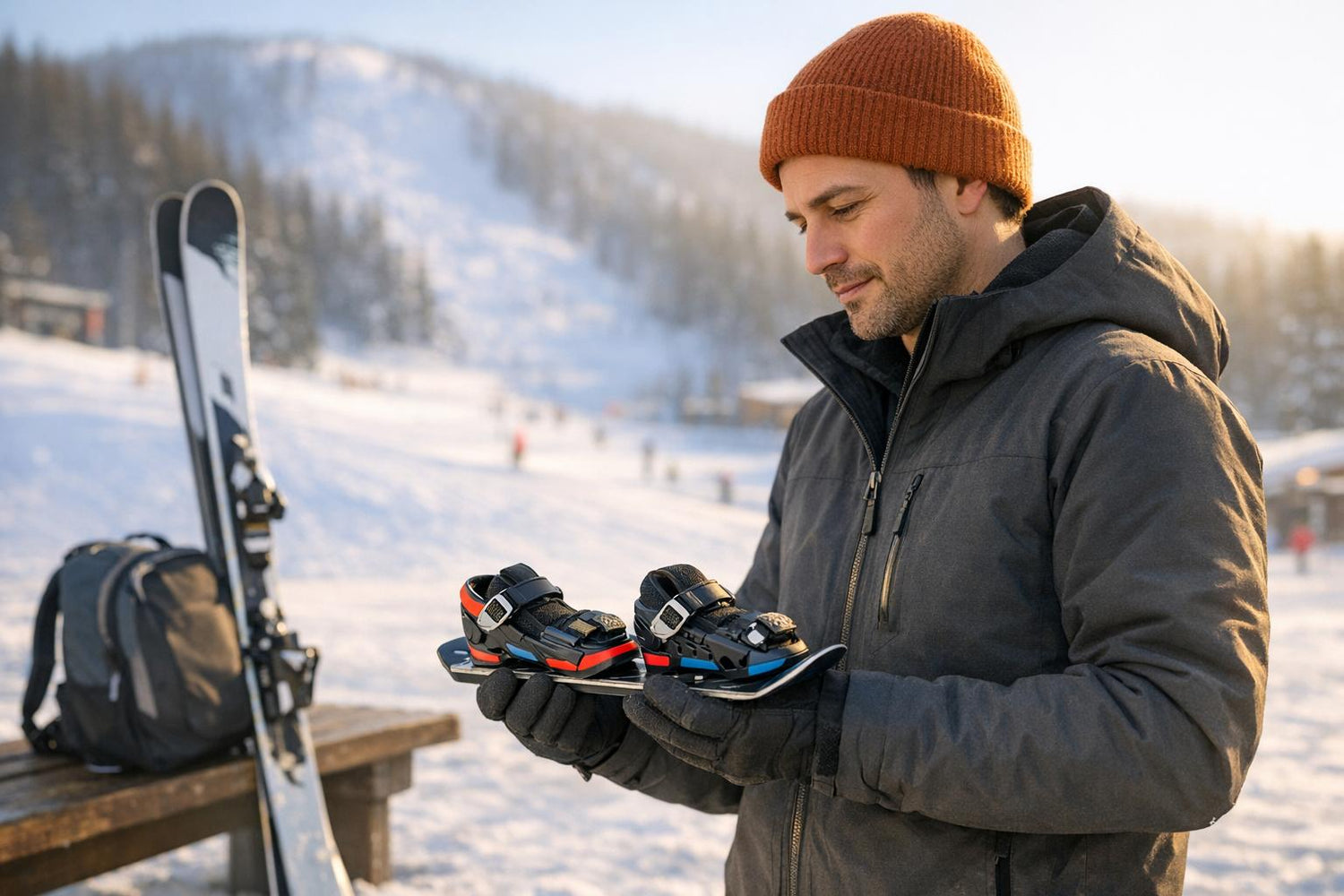
Skiskates are compact, ultra-short skis designed for portability and ease of use. They combine the glide of skiing with the motion of skating, making them a lightweight alternative to traditional skis. Starting at $190 and going up to $590, they cater to beginners and casual skiers, as well as intermediate users seeking convenient gear for slopes, trails, or snow parks.
Key Points:
- Portability: Fits in a standard backpack, unlike bulky ski gear.
- Terrain Performance: Best on groomed trails; less effective in deep powder.
- Cost: One-time purchase ($190–$590) vs. recurring rental costs for traditional skis.
- Ease of Use: Beginner-friendly with a short learning curve.
- Who They’re For: Ideal for occasional skiers, travelers, and kids.
Quick Comparison:
| Feature | Skiskates | Traditional Skis |
|---|---|---|
| Portability | Fits in a backpack | Requires large travel bags |
| Cost | $190–$590 (one-time) | Rentals: $39–$59/day |
| Terrain | Groomed trails, parks | Groomed slopes, varied terrain |
| Learning Curve | Easy for beginners | Steeper for advanced gear |
| Storage | Compact, shelf-friendly | Requires dedicated space |
If you value convenience and travel-friendly gear, Skiskates may be a great option. However, for high-speed performance or advanced skiing, traditional skis remain the better choice.
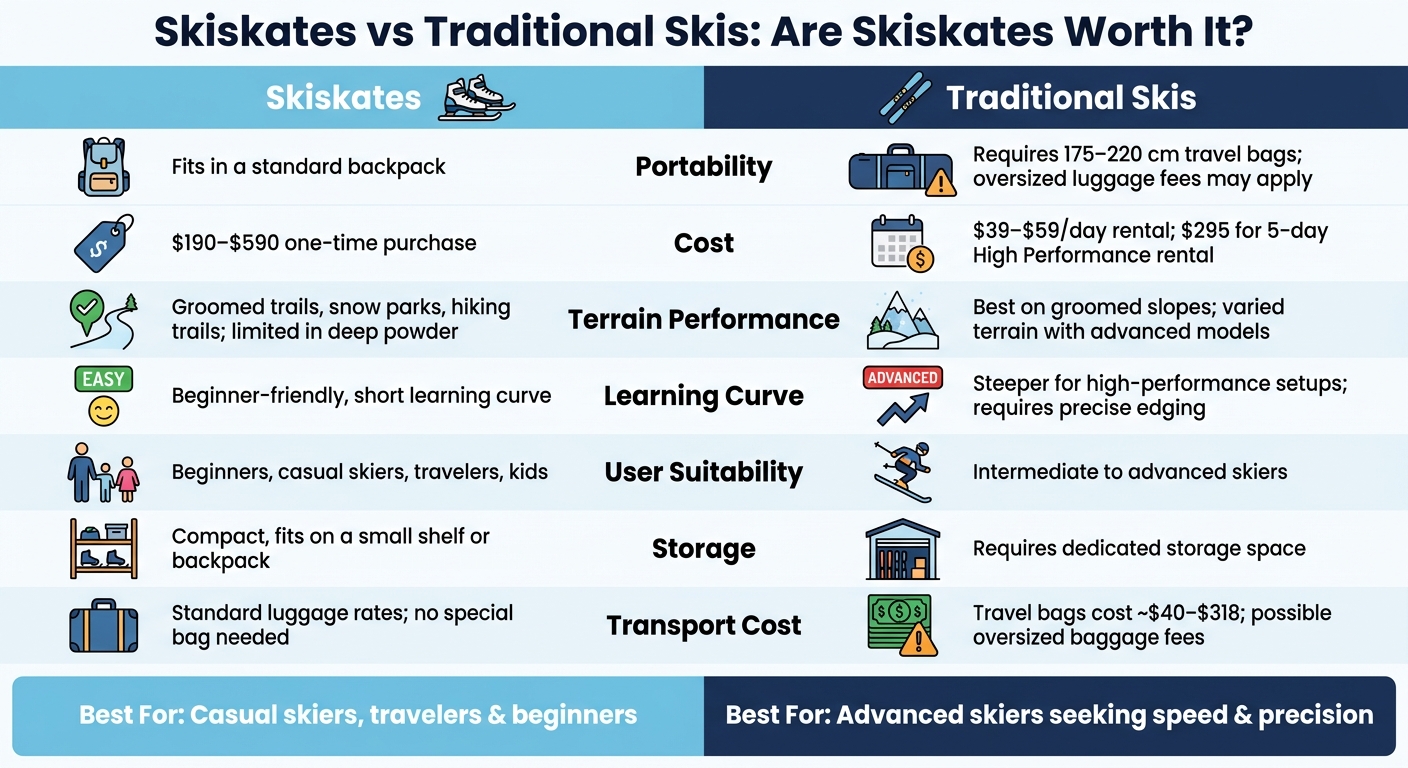
Skiskates vs Traditional Skis: Full Feature Comparison
1. Owning Skiskates
How They Handle Different Terrain
Skiskates shine on groomed trails and packed snow, where their steel edges provide solid grip, and the skating motion feels intuitive. On icy or firm surfaces, you’ll need to actively engage the edges for better control. In deep powder, however, their shorter length can be a drawback, offering less float and making ungroomed conditions more difficult to navigate. Despite these challenges, their performance across various terrains is complemented by their unmatched ease of transport.
Portability Advantages
One of the standout features of Skiskates is how compact they are. A whole pair can easily fit into a standard backpack, eliminating the hassle of carrying bulky gear. Whether you’re catching a flight to a ski destination or road-tripping between resorts, this level of convenience makes them an appealing choice for travelers.
And the best part? This portability doesn’t come at an extreme cost, as their pricing is designed to cater to different budgets.
What They Cost
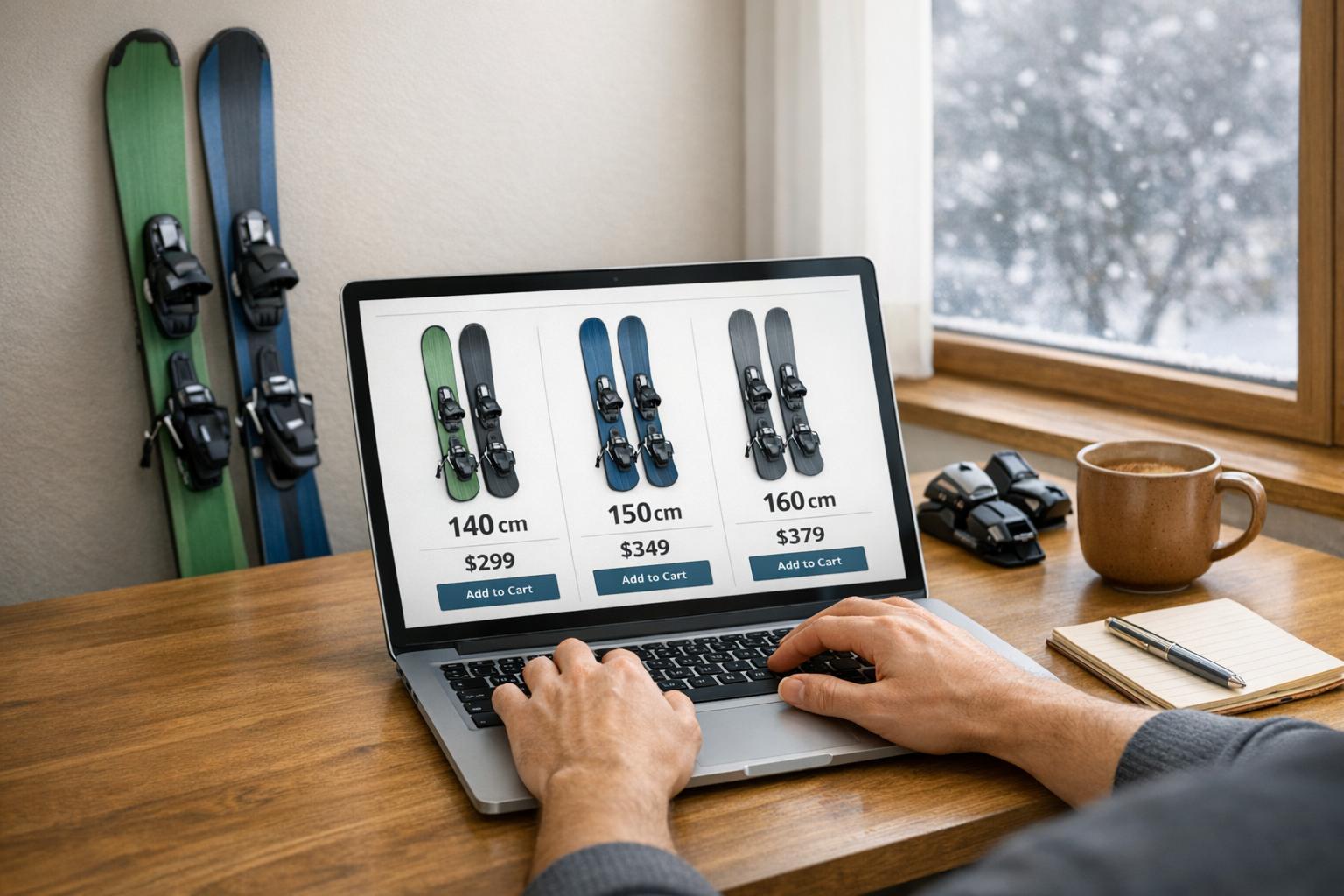
| Model | Price | Best For |
|---|---|---|
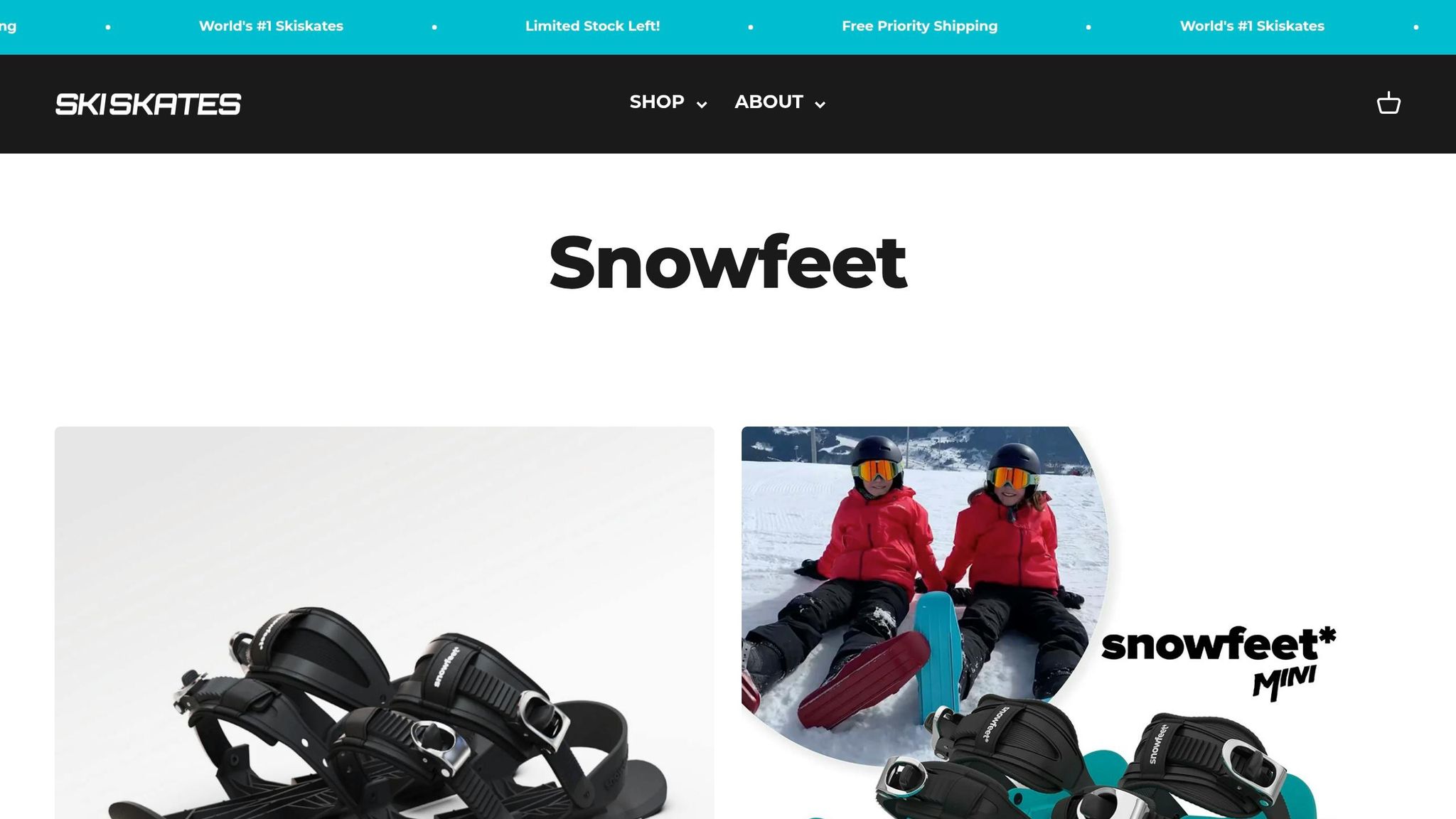
| Snowfeet Basic | $190 | Beginners, casual use |
| Snowfeet 50 PRO | $299 | Intermediate riders |
| Skiskates (Ski or Snowboard Boots) | $490 | Complete Skiskates experience |
| Snowfeet Skiblades 65 cm (26 in) | $550 | Enhanced stability, short ski feel |
| Snowfeet Skiblades 99 cm (39 in) | $590 | Advanced users, longer runs |
With options ranging from $190 to $590, there’s a model for every skill level and need. The $490 version, for instance, features adjustable, tool-free bindings that accommodate both ski and snowboard boots, offering a level of versatility that appeals to many users.
Who Gets the Most Out of Them
Skiskates are ideal for travelers, resort-goers, and adventurous winter sports enthusiasts who value lightweight, portable gear. They’re also a great fit for kids and beginners, thanks to their forgiving design and short learning curve. If you’re someone who likes to mix hiking trails with resort skiing, their lightweight build and versatility make them a practical choice. These qualities set Skiskates apart, offering a unique experience in the world of winter sports. The next section will dive into how they compare to more traditional winter activities.
sbb-itb-32287b2
2. Not Owning Skiskates (Standard Winter Activities)
How Traditional Skis Handle Terrain
Sport skis shine on groomed trails but falter on steep slopes and in deep snow. On the other hand, High Performance skis are built for varied terrain but demand advanced skills to use effectively. Terrain plays a huge role in determining the right equipment. Still, neither option works particularly well in deep powder, leaving gaps in performance.
The Portability Problem
Beyond performance, there’s another big issue with traditional skis: portability. Ski gear is notoriously bulky and hard to manage. Think roof racks, oversized luggage fees, and cumbersome cases.
"Try traveling with regular skis – it's a nightmare of airline fees, awkward carrying cases, and storage headaches." - Wild Outdoor Cafe
You can’t just toss skis in a backpack or make a quick stop at a snowy hill while on a road trip. The logistics involved often make skiing feel more like a carefully planned event rather than a casual winter activity. These challenges highlight the practical downsides of traditional ski gear.
What It Costs
For those who don’t own their gear, renting is the go-to option. During the 2025/26 season, renting a Sport Ski package costs $39 per day, while a High Performance package runs $59 per day. Over a multi-day trip, those costs add up fast. For example, a five-day High Performance rental totals $295, which is roughly the same price as buying a mid-range pair of Skiskates outright.
Who This Setup Fits
Traditional skiing is best suited for dedicated skiers who hit the slopes frequently and are comfortable with advanced runs like blue and black trails. For someone skiing just a handful of days each year (1–5 days, for instance), renting Sport skis is a more practical option. But there’s a catch: jumping to advanced equipment too soon can actually slow your progress. High-performance skis require precise edging techniques, which beginners often haven’t mastered yet. This is where a lightweight, portable alternative could offer a more accessible and convenient solution.
Snowfeet* Review: Are Skiskates Worth It? | Mini Ski | Skates for Snow | Skating Ski | Short Ski
Pros and Cons
Here's a quick breakdown of how Skiskates stack up against traditional skis.
Skiskates shine when it comes to portability. Unlike traditional skis, which require large travel bags and may rack up extra fees for oversized luggage, Skiskates can easily fit into a standard backpack or carry-on. At $490, they’re a one-time purchase that includes adjustable, tool-free bindings, making them a great option for beginners.
On the other hand, traditional skis are built for downhill performance on groomed slopes. They offer greater stability and edge control, catering to the needs of more experienced skiers.
The table below highlights these differences side by side:
| Feature | Traditional Skis | Skiskates |
|---|---|---|
| Terrain Performance | Best for downhill skiing on groomed slopes | Works well on slopes, snow parks, and trails |
| Portability | Requires 175–220 cm travel bags; oversized check-in may apply | Fits in a standard backpack or carry-on |
| Transport Cost | May incur oversized/overweight baggage fees; travel bags cost ~$40–$318 | Standard luggage rates; no special bag needed |
| Purchase Cost | Varies widely based on features | $490 one-time purchase (as listed on Skiskates) |
| User Suitability | Geared toward intermediate and advanced users | Suitable for all skill levels |
| Learning Curve | Steeper for high-performance setups | Easy and beginner-friendly |
| Storage | Requires dedicated storage space | Compact, fits on a small shelf or in a backpack |
If you’re someone who skis only a few days a year and prefers to avoid the hassle of bulky equipment, Skiskates could be your ideal choice. But for those who value high-speed performance on groomed slopes and have advanced skills, traditional skis are likely the better fit. This comparison highlights Skiskates' convenience for casual skiers and the performance edge traditional skis provide for seasoned enthusiasts.
Conclusion
Are Skiskates the right fit for you? That depends entirely on your skiing preferences and priorities.
If you're a beginner or a casual skier who only hits the slopes a few times a year, Skiskates offer plenty of appeal. Priced at $490, they’re a one-time investment that eliminates the hassle of lugging around heavy gear. They’re easy to learn, forgiving for newcomers, and versatile enough for everything from groomed slopes to snow parks and even hiking trails. Plus, their compact, backpack-friendly design makes them perfect for anyone who prefers to travel light. This convenience aligns with the performance and portability factors we’ve discussed earlier.
However, for seasoned skiers who crave speed, precision, and control on groomed runs, Skiskates might not quite measure up. Advanced skiers often require longer, stiffer equipment to handle high-speed stability and aggressive carving - areas where traditional skis or snowboards clearly excel.
Ultimately, if convenience and ease of use are your top priorities as a recreational skier, Skiskates are a great match. But if you’re chasing high-speed thrills and razor-sharp edge control, sticking with traditional gear might be the better choice.
The key is to align your skiing style with what Skiskates bring to the table for the best experience on the snow.
FAQs
Do I need ski boots or snowboard boots for Skiskates?
Skiskates don’t require special ski or snowboard boots. They’re designed to work with most winter footwear, whether you prefer regular shoes, snowboard boots, or ski boots. This gives you the flexibility to stick with whatever feels most comfortable.
How many ski days does it take to break even on Skiskates?
It usually takes 4 to 6 ski days to break even on Skiskates. The exact number depends on your pass and how often you use them, with most users estimating daily costs range from $50 to $75.
What size Skiskates should I choose for my height and skill level?
When picking Skiskates, think about your height, skill level, and the type of terrain you'll be tackling. A good guideline is to choose Skiskates that stand somewhere between your chin and the top of your head when you're upright.
If you're new to this, shorter Skiskates are a smart choice - they're easier to control and more forgiving. On the other hand, experienced skaters might lean toward longer Skiskates, as they offer better stability, especially at higher speeds.
Don't forget to factor in your weight and the terrain you'll be using them on. If you're still unsure, reaching out to a dealer or ski technician can help you make the right decision.

Leave a comment
This site is protected by hCaptcha and the hCaptcha Privacy Policy and Terms of Service apply.