

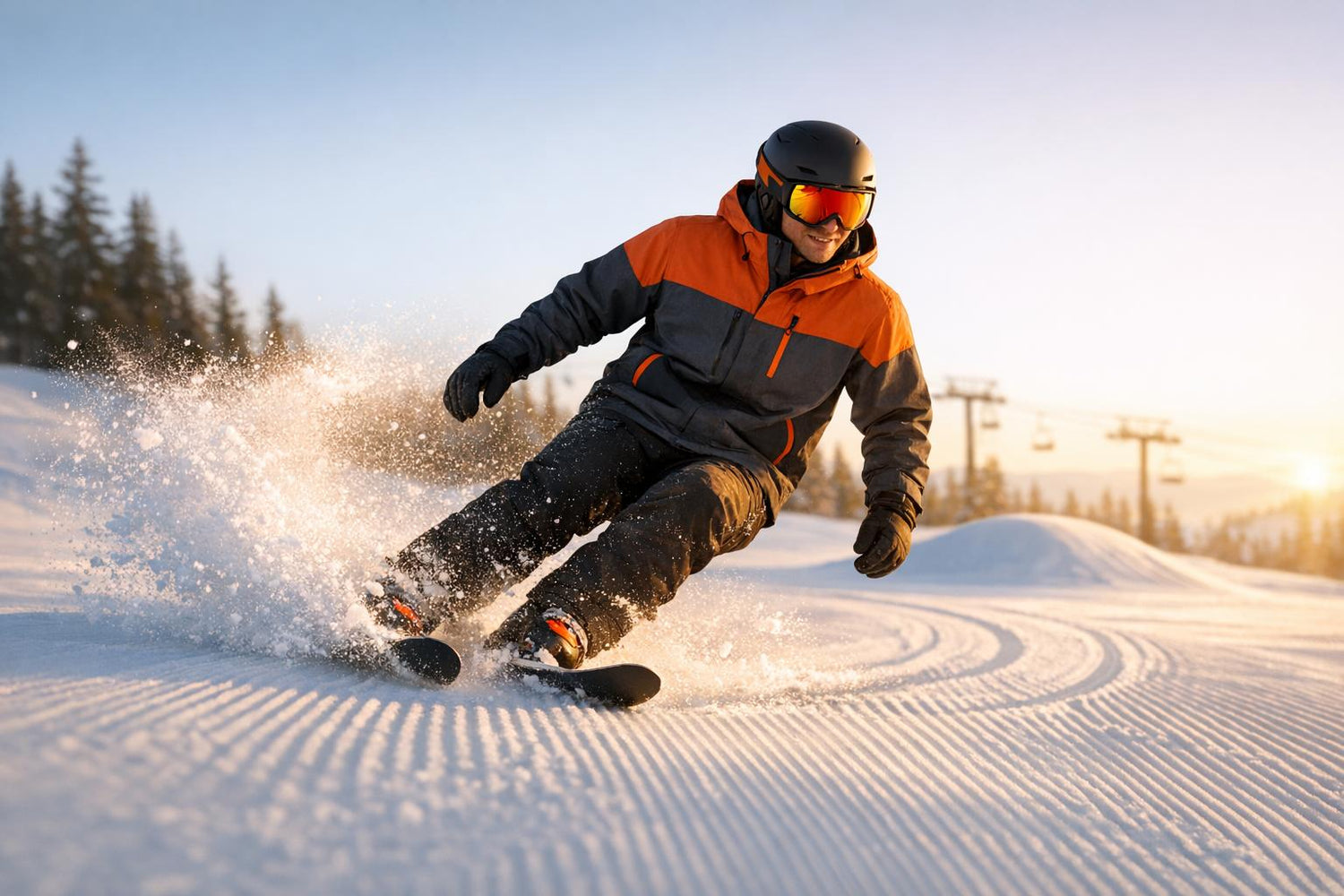
Skiskating is taking over the slopes as a fun, easy-to-learn winter sport. It combines skiing and skating using ultra-short skis (around 17–20 inches), offering quick turns, spins, and playful movement. Here's why it's gaining popularity:
- Beginner-Friendly: Master basic runs in just a few hours.
- Compact Gear: Fits in a backpack, no roof racks or bulky equipment needed.
- Versatile: Works on groomed runs, terrain parks, and tight spaces.
- Creative Movement: Encourages tricks and agile maneuvers not possible with longer skis.
Whether you're a seasoned skier or new to snow sports, skiskating offers a fresh way to enjoy the slopes without the hassle of traditional ski equipment. Plus, it's perfect for short sessions or packed schedules.
Quick Comparison of Skiskates Models:
| Model | Length | Boot Compatibility | Best For | Price (USD) |
|---|---|---|---|---|
| Snowfeet Basic | ~20 in | Winter/hiking boots | Casual use, beginners | $190 |
| Ski Boots Model | Short | Alpine ski boots | Groomed runs, intermediate | $490 |
| Snowboard Boots Model | Short | Snowboard boots | Snowboarders, parks | $490 |
| Snowfeet Skiblades 65 cm | ~26 in | Alpine ski boots | Tricks, sharp turns | $550 |
| Snowfeet Skiblades 99 cm | ~39 in | Alpine ski boots | Speed, stability | $590 |
Skiskating blends ease, portability, and fun - perfect for anyone looking to try something new on the slopes.
What Makes Skiskating So Addictive
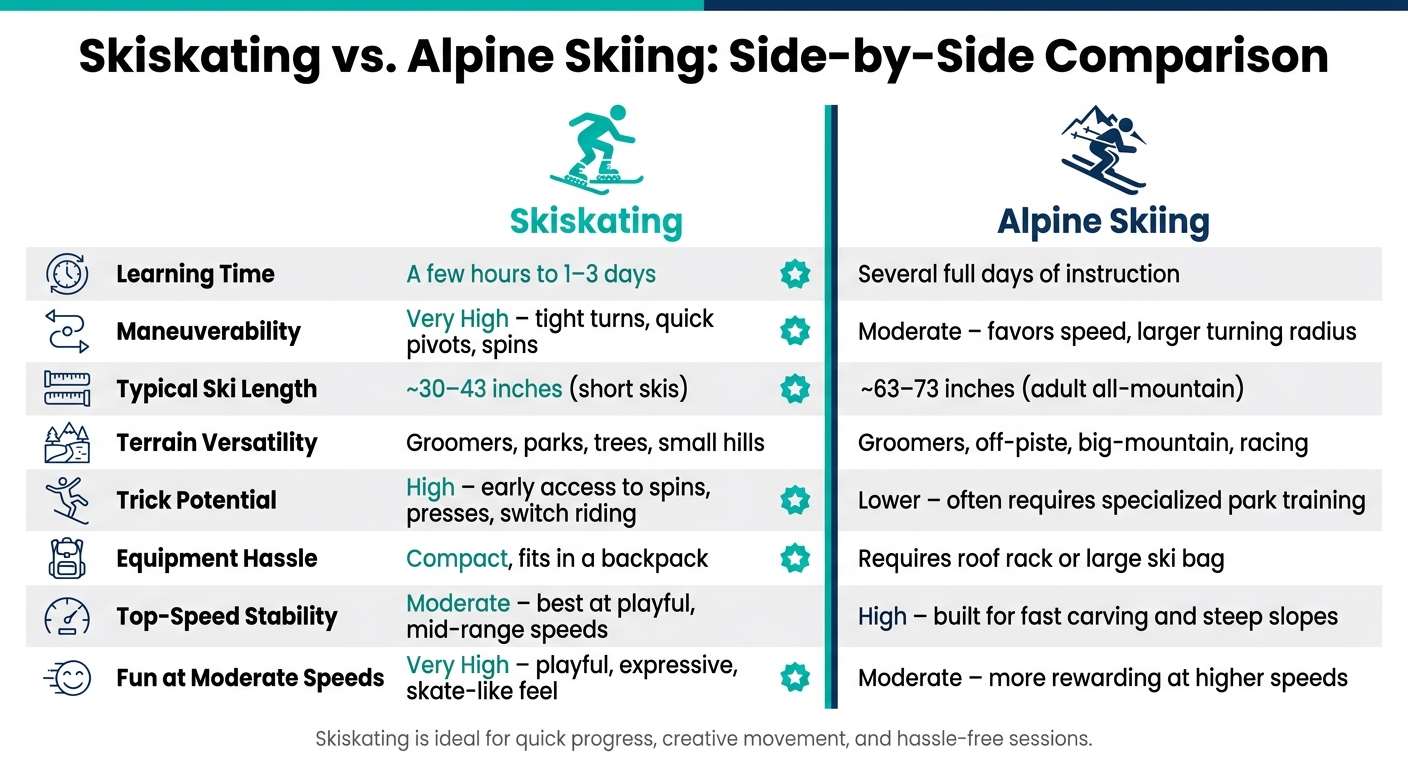
Skiskating vs. Alpine Skiing: Side-by-Side Comparison
Flow and Freedom: The Psychology Behind Skiskating
It’s no wonder skiskating keeps people saying, “Just one more run.” This activity taps into a mental state called flow - that sweet spot where focus sharpens, effort feels natural, and time seems to disappear. Flow happens when the challenge matches your skill level, and skiskating nails this balance perfectly.
Thanks to the short skis, beginners find it easier to make quick adjustments and recover from minor mistakes. This means even first-timers can start linking turns during their initial session. Each small victory - whether it’s mastering edge control, nailing a smoother stop, or pulling off a quick pivot - boosts confidence and makes you eager to keep going.
Research backs this up: sports that create flow experiences often combine skill improvement, just-right challenges, and a sense of independence - all things skiskating delivers in spades.
Physical Feel and Range of Use
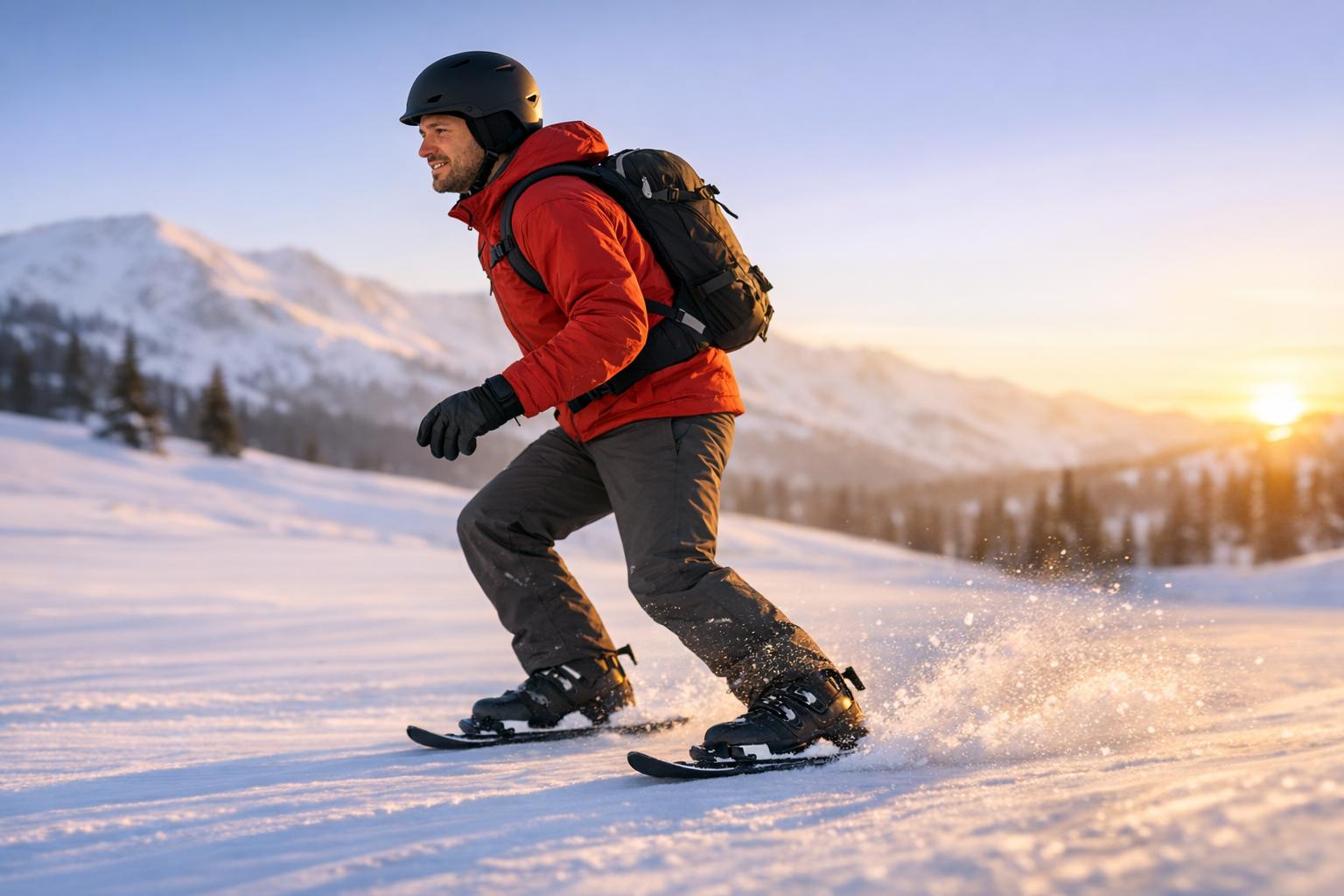
Beyond the mental rush, skiskating offers a physical experience that’s unlike anything else on the slopes. The short skis allow for sharp, snappy movements that feel more like ice skating or inline skating than traditional skiing. With a compact stance and quick footwork, you can switch directions effortlessly.
This agility means you can explore nearly every part of the mountain. On groomed runs, you can carve tight, playful turns along the edges. In terrain parks or tree runs, the shorter skis make small jumps, spins, and navigating tight spaces feel much more manageable. Plus, skiskating’s compact gear is easy to transport - just toss it in your car trunk, no roof rack needed. This convenience makes it simple to squeeze in quick sessions, even on busy days.
Skiskating vs. Alpine Skiing: A Side-by-Side Look
Skiskating’s unique blend of mental and physical benefits sets it apart from traditional alpine skiing. Here’s a closer look at how the two compare:
| Factor | Skiskating | Alpine Skiing |
|---|---|---|
| Learning time (beginner to blue run) | A few hours to 1–3 days | Several full days of instruction |
| Maneuverability | Very high – tight turns, quick pivots, effortless spins | Moderate – favors speed with a larger turning radius |
| Typical ski length | ~30–43 inches (short skis) | ~63–73 inches (adult all-mountain skis) |
| Terrain versatility | Groomers, parks, trees, small hills, local slopes | Groomers, off-piste terrain, big-mountain runs, racing |
| Trick potential | High – early access to spins, presses, and switch riding | Lower – often requires specialized park training |
| Equipment hassle | Compact and lightweight; fits in a backpack | Requires additional storage like a roof rack or ski bag |
| Top-speed stability | Moderate – best at playful, mid-range speeds | High – built for fast carving and steep slopes |
| Fun factor at moderate speeds | Very high – playful and expressive with a skate-like feel | Moderate – more rewarding at higher speeds |
If you’re all about high-speed carves or tackling steep, challenging terrain, alpine skiing might be your go-to. But for anyone looking for quick progress, creative movement, and the freedom to fit skiing into a packed schedule, skiskating is hard to beat.
sbb-itb-32287b2
Core Skiskating Techniques and Skills
Stance, Balance, and Edge Control for Beginners
Getting your stance right from the start can make a huge difference in how quickly you improve. Stand tall with a neutral spine, arms relaxed at your sides, and your gaze fixed ahead - not down at your skis. This small tweak can correct one of the biggest beginner missteps.
Adopt a "soft stance" by keeping your knees slightly bent and your body loose yet ready to move. A helpful trick? Jump up and land softly. The way your knees naturally absorb the landing is exactly how they should feel while skiskating. As Level 2 TrainingPeaks Coach Carrie McCusker puts it:
"A stiff, upright skier falls easily while a relaxed, poised skier absorbs terrain changes with less issue."
For balance during your glide, McCusker suggests:
"Your goal is to line up your nose, knee, and the tip of your ski in one line, with your shoulders squared over the ski."
Make sure your weight is centered over the balls of your feet, with your hips slightly pushed forward into an active stance. True balance comes from shifting your full weight from one foot to the other using your hips - not just bending your knees.
Once you’ve got balance and edge control down, it’s time to focus on building your foundational movements.
Basic Movements and How to Progress
Start on flat, groomed terrain without using poles. This forces your core and legs to work harder, helping you develop stability faster. One common hurdle for beginners is hesitating to commit to a full weight transfer. Many spread their weight across both skis, which limits glide stability. Instead, focus on shifting your entire weight onto one ski at a time for a longer, smoother glide.
How to Choose the Right Skiskates Setup
Once you’ve got the basics of stance and movement down, the next step is finding the skiskates setup that works best for your boots, preferred terrain, and how much stability you want.
Skiskates Models at a Glance
Here’s a breakdown of popular options to help you pick the right match for your riding style and boot compatibility.
The Snowfeet Basic ($190) is the most affordable option. Compact and designed for winter boots, it’s perfect for casual riders, sledding hills, or anyone easing into skiskating at slower speeds. If you’re ready for something more advanced, the Ski or Snowboard Boots Model ($490) offers short skis with proper bindings, a wood core, and steel edges, making it ideal for resort runs or terrain parks. For a mix of agility and stability, check out the Snowfeet Skiblades. They come in two sizes: the 65 cm model ($550) for sharper turns and tricks, and the 99 cm model ($590) for smoother rides at higher speeds or on varied terrain.
What U.S. Riders Should Know Before Buying
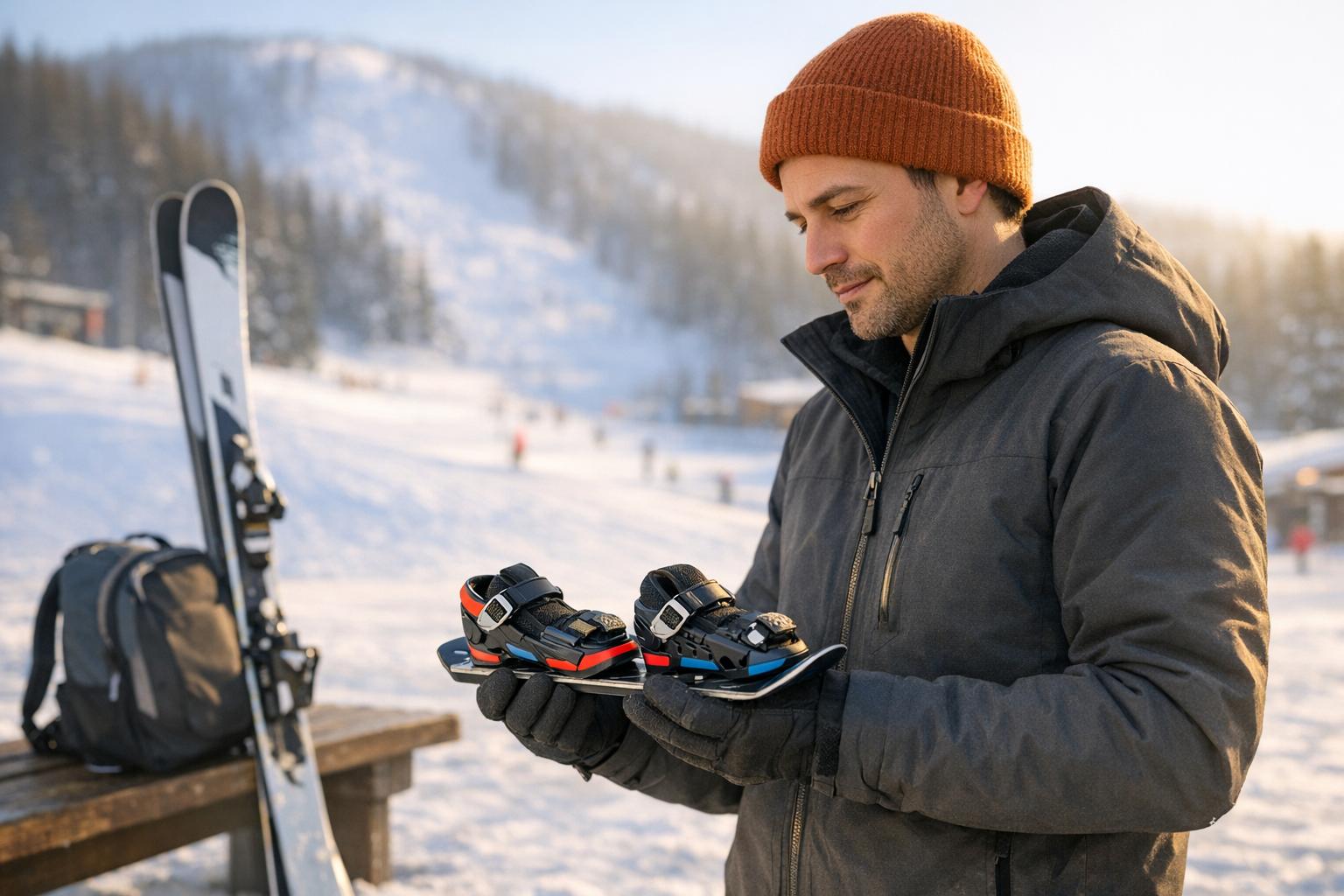
The most critical factor to consider is boot compatibility. The Ski Boots Model requires standard alpine ski boots, while the Snowboard Boots Model features wider, strap-in bindings for snowboard boots. The Snowfeet Basic works with most insulated winter boots but doesn’t provide the lateral support needed for faster speeds or icy conditions.
Make sure your boot sole length (measured in millimeters and printed on the boot shell) falls within the binding’s range for the best performance. Heavier or taller riders generally benefit from longer models for better edge grip, while shorter or lighter riders might prefer shorter setups for easier turns. If you’re buying for a child, look for adjustable models that can accommodate growth over a few seasons.
Finally, U.S. riders should check resort rules regarding brakes or safety leashes, and factor in state sales tax and possible international shipping fees when budgeting for your purchase.
Skiskates Model Comparison Table
Here’s a quick reference guide to compare features and pricing across the different models:
| Model | Length | Boot Compatibility | Best For | Price (USD) |
|---|---|---|---|---|
| Snowfeet Basic | ~20 in (50 cm) | Winter/hiking boots | Beginners, casual hills, low speed | $190 |
| Skiskates Ski Boots Model | Short ski length | Alpine ski boots | Groomers, parks, intermediate–advanced | $490 |
| Skiskates Snowboard Boots Model | Short ski length | Snowboard boots | Groomers, parks, snowboarders transitioning | $490 |
| Snowfeet Skiblades 65 cm | ~26 in (65 cm) | Alpine ski boots | All-mountain, maneuverability, tricks | $550 |
| Snowfeet Skiblades 99 cm | ~39 in (99 cm) | Alpine ski boots | Speed, stability, varied terrain | $590 |
Picking the right skiskates setup ensures you’ll get the most out of your rides, combining fun with control for an unforgettable experience.
How Skiskates Are Built and Why It Matters
The right equipment can make all the difference when you're out on the slopes. It boosts performance, lasts longer, and gives you the confidence to tackle any terrain. Let's break down what makes Skiskates so special and why riders keep choosing them year after year.
Wood Cores, Steel Edges, and Durable Craftsmanship
The construction of Skiskates doesn’t just ensure durability - it transforms your skiing experience. Each pair is handmade in Europe using top-tier ski manufacturing techniques. At the heart of every Skiskate is a certified sustainable wood core with cap construction. This design perfectly balances flexibility and strength, mirroring the craftsmanship found in professional full-sized skis.
The edges are crafted from hardened steel, providing the grip you need to carve through icy or hard-packed snow with precision. This edge-to-edge control makes quick turns and sudden stops feel smooth and steady. To top it off, a graphite sintered base delivers speed and a consistent glide across all kinds of snow conditions. Add a protective topsheet and reinforcing layers, and you’ve got a ski that can withstand heavy, repeated use.
With over 40,000 riders and an impressive 4.7/5-star rating from more than 5,500 verified reviews, it’s clear that this level of craftsmanship holds up in real-world conditions. Plus, the use of certified sustainable wood highlights Skiskates' commitment to environmentally conscious design. This attention to detail naturally complements their compact and practical design.
Compact Design for Easy Transport
Skiskates' compact design is a game-changer for portability and versatility. Measuring just 44 cm (about 17.3 inches) in length, they’re the shortest skis designed for actual slopes. This size makes them incredibly easy to carry - they fit neatly into a standard backpack. No need for roof racks, oversized luggage fees, or lugging around a bulky ski bag at the airport. For U.S. riders heading to resorts like Park City or Mammoth, that convenience is hard to beat.
Despite their small size, Skiskates accommodate boot sizes up to 14.5 US, so most riders are covered. Whether you're hitting groomed runs, snow parks, or exploring backcountry trails, these compact skis integrate effortlessly into your setup, offering unmatched convenience without sacrificing performance.
Conclusion: Give Skiskating a Try This Winter
Skiskating has earned its reputation for being downright addictive. The short skis make turning feel natural and quick, the learning curve is refreshingly manageable, and you don’t need a massive mountain or an extended vacation to enjoy it. Even a local hill on a Saturday afternoon can be enough to get you hooked.
The physical benefits are no joke either. A session on the slopes works your quads, glutes, and core while also improving your balance and coordination - skills that can enhance your performance in other sports. The workout is similar to jogging or cycling, with the added challenge of skating-style pushes and frequent edge transitions keeping your muscles engaged the entire time.
If bulky gear has ever discouraged you from snow sports, skiskating might be your answer. With its compact 44 cm design and durable build, the equipment is easy to transport and performs well in various snow conditions. This simplicity makes stepping onto a groomed run feel far less daunting and much more accessible.
Getting started is straightforward: head to a green or blue groomed run at your nearest resort, apply the stance and balance tips discussed earlier, and dedicate just one afternoon to trying it out. If you have experience with skating or inline skating, you might nail your first run within a couple of attempts. Even beginners often find the shorter skis less intimidating than traditional ones, making it easier to gain confidence quickly.
So, carve out an afternoon this winter, find a nearby hill, and discover why so many people can’t stop talking about skiskating once they’ve given it a shot. You might just find your new favorite winter activity.
FAQs
Do I need ski poles for skiskating?
Using ski poles for ski skating varies depending on your experience and what you're aiming to achieve. If you're just starting out, it's best to skip the poles initially. This allows you to concentrate on mastering balance, footwork, and weight transfer without added distractions. Once you've built confidence and control, poles can become a helpful tool for boosting propulsion and improving posture. A useful tip for practice: hold the poles horizontally across your hips. This helps stabilize your core and promotes smooth, steady movement.
Will skiskates feel stable on icy snow?
Skiskates aren't the best choice for icy terrain. Although their steel edges offer decent grip on packed snow and groomed trails, they truly excel in these specific settings. For an optimal experience, stick to groomed runs, snow parks, or gentle slopes where their agility and quick responsiveness can stand out.
How do I choose the right model for my boots?
Choosing the right model comes down to your boots, skill level, and the terrain you plan to tackle. Skiskates feature tool-free adjustable bindings, making them compatible with both ski boots and snowboard boots.
- Ski boots: These provide rigid ankle support, giving you better control and efficient energy transfer. They're a great choice for those who prefer a more aggressive riding style.
- Snowboard boots: If comfort and flexibility are what you're after, snowboard boots are the way to go. They're also easier to walk in compared to ski boots.
For the best stability and safety, make sure the bindings are adjusted snugly to match your sole length. You’ll need a screwdriver to fine-tune this adjustment.

Leave a comment
This site is protected by hCaptcha and the hCaptcha Privacy Policy and Terms of Service apply.