


Skiskating is a fun, beginner-friendly way to enjoy winter sports without the stress of long skis or advanced techniques. Using short skis (Skiskates), you can combine the glide of skiing with the side-to-side motion of skating, making it easier to balance and control. Here’s why it’s great for beginners:
- Short skis (44–99 cm) are lightweight, portable, and easy to handle.
- Adjustable bindings work with ski boots, snowboard boots, or even winter shoes.
- Simple techniques like the snowplow make speed control and stopping manageable.
- Safety gear like helmets, wrist guards, and knee pads boost confidence.
Start on flat terrain, practice basic movements like the V-shape glide, and work your way up to gentle slopes. Models like Snowfeet Basic ($190) and Snowfeet 50 PRO ($299) offer options for different needs and budgets. Focus on having fun, progress at your own pace, and let gravity do some of the work!
Skiskates Equipment for Beginners
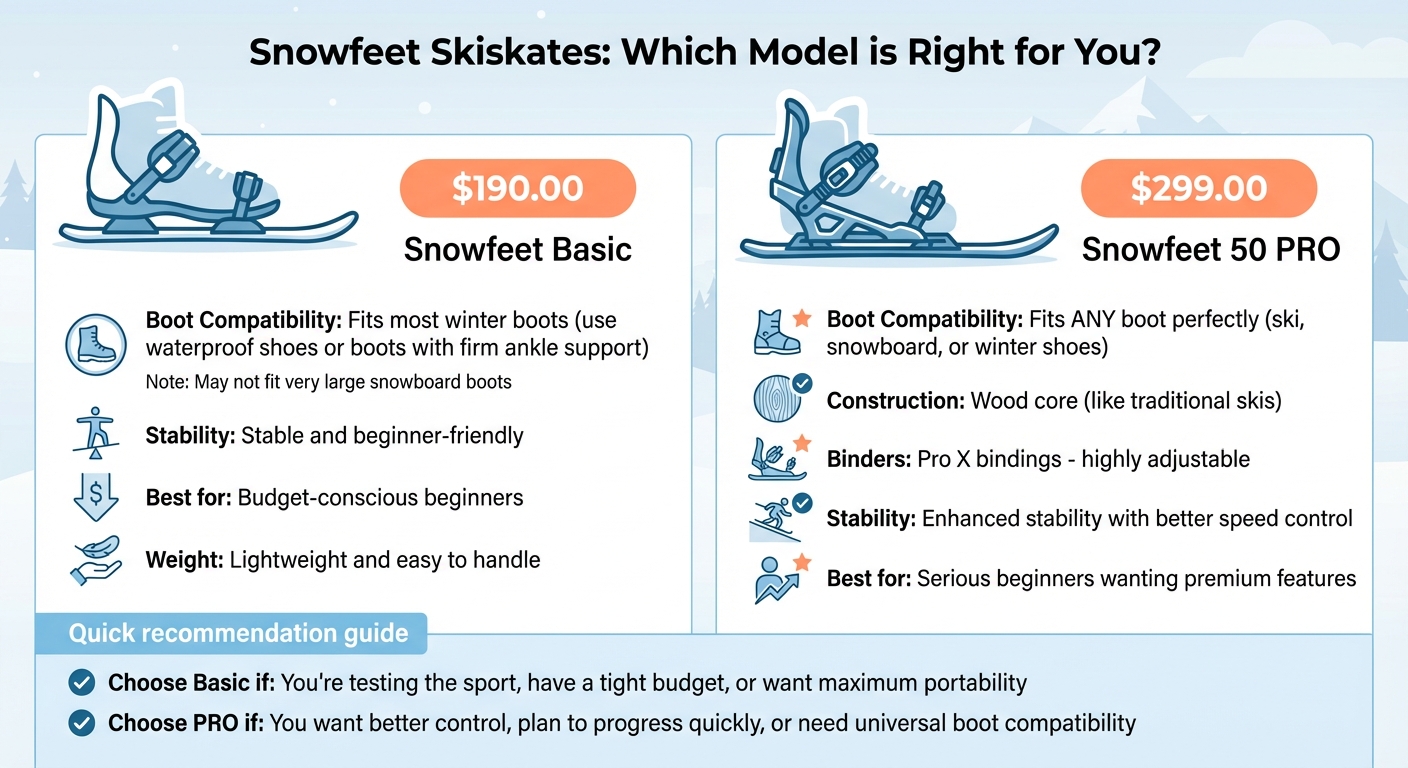
Snowfeet Basic vs PRO Skiskates Comparison for Beginners
Getting equipped with the right gear is key for anyone starting out. Picking skiskates that match your skill level and using proper protective gear will help you stay safe while building your skills and confidence.
Recommended Skiskates Models
Choosing the right skiskates can make all the difference. For beginners who might feel a bit unsure, two models stand out: Snowfeet Basic and Snowfeet 50 PRO.
- Snowfeet Basic: At $190.00, this model is an affordable option that works with most winter boots. It’s lightweight and easy to handle, making it a great choice for those just starting.
- Snowfeet 50 PRO: Priced at $299.00, this model offers features like a wood core construction, similar to traditional skis, giving better speed control and stability on groomed slopes. The Pro X bindings are highly adjustable, ensuring a snug fit with ski boots, snowboard boots, or even waterproof winter shoes.
"Short skis are actually easier to learn than long skis. Skiboards / Snowblades are very responsive, lightweight on your feet, and easy to ride as opposed to cumbersome long skis." - Snowfeet FAQ
Here’s a quick comparison of the two models:
| Model | Price | Boot Compatibility | Stability & Features |
|---|---|---|---|
| Snowfeet Basic | $190.00 | Fits most winter boots (use waterproof shoes or boots with firm ankle support); may not fit very large snowboard boots | Stable and beginner-friendly |
| Snowfeet 50 PRO | $299.00 | Fits any boot perfectly (ski, snowboard, or winter shoes) | Enhanced stability with Pro X bindings |
If you have smaller feet, snowboard boots can provide a secure and comfortable fit in the bindings.
Protective Gear for Safety and Confidence
Safety gear is just as important as the skiskates themselves. It not only protects you but also helps you feel more confident as you learn. Start with a helmet - look for one that’s skating-rated or multi-sport certified. Adjust the straps so they form a "V" shape under your ears for a proper fit. A well-fitted helmet can reduce the risk of head injuries by up to 45%.
Wrist guards are a must-have for preventing wrist injuries during falls. Add knee and elbow pads with shock-absorbing foam to shield against scrapes and impacts. If you're worried about falling sideways, consider padded shorts or hip pads - these help distribute impact and minimize bruising.
"The confidence boost alone is worth it. You're more willing to try a new edge or a crossover when you're not catastrophizing about cracking your skull." - Erika Venza
Don’t forget light gloves to keep your hands warm and protect against scrapes. Dress in layers: a moisture-wicking base layer, an insulating fleece, and a wind-resistant shell will keep you warm and comfortable without restricting movement. With this setup, you’ll be ready to focus on learning and enjoying your time on skiskates.
sbb-itb-32287b2
Getting Started: Step-by-Step Techniques
Learning Balance and Stance
To get started, focus on adopting a solid athletic stance. Bend your ankles and knees, push your hips slightly forward, and let gravity work in your favor. Keep your upper body upright, shoulders back, and eyes straight ahead - resist the urge to look down.
"Slumping or looking down results in a loss of balance because it causes your body weight to pitch forward over the curved toes of the blades." - Laura Stamm, Author and Power Skating Instructor
Begin with your skiskates positioned shoulder-width apart, ensuring full contact with the snow to avoid tipping forward. For added stability, widen your stance a little and deepen your knee bend. Practice this position on flat terrain until it feels second nature. Remember, using the inside edges of your skiskates can help with traction as you bend your knees.
Once this stance feels comfortable, you're ready to move on to basic movement techniques.
Basic Movement: Waddle Skating and Weight Shifts
Now that you've got your balance, it's time to work on movement. Start by forming a V-shape with your skiskates, tips pointing outward. Place your hands on your hips and lean forward slightly from your upper body to encourage a natural glide.
"The key to skate skiing fast is preserving your forward momentum and letting gravity do all of the work for you... To do this, you've got to bend at the ankles and knees to get your hips forward." - Charlotte Ogden, Retired Nordic Ski Racer
Begin shuffling forward on flat ground, gradually shifting your weight from one foot to the other. Engage your core to keep your upper body stable - imagine a box connecting your shoulders and hips that always stays aligned. As you build confidence, try lifting one foot off the ground during a glide. Hold your poles horizontally across your hips; minimal movement here signals a stable core.
These initial movements are essential for building control and confidence as you progress with skiskating.
How to Control Speed and Stop
Snowplow Technique for Speed Control
The snowplow (also known as the "pizza" or wedge) is a reliable way to manage your speed on gentle slopes. To do it, angle the tips of your skiskates inward and push your heels outward to form a V-shape. Keep the tips close together - but make sure they don’t cross - and adjust the width of your heels as needed.
"A snowplough is a very stable position that also acts as a break. By increasing the angle of your skis you can easily slow down and stop." - Aaron Tipping, Co-Founder of Maison Sport
This technique works by increasing friction. The wider you press your heels and the more you engage the inside edges of your skiskates, the more resistance you create against the snow, which slows you down. To stop completely, gradually widen the V until you come to a halt. If you want to pick up speed again, bring your skiskates back to a parallel position to reduce friction.
Start by practicing this move on flat terrain to develop muscle memory. Once you’re comfortable, try it on a gentle slope, focusing on maintaining a straight line before attempting any turns. Keep your knees bent, your weight centered, and your gaze forward to stay balanced.
Getting the hang of the snowplow is an important step toward making smooth turns and controlling your direction.
Making Gentle Turns and Direction Changes
Turning is another key aspect of speed control. By shifting your path diagonally across the slope instead of heading straight downhill, you can naturally reduce your momentum. To turn while in the snowplow position, shift your weight to the inside edge of the skiskate opposite your desired direction. For example, to turn right, apply more weight to your left skiskate; to turn left, shift your weight to your right skiskate.
Subtle movements make all the difference. Gently roll your ankles and knees toward the direction you want to go; the more you tilt, the sharper the turn will be. Keep your shoulders and hips facing forward - this helps you stay balanced and in control. Begin with small, easy turns on shallow slopes before working your way up to steeper terrain.
One important tip: don’t rely on your poles to stop. They aren’t designed to bear your weight and could lead to injury if used improperly. Focus instead on mastering these techniques for safe and effective speed control.
Overcoming Fear and Building Confidence
Once you've got a handle on controlling your speed and making smooth turns, it’s time to tackle one of the biggest hurdles: fear. Fear can be a real roadblock on the slopes, but the good news is that confidence grows as your technique improves and you learn to work with the natural forces around you.
"Fear can hold you back from skiing confidently and enjoying the slopes. And while it's natural to think caution is the solution, over-cautious skiing often leads to hesitation - taking away the fun and flow." - Filippo Chiani, Ski Instructor
The key to overcoming fear lies in mastering speed and balance. When you stop fighting gravity and start working with it, you’ll feel more in control. This shift in mindset allows you to confidently steer your skiskates, giving you the ability to dictate your path and tackle more challenging terrain step by step.
Gradual Progression: From Flat Terrain to Green Runs
Start on flat ground to get comfortable with your skiskates. Practice gliding forward with your skiskates parallel and try small hops to understand how they respond to your movements. Once you can glide confidently using the snowplow technique, it’s time to move onto a gentle, wide, and uncrowded green run.
Begin with J-turns. Point your skiskates across the slope, steer slightly downhill to pick up a bit of speed, and then turn back uphill to stop. Once you’ve nailed that, transition to smooth, rounded C-turns. These turns help you refine how you shift your weight and control your direction. Unlike jerky turns that rely on sudden braking, these fluid movements give you better control and a more enjoyable experience.
Once you’re comfortable steering on green runs, focus on drills that encourage relaxation and balance. These exercises will help you rely less on poles and more on your body’s natural movements.
Relaxation Drills and Starting Without Poles
Ditching the poles during practice can do wonders for your balance. Without them, you’ll naturally pay more attention to your feet, ankles, and how you shift your weight from edge to edge. A great drill to try is the hands-on-knees exercise. Place your hands on your knees while making gentle turns. This helps you fine-tune your lateral movements and edge control.
Another effective exercise is toe-lifting. While turning, gently lift your toes inside your boots. This activates your shin muscles and helps keep your weight forward, ensuring proper pressure on the fronts of your boots. If you start feeling tired, take a break or reduce the intensity. Fatigue can impact your technique and chip away at your confidence, so it’s important to listen to your body and pace yourself.
Key Takeaways for Nervous Beginners
Starting skiskating might feel overwhelming, but with the right approach and equipment, it becomes much more manageable. Skiskates, with their compact and easy-to-handle design, are great for building confidence. Pairing them with quality gear can make learning smoother and more enjoyable.
The basics are key: keep an athletic stance by bending at your ankles and knees, ensuring your hips stay forward. Let gravity do some of the work. Use a V-position for balance, engage your core and arms to distribute power, and keep your torso steady and facing forward. These small adjustments help you maintain control, conserve energy, and avoid fatigue.
Take things step by step. Begin on gentle terrain, focus on mastering basic drills, and only move to green runs when you feel ready. It’s crucial to listen to your body and progress at a pace that feels comfortable. Rushing can lead to frustration, while steady practice builds confidence over time.
Most importantly, focus on having fun rather than aiming for perfection. As your technique improves, your confidence will naturally grow, and skiskating will shift from being a challenge to an enjoyable experience. Embracing this mindset is the final piece of the puzzle for starting strong.
FAQs
Where can I skiskate for the first time?
If you're new to skiskating, there are some fantastic places in the U.S. to get started. One standout is Vermont's Lake Morey, home to a stunning 4.3-mile skating trail - the longest in the country. Surrounded by beautiful scenery, it’s an ideal spot for beginners to enjoy the sport while soaking in nature.
For those who prefer a more controlled environment, ski resorts like Park City in Utah are excellent choices. These resorts often include safe, designated areas for skiskating, and some even offer beginner ski lessons to help you get comfortable on the ice.
Both options provide a welcoming atmosphere, making it easier for first-timers to build confidence and have fun.
Do I need poles to start skiskating?
When you're just starting out with skiskating, poles aren't a must-have. In fact, it can be really helpful to set them aside at first. This allows you to focus on the essentials: balance, control, and overall safety. Practicing without poles encourages better lower body coordination, which is key to building a strong foundation.
As you grow more confident, poles can be introduced to provide extra stability and support. However, they remain optional, especially for those who feel a bit nervous and prefer to concentrate on nailing the basic movements before adding more complexity.
What boots fit skiskates best?
The best boots for skiskates should prioritize comfort, support, and ease of use, especially for beginners. Opt for ski boots with a softer flex rating (around 60-80) and a more spacious fit to prevent discomfort and make the learning process smoother. Beginner-friendly boots, particularly those designed with soft, warm materials, are a great choice. They’re not only easier to wear and remove but also help boost confidence as you get started.

Leave a comment
This site is protected by hCaptcha and the hCaptcha Privacy Policy and Terms of Service apply.