


Shorter skis make skiing easier for everyone - from beginners to experts. They’re lighter, more responsive, and require less effort to turn, which reduces fatigue and strain on your body. Whether you’re navigating tight tree runs, moguls, or crowded slopes, shorter skis offer better control and quicker edge-to-edge transitions. Modern designs even combine agility with improved stability, making them a popular choice for skiers of all ages and skill levels.
Key Takeaways:
- Easier Turns: Shorter skis have a smaller turning radius, allowing for sharper, more precise turns.
- Less Effort: Reduced weight means less strain on your legs, knees, and hips.
- Better for Tight Spaces: Ideal for tree runs, moguls, and crowded areas.
- Great for Beginners and Older Skiers: More forgiving and less physically demanding.
- Advanced Features: New tech improves stability and performance, even on challenging terrain.
If you’re looking for control, comfort, and less fatigue on the slopes, shorter skis could be the perfect fit.
Short Skis vs. Long Skis
sbb-itb-32287b2
The Problems with Long Skis
Long skis can create some serious challenges on the mountain, especially when quick reactions or tight turns are required. The extra length adds more mass to maneuver, which means your legs have to work harder. Steve J. Strandberg, a ski instructor, sums it up well:
"The increased length and mass require more effort and time to transition from one edge to the other. This makes them feel sluggish and cumbersome in tight spots like moguls or tree runs".
With a longer effective edge - the part of the ski that stays in contact with the snow - you’ll need more force and higher speeds to carve into turns. This also slows down edge-to-edge transitions, which can be a real problem in crowded areas or when weaving through trees. Take the VICE 105 as an example: moving from a 163cm to a 187cm version adds 411g of weight per ski (a 26% jump) and increases the turning radius from 18m to 21m. That’s more weight to manage and more room needed for every turn.
Long skis also wear out your legs faster, and as fatigue sets in, your technique suffers. The Ski Monster explains:
"Longer skis reward strong technique and forward pressure. But if balance or stamina fade, they can be harder to manage than a slightly shorter ski".
When exhaustion kicks in, skiers often fall into the "backseat" position, where their weight shifts backward. On long skis, this causes the tips to lose contact with the snow, leading to chatter and a loss of control.
Another issue is how long skis handle mistakes. They’re much less forgiving, making recovery from imbalances more physically demanding. As Strandberg puts it:
"If you get off-balance on a long ski, it takes more strength and skill to recover. They are less forgiving of poor technique, often punishing mistakes with a fall".
For skiers who regularly tackle moguls, tree runs, or crowded slopes, these drawbacks can make skiing feel more like a workout than a fun day on the mountain. The slower response time and increased effort required can turn an otherwise great experience into a tiring struggle. That’s why shorter, more agile skis are often the better choice for navigating tricky terrain.
How Shorter Skis Improve Control
Shorter skis offer better control by reducing both their mass and the length of their edge engagement. This design aligns with modern advancements to enhance performance and recovery, especially on challenging terrain. With less weight to maneuver, reduced force needed for edge engagement, and shorter energy transfer from boots to ski tips, skiers experience greater precision and responsiveness. Let’s dive into the design elements that make shorter skis so agile.
Smaller Turning Radius for Precision
The turning radius of a ski comes from its sidecut - the hourglass shape running from tip to tail. Shorter skis often have a turning radius between 10 and 14 meters, while longer skis exceed 20 meters. This tighter radius allows shorter skis to carve smaller, more precise turns without requiring extra speed or effort. As ski instructor Steve J. Strandberg explains:
"The turning radius is not just a technical specification; it is the blueprint for how your ski will behave on the snow".
Shorter skis also have a reduced effective edge, requiring less force to initiate a turn. Since energy travels a shorter distance from your boots to the ski tips, the response to your movements is quicker. This quick reaction time is invaluable when skiing through moguls, weaving around trees, or making sharp direction changes on busy slopes. Combined with their lighter weight, shorter skis deliver unmatched agility.
Lightweight Design for Faster Movement
Weight plays a bigger role in skiing than many realize. Shorter skis have reduced rotational mass, making it easier to transition from edge to edge. Their lighter build also helps conserve energy, so your legs don’t tire as quickly. This means less strain and fewer moments of feeling like your legs are about to give out after a long day on the slopes.
Additionally, the reduced mass eases the pressure on your knees and hips, which is particularly beneficial for skiers worried about joint health. Whether you’re skiing for hours or tackling steep runs, the lighter design of shorter skis can make a noticeable difference in comfort and performance.
Better Balance for All Skill Levels
Shorter skis are naturally more forgiving when balance falters. If you find yourself leaning too far back or slightly off-center during a turn, their reduced length makes it easier to regain control. Strandberg highlights this advantage:
"If you find yourself in the back seat or slightly off-balance, a shorter ski is easier to bring back under control. This forgiveness is a huge confidence booster for those learning or skiing cautiously".
For beginners, this means a smoother learning experience with fewer setbacks. For advanced skiers navigating technical terrain, shorter skis provide the control needed in tight spaces where longer skis might feel unwieldy. At slower speeds, shorter skis excel in stability and handling, while longer skis only shine at high speeds. This makes shorter skis a great choice for skiers who prefer quick, sharp turns over long, sweeping arcs.
Skiskates: A Short Ski Solution
Skiskates take the perks of shorter skis and refine them into a compact, high-performance tool for skiers tackling challenging terrain. Their ultra-compact design reduces rotational inertia and shortens the moment arm, making it easier to pivot, turn, and navigate tight spaces with precision.
Key Features of Skiskates
What makes Skiskates special? Their design combines a deep sidecut geometry and advanced construction techniques to create a distinct hourglass shape. This results in a turning radius of 11 to 14 meters (about 36 to 46 feet), achieved through sharp sidecut angles that enhance edge grip in confined areas. Thanks to their parabolic profile, the edges maintain consistent contact with the snow, a feature rooted in shaped ski technology that has revolutionized recreational skiing since the late 1990s.
Each pair includes:
- Steel edges: Provide dependable grip on icy or hard-packed snow.
- Cap construction with a wood core: Lightweight yet durable, using sustainable materials.
- Tool-free adjustable bindings: Compatible with both ski and snowboard boots, allowing quick and easy adjustments.
Their compact size also makes them incredibly portable - you can stash them in a backpack for hassle-free transport during hikes or travel.
Popular Skiskates Models and Their Benefits
Skiskates’ innovative features shine in their standout models, tailored to meet a variety of skiing preferences.
- Skiskates Ski Boots Model ($490.00): Designed for use with traditional ski boots, this model offers unmatched control and agility. Handmade in Europe using premium, sustainable materials, it’s perfect for downhill skiing or snow park adventures.
- Snowfeet 50 PRO ($299.00): A great option for beginners or anyone looking to expand their winter sports gear. With its durable build and accessible price, it’s an excellent choice for skiers transitioning from standard equipment. Like the Ski Boots Model, it features tool-free bindings and is portable enough for groomed slopes, hiking trails, or even sledding hills.
These models blend practicality with performance, making them versatile tools for skiers of all levels.
Where Short Skis Work Best
Short skis have a knack for thriving in settings where agility and quick reactions are key. Their compact build makes them a go-to choice for skiers tackling terrain that demands precision and adaptability.
They truly come into their own on tight tree runs, gladed trails, and mogul fields, where their ability to pivot quickly and make sharp turns is unmatched. This versatility also helps them handle varying snow conditions with ease.
On busy slopes, shorter skis provide outstanding edge-to-edge responsiveness, making it easier to weave through moguls, trees, or crowded areas. Ski instructor Steve J. Strandberg puts it perfectly:
"With less material to pivot, they are incredibly quick edge-to-edge. This makes them a dream for tight spaces like moguls, tree runs, and crowded slopes".
This quickness translates to effortless, short-radius turns, which can be a lifesaver when navigating around other skiers.
In freestyle zones and snow parks, their lighter weight becomes a major advantage. Short skis make spins, jumps, and controlled landings feel more manageable, giving skiers an edge when performing aerial tricks. Strandberg also points out:
"Freestyle skiers and those who love to play on natural features often prefer shorter skis for their ease of spinning, jumping, and landing switch".
Another bonus? They’re less physically demanding. The lighter design reduces fatigue, helping you maintain control even as your energy wanes. This means you can stay sharper and more composed, even if your technique falters during a turn.
Getting the Most from Short Skis
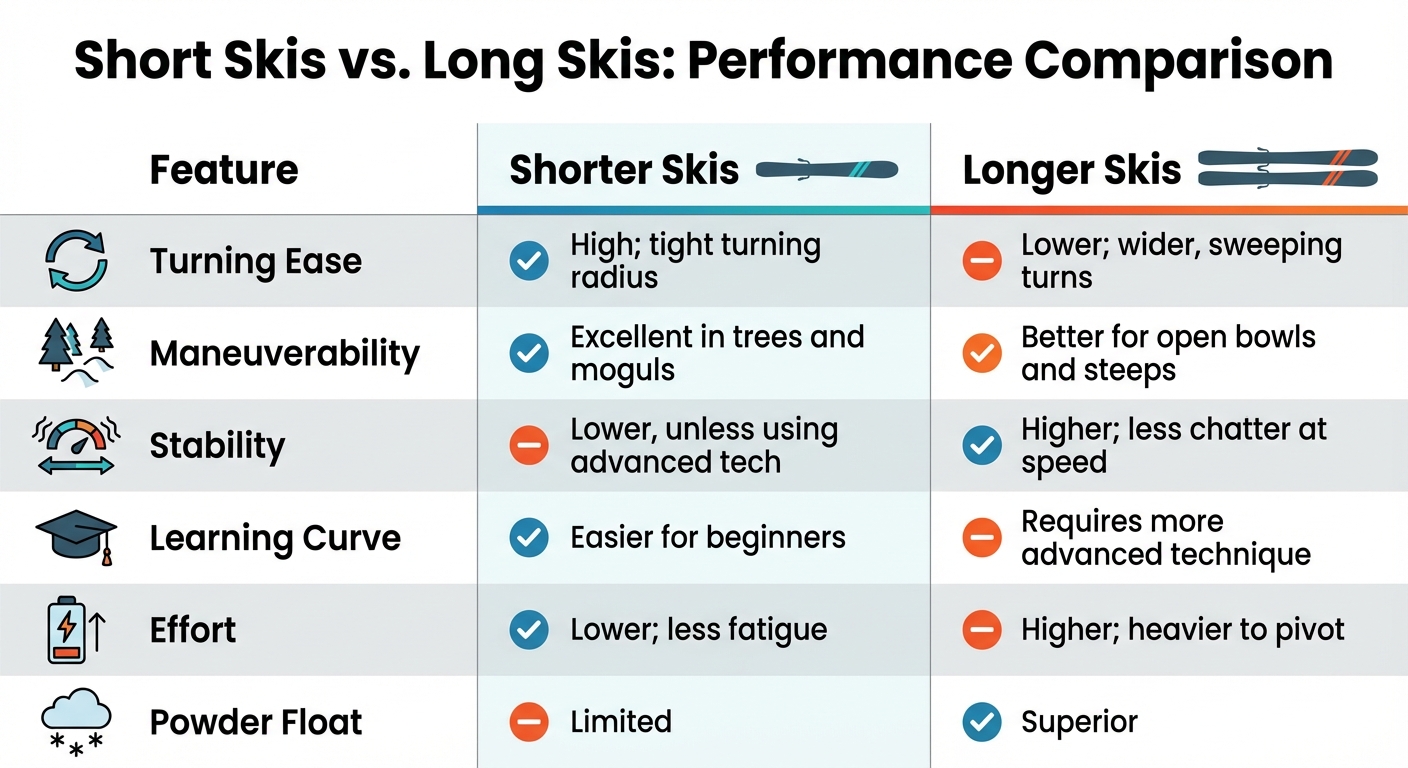
Short Skis vs Long Skis: Performance Comparison Chart
Choosing the Right Short Skis for Your Skill Level
When picking short skis, aim for a length somewhere between your chin and the top of your head. If you're tackling tree runs or moguls, go for slightly shorter skis for better control. For carving on hardpack, a longer length closer to your height provides more stability.
For beginners, the Snowfeet Basic ($190.00) is a great starting point. Its compact design makes it easier to learn and build confidence. If you're an experienced skier looking for more demanding terrain, the Snowfeet Skiblades 65 CM ($550.00) offers a blend of agility and performance without the bulk of traditional skis.
Think about where you'll be skiing most often. Shorter skis excel in tight spaces like trees or moguls, thanks to their quick edge-to-edge control. If you're more into carving on groomed trails, a longer ski will give you better edge hold and stability. For versatility across different terrains, choose a length just under or at your head height to balance agility and control.
Once you've selected the right skis, it’s time to focus on refining your technique to make the most of their agility.
Techniques for Better Turning and Balance
The shorter length of these skis makes turning easier, but fine-tuning your technique can take your skiing to the next level. Keep a balanced stance and engage your edges deliberately - this not only improves control but also reduces strain on your knees and hips, which is especially important for skiers over 45.
Understanding turn radius is another key factor. As Lucy Higgins, Editor and Writer, explains:
"Shorter skis mean quicker turns and easier maneuverability".
For short, sharp carving turns, look for skis with a 10–15m turn radius. If you prefer long, sweeping turns or faster, straight-line skiing, a radius of 20m or more will suit you better.
Short Skis vs. Long Skis: Pros and Cons
| Feature | Shorter Skis | Longer Skis |
|---|---|---|
| Turning Ease | High; tight turning radius | Lower; wider, sweeping turns |
| Maneuverability | Excellent in trees and moguls | Better for open bowls and steeps |
| Stability | Lower, unless using advanced tech | Higher; less chatter at speed |
| Learning Curve | Easier for beginners | Requires more advanced technique |
| Effort | Lower; less fatigue | Higher; heavier to pivot |
| Powder Float | Limited | Superior |
Short skis are all about agility and reduced effort, but they do trade off some stability and powder performance. However, advancements like VibeStop™ technology can make short skis significantly more stable in varying conditions, allowing skilled skiers to enjoy the benefits of shorter lengths without giving up control.
Conclusion
Shorter skis come with clear perks, offering better control and comfort on the slopes. Thanks to their lighter weight and tighter turning radius, they make sharp turns easier and reduce strain on your joints. This means you can enjoy longer days skiing without feeling completely worn out.
Their quick responsiveness adds to the fun. Whether you're weaving through trees, carving groomed trails, or just starting out, shorter skis react faster to your movements. They require less energy, making them perfect for beginners gaining confidence, older skiers looking to ease joint stress, or anyone who prioritizes agility over speed.
Skiskates are a compact option that combines these advantages. With prices ranging between $190.00 and $550.00, there's something for every skill level and terrain preference.
Choosing the right gear for your style is key. If you stick to tight trails, moguls, or terrain parks, shorter skis provide the control and precision you need. Plus, modern features like vibration-dampening technology ensure you don't have to trade stability for a shorter ski length.
FAQs
How short should my skis be?
The right ski length varies based on factors like your skill level, height, weight, and skiing style. Shorter skis, which usually measure between your chin and nose, are easier to handle and steer. This makes them ideal for beginners or casual skiers who value control and balance. If you're unsure about the best fit, refer to a ski sizing chart or ask a professional for advice.
Will shorter skis feel unstable at speed?
Shorter skis are easier to maneuver and respond quickly to movements, making them great for precise turns and enhanced control. This makes them a solid choice for skiers who prioritize agility. However, they might feel less stable when traveling at higher speeds. For those who value stability over agility, longer skis could be a better fit, as shorter skis are built more for control than for speed.
Are skiskates good for beginners?
Skiskates are an excellent choice for beginners because they help improve control, balance, and maneuverability. Their compact design allows new skiers to feel more confident while navigating the slopes, making the learning process more enjoyable and less intimidating.

Leave a comment
This site is protected by hCaptcha and the hCaptcha Privacy Policy and Terms of Service apply.