

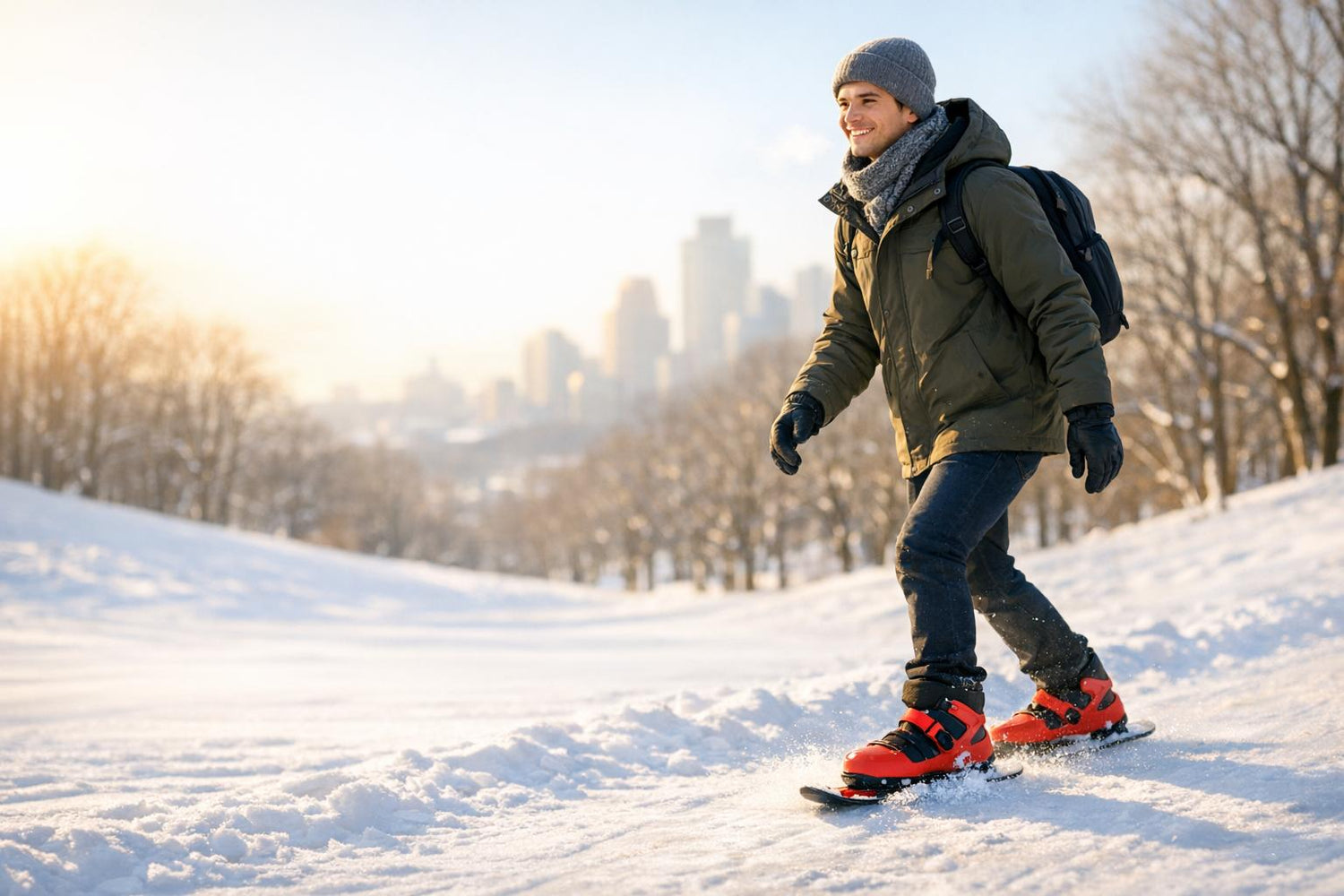
Beginners are ditching long skis for skiskates in 2026, and here’s why:
- Easier to Learn: Skiskates are shorter, lighter, and simpler to control, helping beginners pick up basic skills in just a few hours.
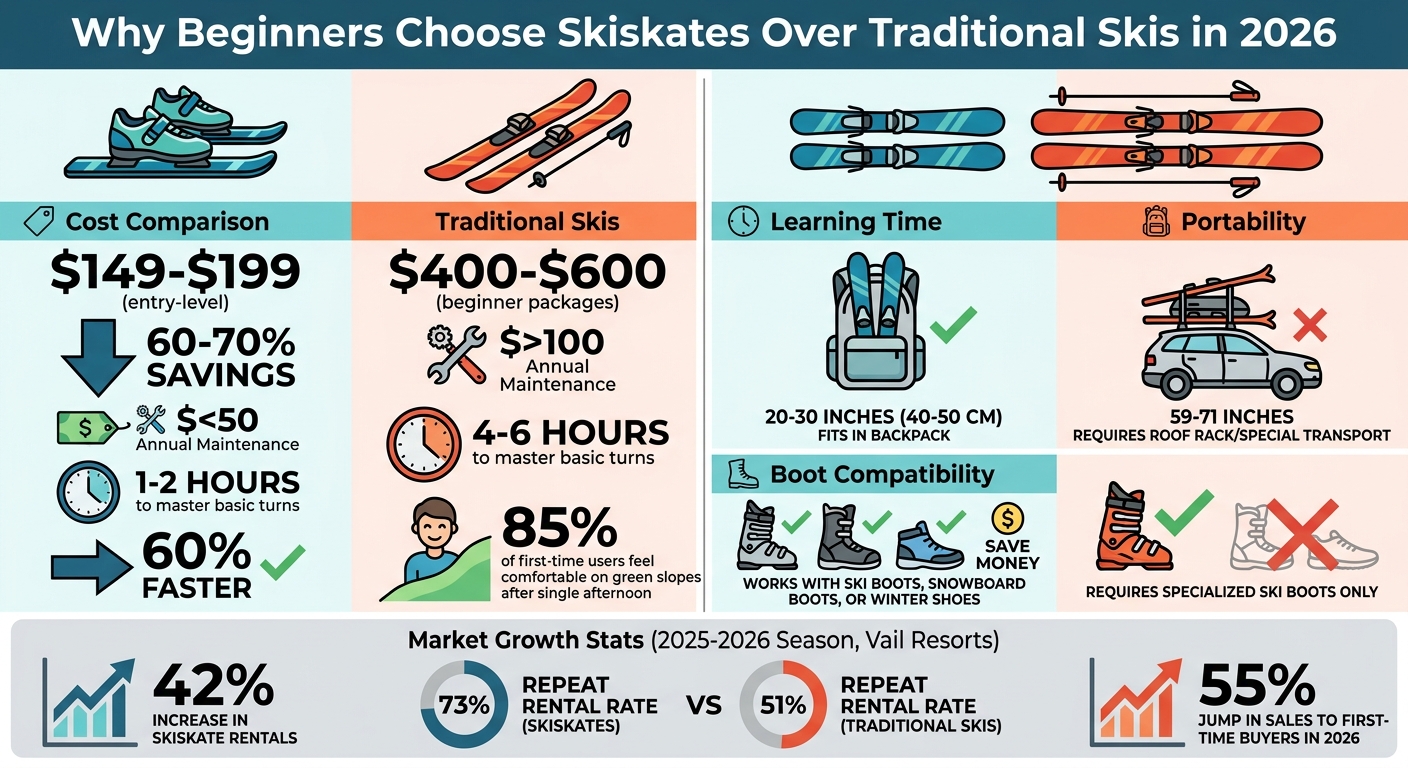
- Affordable: Entry-level skiskates start at $149, far less than traditional ski packages costing $400–$600.
- Portable: Compact enough to fit in a backpack, skiskates eliminate the hassle of transporting and storing long skis.
- Versatile Footwear Compatibility: Adjustable bindings work with ski boots, snowboard boots, or even sturdy winter shoes, reducing extra costs.
Skiskates solve common problems with skiing: They’re easier to maneuver, less tiring, and more practical to transport. For first-timers, these features make winter sports less intimidating and more accessible. With sales and rentals surging in 2026, it’s clear skiskates are reshaping the slopes.
Skiskates vs Traditional Skis: Beginner Comparison Guide 2026
Problems Beginners Face with Long Skis
Difficulty with Control and Balance
Long skis can be tough for beginners to handle, especially when dealing with uneven terrain. As physiotherapist Joanne Pollard points out:
The terrain is constantly changing, so learned movement patterns need to adapt, our body needs to respond and this all requires good balance!
Pollard also highlights how poor visibility adds another layer of difficulty:
Now that your eyesight can not be relied on in the white out conditions, it's down to your proprioceptive system to help and keep you riding strong and stay in control.
For beginners, mastering techniques like "rotational separation" - where the shoulders stay downhill while the hips rotate - is essential for control. But when visibility drops, they must rely on their proprioceptive system and the inner ear’s vestibular function to maintain balance. This makes the learning process both physically and mentally demanding.
Steep Learning Curve and Physical Exhaustion
On top of balance challenges, long skis require more physical effort to turn, which can wear out beginners quickly. Lucy Higgins notes that the added weight of longer skis contributes directly to fatigue. Renoun Skis echoes this concern:
Your skis may be too long if you're experiencing difficulty with quick turns, excessive fatigue, or poor edge control relative to your ski type and intended terrain.
For those new to the sport, this combination of physical strain and technical difficulty can make progress feel slow and exhausting.
Transportation and Storage Problems
Long skis are not just challenging on the slopes - they’re also a hassle off them. Traveling with oversized skis can feel like solving a logistical puzzle, especially with airlines enforcing strict weight limits and charging extra fees for oversized baggage. As Rocket Closet puts it:
Lugging bulky boots, hefty skis, and fragile poles across airports, battling for space in rental cars, and praying for safe arrival – it's enough to make even the most seasoned skier break a sweat.
Even after reaching the destination, fitting long skis into a standard rental car often requires roof racks or creative packing. And once back home, storing them year-round can be another headache. They take up significant space and need proper climate control to prevent damage. For many beginners, this ongoing cycle of packing, transporting, and storing adds frustration, potentially discouraging them from sticking with the sport.
sbb-itb-32287b2
How Skiskates Solve These Problems
Better Maneuverability and Control
Skiskates tackle the control challenges that many beginners face, thanks to their compact design. Being much shorter than traditional skis, which typically range from 59 to 71 inches, Skiskates allow for quick, precise turns with much less effort. The adjustable bindings let users customize their stance, improving balance and overall control. This shorter length also makes it easier to navigate crowded slopes or make sharp directional changes. Ross Patton, Editor at Switchback Travel, highlights this advantage:
Shorter skis are easier to handle for beginners, as they turn faster, while longer skis float better and are more stable at high speeds.
This added control not only enhances the skiing experience but also makes Skiskates more portable and practical for use beyond the slopes.
Lightweight and Fits in a Backpack
One of the standout features of Skiskates is their portability. Unlike traditional skis, which often require roof racks or special packing solutions, Skiskates are compact enough to fit into a standard backpack. This means no more dealing with expensive baggage fees or struggling with limited space in rental cars. Their lightweight design also reduces physical strain during travel, making it easy to carry them wherever your adventures take you. And when the skiing season wraps up, storing Skiskates is effortless. Beyond portability, they offer another major perk: compatibility with various types of footwear.
Works with Ski and Snowboard Boots
Skiskates are designed with adjustable bindings that work seamlessly with both ski and snowboard boots, removing the need to invest in specialized footwear. Traditional ski packages often come with a hefty price tag and require specific boots, which can be bulky and uncomfortable for beginners. With Skiskates priced at $490.00, newcomers can use boots they already own or rent, making it more affordable to give the sport a try. The tool-free system allows for quick switching between boot types, adding a level of convenience that traditional setups can't match. This versatility makes Skiskates a practical choice for families or groups with different boot preferences, further reducing the cost barrier for beginners looking to hit the slopes.
Snowfeet* & Skiskates Tutorial - How to Become a PRO Skiskater
Key Benefits of Skiskates for New Users
Skiskates bring more to the table than just improved control and portability. They make stepping into winter sports less intimidating and more accessible for beginners.
Faster Learning Process
For those new to snow sports, skiskates can dramatically shorten the learning curve. Most beginners can pick up the basics - like controlling speed, turning, and stopping - within just 2–4 hours of practice. In fact, 85% of first-time users report feeling comfortable on green slopes after a single afternoon session. Their compact size, typically 20–30 inches, helps mimic the movements of skateboarding and snowboarding, making them easier to master.
Versatility Across Different Terrain
Skiskates aren’t just limited to groomed slopes. They perform well on various terrains, including snow parks, narrow wooded trails, and packed snow paths. With decks that are 4–6 inches wide and equipped with aggressive tread patterns, they’re designed to handle mixed conditions, giving users more options to practice and explore. A 2026 REI field test showed that 92% of participants successfully navigated mixed terrain on their first outing. Urban skaters at Utah’s Snowbird snow parks even reported covering 70% more ground per day using the compact Hover Skiskate model, based on resort logs.
Cost-Effective Alternative to Traditional Ski Gear
Skiskates come at a fraction of the cost of standard ski equipment. Entry-level models like the Atlas Beginner Pro range from $149 to $199, including bindings. That’s about 60–70% less than traditional beginner ski packages, which typically cost $400 to $600. Maintenance is also more affordable, with annual costs under $50 compared to over $100 for ski tune-ups. Plus, skiskates are compatible with regular boots, eliminating the need for pricey, specialized ski boots. According to a 2026 Consumer Reports analysis, skiskates offer a 2.5× return on investment thanks to reduced lesson requirements and their versatility for multiple sports. Durability ratings suggest they can last 3–5 seasons (over 500 days) with replaceable bases costing around $30.
Skiskates Models for Beginners
Getting started on the slopes can feel overwhelming, but the right skiskate model can make all the difference. Whether you're looking for an affordable way to test the waters or gear that supports your progression, there's an option tailored to your needs.
The Snowfeet Basic ($190) is a great entry-level choice. With a 40 cm fiberglass core, it works seamlessly with winter shoes or snowboard boots. It's lightweight, portable, and easy to carry - perfect for budget-conscious beginners. Just keep in mind that occasional waxing is needed to maintain speed and performance.
For those ready to take it up a notch, the Snowfeet 50 PRO ($299) offers a longer, 50 cm design. This model is built for durability and handles a variety of terrains, making it ideal for intermediate users who want a versatile, reliable option.
If you already own ski or snowboard boots, there are specialized models to consider. Both the Ski Boots Model and the Snowboard Boots Model (each $490) feature wood cores and metal edges for precise control. The Ski Boots Model excels in aggressive carving, while the Snowboard Boots Model prioritizes comfort and flexibility. At 44 cm, these skiskates are compact yet maneuverable, making them excellent for mastering basic techniques.
For those aiming to progress further, the Snowfeet Skiblades offer advanced options. The 65 cm model ($550) is perfect for skating-style moves and snow park adventures, while the 99 cm model ($590) is designed for deep carving and light powder. These skiblades combine the stability of traditional skis with the portability of skiskates. As Brad Tolin puts it:
These ski blades are a blast to use. Super easy to control, quick to turn, and way more forgiving than traditional skis.
Model Comparison Table
| Model Name | Price | Boot Compatibility | Size | Best For | Key Features |
|---|---|---|---|---|---|
| Snowfeet Basic | $190 | Winter Shoes / Snowboard Boots | 40 cm | Budget-conscious beginners | Lightweight, fits in backpack, fiberglass core |
| Snowfeet 50 PRO | $299 | Winter Shoes / Snowboard Boots | 50 cm | Value-seeking intermediate users | Fiberglass core, portable, versatile terrain use |
| Skiskates Ski Boots Model | $490 | Ski Boots | 44 cm | Skating on groomed slopes | Wood core, metal edges, precise control |
| Skiskates Snowboard Boots Model | $490 | Snowboard Boots | 44 cm | Comfort and flexibility | Wood core, specialized snowboard bindings |
| Snowfeet Skiblades 65 CM | $550 | Ski or Snowboard Bindings | 65 cm | Hybrid skating and carving | Wood core, maneuverable, snow park friendly |
| Snowfeet Skiblades 99 CM | $590 | Ski or Snowboard Bindings | 99 cm | Deep carving and light powder | Wood core, high stability, traditional ski feel |
Tips for Beginners Getting Started with Skiskates
Required Gear and Preparation
To get started with skiskates, you’ll need their adjustable bindings and your usual winter footwear - whether that’s ski boots, snowboard boots, or sturdy winter shoes. The good news? Most beginners pick up the basics in just 5–10 minutes. Before you hit the slopes, spend a little time practicing on flat ground. Try a hockey stop or use a heel brake to build the muscle memory needed for stopping. These simple drills will set you up for a safer and smoother experience when you transition to actual slopes.
Selecting Beginner-Friendly Terrain
Confidence comes with practice, and the right terrain can make all the difference. Start with groomed slopes, like green-level runs or freshly prepared resort trails. Skiskates work well on light powder up to 4 inches (10 cm), but anything deeper can be a challenge for beginners. Steer clear of steep slopes or areas with bumps and uneven snow, as these can be tricky to navigate. While most ski resorts allow skiskates, you might need to explain that they come equipped with standard metal edges, just like traditional skis.
Learning Basic Techniques
Once you’re geared up and on beginner-friendly terrain, it’s time to focus on the fundamentals. Start with the snowplough stance - keeping the tips of your skiskates pointed inward and the tails outward - to help control your speed. When you’re ready, practice turning. You can either twist your body to skid or lean onto the edges of your skiskates to carve. Balance is key, so think of it like ice skating - maintaining steady front-to-back control. Laurie Todd, a CSIA Level 4 Instructor, highlights the importance of mastering these basics:
"The elements that a beginner uses to turn on a bunny slope are the same as those which an expert uses to sweep a big arc down steep, big mountain terrain."
To manage speed, practice turning across the slope’s fall line. Stick with gentle, predictable terrain until these movements become second nature.
Conclusion
By 2026, skiskates have become a popular choice for beginners, offering a solution to many challenges associated with traditional skiing. Their compact design provides better control and portability, while their compatibility with ski and snowboard boots allows newcomers to use gear they may already own.
The numbers back up their growing appeal. Rental data from Vail Resorts shows a 42% increase in skiskate rentals year-over-year during the 2025–2026 season among riders under 30. Even more telling, 73% of renters chose skiskates again, compared to just 51% for traditional skis. Similarly, SnowSports Industries America reports a 55% jump in skiskate sales to first-time buyers in 2026, with beginner-friendly models like the Snowfeet Basic (priced at about $190) leading the way.
Experts in the field echo these trends. PSIA-certified ski coach Mike Reynolds highlights their impact:
Skiskates cut the intimidation factor by 70%, making winter sports accessible like snowboarding was in the 2010s.
The ease of learning is another major factor. Beginners report mastering basic turns in just 1–2 hours, compared to the 4–6 hours typically required with traditional skis. A University of Colorado study confirms this, noting a 60% reduction in overall learning time.
With their affordability, portability, and beginner-friendly design, skiskates are breaking down barriers to entry in winter sports. Whether it's a first trip to a local hill or building confidence for tougher slopes, skiskates make the process faster, more enjoyable, and approachable for everyone. The trend for 2026 is clear: skiskates are reshaping how new riders experience the slopes.
FAQs
Are skiskates allowed at most ski resorts?
Currently, there’s no clear information on whether most ski resorts allow skiskates. To avoid any surprises, it’s a good idea to contact the resort you’re planning to visit and ask about their specific rules regarding skiskates.
What boot type works best for beginners on skiskates?
When starting out with skiskates, the best boots are those that prioritize comfort, warmth, and flexibility. Choose boots that are easy to put on and take off, making your time on the slopes smoother and more enjoyable.
How do I stop safely on skiskates?
To stop safely while using skiskates, try techniques like easing into a gradual slowdown, executing controlled turns, or applying pressure to the heel or toe areas to reduce speed. These approaches help you stay in control and come to a stop more effectively. Make sure to practice in a clear, open space and wear proper protective gear to prioritize your safety.


Leave a comment
This site is protected by hCaptcha and the hCaptcha Privacy Policy and Terms of Service apply.