

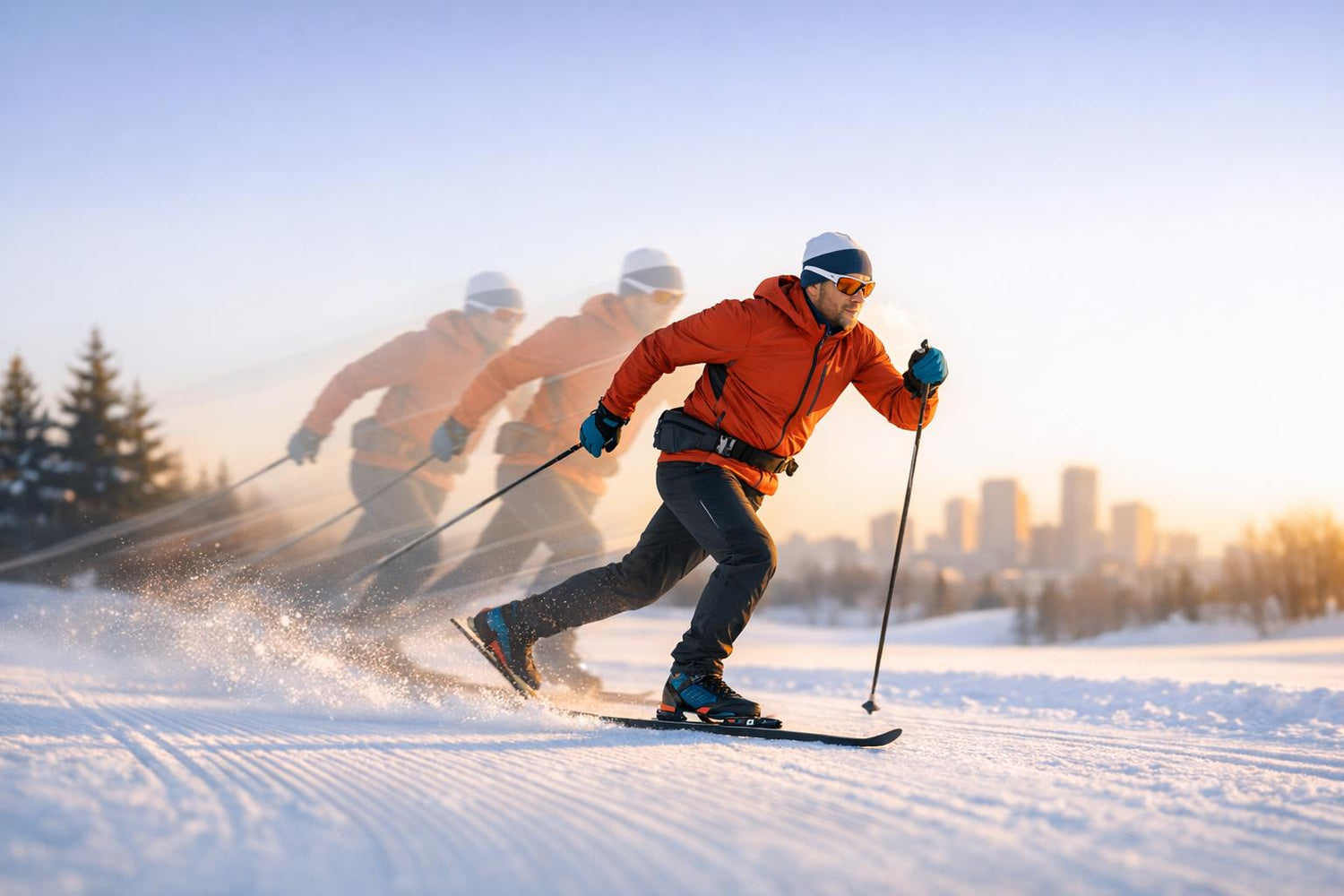
Skiskating is reshaping winter sports in 2026 with its lightweight, portable design and accessible learning curve. Unlike traditional skiing, skiskates fit in a backpack, cost less ($490 on average), and work with various terrains. They’re beginner-friendly yet offer enough performance for experienced riders. Key factors driving its popularity include:
- Ease of Use: Shorter learning curve compared to skiing or snowboarding.
- Portability: Compact enough to carry easily, eliminating bulky gear hassles.
- Affordability: A one-time investment reduces ongoing rental or travel costs.
- Eco-Conscious Design: Made with plant-based materials and sustainable practices.
- Tech Integration: AI coaching tools and performance trackers simplify learning.
With over 15% growth in snow sports participation across North America in the last five years, skiskating offers a fresh, fun way to enjoy the slopes without the barriers of traditional gear. It’s becoming a go-to choice for newcomers, casual riders, and those seeking a simpler winter sport option.
The Problem: What Holds Back Winter Sports Today
Winter sports are growing in popularity, but skiing and snowboarding still come with their fair share of challenges. The barriers aren't about a lack of enthusiasm - they're rooted in logistical headaches, steep learning curves, and gear that’s too narrowly designed.
Bulky Gear and Travel Hassles
Ski gear is notoriously hard to manage, especially when traveling. Standard ski bags, often around 6.5 feet long, can turn a simple trip into a logistical nightmare. Max Ritter, Gear Editor at Powder magazine, points out that the rising costs and difficulties associated with transporting ski gear are making it harder for people to stay involved in the sport.
"Let's be real here, nobody likes carrying a ski bag. Some of the worst journey experiences of our lives have been caused by those ~2m long floppy bags of doom, trying to negotiate places like the Tokyo metro, downtown Boston..." - Newschoolers
For those living in smaller homes or apartments, storing bulky gear is another hurdle. These practical challenges discourage many casual participants from fully embracing the sport.
A Tough Start for Beginners
Learning to ski or snowboard isn’t easy. Newcomers face a steep learning curve, needing to quickly grasp edge control, balance, and body positioning - all while navigating intimidating slopes. This overwhelming start often discourages beginners before they can fully enjoy the experience. Pair that with the heavy, specialized equipment, and it’s no surprise many people give up early.
Gear That’s Too Specialized
Ski equipment is often designed for specific conditions, which limits its adaptability. While specialized gear performs well in ideal settings, it struggles outside of those conditions. For example, backcountry setups frequently lack practical features like walk modes. This forces riders to choose between performance and convenience, with few options that cater to both needs.
sbb-itb-32287b2
Skiskating as the Answer: What Sets It Apart
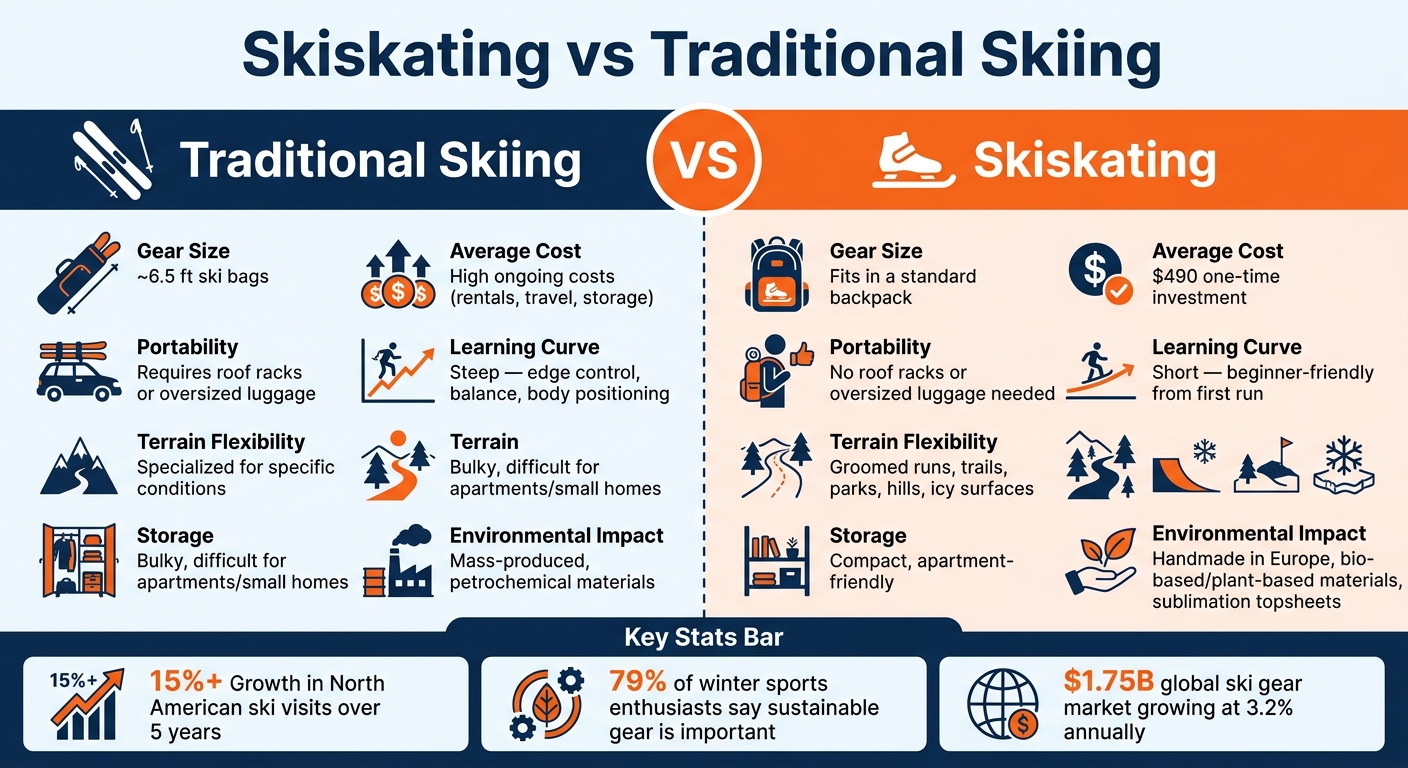
Skiskating vs Traditional Skiing: Cost, Portability & Performance Compared
Traditional ski gear often feels bulky, complicated, and restrictive. Skiskating addresses these challenges head-on, offering a sleek, modern solution that blends top-notch performance with an element of fun.
Key Design Features of Skiskates
Skiskates are all about simplifying the essentials. Priced at $490, they come in both ski boot and snowboard boot models, designed for easy portability - small enough to fit in a standard backpack. The bindings are adjustable and require no tools, so you won’t have to fumble with hardware in freezing temperatures. With steel edges and cap construction, skiskates provide precise control on groomed trails, icy sections, and mixed snow conditions. Despite their compact size, they deliver full-scale performance without compromise.
This thoughtful design prioritizes both functionality and ease of use, making skiskating accessible for everyone.
Accessible for All Skill Levels
One of the standout features of skiskating is how quickly people can pick it up, regardless of their prior experience. The learning curve is smooth, adapting to everyone from beginners to advanced riders. Here's how skiskating progresses across skill levels:
| Skill Zone | Ability Levels | What You Can Do |
|---|---|---|
| First Timer | Level 1 | Learn to handle equipment and take first steps on snow. |
| Green Zone | Levels 2–4 | Master sliding, stopping, and linking turns on easy terrain. |
| Blue Zone | Levels 5–7 | Develop parallel turns, pole plants, and explore ungroomed trails. |
| Black/Expert Zone | Levels 8–9 | Perform carved turns, tackle steep slopes, and handle all-mountain conditions. |
This adaptability aligns with the growing demand for gear that combines high performance with ease of use, a trend expected to dominate winter sports by 2026. Plus, the durable and eco-conscious design adds to its universal appeal.
Handmade Construction and Sustainable Materials
Each pair of skiskates is handmade in Europe using bio-based materials, which replace traditional petrochemicals with plant-based alternatives. The topsheets are crafted using a sublimation process that reduces the need for toxic printing inks, leaving the natural wood grain visible. This is an important step, considering the environmental impact of winter sports - 95% of ski resorts now rely on artificial snowmaking, which consumes significant energy and disrupts local ecosystems.
The philosophy of balancing sustainability with performance is key here. As Meier Skis aptly puts it:
"No one wants the world's most eco-friendly ski if it doesn't ski well".
Skiskates embrace this mindset. Their extra-thick base resists rock damage more effectively than the softer materials found in many mass-produced options. This durability means they last longer, reducing waste over time. By combining performance with eco-conscious construction, skiskating carves out a unique space in the evolving world of winter sports.
Tech Advances Behind the Skiskating Trend
The evolution of skiskating gear highlights a shift in how winter sports equipment is designed. Instead of focusing on bulky, single-purpose gear, the emphasis has shifted to compact tools that work well in various conditions. These advancements address the challenges of traditional equipment, offering solutions that make skiskating more accessible and enjoyable.
Compact and Lightweight Build
Skiskates are small enough to fit into a standard backpack, making them incredibly convenient for both casual riders and travelers. Forget about roof racks or oversized luggage - skiskates eliminate those hassles entirely.
Interestingly, the industry has moved beyond the obsession with making everything as light as possible. As Max Ritter, Gear Editor at Powder Magazine, explains:
"We went through the everything-needs-to-be-ultralight era... and now we're trending towards a Goldilocks zone where the uphill/downhill balance is no longer too skewed one direction."
Skiskates strike that perfect balance. They're light enough to carry without effort but sturdy enough to handle challenging terrain. And they don't just win points for portability - they also shine in performance.
Performance Features That Improve Control
Skiskates deliver impressive control thanks to features like steel edges and cap construction. Steel edges provide excellent grip on hard-packed snow and icy surfaces, much like full-sized downhill skis. Meanwhile, cap construction ensures even pressure distribution, giving riders a stable and responsive feel, especially during turns.
Adding to their maneuverability is the sub-100mm waist width, which makes high-angle edging on groomed runs feel smooth and intuitive. This precision and ease of use have drawn in many riders who found traditional ski gear difficult to master.
Product Range for Different Users
Skiskating gear is available in a variety of models, catering to everyone from beginners to advanced riders:
| Model | Price | Best For |
|---|---|---|
| Snowfeet Basic | $190 | Beginners seeking portability and simplicity |
| Snowfeet 50 PRO | $299 | Experienced users wanting enhanced performance in a compact design |
| Skiblades 65 CM | $550 | Riders prioritizing agility with added stability |
| Skiblades 99 CM | $590 | High-speed carving with a longer edge for control |
The Snowfeet Basic is an affordable, beginner-friendly option that prioritizes ease of use. For those looking for more durability and precision, the Snowfeet 50 PRO steps up the game. In the Skiblades range, the 65 CM model emphasizes agility, while the 99 CM model offers greater stability for high-speed carving. This tiered lineup ensures that riders can find gear suited to their current skill level while leaving room to upgrade as they progress.
Practical Benefits and Techniques of Skiskating
Skiskating easily fits into daily life. Thanks to its compact design, you can slip a pair into a standard backpack and head out for a ride whenever the mood strikes. Whether you’ve got a couple of hours or an entire weekend, skiskating works with your schedule. This flexibility makes it an appealing winter sport that’s easy to enjoy without a lot of planning.
Short Learning Curve and Quick Progress
One of the best things about skiskating is how fast beginners can pick it up. Unlike traditional skis, which often require awkward adjustments to find balance and control, skiskates are shorter, making them easier to handle right from the start. This design helps riders feel steady and confident on their very first run.
The 2026 skiskate models are all about fun. They’re designed to make techniques like edging and carving approachable for everyone. As Max Ritter, Gear Editor at Powder Magazine, explains:
"I'm referring to everyperson hard-snow skis that are meant to be fun above all else and make edging and high-speed carving easy."
For those who want to improve quickly, performance-tracking apps like Carv provide real-time feedback on techniques, offering a coaching-like experience without the need for an instructor. This combination of ease and support makes skiskating a great option for riders of all skill levels.
Use Across Multiple Terrains
Once you’ve got the basics down, skiskates open up a world of possibilities. They perform well on groomed runs, trails, parks, and even hills. Plus, their adjustable, tool-free bindings work with different boot types, so you don’t have to worry about specialized gear. This versatility is perfect for groups with mixed preferences - whether it’s families or friends, everyone can join in without the usual equipment hassles.
Tricks and Fun on the Snow
Skiskates’ compact size makes them ideal for trying spins, jumps, and even backward rides. Their shorter length gives you better control, so experimenting with quick direction changes or tricks feels less intimidating. You don’t need a terrain park to have a good time - any gentle slope or sledding hill can become your playground. This creative freedom is a big part of why skiskating is gaining traction in 2026, appealing to both newcomers and seasoned riders looking for a fresh, expressive way to enjoy winter sports.
2026 Trends: Sustainability and Community Growth
Sustainable Materials Attracting New Buyers
Eco-consciousness is reshaping the winter sports industry in 2026. A striking 79% of winter sports enthusiasts believe sustainable gear is important, with 28% actively choosing sustainably-made products during the last winter season. This shift is driving brands to adopt responsibly sourced materials, like wood cores from sustainable sources, and to embrace transparent supply chains. As bio-based materials and responsible manufacturing practices become more common, these products are standing out in a competitive market. For buyers seeking performance without compromising on environmental impact, this approach hits the mark. It’s not just about reducing harm to the planet - it’s about connecting with a community that values conscious choices.
More People Getting Into Winter Sports
Winter sports are seeing a surge in participation. Over the past five years, skier visits in North America have jumped by more than 15%, thanks in part to growing inclusivity and more accessible designs. In China, skiing participation rose by 14.5% in 2024, bringing the total to over 12.8 million participants. Women, in particular, are making strides, with their share of the market projected to reach 38.3% by 2026. Skiskating, with its user-friendly design and minimal commitment, fits perfectly into this expanding landscape. Its simplicity makes it an appealing choice for first-timers eager to try something new without the steep learning curve.
A Growing Skiskating Community
Skiskating is doing more than just gaining popularity - it’s fostering a tight-knit and welcoming community. Whether it’s at local hills, terrain parks, or community events, skiskaters are connecting in ways that traditional skiing often doesn’t. Jessi Wynn from the SportsAbility Alliance captures this sentiment perfectly:
"Adaptive sports are more than just a way to stay physically active; they're a gateway to building confidence, forging connections, and discovering new passions."
This sense of connection is a major driver behind skiskating’s momentum in 2026. Riders frequently share videos, tips, and experiences online, sparking curiosity among newcomers who might not have considered this short-ski format before. The community isn’t just expanding - it’s actively inviting others to join the fun.
Conclusion: Why Skiskating Is Here to Stay
Skiskating hits all the right notes for today’s winter sports enthusiasts - it’s portable, budget-friendly, beginner-accessible, and thoughtfully crafted with sustainability in mind. These are features often missing from traditional skiing, where gear and resort prices have soared to what many describe as "astronomical highs".
The global ski gear and equipment market, valued at $1.75 billion in 2026, is expected to grow at a modest 3.2% annual rate through 2033. In this landscape, skiskating stands out as an appealing choice, especially for newcomers, women, and those looking for more affordable options.
Max Ritter, Gear Editor at Powder, summed it up perfectly:
"Skiing is as expensive as it's ever been, and I'm no economist, but there's no way that is going to be sustainable... I'm predicting a crash in participation any day now."
This underscores the need for alternatives that don’t break the bank. Skiskating answers that call. Priced at $490, these handmade European skates - crafted from sustainable wood - offer a one-time investment that eliminates ongoing rental fees and the hassle of lugging around heavy equipment. Compact enough to fit in a backpack, they’re versatile across different terrains and much quicker to master than traditional skis.
As trends lean toward more adaptable and eco-conscious winter sports, skiskating is perfectly positioned to thrive. It checks the boxes for flexibility, affordability, and ease, making it a sport that aligns seamlessly with modern demands. The growing momentum behind skiskating makes one thing clear: it’s not just a passing trend - it’s here to stay.
FAQs
What boots work with Skiskates?
Combi boots work perfectly with Skiskates. These boots blend the characteristics of classic and skate ski boots, offering strong ankle support for skating while improving overall stability.
Are Skiskates allowed at most ski resorts?
Currently, there’s no clear information on whether most ski resorts allow Skiskates. If you’re planning to use them, it’s best to contact the resort directly to confirm their rules and policies.
What’s the best terrain to start skiskating on?
The best place to kick off your skiskating journey is on a gentle hill or a flat surface. These spots give you the chance to work on gaining forward momentum and honing your technique without feeling overwhelmed. It's all about starting in a setting where you can stay in control and focus on getting the basics right.


Leave a comment
This site is protected by hCaptcha and the hCaptcha Privacy Policy and Terms of Service apply.