

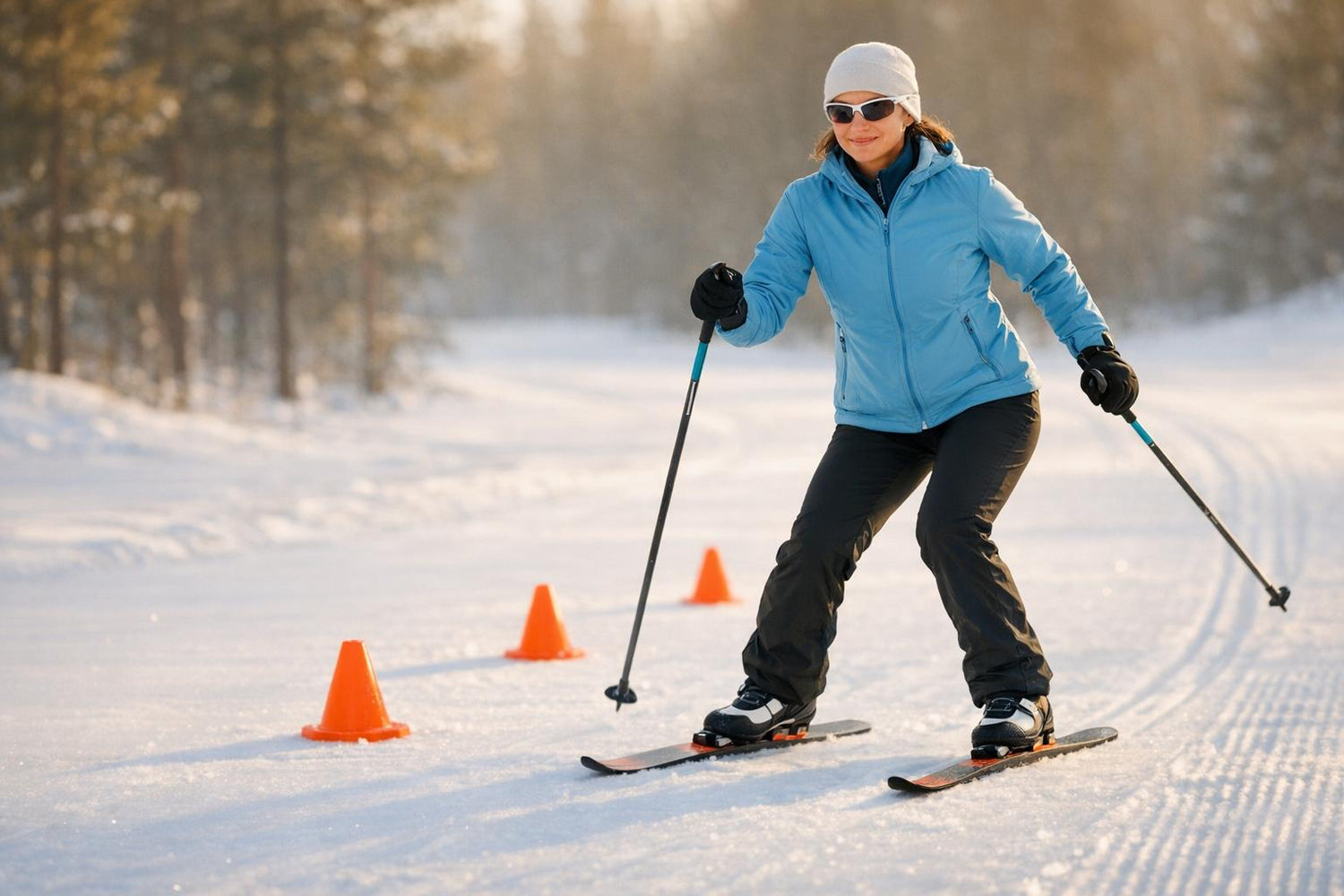
Yes, adults can learn skiskating quickly and enjoyably. Skiskating combines skiing and skating, using shorter, lightweight skis that are easier to control. This makes it less intimidating for beginners compared to traditional skiing.
Key Points:
- Faster Learning Curve: Basic skills like stopping and turning can be learned in just 3–5 days.
- Beginner-Friendly Equipment: Short skis (65–99 cm) provide better control and reduce physical strain.
- Accessible for All Fitness Levels: Skiskating is a low-barrier, full-body workout perfect for winter activity.
Tips for Success:
- Start on easy terrain to build confidence.
- Practice short, frequent sessions to improve balance and technique.
- Use supportive gear like helmets, moisture-wicking layers, and adjustable bindings.
With the right mindset and consistent practice, adults can enjoy skiskating as a fun way to stay active during winter.
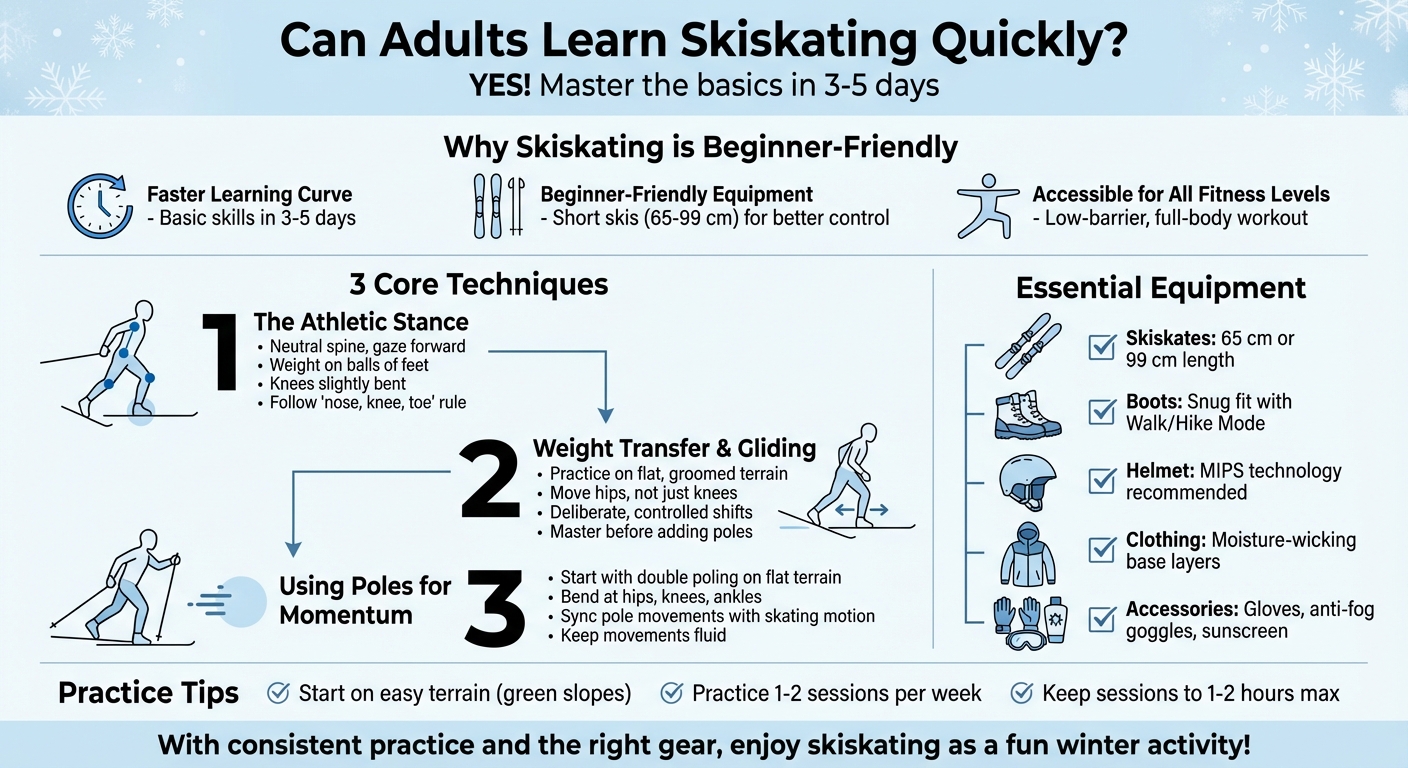
Adult Skiskating Learning Guide: 3 Core Techniques and Equipment Essentials
How to Ski in One Day | Beginner Learns Basic Turns
sbb-itb-32287b2
Core Techniques for Fast Learning
These essential techniques will help you gain confidence on skiskates. They’re the foundation for everything else you’ll do on the snow and will help you progress more quickly.
The Athletic Stance
Start with a neutral spine and keep your gaze forward. Your weight should rest evenly on the balls of your feet, with your knees slightly bent.
Here’s an easy way to find this position before hitting the snow: jump and land softly. That landing stance is exactly what you want on skiskates. Follow the "nose, knee, and toe" rule - imagine a straight vertical line connecting your nose, knee, and the tip of your ski. To stay stable, keep your shoulders aligned over the gliding ski. As Carrie McCusker, a Level 2 TrainingPeaks Coach, puts it:
"A stiff, upright skier falls easily while a relaxed, poised skier absorbs terrain changes with less issue."
Weight Transfer and Gliding
Mastering smooth weight transfer is key to making skiskating feel natural. Start practicing on flat, groomed terrain without poles. This helps you focus on balance and ensures you’re fully shifting your weight from one ski to the other. Begin by moving your hips rather than just bending your knees. Try a gentle rocking motion from one foot to the other, and once you’re comfortable, lean your knees slightly forward to engage your hips and initiate gliding.
Christian Aigner, an Austrian Full Cert. Ski Instructor, explains that "Learning to ski is a continuous process, from your first turn to high edge angle carving." Take your time - each weight shift should be deliberate and controlled. Once this feels natural, adding poles will be much smoother.
Using Poles to Build Momentum
Once you’re comfortable gliding, poles can help you maintain rhythm and momentum. Start by practicing without poles to establish your balance, then introduce double poling on flat terrain. To double pole, bend at your hips, knees, and ankles, push through the poles, and engage your core. This creates the tension needed to transfer power efficiently while keeping your movements fluid.
Timing is everything. Your pole movements should sync with your skating motion to maintain a steady rhythm. Nordic Ski Lab highlights the importance of this technique:
"Double Poling teaches you how to create full body tension; how to be both braced and activated throughout your core, but still make movements that are fluid and smooth."
Keep your ankles, knees, and hips flexible - standing too upright will throw off your balance. With practice, you’ll find your rhythm and flow on the snow.
Tips for Adult Learners
Adults tend to approach learning with a logical mindset, understanding their limits and focusing on strategies that work best for them. Christian Aigner, a CSIA Level 4 Ski Instructor, encourages late starters by saying, "There is every chance to become a good skier, even with a later start". The key lies in working smarter, not harder, and selecting the right tools to make progress easier.
Start with Short Skis for Better Control
When you're learning as an adult, picking the right equipment can make all the difference. Shorter skis can significantly simplify the learning process. Long skis require more strength and coordination, which can be challenging for beginners. On the other hand, shorter options, like skiskates measuring 65 cm or 99 cm, offer better control and maneuverability. Their compact size makes it easier to transfer weight, helping you feel more in control when stopping or turning. This design is especially helpful for adults, as it reduces the physical strain and speeds up the learning process. Most beginners using these shorter skis can grasp the basics within just 3–5 days.
Practice on Easy Terrain First
Starting on gentle slopes or flat, designated beginner areas is crucial. These spaces allow you to practice gliding without worrying about speed or steep inclines. Use this time to develop your athletic stance and refine your weight transfer. It's important to stay on these beginner-friendly areas until you feel comfortable stopping and turning. Rushing to more advanced terrain too soon can lead to unnecessary frustration or even injuries. According to Snow.com, using high-quality, skill-appropriate equipment also plays a major role in building confidence and improving your overall control.
Practice Regularly in Short Sessions
Consistency is key when you're learning something new. Short, frequent practice sessions are far more effective than long, infrequent ones. Aim for 1–2 sessions per week, focusing on gliding, stopping, and turning. With this approach, many adults master the basics in just a few weeks. Keep your sessions to 1–2 hours to avoid muscle fatigue, which can lead to sloppy technique or falls. Renee Roaming, a seasoned ski instructor, emphasizes:
"The more often you can go, the more likely you are to progress your skills and have fun!"
Wrap up your practice before exhaustion sets in, and don't forget to stretch before and after each session to maintain flexibility. Staying hydrated and fueled is equally important - pack water with electrolytes and energy-rich snacks to keep your energy levels steady throughout your practice.
Equipment for Faster Progress
Using the right equipment can make a huge difference when you're learning something new - especially on the slopes. The right gear doesn't just make things easier; it can actually speed up your progress. As Snow.com puts it:
"Investing in or renting high-quality skiing equipment appropriate for your skill level can improve your control, comfort, and confidence on the slopes."
This advice ties directly into earlier techniques, giving you an extra edge as you work toward mastering the sport.
Why Skiskates Work Well for Beginners
Skiskates are a fantastic choice for adults who are just starting out. Their lightweight build means less strain on your legs and core, so you can practice longer without wearing yourself out. Plus, the adjustable, tool-free bindings fit both ski and snowboard boots, offering the ankle support you need to stay balanced.
Their compact size - available in lengths of 65 cm (about 25.6 inches) and 99 cm (about 39 inches) - is another big advantage. This smaller design makes them easy to maneuver, which is especially helpful for learning techniques like the "snowplow" or "pizza wedge." These methods involve forming a V-shape with your skis to control speed and stop safely. And when it's time to head to another slope, their small size makes them easy to carry in a backpack.
Other Gear for Skiskating
Your skiskates are just the beginning - other gear can make your experience safer and more comfortable. Start with a good pair of boots. A snug fit is key for maintaining control, and boots with a Walk/Hike Mode can make moving around off the slopes much easier. Adding supportive insoles, like Superfeet, can also enhance stability and comfort during long practice sessions.
For safety, a helmet is a must. Look for one with MIPS technology for added protection. Options like the Giro Avera MIPS Helmet are both reliable and affordable.
Don’t overlook clothing and accessories. Moisture-wicking merino wool base layers keep you warm and dry, while protective gloves and anti-fog goggles ensure comfort and visibility. Sunscreen is essential to prevent windburn, and packing energy-dense snacks will help you stay fueled during your sessions.
With the right gear in hand, you'll be ready to focus on improving your skills and building confidence on the slopes.
Training Drills to Build Skills
With your gear ready, it's time to dive into drills that build muscle memory and boost confidence without overwhelming you. Christian Aigner, a CSIA Level 4 Ski Instructor, shares, "Within a couple of days, everyone will be able to do some turns and enjoy the feeling of gliding on white gold - be ready to sense a feeling of real freedom (but in control!)." The goal here is to practice movements that directly enhance your control and performance on the slopes. These focused exercises build on earlier techniques, helping you tackle varied terrain with greater ease.
Weight Transfer Drill
Mastering weight transfer is essential for skiskating. Start on flat terrain where you can focus entirely on shifting your weight. Begin in an athletic stance with your knees bent, then gradually lean to one side until your weight is fully over that ski. Hold the position for a few seconds before shifting to the other side. Repeat this back-and-forth motion to develop balance and control. Keep sessions short - fatigue can lead to poor form, which undermines progress.
Side-to-Side Gliding Exercise
This exercise takes weight transfer a step further by adding movement. Find a gentle slope or a flat area with a slight incline, then practice a V-shaped stride similar to ice skating. Push off with the inner edge of one ski while gliding forward on the other, alternating sides. The compact design of your skis should make this motion easier. Focus on smooth, controlled movements rather than speed, and work on coordinating your arms and legs. Use your poles to maintain rhythm and momentum as you glide.
Uphill and Downhill Practice
To handle varied terrain, you need to adapt your technique. For uphill climbs, use short strides with your skis in a slight V-shape, pushing off the inner edges to gain traction. Keep your weight forward and your knees bent for stability. When heading downhill, practice the wedge (or "pizza") position by pointing your ski tips together to control your speed. Stick to beginner (green) slopes while you refine these skills. Research on ski learning technology shows that 95% of skiers improved their technique within their first week when using objective analysis and real-time audio feedback. Focus on deliberate, consistent practice, and you'll notice improvements quickly.
Conclusion
Adults can pick up skiskating quickly with the right mindset, gear, and approach. By focusing on the techniques discussed earlier and committing to short, consistent practice sessions instead of sporadic, lengthy outings, progress can come surprisingly fast.
Your attitude plays a huge role in how quickly you improve. As Christian Aigner, a CSIA Level 4 Ski Instructor, emphasizes, staying positive, determined, and willing to step slightly outside your comfort zone can make all the difference. Physical fitness also plays a part - strength, flexibility, and endurance can help make the process smoother.
Using beginner-friendly equipment like Skiskates can speed up your learning and boost your confidence. These tools, paired with targeted practice, make the experience more enjoyable and less daunting.
Ultimately, consistent effort and the right gear are key. Skiskating offers adults a fantastic way to embrace the fun of winter sports again. Outdoor blogger Renee Roaming captures this sentiment perfectly:
"I love it so much more than I expected to and now I wish I had learned years ago!"
With these tips and techniques, you can confidently dive into skiskating and discover a rewarding new way to enjoy the winter season. The learning curve is manageable, and the rewards are well worth the effort.
FAQs
Do I need skating experience to start skiskating?
No, you don’t need to have any skating experience to try skiskating. Adult lessons are tailored for beginners, emphasizing safety, balance, and step-by-step skill development. These classes make it easy for newcomers to build confidence and improve steadily, even if it’s their first time on skates.
Should I rent skiskates or buy them as a beginner?
For beginners, deciding whether to rent or buy skiskates comes down to your goals and usage frequency. Renting is a budget-friendly option that lets you test out skiskating and gain confidence without spending a lot upfront. However, if you find yourself enjoying the activity and plan to practice often, owning your own skiskates can help you train consistently and improve more quickly.
What’s the safest way to practice stopping on skiskates?
The best way to learn how to stop safely on skiskates is by perfecting controlled deceleration techniques. Pay attention to your balance, keep proper form, and plan ahead for when you'll need to stop. Begin with techniques like the heel stop or T-stop in flat, open areas. Take your time practicing, and always wear protective gear to minimize the risk of injury while boosting your confidence and control.

Leave a comment
This site is protected by hCaptcha and the hCaptcha Privacy Policy and Terms of Service apply.