

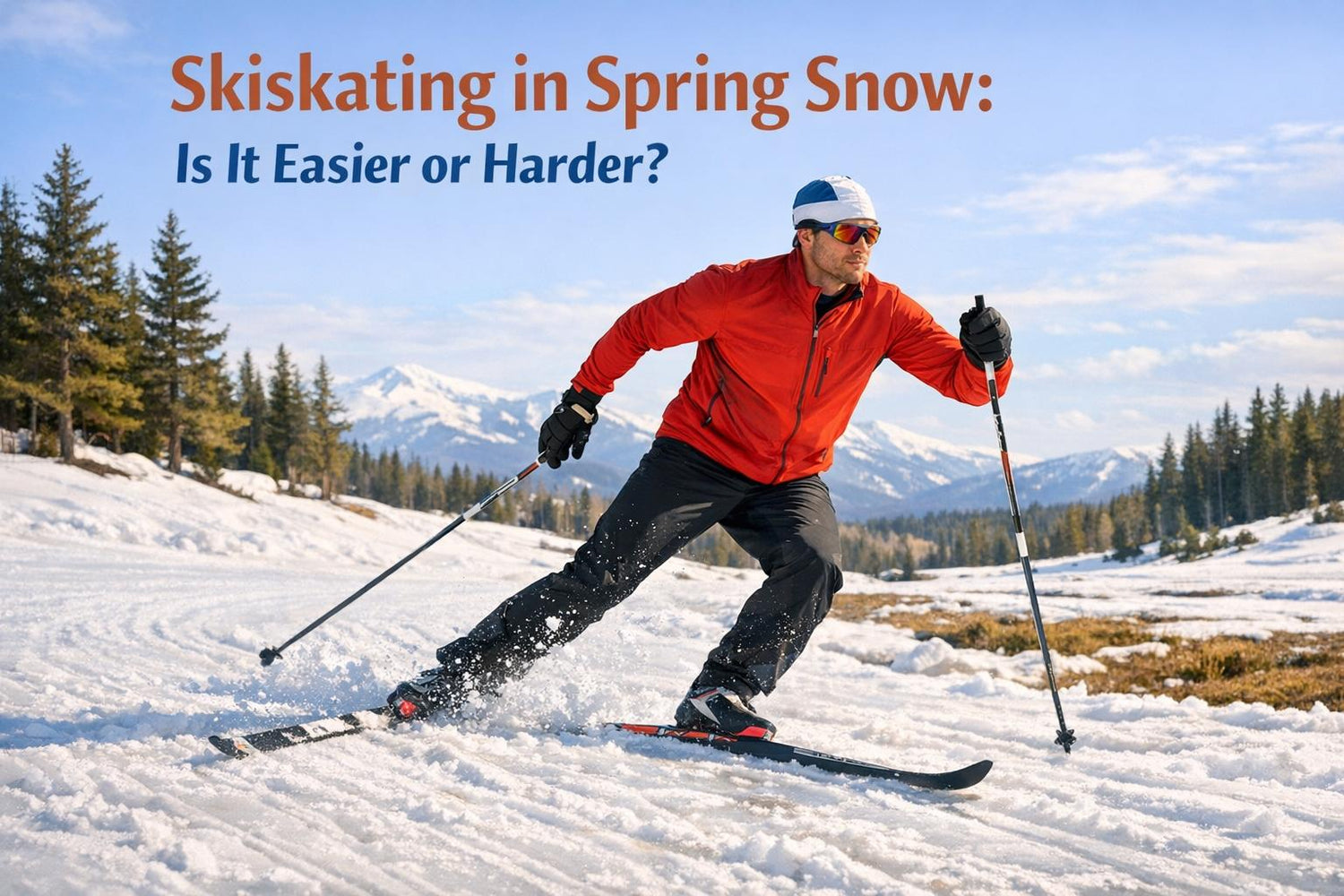
Skiskating in spring snow is a mixed bag. Softer, wetter snow can make landings feel smoother, but it also slows you down due to increased drag and suction. Here’s what you need to know:
- Challenges: Spring snow is heavier and stickier, requiring more physical effort. Morning icy crusts can quickly soften into slush, making balance and control tricky.
- Gear Tips: Longer skiskates, like the Snowfeet Skiblades 99 CM ($590.00), handle slushy conditions better by reducing suction and improving stability. Waxing regularly is key to maintaining glide.
- Timing: Early mornings (7:00 AM–10:00 AM) offer firmer snow for smoother runs, while afternoons bring softer, energy-draining slush.
Spring conditions demand adjustments in technique and equipment, but with the right approach, you can still enjoy the ride.
SnowMotion Ski Tip - Spring Skiing
sbb-itb-32287b2
What Makes Spring Snow Different?
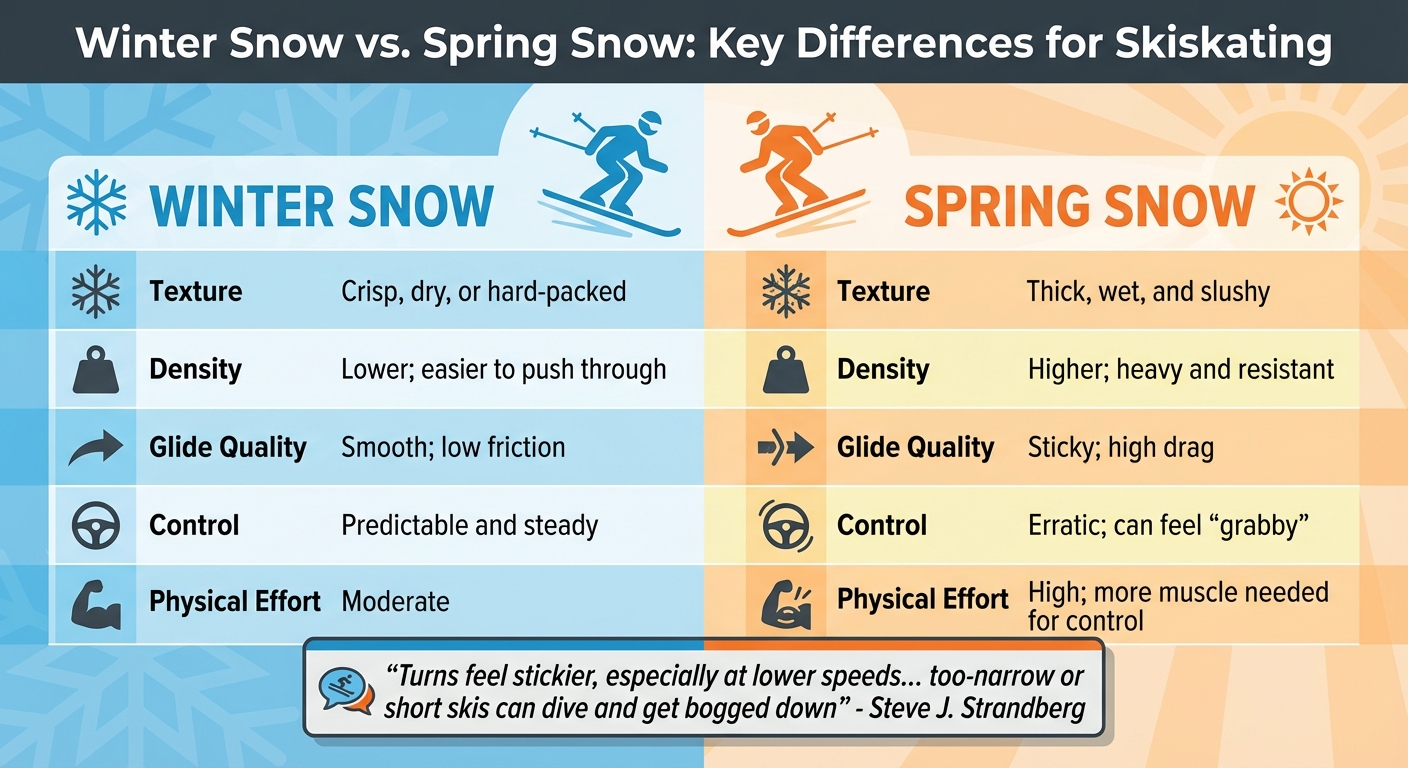
Winter vs Spring Snow Conditions Comparison for Skiskating
Spring Snow vs. Winter Snow: Key Differences
As the seasons shift, so does the nature of snow. Winter snow tends to be crisp, dry, and easy to predict - whether it's fresh powder or well-packed trails. Spring snow, however, transforms into something entirely different: thick, wet, and heavy. This change happens as temperatures rise, increasing the moisture content and weakening the bonds between snow crystals. The result? Slow-moving, dense layers that can feel like you're skiing through molasses.
Spring snow's density makes it much harder to push through compared to winter snow. While winter conditions allow for smooth gliding with minimal friction, spring snow creates a sticky effect, increasing drag against your skis. Steve J. Strandberg captures this perfectly:
"Turns feel stickier, especially at lower speeds... too-narrow or short skis can dive and get bogged down".
Here's a quick comparison of how winter and spring snow differ:
| Feature | Winter Snow | Spring Snow |
|---|---|---|
| Texture | Crisp, dry, or hard-packed | Thick, wet, and slushy |
| Density | Lower; easier to push through | Higher; heavy and resistant |
| Glide Quality | Smooth; low friction | Sticky; high drag |
| Control | Predictable and steady | Erratic; can feel "grabby" |
| Physical Effort | Moderate | High; more muscle needed for control |
These changes in snow conditions directly influence your skiing experience, making spring snow more demanding and less forgiving.
How Temperature and Moisture Affect Spring Snow
Temperature swings are the main culprits behind spring snow's unpredictable nature. Overnight freezes create a hard, icy crust that softens into slush as the morning sun warms things up. Daytime highs in the 30s to low 40s °F set off a melt-freeze cycle, meaning you’re often dealing with two entirely different snow textures in a single day.
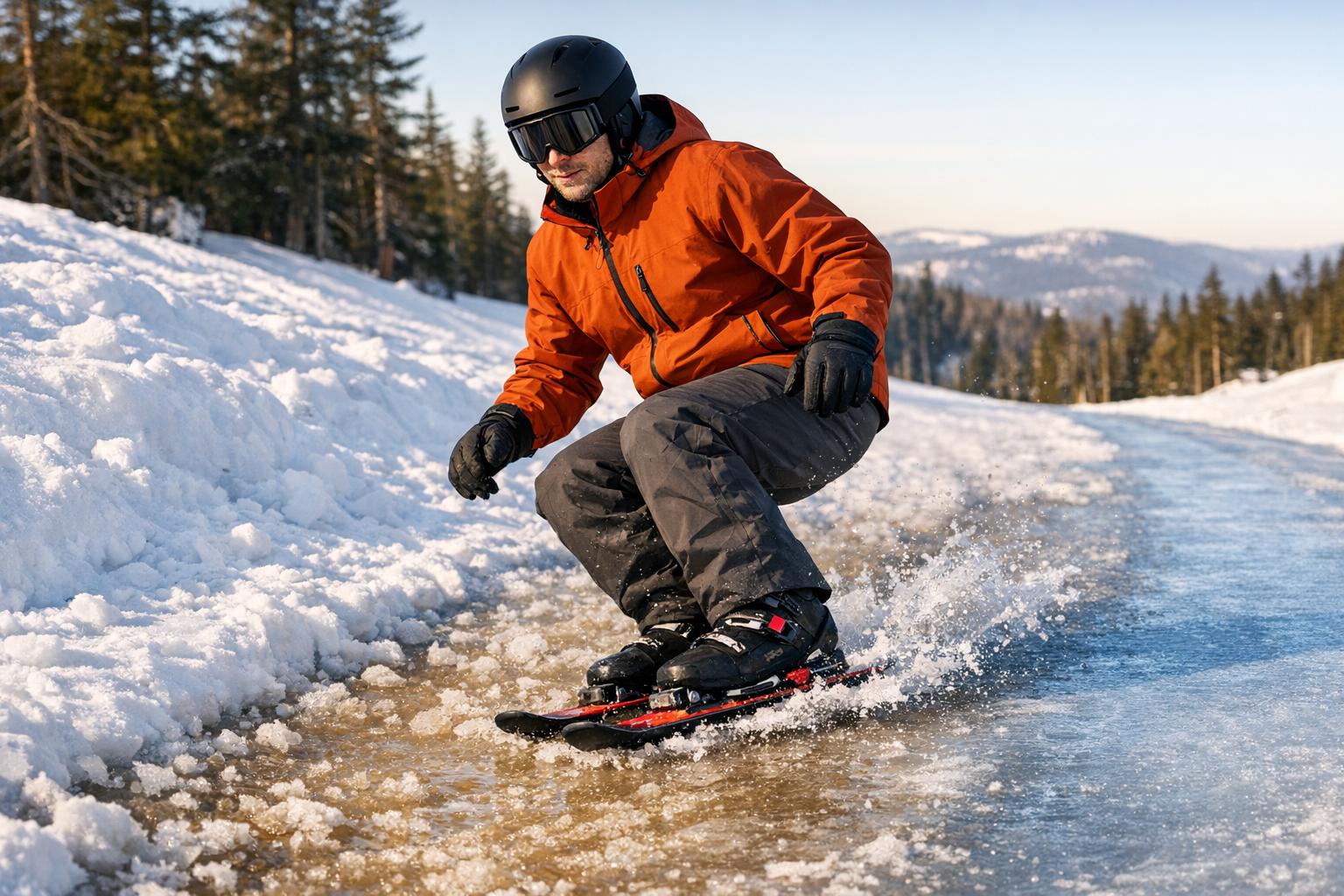
As the snow melts, it forms a thin layer of water under your skis. This water film acts like a vacuum, creating suction that slows you down. Add in surface debris like dirt, pollen, and pine needles, and your glide performance takes a serious hit.
Timing is everything when skiing spring snow because its firmness changes throughout the day. East-facing slopes catch the morning sun and soften first, while north-facing slopes might remain firm all day. The ideal window is when only the top 2–3 inches of snow have softened. Any deeper, and you’re left battling through what skiers often call "mashed potatoes" - a workout in itself.
How to Adjust Your Skiskating Technique for Spring Conditions
Maintaining Balance and Control on Softer Snow
Spring slush, with its unpredictable density, can easily throw off your balance. To counter this, aim for a centered and stable stance. If the snow becomes particularly soft and slushy, widening your stance slightly can provide extra stability. Another helpful tweak is adjusting your bindings slightly backward - this helps keep the tips of your skiskates from diving into the soft snow, allowing for smoother movement.
Spring snow’s higher moisture content also increases suction, making it harder to steer. To stay in control, start your turns earlier and engage your edges more deliberately. This proactive approach helps you maintain your course through the slush.
How to Maintain Speed and Glide in Wet Snow
Staying balanced is only part of the equation - keeping your speed and glide in wet snow requires some additional strategies. The moisture in spring snow creates a suction effect between your ski base and the snow surface, which can significantly slow you down. Nathan Schultz offers this advice:
"We've found that applying a hard, highly hydrophobic base wax is key for speed, durability, and dirt resistance. On top of this, liquid waxes have proven to be the most effective in wet conditions".
To combat drag, apply a hard, hydrophobic base wax and keep your ski base clean by regularly removing dirt and pollen. This reduces friction and improves glide. For even better performance, use a structured hand tool to create deeper grooves on your ski base. These grooves help break the surface tension of wet snow, making it easier to maintain speed.
Your physical technique also needs some fine-tuning. Spring snow is thicker and wetter, which means it requires more effort to initiate turns and keep your momentum. Instead of trying to muscle through, focus on maintaining steady pressure through your turns. Let your waxing and base preparation do the heavy lifting, so you can conserve energy and glide more efficiently.
Benefits of Skiskates in Spring Snow
How Different Skiskates Models Perform in Spring Conditions
Spring snow, with its unpredictable texture and moisture levels, demands gear that adapts to the challenge. Each Skiskates model offers a unique edge when tackling these tricky conditions, from handling slushy terrain to maintaining speed and control.
The Snowfeet Basic ($190.00) and Snowfeet 50 PRO ($299.00) shine in terms of agility. Their compact size makes them perfect for quick turns and tricks, but the shorter surface area can lead to more suction in wet snow, slowing you down compared to longer models.
For a balance between portability and performance, the Skiskates Ski Boots Model ($490.00) and Skiskates Snowboard Boots Model ($490.00) deliver. These models remain compact enough to carry easily but offer better control in soft, slushy snow. Their adjustable bindings let you modify weight distribution, helping to prevent the tips from sinking into softer patches.
If stability and glide are your priorities, the Snowfeet Skiblades 65 CM ($550.00) is a great choice. Its 65 cm length helps displace moisture more effectively than shorter models while still being agile enough for tight terrain. For those who want maximum glide and speed, the Snowfeet Skiblades 99 CM ($590.00) are ideal. The longer length reduces suction in wet snow, providing a smoother ride, yet they remain far easier to handle than traditional skis.
| Model | Length | Ease of Use | Control in Slush | Speed/Glide | Best For |
|---|---|---|---|---|---|
| Snowfeet Basic | Shortest | High (lightweight & agile) | High maneuverability for tricks | Lower (more suction) | Tricks, tight terrain |
| Snowfeet 50 PRO | Short | High (enhanced performance) | High maneuverability | Moderate | Advanced tricks, parks |
| Skiskates Ski Boots Model | Medium-short | High (adjustable) | Excellent for variable terrain | Moderate | All-around spring use |
| Skiskates Snowboard Boots Model | Medium-short | High (adjustable) | Excellent for variable terrain | Moderate | Snowboarders transitioning |
| Snowfeet Skiblades 65 CM | 65 cm | High (easy turn initiation) | Excellent for tight terrain | Moderate-High | Balanced float/control |
| Snowfeet Skiblades 99 CM | 99 cm | Moderate (more stable) | Good (balanced float/control) | High (better moisture displacement) | Speed, open terrain |
With these options, you can tailor your gear to match your preferred style and the spring conditions you’re likely to encounter.
Maneuverability and Fun in Slushy Terrain
Skiskates bring a playful edge to the challenges of spring snow. Their compact design allows for quick pivots, spins, and even jumps, turning slushy terrain into a playground. When traditional skis feel heavy and cumbersome in such conditions, Skiskates make it easier to move with the snow rather than battling against it.
Another major advantage is portability. Spring skiing often means adapting to rapidly changing snow textures throughout the day. Morning conditions might be firm and crusty, while afternoons bring soft, slushy snow. With Skiskates, you can easily pack up and move to another area or even explore off-the-beaten-path terrain like hiking trails. Unlike full-length skis, they’re light and compact enough to carry when conditions take a turn for the worse.
As Steve J. Strandberg points out, shorter equipment excels in variable terrain like bumps and trees, where maneuverability is key. Skiskates provide just that - allowing you to react quickly to changing snow textures, making spring skiing less tiring and a lot more enjoyable than with traditional gear.
Challenges of Skiskating in Spring Snow
Dealing with Inconsistent Snow Conditions
Spring snow is unpredictable - it starts firm and icy in the morning but quickly turns into soft, slushy patches as temperatures rise. This constant change can throw off your rhythm and make maintaining control a challenge.
The tricky part? Those sudden mid-turn snow changes. One second, you’re gliding smoothly through soft snow, and the next, firmer patches grab your ski tips, disrupting your balance. With shorter skiskates, like the Snowfeet Basic, there’s less surface area to spread your weight, which can cause the tips to dive into deeper slush. This imbalance often leaves the front sinking while the back stays higher, causing you to lurch forward unexpectedly.
To handle these transitions, focus on keeping your weight centered or leaning slightly back when softer snow is ahead. This adjustment helps prevent your tips from digging in. If you’re using longer models like the Snowfeet Skiblades 65 CM or 99 CM, you’ll benefit from greater fore-aft stability, which makes tackling uneven terrain a bit easier. These constant shifts in snow texture don’t just disrupt your flow - they also demand extra physical effort to push through the sticky, slushy conditions.
Why Wet Snow Requires More Physical Effort
Spring snow is heavy and wet, thanks to its high moisture content, and this creates a suction effect that slows you down and makes every movement feel more labor-intensive.
"Spring skiing is all about balancing float and control. The perfect ski for spring slush lets you cut through the mush without getting stuck but won't feel unwieldy if the snow firms up later in the day." – Steve J. Strandberg
As melting snow crystals bond weakly, the resulting slush becomes thicker and heavier. This means turning requires more leg power, and maintaining momentum on flat terrain becomes harder. To make things worse, melting snow collects dirt and pollen, which act like sandpaper on your skiskates’ bases, increasing friction. Cleaning your bases and applying hydrophobic waxes can help reduce this drag, though it won’t bring you back to the effortless glide of winter.
Adapting both your technique and equipment is key to managing the added strain of spring snow. It’s all about finding ways to work with the snow, not against it.
Gear Recommendations and Timing Tips for Spring Skiskating
Which Skiskates Model to Choose for Spring Use
Spring snow brings more moisture and drag, so your gear needs to handle these challenges effectively. Longer skiskates are ideal for slushy conditions. For example, the Snowfeet Skiblades 99 CM ($590.00) offer excellent float and stability in wet, heavy snow, making them a top choice for deep slush. Their extra surface area helps prevent that annoying "front-diving" sensation.
If you prefer something shorter but still versatile, the Snowfeet Skiblades 65 CM ($550.00) provide a good balance. They deliver improved fore-aft stability compared to the 44 cm models, while still being nimble enough for quick adjustments when snow conditions shift. For firmer snow - like what you might find in the early morning - the 44 cm Skiskates ($490.00) perform well, but they struggle in deeper slush.
To keep your skiskates gliding smoothly, frequent waxing and cleaning are essential. Wooden-core models come pre-waxed, but fiberglass options need regular applications of warm-weather wax to combat suction from wet snow. Cleaning your bases after every session is equally important - melting snow brings pollen and dirt that can ruin your glide.
Best Times of Day for Skiskating in Spring Snow
Early mornings are your best bet for optimal conditions. Overnight freezing creates a firm, fast surface that's easier to control. By mid-morning, rising temperatures soften the snow, turning it into slush that requires more effort and technique to navigate.
For firmer, faster runs, aim to hit the slopes between 7:00 AM and 10:00 AM. If you prefer a more relaxed vibe with softer snow - perfect for tricks or less intimidating falls - late morning to early afternoon is the sweet spot. However, steer clear of late afternoons. By then, the snow becomes sticky and patchy, and tired legs can make the experience feel like a chore rather than fun.
Conclusion: Is Skiskating in Spring Snow Easier or Harder?
Spring skiskating comes with its own set of challenges and perks. Softer snow makes falls less intimidating for beginners and reduces the risk of encountering icy patches. However, the high moisture content in spring snow can create a sticky drag, slowing you down on flat terrain. As meteorologist Alan Smith points out, "Once the sun comes out after a storm, new snow can quickly become wet and heavy".
Timing plays a huge role in your experience. Early mornings often bring firm, supportive corn snow, perfect for smoother glides. By late afternoon, though, the snow turns slushy and can sap your energy, making it harder to maintain momentum.
The right gear can make all the difference. Longer models, like the Snowfeet Skiblades 99 CM ($590.00), are better equipped to handle slushy conditions. Pair them with warm-weather waxes to keep your glide consistent and avoid getting bogged down in the heavy snow. Without these adjustments, spring conditions might feel more like a battle than a joyride.
FAQs
What wax should I use for spring slush?
When dealing with spring slush, opt for a warm-temperature glide wax specifically made for wet, soft snow. A great choice is Swix PS10 Yellow, which helps minimize friction, repel moisture, and keep your skis gliding smoothly, even in sticky conditions. This type of wax performs best in temperatures above freezing, where melting snow creates a thin layer of water that can otherwise slow you down.
How do I stop my tips from diving in wet snow?
To keep your ski tips from sinking in wet, slushy snow, it’s important to tweak both your gear and technique for spring conditions. Opt for skis with wider tips and the right length to improve floatation. Double-check that your bindings are properly set for stability. Additionally, tuning your skis specifically for slushy snow can make a big difference in control. These small adjustments can make skiing on wet snow feel much more stable and easier to handle.
Can I still go fast in spring snow?
Firmer spring snow, like corn snow, can make skiing faster, especially if you time it right with melt/freeze cycles. On the other hand, slushy or heavier snow tends to slow you down, making it harder to maintain speed. However, adjusting your gear - like opting for wider skis - can help improve both control and stability in these conditions.

Leave a comment
This site is protected by hCaptcha and the hCaptcha Privacy Policy and Terms of Service apply.