

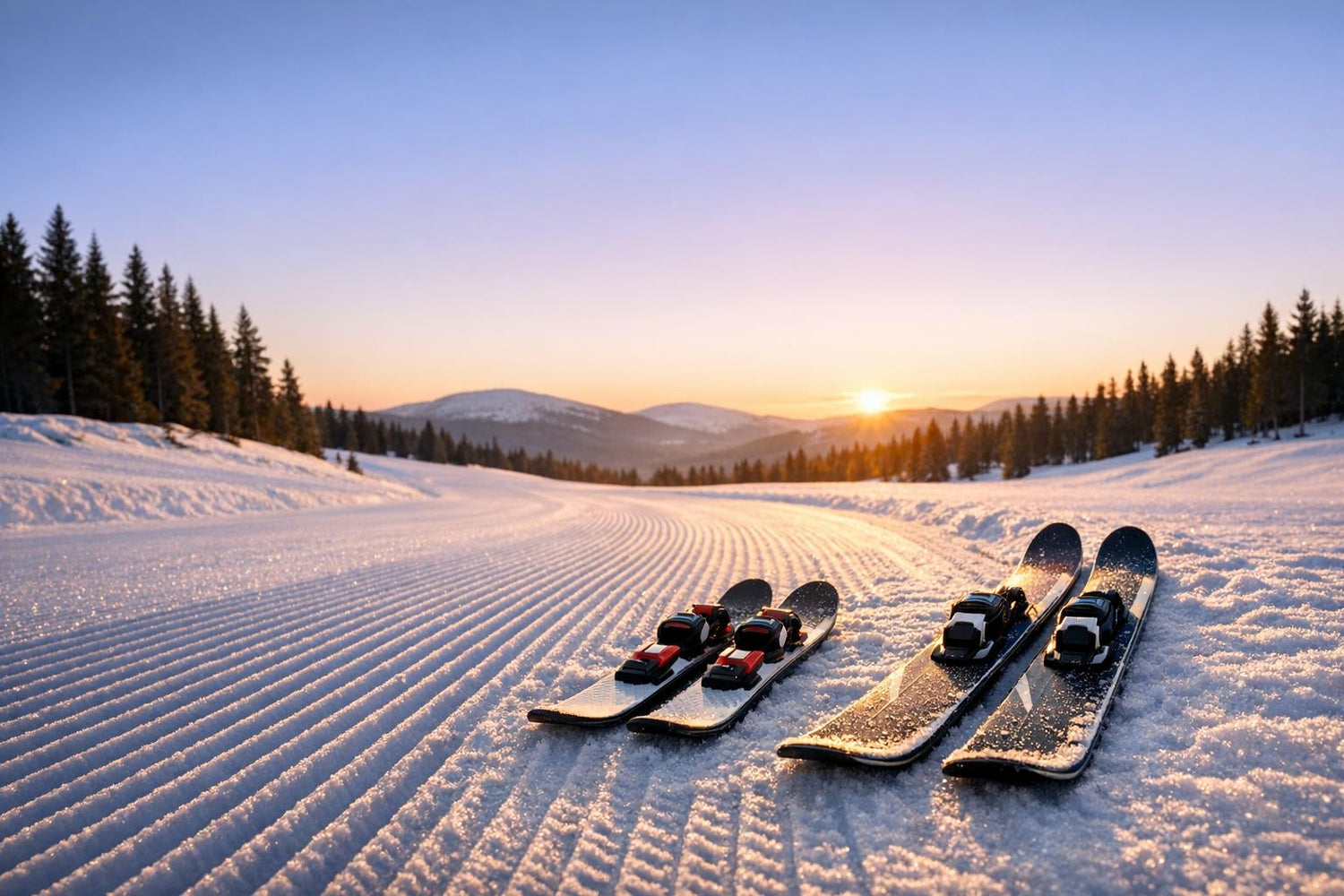
Skiskating blends skiing and ice skating, offering a fast, dynamic way to glide through winter landscapes. But terrain plays a huge role in your experience. Groomed trails with hard-packed snow near 32°F are ideal for smooth motion. Beginners should start on flat, wide trails, while advanced skiskaters can tackle rolling hills or moderate slopes. Choosing the right gear is just as important - compact models like Snowfeet Basic ($190) suit beginners, while longer skiblades like the 99 CM ($590) provide more stability for steeper runs. Each model performs differently based on slope gradient, snow conditions, and trail features.
Key Takeaways:
- Best Terrain: Groomed, hard-packed snow around 32°F.
- Beginner-Friendly Gear: Compact models like Snowfeet Basic.
- Advanced Options: Longer skiblades for stability on steeper slopes.
- Techniques: V1 stride for flat/mild slopes; herringbone for uphill; wedge braking for control downhill.
Pair your gear and skill level with the right terrain for a safer, more enjoyable experience.
1. Skiskates Ski Boots Model
Choosing the right gear for the terrain can make or break your experience. Here's a closer look at how the Skiskates Ski Boots Model ($490.00) performs across different slopes and conditions.
This model combines alpine-level support with 44 cm skis, making it ideal for moderate gradients. Its stiff soles and secure ankle support minimize flex during push-offs, ensuring better power transfer compared to more flexible touring boots.
Slope Gradient Compatibility
On gentle slopes, the design helps you maintain balance as gravity aids your glide. For moderate inclines, the V1 technique enhances efficiency. On steeper climbs, herringbone steps are your go-to, while wedge braking ensures control on the way down.
Snow Condition Suitability
The boots perform best on firm, well-groomed snow at around 32°F (0°C). The stiff flex provides excellent edge grip in these conditions. However, the 44 cm ski length isn't suited for deep powder, as it limits flotation.
Trail Width and Terrain Features
These boots shine on wide, smooth trails, where the lateral V-shaped stride is easier to execute. Nordic centers with dedicated skate lanes or resorts like McCoy Park at Beaver Creek and Morse Mountain at Smugglers' Notch are excellent options. Flat cat tracks are perfect for practicing carving turns and weight transfer, while the compact design makes navigating terrain park features - like ramps and rails - a breeze.
Up next, we'll explore another model to help you fine-tune your terrain choices.
2. Skiskates Snowboard Boots Model
If you're looking for snowboard boots that shine on gentler slopes and open trails, the Skiskates Snowboard Boots Model is worth considering. Priced at $490.00, these boots are designed with a softer flex, giving you a different feel and altering your snow dynamics compared to stiffer ski boots.
Slope Gradient Compatibility
For beginners, flat terrain and green trails are ideal with this setup. While some techniques overlap with those used in skiing, the softer flex of snowboard boots requires minor adjustments. On gentle slopes, the V1 skate rhythm is a reliable technique, offering smooth motion. For steeper inclines, the herringbone technique - a V-shaped stance - helps prevent slipping backward. When descending, use wedge braking by pushing your heels outward to form a triangle, which helps control your speed.
Interestingly, most skate skiers rely on the V1 rhythm for over 90% of their trail time, making it a skill worth mastering on beginner-friendly slopes.
Snow Condition Suitability
"Skate is fun at mid-range temperatures on hard packed snow"
These boots perform best on hard-packed snow in mid-range temperatures. Groomed trails with dedicated skating platforms are ideal, as they provide the resistance needed for effective push-offs. It's best to avoid ungroomed powder or icy patches, often found on blue and black trails, as these conditions demand faster braking and sharper turns.
Trail Width and Terrain Features
Wide, groomed trails with skating platforms are essential for smooth lateral movement. For example, Whistler Blackcomb dedicates about 55% of its terrain to green and blue trails, with an average annual snowfall of 36 feet providing consistently packed conditions.
"A universal no-no is tromping on (ruining) any ski tracks or smooth trail surfaces"
Make sure to stick to the skating lanes and avoid stepping on the parallel tracks reserved for classic skiers. Respecting these trail rules ensures a better experience for everyone.
3. Snowfeet Basic
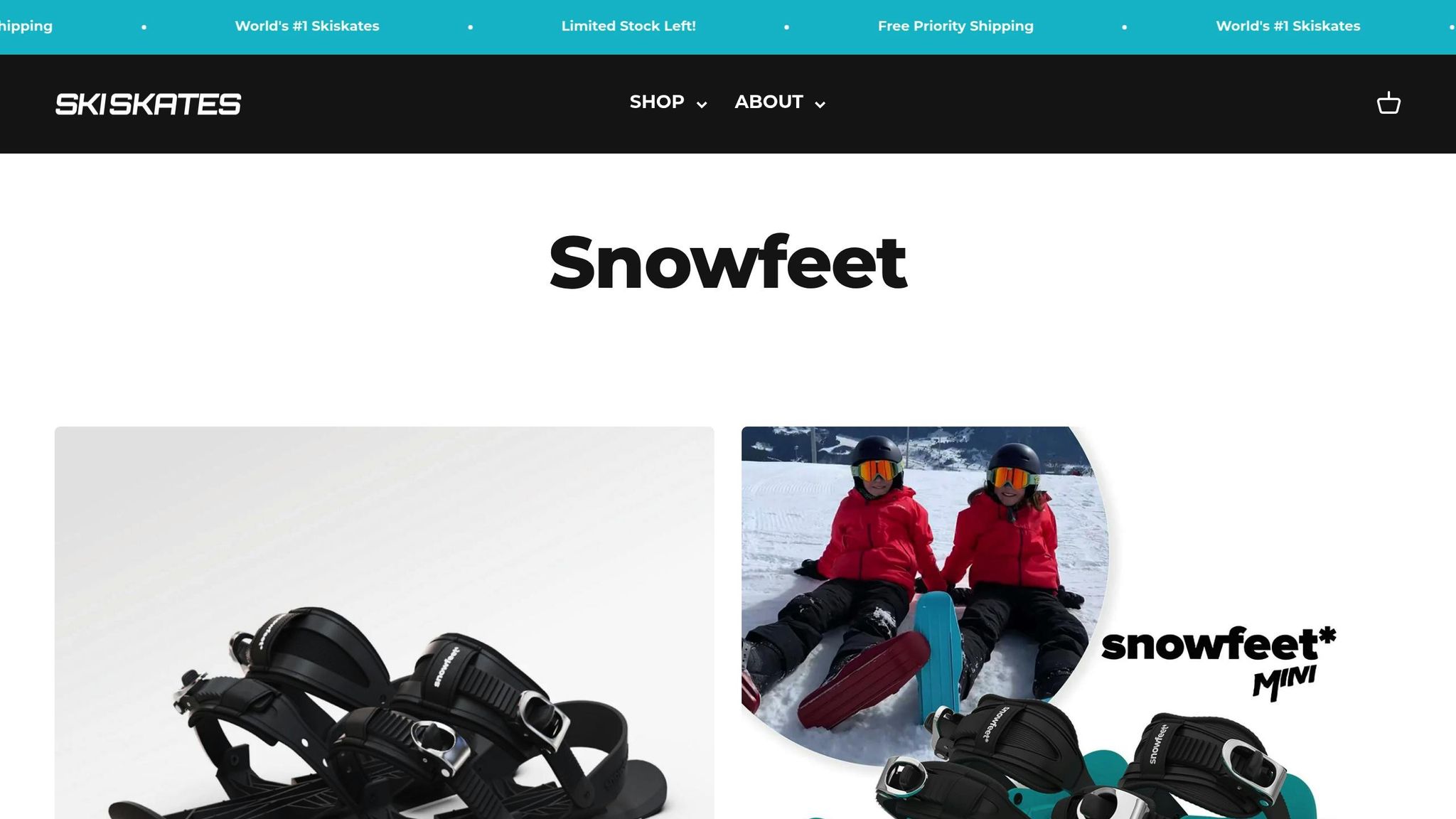
The Snowfeet Basic is a great option for beginners looking to dip their toes into skiskating without breaking the bank. Priced at $190.00, it boasts a fiberglass-reinforced build and measures just 50 cm (about 20 inches) in length - compact enough to slip into a backpack. Its lightweight design and simplicity make it a hit among users, with many mastering it in just 5 minutes. Not surprisingly, it has earned an impressive 4.9/5 rating from more than 5,500 verified reviews.
Slope Gradient Compatibility
The Snowfeet Basic shines on groomed ski slopes with moderate gradients. Its 50 cm length is perfect for snow parks and well-maintained slopes, but it’s best to avoid steep terrain, as balance can become tricky. For speed control, you can rely on the integrated heel brake or perform a hockey stop. And if you’re tackling steeper sections, the herringbone technique - angling your feet in a V-shape - helps you climb without sliding backward.
Snow Condition Suitability
"Snowfeet are best on groomed snow. You can use Snowfeet on powder that is not thicker than +/- 10 cm (4 in)." – Snowfeet Store
Hard-packed, machine-groomed snow offers the best experience, providing a stable surface for smooth turns and better edge control. While light powder under 4 inches deep is manageable, deeper snow might cause the skis to sink. Slushy conditions above 23°F can also slow you down due to increased friction. To maintain performance, regular waxing of the fiberglass-reinforced polyamide base is recommended.
Trail Width and Terrain Features
Thanks to its compact design, the Snowfeet Basic is incredibly agile, making it a great fit for tighter spaces like tree runs or trails with gentle side hits. That said, it’s better suited to wide, groomed trails, as navigating large bumps or uneven terrain can be challenging with its smaller size.
Portability and Ease of Use
One of the standout features of the Snowfeet Basic is how easy it is to transport and use.
"Long enough to ski, short enough to skate. Easy to Learn and Use. Strap in and ride - no lessons needed." – Snowfeet Store
Its small size makes it perfect for tossing into a backpack, so you can take it anywhere without hassle. Whether you’re a beginner or just looking for a fun, portable way to enjoy the slopes, the Snowfeet Basic delivers on convenience and performance.
4. Snowfeet 50 PRO
The Snowfeet 50 PRO takes the Basic model up a notch with the addition of a fiberglass core, which enhances both durability and flexibility. At $299.00, it maintains its compact 50 cm (about 20 inches) length and works seamlessly with standard winter shoes or snowboard boots in sizes 6–13 US (38–47 EU). With a stellar 4.9/5 rating from over 5,500 verified reviews, it’s clear this product has made an impression.
Slope Gradient Compatibility
The 50 PRO performs best on moderate slopes and groomed ski runs. It’s not designed for steep terrain, so stick to slopes where you can evenly distribute your weight for effective braking. Techniques like the hockey stop or heel brake work well with this model.
Snow Condition Suitability
For the best experience, use the 50 PRO on machine-groomed corduroy snow, as its smooth, even surface allows for sharp turns and better edge control. It also handles light powder up to 4 inches deep and performs reliably on hard-packed snow. To maintain peak performance, regular waxing of the fiberglass-reinforced polyamide base is recommended.
Trail Width and Terrain Features
The 50 PRO shines in snow parks, sledding hills, and groomed hiking trails, turning these areas into playgrounds for jumps and tricks. Its compact size makes it highly maneuverable in tight spaces, though it’s most at home on wide, groomed trails. This agility also makes it easy to carry and use, which adds to its overall appeal.
Portability and Ease of Use
At just 50 cm long, the 50 PRO is incredibly portable. If you’ve ever ice skated or inline skated, you’ll likely pick it up in about 5 minutes. The fiberglass core not only adds durability but also keeps it lightweight, making it a great choice for riders who want something sturdy yet easy to handle. It’s perfect for those who enjoy a more aggressive style of riding without the bulk of traditional skis.
sbb-itb-32287b2
5. Snowfeet Skiblades 65 CM
The Snowfeet Skiblades, measuring 65 cm (26 inches), strike a balance between skiing stability and the nimbleness of skiskating. Priced at $550.00, they feature a wood core, metal edges, and cap construction - offering durability and precise carving. With a perfect 5.0/5 rating from verified reviews, these skiblades are a standout option for those seeking versatility on the slopes.
Slope Gradient Compatibility
These skiblades excel on green slopes (6%-25% gradient) and blue slopes (25%-40% gradient). Their 65 cm length enhances balance and carving precision, making them a great choice for faster and steeper runs. However, they are not recommended for black diamond slopes or ungroomed terrain. On intermediate slopes, techniques like a hockey stop or heel brake are ideal for maintaining control.
Snow Condition Suitability
The metal edges of these skiblades shine on machine-groomed corduroy snow, delivering excellent grip for sharp turns and smooth carving. They also perform well in light powder (up to 4 inches), but deeper snow can cause them to sink, and slushy conditions may increase friction and the risk of falls. On icy days, waiting for the sun to soften the surface can improve handling and control.
Trail Width and Terrain Features
Thanks to their compact design, these skiblades handle a variety of trail widths with ease. They thrive on wide, groomed lanes with smooth corduroy patterns, offering the grip and glide needed for seamless skating. In snow parks, they excel at tricks, jumps, and even backward riding. Their shorter length also makes them a practical option for navigating narrow hiking trails that longer skis can't manage.
Portability and Ease of Use
At just 26 inches long, these skiblades are compact enough to fit into a standard backpack, making them far more portable than traditional skis. The tool-free binding system accommodates a wide range of boot sizes (4.5 to 14.5 US or 36–49 EU), while the wood core keeps them lightweight. Although they come pre-waxed, regular waxing is recommended for maintaining speed and a smooth glide. Users frequently highlight their fun and easy-to-control design, which adds to their appeal.
6. Snowfeet Skiblades 99 CM
The Snowfeet Skiblades 99 CM, priced at $590.00 and boasting a 5.0/5 rating, combine a wood core, metal edges, and cap construction. This mix delivers the stability of short skis while keeping the nimble feel of skiskating.
Slope Gradient Compatibility
These skiblades are designed for groomed blue and red runs, offering a longer length that enhances stability on steeper slopes while still allowing for quick, precise turns. The twin-tip design also makes smooth jumps easier. Beginners should stick to blue runs initially to build confidence and balance. This combination of agility and steadiness makes them a solid choice for tackling various slopes.
Snow Condition Suitability
Perfect for powder up to 10 cm deep, these skiblades provide better flotation in softer snow. On groomed, packed trails, the pre-waxed wood core ensures smooth carving and steady control. Sharp metal edges grip firmly on icy patches, especially during deliberate turns. As with similar models, keeping the edges sharp is essential for icy conditions.
Trail Width and Terrain Features
The 99 cm length strikes a great balance between stability and agility. These skiblades shine on narrow chutes, tree-lined runs, and snowparks, but they also perform well on wide, groomed trails. They’re compatible with both ski and snowboard release bindings, offering flexibility in setup. This versatility means they can handle a variety of trail widths and terrain features, making them adaptable to different riding styles.
Portability and Ease of Use
Even with their longer length, these skiblades are easy to carry in a backpack, thanks to their tool-free binding system. The release bindings add an extra layer of safety, a feature specific to this model. For steep terrain or deeper powder, using poles is recommended to maintain balance and control.
Advantages and Disadvantages
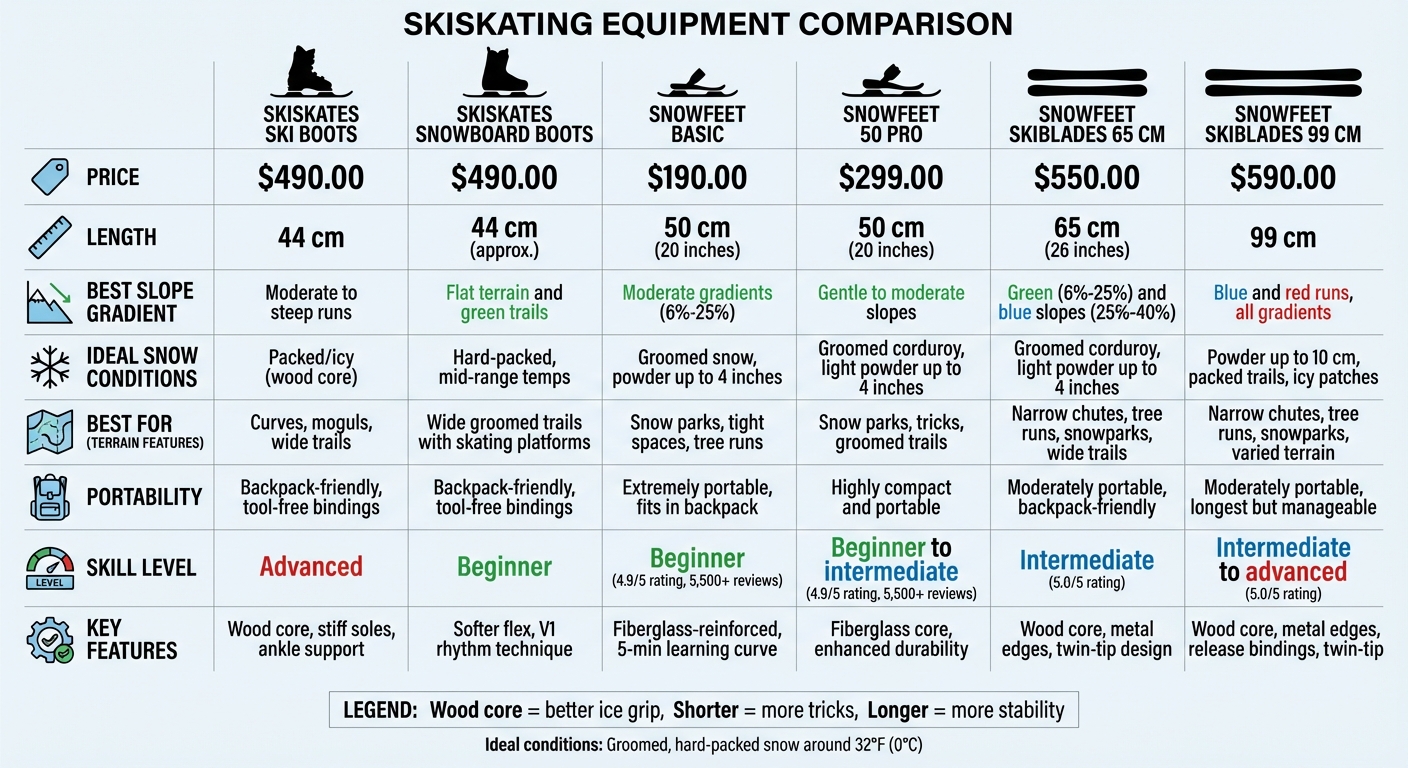
Skiskating Equipment Comparison: Terrain, Snow Conditions, and Performance Guide
Here's a breakdown of how different models perform across slopes, snow conditions, trail features, and portability:
| Model | Slope Gradient | Snow Conditions | Trail Features | Portability |
|---|---|---|---|---|
| Skiskates Ski Boots | Excels on moderate to steep runs; provides strong ankle support | Outstanding on packed and icy surfaces due to its wood core | Handles curves and moguls with precision | Backpack-friendly; tool-free bindings |
| Skiskates Snowboard Boots | Best for moderate to steep runs | Performs well on packed snow; wood core adds stability on ice | Great for quick turns and playful riding | Fits in a backpack; tool-free bindings |
| Snowfeet Basic | Ideal for gentle to moderate gradients (6%–25%); beginner-friendly | Works well on packed or groomed snow but struggles in powder | Perfect for spins and maneuverability, though less stable at higher speeds | Extremely portable; fits easily in a backpack |
| Snowfeet 50 PRO | Designed for gentle to moderate slopes; helps with weight transfer | Performs best on packed trails; fiberglass core limits icy slope performance | Great for tricks and tight spaces, but less effective on uneven moguls | Highly compact and portable |
| Snowfeet Skiblades 65 CM | Handles all gradients with a balance of stability and agility | Performs well on packed snow and light powder (up to 4 inches) | Versatile for narrow chutes and wide trails; twin-tip design aids jumps | Moderately portable; longer but still backpack-friendly |
| Snowfeet Skiblades 99 CM | Suitable for all gradients; offers excellent stability on steep terrain | Strong on packed and icy runs; better support in powder conditions | Balanced across varied trail features | Moderately portable; longest model but still manageable |
Key Insights
- Wood Core Models: Both the Skiskates Ski Boots and Snowfeet Skiblades feature a wood core, which enhances edge grip and reduces vibrations on icy terrain.
- Shorter Models: The Snowfeet Basic and 50 PRO prioritize maneuverability, making them ideal for tricks and spins but less stable at high speeds.
- Longer Models: The Snowfeet Skiblades 99 CM offer the stability of traditional skis, especially on steeper slopes, and provide better support in softer snow conditions .
- Powder Performance: While all models have limited flotation in deep powder, the 99 CM model stands out for offering slightly better support in such conditions.
For beginners, the Snowfeet Basic and 50 PRO models are easier to master, especially for those transitioning from walking or skating. On icy terrain, wood-core models like the Skiskates Ski Boots or Snowfeet Skiblades 99 CM deliver superior grip. Additionally, the narrow widths (41–45 mm) across all models ensure smooth gliding on groomed runs .
Understanding these trade-offs can help you choose the right model for your preferred terrain and style of skiskating.
Conclusion
Choose terrain that complements both your model's design and your skill level. For beginners, groomed, hard-packed snow provides a stable surface to practice essential techniques like weight transfer and wedge braking. Green slopes are ideal for learning, and models like the Snowfeet Basic ($190.00) and Snowfeet 50 PRO ($299.00) offer the maneuverability needed to master the basics.
As you gain confidence, you can tackle more challenging terrain. Longer models, such as the Snowfeet Skiblades 65 CM ($550.00) and 99 CM ($590.00), are perfect for blue intermediate slopes, offering enhanced stability for steeper pitches and faster speeds. For those who enjoy terrain parks, moguls, or weaving through tight tree runs, shorter models excel with their agility and quick responsiveness.
When it comes to snow conditions, skiskating performs best on fresh snow at around 32°F (0°C), ensuring smooth gliding. For carving turns, aim for dry, light snow within a temperature range of 23°F to 5°F (-5°C to -15°C). However, keep in mind that shorter models are not suited for deep powder due to their limited surface area, which reduces flotation.
If you're preparing for more advanced slopes, start on flat, groomed areas to develop balance and control. For uphill climbs, use the Herringbone technique to manage steeper gradients effectively.
Ultimately, match your model to your goals. Shorter models are ideal for tricks and quick turns, while longer ones provide the stability needed for steeper runs. Begin with terrain that aligns with your current skill level, and adjust your model choice as your abilities and the conditions evolve.
FAQs
What kind of terrain is best for beginners learning to skiskate?
For those new to skiskating, the best places to start are flat or gently sloping areas with smooth, packed snow. Wide, open trails are ideal because they give you the space to work on your balance and movement without worrying about obstacles. Groomed trails specifically designed for cross-country or skate skiing are fantastic options since they offer consistent surfaces that are much easier to navigate. Picking the right terrain not only makes learning more enjoyable but also helps you gain confidence as you improve your skills.
How can I pick the best skiskating gear for different terrains?
Choosing the right gear for skiskating comes down to understanding the terrain, snow conditions, and your own skill level. For groomed, hard-packed trails, lightweight skate skis are your best bet. If you're tackling softer snow or deeper powder, wider skis will give you the stability you need. For those focused on speed, narrower skis are faster, while wider, more versatile skis perform better in mixed conditions.
Don’t forget about the rest of your setup - boots, bindings, and poles should complement both the terrain and your experience. On groomed trails, opt for gear tailored for speed and precision. If you're heading into untracked or uneven snow, look for equipment that handles a variety of conditions. With the right choices, you'll enjoy a smoother and more rewarding skiskating adventure.
What are the best techniques for skiskating on different types of slopes?
To make the most of skiskating across different slopes, having the right techniques down is crucial. On flat or gentle terrain, aim for a smooth, gliding motion. Push off with the inside edge of each ski while shifting your weight efficiently from one leg to the other. This helps you maintain momentum without wasting energy.
For uphill sections, you’ll need a bit more effort. Techniques like diagonal skating or paddling can be effective here. Use a wider stance and strong pole plants to keep your rhythm and maintain forward motion.
When it comes to steeper slopes or downhill stretches, speed control becomes the priority. Stick to shorter, controlled strides and focus on using your edges to stay stable and avoid slipping. Don’t forget to adjust for snow conditions: soft snow might call for shorter, more careful strides, while icy patches demand sharper edge control to stay balanced.
By fine-tuning these techniques and adapting to the terrain and snow conditions, you’ll not only boost your performance but also stay safer out on the slopes.


Leave a comment
This site is protected by hCaptcha and the hCaptcha Privacy Policy and Terms of Service apply.