

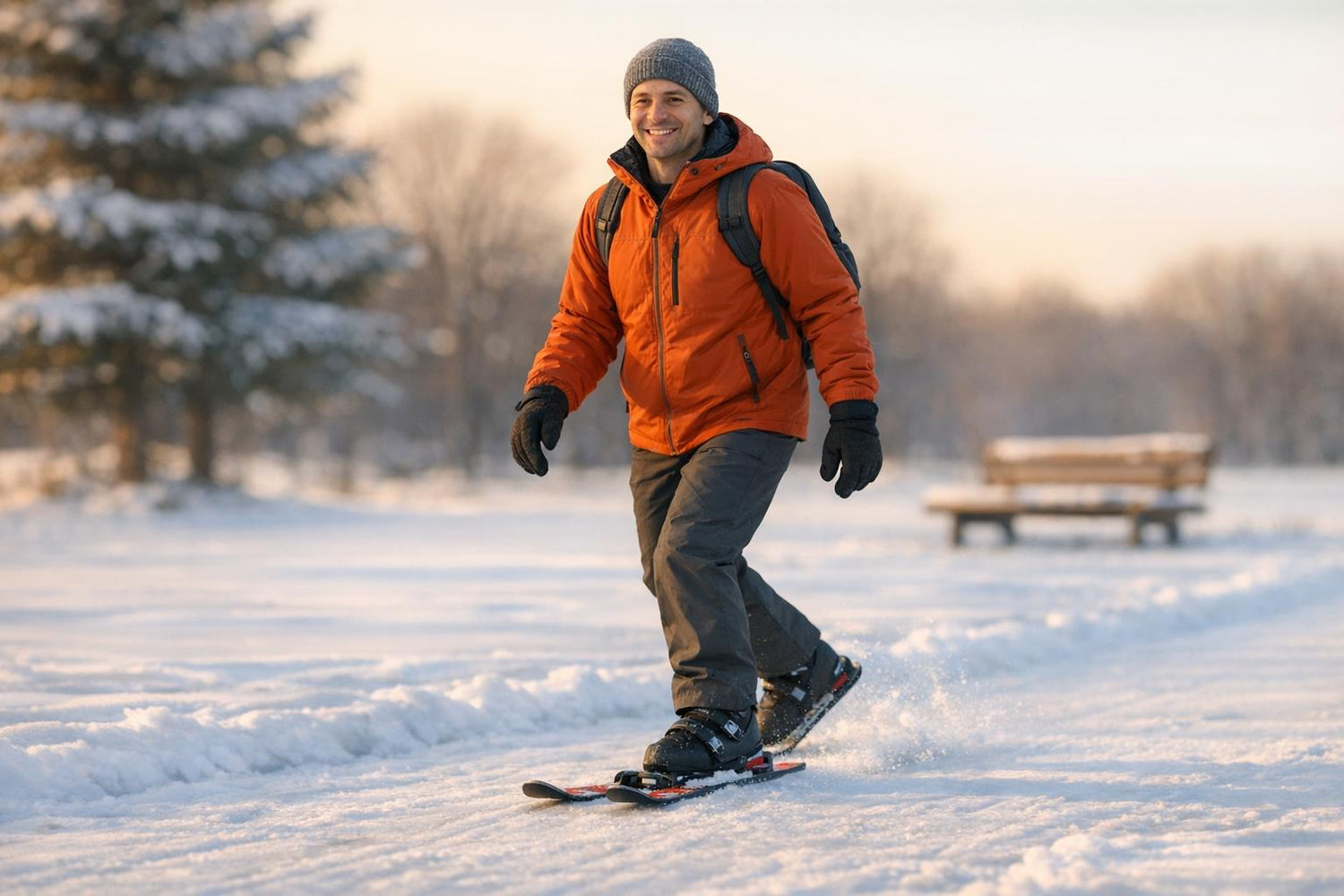
Looking for a snow sport that doesn’t involve skiing? Skiskating and short skiing are the top picks for 2026. These activities combine ease of use with fun, making them perfect for beginners or anyone who wants to enjoy winter without the steep learning curve of skiing. Here’s why they stand out:
- Skiskating: Mimics ice skating on snow. Easy to learn with a simple push-and-glide motion. No poles or technical skills required.
- Short Skis (Skiskates): Compact, lightweight, and beginner-friendly. Designed for various terrains like slopes, parks, and hiking trails. At $490, they’re a one-time purchase that fits in a backpack.
Why choose these? They’re intuitive, cost-effective, and don’t require a ski resort. You can use them on local hills or snowy parks, making them accessible for everyone. Plus, they’re built for durability with eco-conscious materials and tool-free adjustable bindings.
For non-skiers, Skiskating offers an easy, fun, and practical way to enjoy winter. Ready to try? Start with the basics: balance, glide, and explore snowy terrains near you.
What Are Skiskating and Short Skiing?
Skiskating and short skiing offer a middle ground between traditional skiing and skating. Instead of relying on long skis and a steep learning process, these activities use shorter, easier-to-handle equipment that responds quickly and naturally. Let’s break down how each option balances the thrill of skiing with accessibility.
Skiskating: Perfect for Beginners
Skiskating mimics the push-and-glide motion of ice skating but on snow. If you’ve ever been on an ice rink, the movement will feel second nature. You simply shift your weight side to side, push off, and glide forward - no poles, no overly technical skills required. This straightforward approach makes it a great introduction to winter sports, especially for beginners.
While skiskating emphasizes simplicity and natural movement, short skis bring a compact and versatile alternative to the table.
Short Skis: Lightweight and Adaptable
Short skis are essentially a smaller version of traditional skis, and their reduced size changes the experience entirely. While standard alpine skis typically measure between 150 and 185 cm, Skiskates models are significantly shorter, making them easy to carry in a backpack and ready for any snowy adventure.
Made in Europe using high-grade materials, Skiskates feature tool-free adjustable bindings compatible with both ski and snowboard boots. At $490.00, they’re built for serious use on downhill slopes, snow parks, and hiking trails - not just for casual fun. Their compact size makes turning and stopping noticeably easier than with traditional skis, which is a huge plus for beginners. This agility pairs well with skiskating, offering a more dynamic option without the bulk of full-sized skis.
sbb-itb-32287b2
Why Skiskating Works Better for Non-Skiers
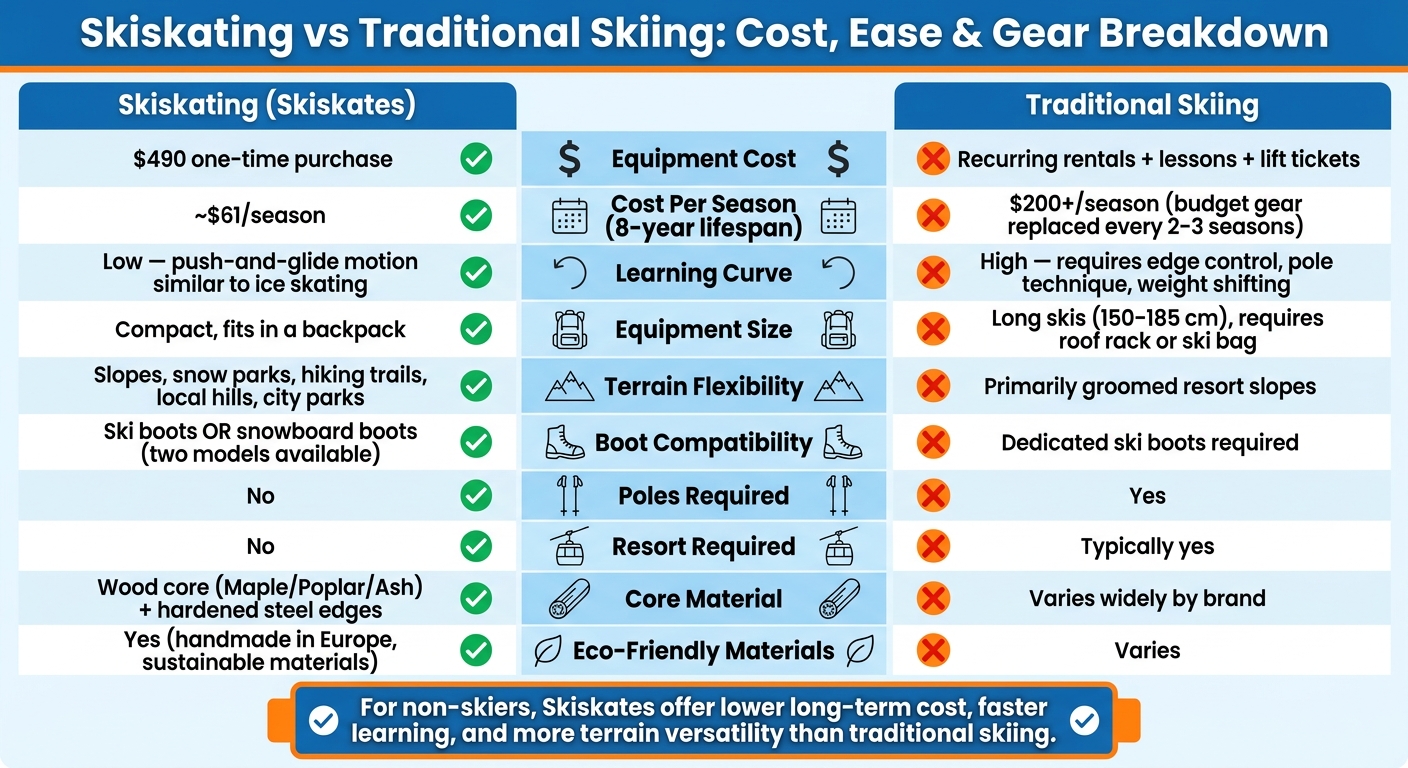
Skiskating vs Traditional Skiing: Cost, Ease & Gear Breakdown
Traditional skis can feel overwhelming for beginners. Skiskating simplifies things. Its push-and-glide motion feels natural - similar to ice skating or rollerblading - making it an approachable choice for those new to winter sports. This simplicity helps newcomers enjoy the experience right from the start.
Key Benefits for First-Time Winter Sport Participants
Unlike traditional skiing, which demands learning techniques like edge control, weight shifting, and using poles, skiskating offers a more intuitive experience. The side-to-side push-and-glide motion is easy to pick up, reducing frustration and letting beginners enjoy the snow almost immediately.
Cost is another factor. Skiing often involves recurring expenses like rentals, lessons, and lift tickets. Skiskates, priced at $490.00 for a one-time purchase, are compact enough to fit in a backpack. This eliminates the need for costly rentals or storage fees, making them a budget-friendly option over time.
The design of skiskates also plays a big role in their beginner-friendly appeal. Their shorter length makes them more responsive, giving users better control and boosting confidence from the very first try. For non-skiers, this makes skiskating an ideal way to embrace winter activities.
Where Skiskating Can Be Used
One of the standout features of skiskates is their versatility. They’re designed for various terrains, including downhill slopes, snow parks, hiking trails, and sledding hills. This means you don’t need a lift ticket or a groomed trail to enjoy them. Whether it’s a snow-covered local park, a nearby sledding hill, or a resort slope, skiskates let you make the most of any snowy landscape.
This adaptability is especially beneficial for people who aren’t near major ski resorts. With skiskates, you can explore a variety of terrains, maximizing your investment whether you’re in Colorado, the Midwest, or the Northeast. Their flexibility ensures that winter fun is always within reach.
How to Choose the Right Skiskating Equipment
Picking the right skiskating gear starts with understanding your boot compatibility and the type of terrain you’ll be tackling. Making the right choice upfront not only saves you money but also ensures a smoother, more enjoyable first experience on the snow.
Skiskates Models and Their Best Uses
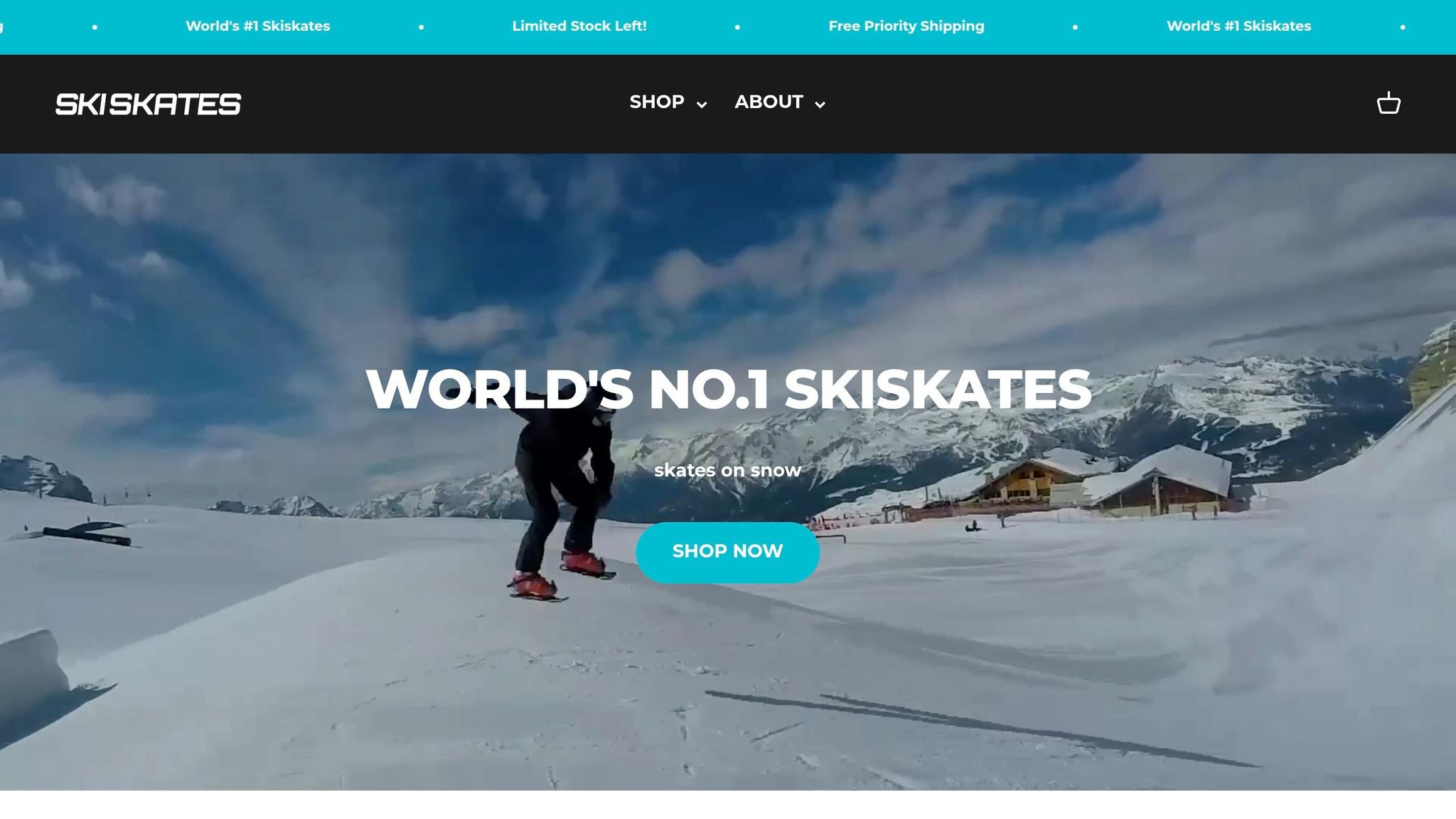
There are two skiskates models available, both priced at $490.00. The key difference lies in their compatibility with specific boot types.
| Model | Best For | Ideal Terrain |
|---|---|---|
| Ski Boots Model | Resort use, maximum control | Groomed slopes, ski parks |
| Snowboard Boots Model | Casual use, everyday comfort | Local hills, snow parks, hiking trails |
If you already own hard-shell ski boots and plan to stick to groomed slopes or resorts, the Ski Boots Model is your best bet. It offers superior control and precision for these environments. On the other hand, if you’re looking for a more laid-back setup or plan to explore local hills without needing a lift ticket, the Snowboard Boots Model is the way to go. This model works seamlessly with softer snowboard boots or even standard winter footwear, making it a versatile choice for casual outings or hikes.
Both models come with adjustable, tool-free bindings, a lightweight design, and a wood core reinforced with steel edges. This thoughtful design not only ensures durability but also makes the gear beginner-friendly. Plus, the use of sustainable materials reflects a commitment to eco-conscious practices.
Once you’ve chosen the right skiskates, don’t forget to gear up with safety and comfort essentials to make the most of your time on the snow.
Safety and Comfort Gear to Have Ready
Your skiskates are just one part of the equation - safety and proper clothing are just as important. Start with a well-fitted helmet, especially if you’re new to slopes or snow parks. Adding knee and wrist pads is a smart move too. These inexpensive items can significantly reduce the risk of injury during those inevitable early falls.
Dressing appropriately for winter conditions is crucial. Layering is your best friend: wear a moisture-wicking base layer, an insulating mid-layer, and a waterproof outer shell to handle the wide range of temperatures you might encounter, from the Rockies to the Northeast. Don’t skimp on waterproof gloves and thermal socks either - cold hands and feet can quickly ruin a session. Finally, take a few minutes to stretch before hitting the snow to help prevent muscle strains and keep you moving comfortably.
Getting Started: Basic Skiskating Techniques
Once you're geared up, it's time to get moving! The beauty of skiskating lies in its simplicity - there’s no need for prior skiing experience. The techniques are based on natural movements like walking and balancing, making it approachable for just about anyone. Plus, learning these basics not only boosts your confidence but also ensures a safer and more enjoyable experience. With these skills, you'll be ready to tackle a variety of terrains as you progress.
Step 1: Balance and Gliding on Flat Ground
Start with a quick warm-up; stretching helps loosen muscles and reduces the chance of strain, especially in cold conditions. Find a flat, open snow-covered area - think the edge of a parking lot, a gentle meadow, or a groomed resort trail.
Once you secure your Skiskates with their tool-free bindings, stand still for a moment to get used to the feel. Then, push off gently. It’s normal to feel a bit wobbly at first, so keep your knees slightly bent and your weight centered. Use short, controlled pushes to glide forward, focusing on maintaining your balance. With just a little practice, you'll feel more stable and confident.
Step 2: Turning and Stopping Safely
After getting comfortable with gliding, it’s time to practice turning and stopping. To slow down, shift your weight gradually and tilt the steel edges of your Skiskates inward - this increases friction and allows for a smooth stop. For turning, press down on the foot in the direction you want to go and lean your body that way. The steel edges will grip the snow, giving you control as you turn. Start with wide, easy turns and, as you gain confidence, work toward sharper, more precise maneuvers. Controlled weight shifting will naturally improve both your turns and stops as your movements become smoother over time.
Once you've got these basics down, you'll be ready to explore beginner-friendly trails, resorts, or even local snowy parks!
Where to Go Skiskating in the U.S.
Now that we've covered how accessible and flexible skiskating can be, let's dive into the best places to practice across the U.S. Whether you're a beginner or just looking for a new spot to enjoy, you'll find plenty of options that don’t require a world-class ski resort. From well-maintained trails to local parks, there’s something for everyone.
Beginner-Friendly Resorts and Snow Parks
Lake Morey Resort in Fairlee, Vermont is home to the longest natural ice skating trail in the U.S. - a 4.5-mile loop around Lake Morey. This trail is free to use and comes with perks like a warming clubhouse and equipment rentals. Todd Maurer, Founder of The Exploreist, describes it perfectly:
"Fairlee, Vermont, is home to the longest natural ice skating trail in the U.S., winding nearly 4.5 miles around Lake Morey through a postcard-perfect winter landscape."
Nearby, Dartmouth Skiway offers beginner-friendly slopes with a relaxed vibe, making it a great place to transition from flat gliding to gentle hills. As Maurer notes, "It's easy to spend your morning skating the lake and your afternoon riding the lifts."
If you're out West, Yellowstone National Park provides a variety of scenic winter trails, including the Horse Butte Trail and paths along Hebgen Lake. For those in the Northeast, Adirondack Park in New York is another great choice. Its frozen lakes often host winter sports events organized by groups like the Adirondack Mountain Ensemble Club (AMEC).
Local Hills and Everyday Spots
You don’t have to travel far to enjoy skiskating. Suburban hills, city parks, and open fields make excellent practice grounds, especially after a fresh snowfall. Look for areas with gentle, consistent slopes and packed snow for the best experience. In urban areas, check for refrigerated outdoor skating surfaces. For example, The Ribbon in Toledo, Ohio, offers rolling hills and soft curves that mimic natural terrain.
These locations, whether at famous resorts or right in your neighborhood, make skiskating accessible for everyone.
| Location | Type | Why It Works for Beginners |
|---|---|---|
| Lake Morey, Fairlee, VT | Natural ice trail | 4.5-mile loop; free access; equipment rentals available |
| Dartmouth Skiway, NH/VT | Ski resort | Relaxed slopes; low-pressure environment |
| Yellowstone National Park, WY | National park | Packed winter trails, including the Horse Butte Trail and Hebgen Lake |
| Adirondack Park, NY | State park | Frozen lakes with organized winter sports events |
With these spots in mind, you're well on your way to finding the perfect place to refine your skiskating skills. Next, we’ll explore how to choose the right gear to enhance your experience and get the most out of your time on the snow.
Skiskates: Materials, Build Quality, and Long-Term Value
Let’s take a closer look at what skiskates are made of and why investing in quality gear pays off in the long run.
What Skiskates Are Made Of
Crafted in Europe, skiskates are built using a wood core - typically Maple, Poplar, or Ash - that provides flexibility, energy return, and durability. As Jason Levinthal, founder of J Skis, explains:
"Maple is a very expensive high quality hard wood... Maple absorbs impact, and has a ton of energy for a very ski feel and long life."
Maple, in particular, stands out for its ability to absorb impact while maintaining longevity. The design also includes hardened steel edges, which ensure a secure grip and precise control on icy or packed snow. Cap construction further reduces weight, making skiskates more user-friendly, especially for beginners. Additionally, many models feature sintered P-Tex bases, which are excellent at absorbing wax for a smoother glide and better resistance to scratches.
| Material | Benefits |
|---|---|
| Wood Core (Maple/Poplar/Ash) | Flexibility and energy return |
| Hardened Steel Edges | Improved grip and precision on icy terrain |
| Sintered P-Tex Base | Better wax absorption and scratch resistance |
| Cap Construction | Lightweight, beginner-friendly design |
These carefully chosen materials not only enhance performance but also ensure the skiskates hold up over time, making them worth the initial investment.
Why Buying Quality Gear Saves Money Over Time
High-quality skiskates are built to last, offering excellent performance for years. While they may have a higher upfront cost, their durability makes them a smart financial choice for winter sports enthusiasts. For example, well-made skiskates can last 8–10 years, whereas cheaper options often need replacing every 2–3 seasons.
Let’s break it down: Spending $490 on a pair of skiskates that lasts eight years works out to about $61 per season. On the other hand, opting for a budget-friendly pair priced at $400 but requiring replacement every two seasons could cost $200 or more per season. As Little Ed's Ski & Bike Shop aptly puts it:
"Buying cheap gear that falls apart after one season actually costs you more in the long run."
Another advantage of investing in quality skiskates is their serviceability. Hardened steel edges, for instance, can be filed and re-tuned multiple times, extending their lifespan and reducing the need for frequent replacements. This makes high-quality skiskates not just a better choice for performance but also a smarter long-term investment.
Conclusion: Start Your Winter Sport Journey with Skiskates
Winter sports don’t always have to involve full-length skis or snowboards. Skiskating offers a fresh way to enjoy the snow, with an easy learning curve, adaptability to different terrains, and gear designed to last. It’s a sport that builds on the balance and coordination you already use in your everyday life, making it a great introduction for those new to snow-based activities.
When it comes to cost, Skiskates provide solid value for durable winter gear. Priced at $490 per pair, they are built to deliver long-term performance without constant replacements. Skiskates also cater to different preferences with two models - one for ski boots and another for snowboard boots - both handmade in Europe using eco-friendly materials. For those wanting a more budget-friendly entry, the Snowfeet Basic, also by Skiskates, starts at $190, offering an affordable way to test the waters.
As one traveler wisely put it:
"If you're looking for winter sports but don't like skiing, there are plenty of options to play in the snow."
Skiskating is one of those options, and it’s a perfect time to give it a try.
FAQs
Do I need to know how to ice skate first?
No prior ice skating experience? No problem! Skiskating and short ski activities are perfect for beginners. They're designed to be easy to pick up and enjoyable for everyone, even if you've never set foot on the ice before. These winter activities focus on making the experience fun and approachable, so you can dive right in without any hesitation.
Which model should I get for my boots?
When selecting a pair, make sure the model works with your boots and is specifically crafted for skiskates. These options are perfect for beginner-friendly winter activities and are particularly suited for those who don’t ski. Look for models that emphasize simplicity and are easy to use, making them ideal for anyone just starting out in winter sports.
Can I use skiskates off a ski resort?
Skiskates are perfect for a variety of winter activities and can handle different snowy terrains, not just ski resorts. Their portability and ease of use make them an excellent choice for enjoying outdoor areas without relying on traditional ski slopes.


Leave a comment
This site is protected by hCaptcha and the hCaptcha Privacy Policy and Terms of Service apply.