

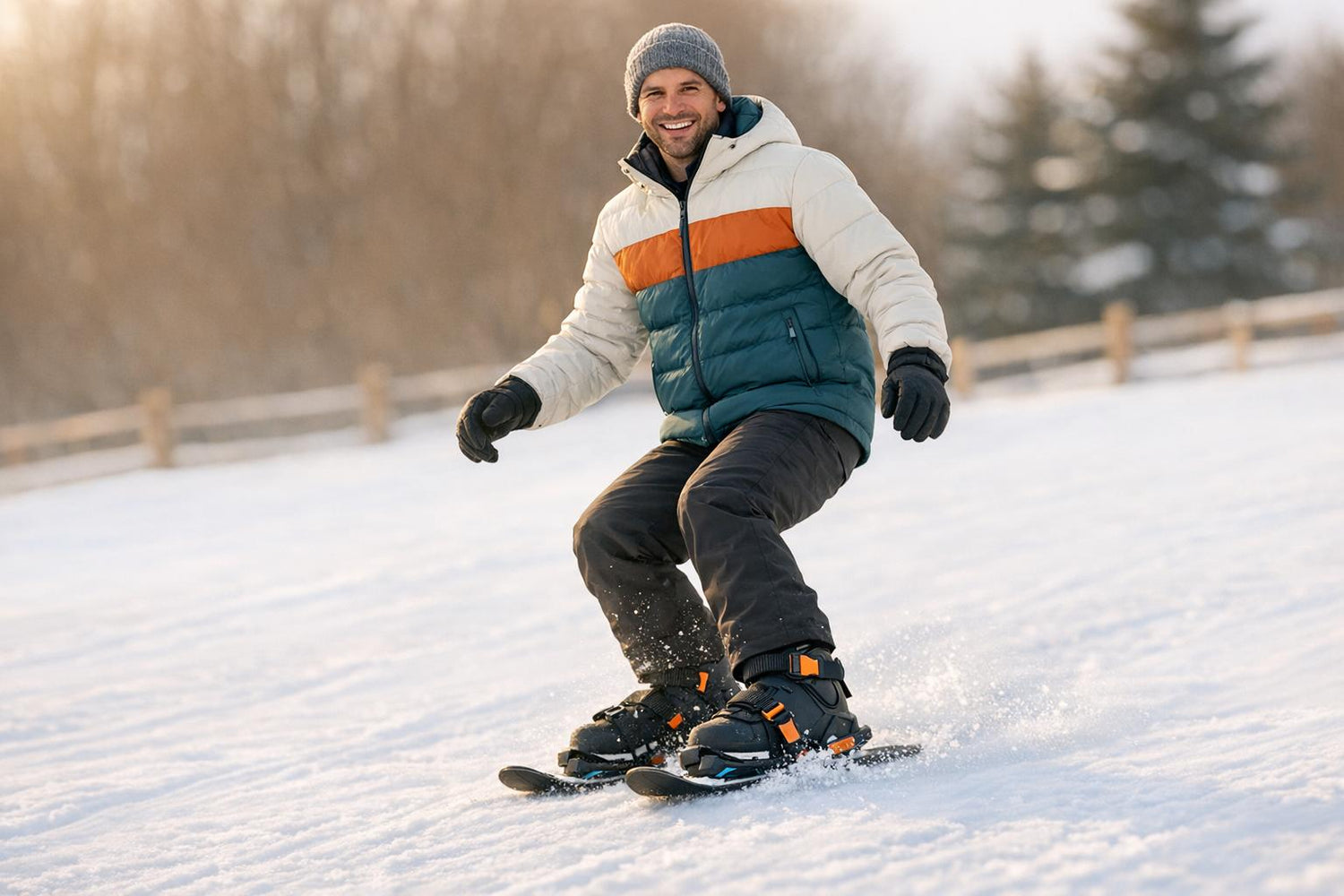
Skiskates are a compact and easy way to enjoy winter sports without the hassle of traditional ski gear. These mini skis combine the feel of skating and skiing, making them ideal for beginners and casual riders. They strap onto your existing ski or snowboard boots and are small enough to fit in a backpack, offering convenience and portability.
Key Highlights:
- What Are They? Miniature skis designed for easy use and portability.
- Who Are They For? Perfect for beginners, families, or anyone wanting a fun, low-effort snow experience.
- Models & Pricing: Options range from $190 for entry-level to $590 for advanced models.
- Ease of Use: Tool-free adjustable bindings and a natural motion make them beginner-friendly.
- Durability: Built with a wood core and steel edges for performance and longevity.
Skiskates are perfect for gentle slopes, snow parks, or even sledding hills. They’re fun, simple to use, and a great way to enjoy snowy days without the burden of heavy gear.
How Skiskates Work: Design and Features
Core Design and Build
Skiskates stand out with their compact, short, and wide shape, combined with upturned tips that make it easier to glide through snow without snagging. This design gives you better control, especially on groomed runs.
The materials used are built for durability and performance. At the heart of skiskates is a wood core, a material long trusted in ski manufacturing. As SENDY.io explains:
"Wood remains the preferred material in high-performance skis due to its resilience, energy return, and natural flex pattern."
Adding to their toughness are hardened steel edges, which provide dependable grip whether you're carving turns or tackling firmer snow. The cap construction, where the top sheet wraps around the edges, not only reduces weight but also reinforces strength - ideal for maintaining mobility throughout the day.
These features are paired with adaptable bindings that make switching boots quick and easy.
Bindings and Boot Compatibility
The bindings on skiskates are designed with convenience and versatility in mind. They’re adjustable and tool-free, allowing you to switch between ski boots and snowboard boots effortlessly. You don’t need any extra tools - just snap the bindings into place and adjust as needed.
This flexibility is especially handy when riding with friends who use different boot types or if you’re using rental gear. The bindings securely hold both styles of boots, ensuring your foot stays firmly in place while you ride.
On-Snow Feel and Control
Riding skiskates feels a lot like skating. Your feet move independently, and you steer by shifting your weight from side to side. This makes them a great choice for anyone looking for laid-back winter fun. If you’ve ever been on a skateboard or ice skates, the motion will feel natural. Even beginners can quickly get the hang of it on smooth, gentle slopes.
The steel edges make turning simple. Just lean into a turn, and the edges grip the snow, guiding you smoothly through. Thanks to their shorter length, skiskates allow for tighter turns without requiring wide, sweeping movements. Small shifts in balance and stance are all you need to stay in control, making the whole experience easygoing and approachable.
sbb-itb-32287b2
Snowfeet* & Skiskates Tutorial - How to Become a PRO Skiskater
Choosing the Right Skiskates Model
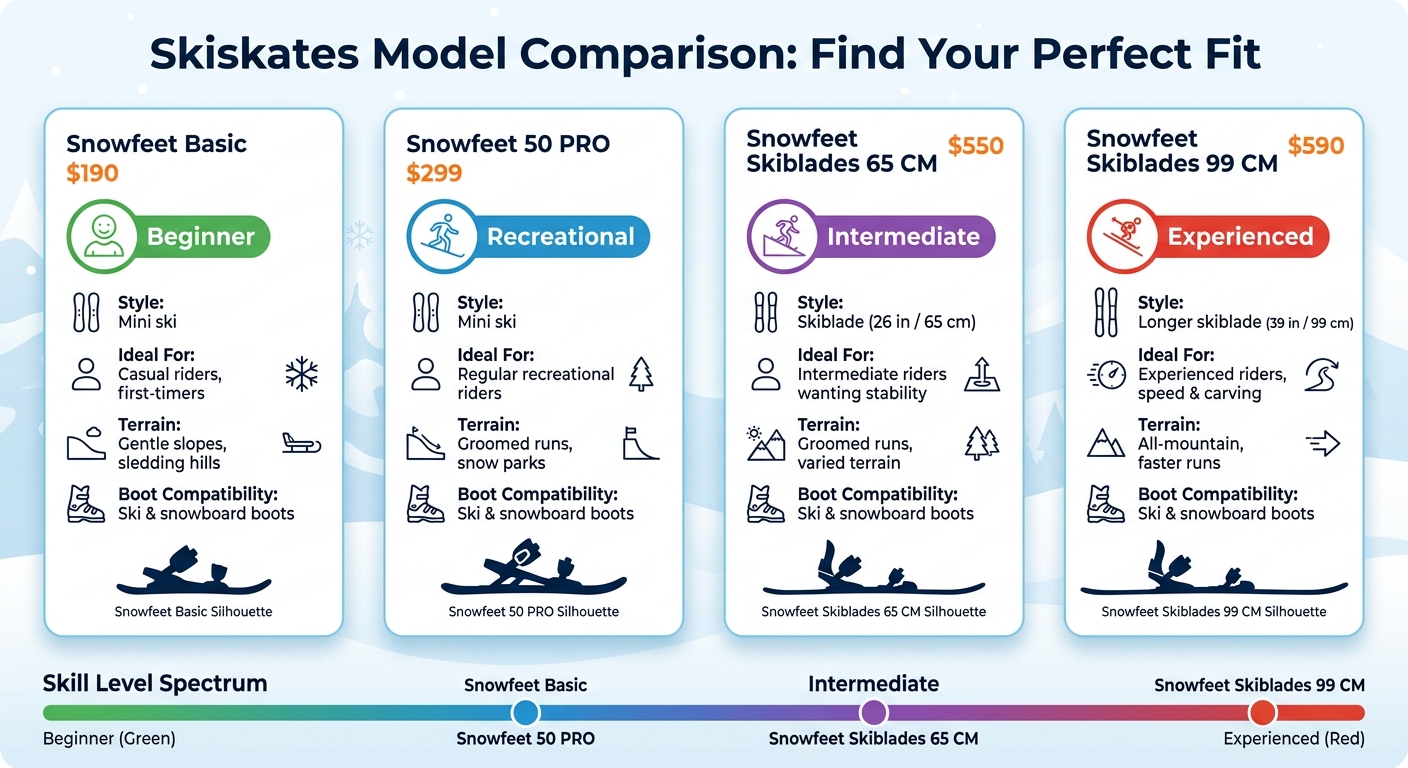
Skiskates Model Comparison: Find Your Perfect Fit
When it comes to winter fun, picking the right Skiskates model is all about matching your style and skill level with the features that suit you best.
Skiskates Product Range Overview
Skiskates offers a variety of models tailored to different needs, from beginners to seasoned riders. For those just starting out, the Snowfeet Basic is a great choice at $190. This compact mini ski skate is perfect for casual fun and learning the ropes. If you're looking for something more durable for regular use, the Snowfeet 50 PRO ($299) steps up with sturdier materials designed for recreational riders.
For those who enjoy a more traditional skiing experience, the Snowfeet Skiblades series provides two distinct options. The Snowfeet Skiblades 65 CM (26 in, $550) strikes a balance between stability and agility, making it ideal for groomed slopes. On the other hand, the Snowfeet Skiblades 99 CM (39 in, $590) offers enhanced control, making it a great fit for experienced skiers tackling faster runs and dynamic turns.
How to Match a Model to Your Needs
Choosing the right model depends on your experience and the type of terrain you prefer.
- If you're new to winter sports or just want something easy and fun, the Snowfeet Basic is a fantastic entry-level option.
- For those who ride more frequently and need something tougher, the Snowfeet 50 PRO provides the durability and performance required for regular outings.
For skiers with some experience who want more stability on groomed runs, the Snowfeet Skiblades 65 CM (26 in) offers a secure feel while still allowing for quick maneuvers. If you're comfortable with speed and carving, the Snowfeet Skiblades 99 CM (39 in) is your go-to, offering extra control for more challenging terrains.
Skiskates Model Comparison Table
| Model | Length/Style | Ideal For | Boot Compatibility | Terrain | Price |
|---|---|---|---|---|---|
| Snowfeet Basic | Mini ski | Beginners, casual riders | Ski & snowboard boots | Gentle slopes, sledding hills | $190 |
| Snowfeet 50 PRO | Mini ski | Regular recreational riders | Ski & snowboard boots | Groomed runs, snow parks | $299 |
| Snowfeet Skiblades 65 CM | Skiblade (26 in) | Intermediate riders | Ski & snowboard boots | Groomed runs, varied terrain | $550 |
| Snowfeet Skiblades 99 CM | Longer skiblade (39 in) | Experienced riders | Ski & snowboard boots | All-mountain, faster runs | $590 |
Where and How to Use Skiskates
Good Spots for Casual Skiskating
Skiskates perform best on groomed snow, offering a smooth and predictable glide. For beginners and intermediate riders, resorts like Breckenridge and Vail in Colorado or Park City in Utah are excellent choices. These locations feature well-maintained slopes with gentle gradients, perfect for a relaxed ride. If you're not ready to commit to a full day at a resort, consider heading to a local sledding hill or even a snow-covered park path. These spots are great for trying out models like the Snowfeet Basic or Snowfeet 50 PRO. Thanks to their compact size, Skiskates are easy to pack, making them perfect for spontaneous outings. Once you've picked your spot, learning the basics will help you get the most out of your ride.
Basic Techniques for New Riders
Getting started with Skiskates is pretty straightforward, but a few key techniques can make the experience much smoother. Start by positioning your feet in a slight V shape, with your toes pointing outward. This stance helps maintain balance and allows for a steady glide. One of the most crucial habits is keeping your hips forward. Bend at your ankles and knees to ensure your weight stays over the front of the skates, avoiding the common mistake of leaning back.
"The key to skate skiing fast is preserving your forward momentum and letting gravity do all of the work for you, even if you are heading up a hill. To do this, you've got to bend at the ankles and knees to get your hips forward." - Charlotte Ogden, Retired Nordic Ski Racer
Relax and enjoy the process. As Ogden says, "Just getting outside and having fun is always more important than having perfect technique." Start on gentle terrain to build confidence before tackling steeper slopes. Once you're comfortable with the basics, focus on safety and comfort to make your experience even better.
Safety and Comfort Tips
A certified helmet is a must for safety - look for one that meets ASTM or CPSC standards and provides adequate coverage for the back of your head. Standard bike helmets won't cut it for snow sports. Adding wrist guards is also a smart move, as most falls involve instinctively reaching out with your hands. To further protect yourself, consider wearing knee and elbow pads.
When it comes to staying comfortable, layering is the way to go. Slope temperatures can vary throughout the day, so a moisture-wicking base layer paired with a wind-resistant outer shell will keep you warm without overheating. Before hitting the slopes, double-check that your bindings are secure and your boots are properly locked in. Loose bindings can quickly throw off your balance, especially on downhill runs.
How to Care for Your Skiskates
Drying and Storing Your Skiskates
After each use, wipe your skiskates with a soft cloth to remove moisture, dirt, and salt. This step is crucial to prevent rust from forming on the metal parts. Be thorough while cleaning to ensure no residue is left behind.
Once cleaned, allow the bases to air dry completely for at least 5–10 minutes before putting them away. Store them flat in a dry, room-temperature space. Avoid areas like attics or crawl spaces, as these environments can become excessively hot in the summer.
"Store lying down in an environment that doesn't get too warm. Do not store skis upright standing on their tails. Do not store skis in attics or crawl spaces where temperatures can be very hot in the summer." - Roger Knight, Boulder Nordic & Cycle Sport
Also, keep your skiskates out of direct sunlight during storage. Prolonged exposure to UV rays can cause the base materials to become brittle over time.
Edge and Base Upkeep
Proper storage is just the beginning - routine edge and base maintenance is key to keeping your skiskates in top shape. To check the sharpness of the edges, use the fingernail test: lightly drag a fingernail along the edge. If it shaves off a small amount of nail, the edge is sharp. If it slides without resistance, it's time for a touch-up.
Plan to sharpen the edges once or twice a season. For minor nicks, a gummi or diamond stone works well to smooth them out. As for the base, applying a fresh coat of wax at the start and midway through the season ensures a smooth glide and protects the surface.
If you'd rather leave it to the pros, a basic tune - which includes a base grind, edge sharpening, and waxing - costs about $40, while a full tune runs closer to $60. If you only need waxing, machine waxing typically costs around $18, while hand waxing is about $25.
Keeping Your Skiskates in Good Shape Long-Term
Seasonal maintenance is another way to extend the life of your skiskates. At the end of the season, apply a layer of storage wax to the bases. This protective layer prevents oxidation during storage, so don’t scrape it off until the next season.
"Storage rooms, garages and basements are typical places where skis are stored over the summer. They also typically contain a lot of dust that will end up on the base of your skis. This will in turn produce a dry base, which will be harder to glide on next season." - Swix
When the new season begins, simply scrape and brush off the storage wax to reveal a fresh base. Before hitting the slopes, perform a quick pre-season check:
| Check | What to Look For |
|---|---|
| Edges | No rust, burrs, or dull spots |
| Base | Free of deep scratches or dry patches |
| Bindings | Secure fit, no cracks or looseness |
| Hardware | Screws and bolts are tight |
With regular care, your skiskates can last for many seasons. Watch for signs like squeaky bearings, dirt buildup on the base, or a noticeable drop in glide performance - these indicate it’s time for a tune-up or hardware inspection. Routine maintenance ensures your skiskates are always ready for smooth, enjoyable rides.
Why Skiskates Are a Great Pick for Casual Winter Fun
Skiskates are a simple and portable way to make the most of a snowy day without the hassle of heavy equipment. At $490, they’re a one-time buy that packs a lot of joy into a compact package. Toss them in your backpack - no need for a roof rack or oversized ski bag.
Their convenience makes them perfect for beginners or anyone looking for quick fun. Whether it’s a weekend getaway with friends, a few hours on the local sledding hill, or a relaxed run through a snow park, skiskates let you jump into the action with ease. They blur the line between laid-back afternoons and spur-of-the-moment adventures, making them a go-to for low-pressure winter fun.
Skiskates are all about keeping things lighthearted. They’re made for sliding around, trying a spin or two, and ending the day with a grin - not a long training session. By cutting out the usual winter sport frustrations, skiskates deliver an easy, carefree way to enjoy the snow.
FAQs
Do I need special boots for skiskates?
Skiskates are built to pair with regular winter boots, provided they offer solid ankle support and fit snugly. There's no mention of requiring specialized boots, so as long as your winter boots meet these basic requirements, they should work perfectly with skiskates.
Can I use skiskates at most ski resorts?
Skiskates are welcome at most ski resorts. Their compact, portable design makes them ideal for recreational use in snowy settings. However, it’s always a good idea to check the specific policies of the resort you plan to visit to confirm they allow skiskates.
How steep is too steep for skiskates?
Specific guidelines on the steepest slopes suitable for skiskates aren't clearly defined. To stay safe, choose slopes that align with your skill level and confidence. If you're a beginner, stick to mild inclines to build your technique. More experienced users can try steeper slopes but should approach them with caution. Always focus on maintaining control and prioritizing safety when deciding where to ride.


Leave a comment
This site is protected by hCaptcha and the hCaptcha Privacy Policy and Terms of Service apply.