

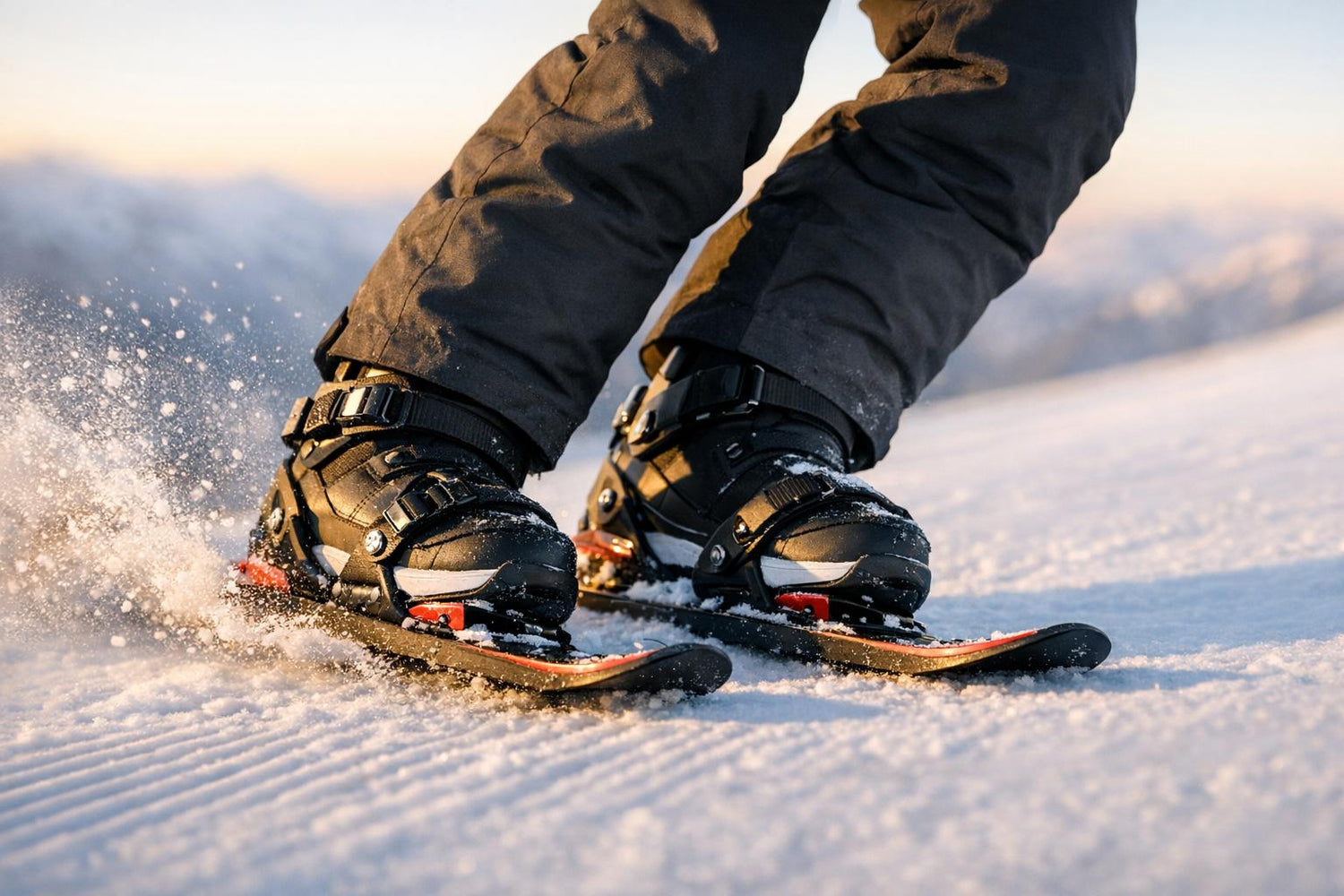
Yes, you can use snowboard boots for skiskating, but it depends on your priorities. Snowboard boots offer comfort, warmth, and flexibility, making them suitable for casual skiskating or freestyle tricks. However, they lack the rigid lateral support and precise control needed for aggressive carving or high-speed runs. To use snowboard boots with skiskates, you'll need non-release bindings designed for short skis, which are safe for skiskates up to 100 cm in length. These bindings provide a secure fit but don't release during falls, so staying on groomed trails is recommended.
Here’s the breakdown:
- Snowboard Boots: Flexible, warm, and comfortable. Great for freestyle moves but less stable for technical or high-speed skiing.
- Skiskating Boots: Stiff, with high ankle support for better control and safety. Ideal for carving and steep terrain but less comfortable off the slopes.
- Bindings: Snowboard boots require non-release bindings, while skiskating boots pair with DIN-rated release bindings for added safety.
If you value comfort and ease of movement, snowboard boots are a good option for skiskating under 100 cm. But for more demanding conditions, skiskating boots provide better performance and safety.
Quick Comparison:
| Feature | Snowboard Boots | Skiskating Boots |
|---|---|---|
| Comfort | High | Low |
| Support | Moderate | High |
| Performance | Good for tricks, less for speed | Great for carving and speed |
| Safety | Non-release bindings | DIN-rated release bindings |
| Price Range | $200–$700 | $200–$900+ |
Choose based on your skiing style and terrain. For casual riders, snowboard boots work well. For technical skiing, skiskating boots are the better choice.
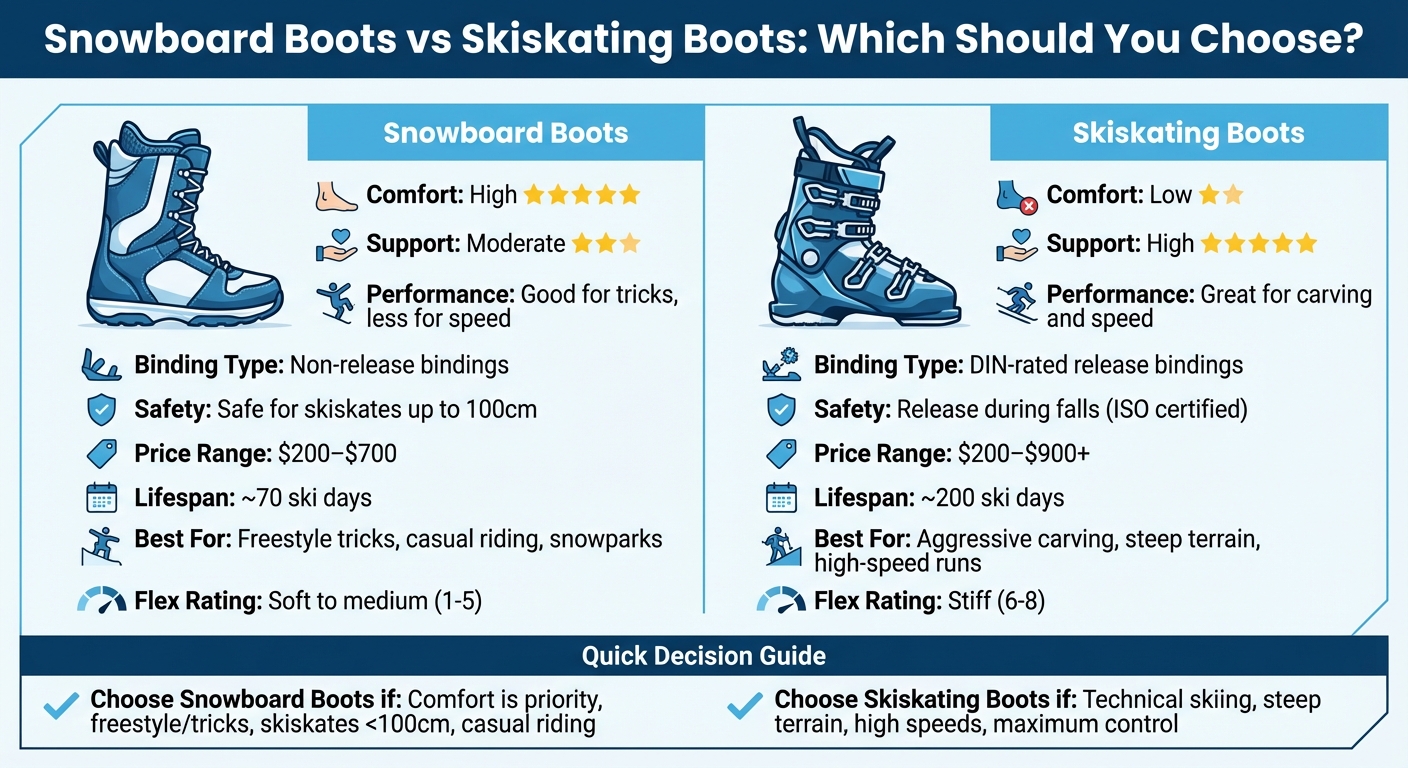
Snowboard Boots vs Skiskating Boots Comparison Chart
1. Snowboard Boots
Design and Support
Snowboard boots are crafted with softer materials, giving your ankles more freedom to move and making them more comfortable for walking off the slopes. In contrast, traditional skiskating boots are stiff, with high cuffs and rigid soles made from hard plastic or carbon fiber. These features are designed to provide strong lateral support but can feel restrictive in comparison .
Binding Compatibility
To use snowboard boots with skiskates, you'll need specialized non-release bindings, which are typically pre-installed by the manufacturer. These bindings feature a two-strap system - one for the ankle and one for the toe - designed to fit the narrower profile of skiskates. Standard snowboard bindings don’t work here because they’re too wide for the short skis, and trying to modify them with DIY riser platforms could compromise both safety and control. These specialized bindings are usually compatible with boot sizes ranging from US 6 to 14.5 (EU 38–49), making them versatile for a wide range of users. This compatibility is key to ensuring the boots perform well on skiskates .
Safety
One important feature of snowboard boot bindings for skiskates is that they are non-release, meaning they stay attached even if you fall. According to manufacturers, these bindings are safe to use with skiskates up to 100 cm in length. As the Snowfeet Team explains:
Non-release bindings are perfectly safe, as long as they are used with skiboards no longer than 100 cm.
Before hitting the slopes, double-check that both the ankle and toe straps are securely fastened. Stick to groomed slopes, hiking trails, or local hills for the best experience, and avoid deep powder (over 4 inches) or steep, ungroomed terrain where extra support might be necessary. This safety setup is designed to help you ride confidently in most conditions.
Performance
Thanks to their flexible design, snowboard boots are a great match for freestyle riding. They make it easier to pull off jumps, twists, and tricks that would be much harder in stiffer boots. The Snowfeet Team highlights this advantage:
Snowboard bindings offer flexibility for tricks, unmatched comfort, and easy mobility, enhancing your ski trip experience.
However, this flexibility has its trade-offs. While snowboard boots excel in comfort and versatility, they don’t provide the same rigid power transfer that traditional skiskating boots offer. This makes them less ideal for aggressive carving or high-speed runs. That said, many riders with experience in ice hockey, ice skating, or inline skating find the movement natural and intuitive.
sbb-itb-32287b2
2. Skiskating Boots
Design and Support
Skiskating boots, whether alpine ski boots or Nordic skate boots, are built with a distinct focus on performance. Unlike snowboard boots, they feature a rigid plastic shell and a high ankle cuff designed to lock your foot securely in place. This design provides the lateral stability needed for pushing off the ski's inside edge, which is critical for maintaining control. The rigid construction also ensures that power transfers directly from your leg to the ski edge, making it ideal for sharp carving and high-speed maneuvers. In comparison, snowboard boots are designed with walking comfort in mind, which sacrifices some of the control that skiskating boots prioritize.
Performance
The stiff structure of skiskating boots is what sets them apart when it comes to performance. Their design allows for precise power transfer, making them perfect for technical skiing, steep terrains, and fast-paced runs. However, this performance-focused design does come with drawbacks. Skiskating boots are less comfortable for walking off the slopes and can feel restrictive compared to softer boots. That stiffness, though, is a trade-off that provides the support and control skiers need for demanding conditions.
Safety
The differences in design and performance also play a role in safety. Skiskating boots are paired with DIN-rated release bindings, which adhere to ISO standards like ISO 5355 or ISO 23223. These bindings are engineered to release during falls, reducing the risk of injuries. Additionally, the enhanced ankle support provided by skiskating boots helps protect against injuries during crashes, a feature that sets them apart from snowboard boots, which use non-release systems. This combination of support and safety mechanisms makes skiskating boots a crucial choice for technical skiing.
Snowfeet* & Skiskates Complete Guide | All you need to know about Skiskating
Pros and Cons
Let’s break down the main strengths and weaknesses of each boot type based on their features and uses.
Snowboard boots are known for their comfort and flexibility, thanks to their soft-shell design. They’re easy to walk in and feel much more natural on your feet, making them a great choice for skiskates under 100 cm. However, this comfort comes at a cost - control. Compared to skiskating boots, snowboard boots offer only moderate control, which might not be ideal for more technical or aggressive skiing.
On the other hand, skiskating boots are all about performance and precision. Their rigid plastic shells and high ankle cuffs deliver excellent edge control, especially for high-speed carving and steep terrain. They also come with added safety features, but the downside is their stiffness, which makes walking off the slopes a challenge.
"Snowboard boots are one of the most comfortable footwear for winter sports. Using them with skis and getting rid of the stiff ski boots is every skier's dream." - Snowfeet Team
When it comes to durability and cost, there’s a noticeable difference. Snowboard boots typically last around 70 ski days and are priced between $200 and $700. In contrast, high-performance skiskating boots can endure up to 200 ski days, with prices ranging from $200 to over $900. This gap highlights the contrasting priorities of each design - comfort versus high performance.
For casual skiskating on trails, local hills, or in snowparks, the comfort and support of snowboard boots might be the better option. But if you're tackling high-speed, aggressive runs, the rigid construction of skiskating boots becomes a necessity.
How Snowboard Boots Perform on Different Skiskates
The performance of snowboard boots can vary significantly depending on the skiskate model you're using. Each model - ranging from the compact Snowfeet 50 PRO to the longer Skiblades 99cm - requires a specific level of boot flex and support to optimize performance.
The Snowfeet 50 PRO (50 cm) pairs best with soft, flexible snowboard boots (flex rating 1-2). These shorter skates demand a lot of front-to-back balance and mimic the motion of ice skating. Softer boots allow for the quick, agile movements needed for tricks and the unique "skating" feel on snow. Their flexibility also supports rapid weight shifts, making them ideal for this compact model.
Moving up in size, the Skiblades 65cm strike a balance between agility and support. They work well with medium-flex boots (flex rating 3-5). This level of flexibility is perfect for twists, jumps, and quick maneuvers in snowparks, where responsiveness is key. While medium-flex boots offer solid performance for park tricks, they trade off some edge control when carving at higher speeds compared to stiffer options.
For the longer Skiblades 99cm, the ideal boot stiffness depends on your riding style. If you're cruising casually, medium-flex boots provide comfort and ease. But for aggressive carving on groomed trails, you'll want stiffer boots (flex rating 6-8) for enhanced edge power and control. Professional ski bootfitter Sam Tischendorf emphasizes the importance of stiffness for advanced skiers:
If you're an aggressive skier who tends to drive your skis actively, you need a boot with a stiffer flex.
Stiffer boots not only improve edge hold on firm snow but also help avoid that "backseat" feeling during sharp turns. Additionally, achieving a secure heel lock is essential - your heel should remain firmly in place when driving your knee forward. This ensures better control, especially during toeside turns.
All Snowfeet models accommodate snowboard boots sized 6-14.5 US (38-49 EU), so finding a compatible pair shouldn't be a problem.
Conclusion
Snowboard boots are a great option for skiskating, especially when paired with gear specifically designed for this purpose. As the Snowfeet Team has pointed out, these boots offer a level of comfort and warmth that traditional ski boots often lack, while still providing the ankle support needed to help prevent injuries.
Choosing between snowboard boots and skiskating boots comes down to balancing comfort with control. The key takeaway here? Compatibility is everything. Make sure your boots align with your riding style and the length of your skiskates. For skiskates shorter than 100 cm - like all Snowfeet models - snowboard boots with non-release bindings are a safe and effective choice.
Always stick to manufacturer-mounted bindings for safety, and ensure a secure fit if your US shoe size is below 6.
For recreational skaters, especially those with experience in ice skating or hockey, snowboard boots provide a familiar feel while keeping your feet warm and comfortable. Just remember to fasten both the ankle and toe straps securely before hitting the slopes.
FAQs
What’s the difference between snowboard boots and skiskating boots?
Snowboard boots and skiskating boots are crafted with distinct purposes in mind, which is why their design, support, and functionality differ so much. Snowboard boots are known for being softer and more flexible. This flexibility ensures comfort and allows for a greater range of motion, which is crucial for snowboarding. They're also padded to protect your ankles and are specifically shaped to fit snowboard bindings snugly.
On the other hand, skiskating boots are all about stability and precision. These boots are designed to provide firm support around the ankle, making them ideal for the dynamic movements involved in skiskating. Their structure is tailored to handle the blend of skiing and skating motions, prioritizing control over flexibility. Simply put, snowboard boots focus on freedom of movement, while skiskating boots emphasize control and support, making each perfect for its respective sport.
Are non-release bindings safe for beginners using snowboard boots with skiskates?
When it comes to using snowboard boots with skiskates, non-release bindings aren’t the best choice for beginners. These bindings don’t include the safety release mechanisms found in skiskate-compatible bindings, which are designed to minimize the risk of injury during falls or abrupt movements.
To have a safer and more comfortable experience, it’s a good idea to stick with bindings specifically made for skiskates. They offer improved security, better control, and added comfort - features that are especially helpful for those just starting out.
How does the flexibility of boots impact skiskating performance?
The flex, or flexibility, of your boots plays a big part in how you perform while skiskating. Stiffer boots are great for transferring power efficiently and providing stability, especially at high speeds or when skating downhill. The trade-off? They can feel less comfortable during long sessions or on bumpy terrain. On the flip side, softer boots are more forgiving and comfortable, making them a solid choice for beginners or casual skaters. However, they don’t offer the same level of control or precision when you're moving fast.
Skiskate models are typically designed with specific boot flex in mind. Freestyle or recreational skiskates often work best with softer boots, as they allow for easier movement and control. Meanwhile, advanced or downhill-focused skates are better suited for stiffer boots, which provide the stability and precision needed for intense skating. Picking the right boot flex is all about striking the right balance between comfort, safety, and performance, depending on how and where you like to skate.


Leave a comment
This site is protected by hCaptcha and the hCaptcha Privacy Policy and Terms of Service apply.