

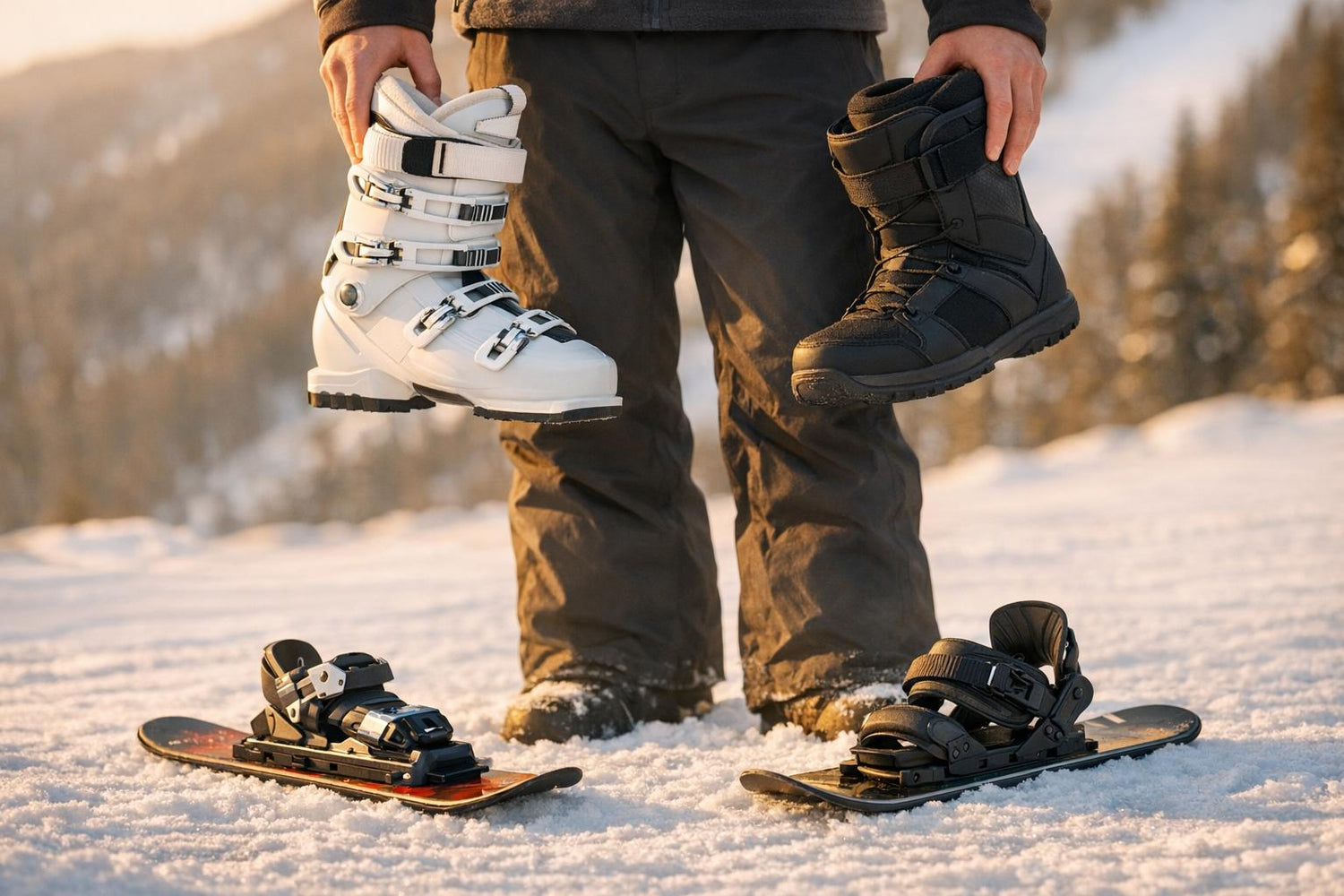
When choosing boots for skiskates, the decision comes down to ski boots or snowboard boots. Each offers unique benefits depending on your riding style and terrain preferences:
- Ski Boots: Known for their rigid structure, they provide precise edge control and stability, making them ideal for carving and downhill runs. However, they can be uncomfortable for walking and less flexible for freestyle tricks.
- Snowboard Boots: Softer and more comfortable, these boots allow greater ankle mobility, making them better for tricks, park sessions, and walking. However, they lack the precision and edge control of ski boots on icy or steep terrain.
Quick Comparison
| Feature | Ski Boots | Snowboard Boots |
|---|---|---|
| Control | High precision for carving | Moderate, suited for tricks |
| Flexibility | Low | High |
| Comfort | Tight fit, less walking comfort | Soft, cushioned for all-day wear |
| Best Terrain | Groomed slopes, downhill runs | Parks, freestyle, hiking trails |
Your choice depends on whether you prioritize precision and speed (ski boots) or comfort and flexibility (snowboard boots). A snug fit is key for both options to ensure safety and performance.
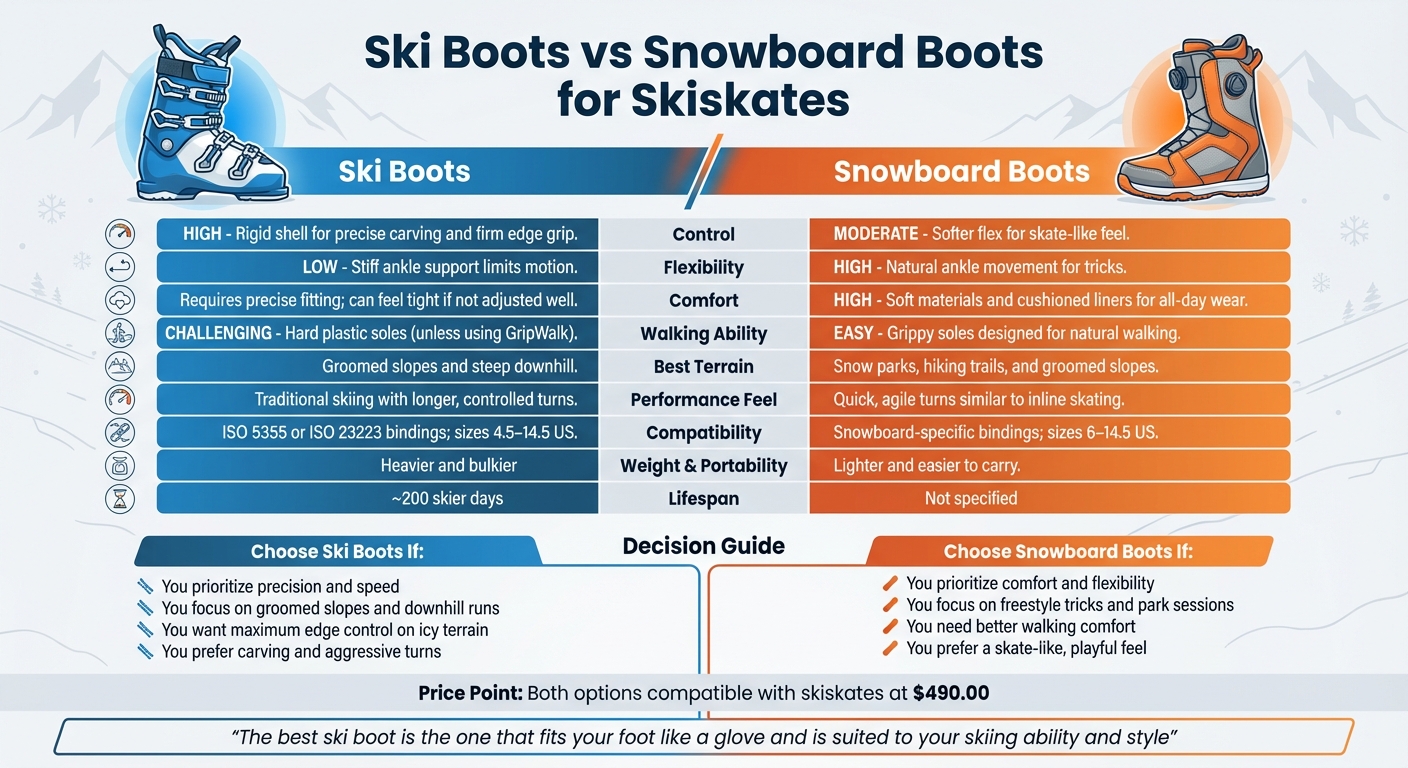
Ski Boots vs Snowboard Boots for Skiskates: Complete Comparison Guide
Ski Boots for Skiskates
What Makes Ski Boots Different
Ski boots designed for skiskates come with a rigid plastic shell that efficiently transfers power. Most alpine boots use a four-buckle system, though many now include BOA cable closures for a more precise fit.
A tall, supportive ankle cuff helps reduce unwanted movement and protects against twisting forces during sharp turns or quick directional changes. The soles are extremely stiff with little to no flex, which helps maintain energy and control when carving through turns.
Ski boots are sized using the Mondopoint system, which measures foot length in centimeters (e.g., 26.5 or 28.0). This ensures a snug, performance-focused fit. They also feature a flex index rating, where higher numbers indicate stiffer boots. As explained by REI Expert Advice:
"The more rigid your boot, the more power transfers to your skis' inside edges so they excel at downhill performance".
How Ski Boots Perform on Skiskates
When paired with skiskates, the rigid shell of ski boots allows for precise and controlled turns on groomed slopes. This is especially useful on hard-packed or icy terrain, where edge grip is critical. The Editors at Ski Magazine describe this dynamic as:
"a symbiotic relationship - the energy you generate by flexing your knees and ankles is seamlessly transferred to your skis via your boots".
Ski boots also pair well with adjustable bindings made for alpine boot soles, ensuring secure attachment. Their stiff design makes it easier to perform techniques like the hockey stop, where you turn your feet perpendicular to the slope and engage the metal edges for quick braking.
While these features make ski boots highly effective for skiskating, they do come with trade-offs depending on your style and terrain.
Downsides of Ski Boots for Skiskating
Despite their precision, the stiffness of ski boots can limit their versatility off the slopes. One major drawback is their lack of walking comfort; most alpine boots don’t include a walk mode, making movement away from the snow cumbersome.
The same rigidity that enhances carving also limits ankle flexibility, which can be a challenge for freestyle tricks or park sessions. Poorly fitting boots can further reduce comfort, leading to pressure points and discomfort. Tracy Smith, owner of Mt. Shavano Ski and Snowboard Shop, points out:
"Unfortunately, many skiers are skiing in boots that don't match their ability or don't fit properly".
On top of that, ski boots have a limited lifespan. Manufacturers estimate they last around 200 skier days before the plastic shells lose their integrity or the liners wear out. These factors make it important to choose boots that align with your specific skiskating needs.
sbb-itb-32287b2
Snowboard Boots for Skiskates
What Makes Snowboard Boots Different
Snowboard boots are designed with comfort and mobility in mind. Unlike the rigid plastic shells of ski boots, nearly all modern snowboard boots feature a semi-rigid outer shell combined with a softer internal liner. This combination allows for more natural movement. Features like softer backstays and flexible flex patterns enhance ankle mobility, which is crucial for freestyle tricks like grabs, presses, and stylish jumps. To ensure a secure and adjustable fit, these boots come with closure systems such as traditional laces, Speed Lace, or BOA. The soles are crafted with materials like EVA foam, gel pads, and rubber to absorb impacts while offering grip on snowy and icy surfaces.
As Absolute-Snow puts it:
"Softer flexing boots allow for more movement in your ankle... preferred by a lot of park and freestyle snowboarders as they have a very playful feeling and allow you to tweak grabs, press and add plenty of style to your riding."
These thoughtful design features make snowboard boots a natural fit for the unique demands of skiskating.
How Snowboard Boots Perform on Skiskates
The flexibility of snowboard boots works well with the skating-like motion required for skiskating. Since skiskating movements resemble ice skating or hockey more than traditional skiing, the increased ankle mobility makes fluid weight transfers and dynamic maneuvers easier. This flexibility is especially useful in park settings and for executing tricks. A soft flex rating (typically 1–3 on a 10-point scale) enhances the ability to spin, jump, and even ride backward.
The Snowfeet Team highlights this advantage:
"Snowboard boots are one of the most comfortable footwear for winter sports. Using them with skis and getting rid of the stiff ski boots is every skiers dream."
Additionally, the soft shell and flexible sole make walking between runs more comfortable - closer to wearing regular winter boots. Snowboard boots connect to skiskates through a non-release, two-strap binding system (with both ankle and toe straps). These bindings are adjusted to fit the narrower profile of short skis and work best with skiskates ranging in price from $490.00 to $590.00.
Downsides of Snowboard Boots for Skiskating
While snowboard boots excel in comfort and flexibility, they do have limitations, particularly on steep or icy terrain. The flexibility that benefits freestyle riding can become a drawback when carving on groomed slopes. Without the rigid support of ski boots, snowboard boots provide less precision and edge control, especially at higher speeds or on icy surfaces. The softer shell design also reduces energy transfer to the ski edges, making aggressive turns more effortful. On hard-packed runs where grip is critical, the lack of lateral stiffness can leave riders feeling less stable. For those who prioritize downhill performance over freestyle tricks, this trade-off may be a dealbreaker.
Snowfeet* & Skiskates Complete Guide | All you need to know about Skiskating
Ski Boots vs Snowboard Boots: Side-by-Side Comparison
When it comes to skiskating, the type of boots you choose can drastically affect your experience. Ski boots are built for precision, offering a rigid structure that excels in carving and maintaining stability at high speeds. On the other hand, snowboard boots prioritize comfort and mobility, with a softer design that allows for greater freedom of movement - perfect for tricks and a skate-like performance.
Your preferred terrain also plays a big role. Ski boots dominate on groomed slopes and steep downhill runs, where edge control is vital. Meanwhile, snowboard boots are ideal for snow parks and hiking trails, thanks to their flexible build and easier walking capability. As bootfitting expert Sam Tischendorf says:
"The best ski boot is the one that fits your foot like a glove and is suited to your skiing ability and style".
Here's a quick breakdown of how these boots compare:
Comparison Table: Ski Boots vs Snowboard Boots
| Feature | Ski Boots | Snowboard Boots |
|---|---|---|
| Control | High - rigid shell for precise carving and firm edge grip | Moderate - softer flex for a skate-like feel |
| Flexibility | Low - stiff ankle support limits motion | High - natural ankle movement for tricks |
| Comfort | Requires precise fitting; can feel tight if not adjusted well | High - soft materials and cushioned liners for all-day wear |
| Walking Ability | Challenging due to hard plastic soles (unless using GripWalk) | Easy - grippy soles designed for walking naturally |
| Best Terrain | Groomed slopes and steep downhill | Snow parks, hiking trails, and groomed slopes |
| Performance Feel | Traditional skiing with longer, controlled turns | Quick, agile turns similar to inline skating |
| Compatibility | ISO 5355 or ISO 23223 bindings; sizes 4.5–14.5 US | Snowboard-specific bindings; sizes 6–14.5 US |
| Weight & Portability | Heavier and bulkier | Lighter and easier to carry |
Both options pair seamlessly with skiskates priced at $490.00, allowing you to focus entirely on your performance needs. Whether you're chasing precision or playful flexibility, the right boot can make all the difference.
Which Boots to Choose for Your Skiskating Style
Your choice of boots is heavily influenced by your skiskating style, as it determines whether you prioritize precision or flexibility. Let’s break down how the technical features of boots align with different riding approaches.
Best Boots for Carving and Downhill Riding
If speed and precision on groomed slopes are your goals, ski boots are the way to go. Their rigid design creates what Tracy Smith, owner of Mt. Shavano Ski and Snowboard Shop, describes as a perfect synergy:
"When you wear ski boots that fit your skiing style and your foot... the energy you generate by flexing your knees and ankles is seamlessly transferred to your skis via your boots".
This direct energy transfer allows for sharp, controlled turns at high speeds and boosts confidence on icy terrain. For riders focused on downhill performance, stiffer boots offer the lateral support needed to tackle steep slopes. On the other hand, freestyle riders may prefer softer boots that accommodate more fluid, dynamic movements.
Best Boots for Freestyle and Tricks
While ski boots excel in precision, snowboard boots shine in flexibility, making them the top choice for freestyle maneuvers. Boots with a soft to medium flex are ideal for terrain parks and trick-heavy riding. Their forgiving nature minimizes unintended movements, which is particularly helpful when learning new tricks or recovering from off-balance landings. As UtahSkis puts it:
"A soft flexing boot will aid in keeping your set up forgiving so that you aren't transferring energy to the board unintentionally".
This adaptability is crucial for freestyle enthusiasts who value mobility and creativity. For added comfort, look for boots with extra underfoot cushioning - many models feature damping systems to absorb impact during hard landings. Softer boots also pair well with shorter skiskates, enhancing agility and a playful feel on the mountain.
What to Consider When Choosing Boots
The right fit is everything. Your boots should feel snug without being painful, adapting naturally as you flex. Don’t rely on thick socks to fix a loose fit; instead, use thin, moisture-wicking socks to retain warmth and ensure efficient energy transfer.
Match your boot’s flex rating to your skill level and riding style. Beginners should aim for softer flex ratings (around 70–90), while advanced riders carving on steep slopes will benefit from stiffer options. Think about where you’ll be spending most of your time - groomed trails, terrain parks, or even hiking trails - and choose boots that complement your primary focus. In the end, the best boots are the ones that align with your style and needs.
Conclusion
Deciding between ski boots and snowboard boots for skiskating hinges on understanding what each brings to the table. Ski boots deliver rigid ankle support and stiff soles, ensuring maximum power transfer and edge control. This makes them an excellent choice for carving on groomed slopes or tackling aggressive downhill runs. On the other hand, snowboard boots offer more flexibility and comfort, creating a skate-like feel that’s perfect for freestyle tricks, terrain parks, or even venturing off the beaten path. The choice ultimately depends on how you plan to approach the slopes.
Your riding style should guide your decision. If you're aiming for precision and speed on steep terrain, ski boots provide the stability needed for sharp, controlled turns. Meanwhile, snowboard boots offer a lighter, more flexible feel, ideal for those who value mobility and creativity across varying snow conditions. Matching a boot’s flex profile to your style is key - whether you need softer flex for easier movement or stiffer support for more demanding performance.
Fit is just as important as performance. As bootfitting expert Sam Tischendorf puts it:
"The best ski boot is the one that fits your foot like a glove and is suited to your skiing ability and style".
A well-fitted boot allows you to focus on the joy of skiskating, rather than being distracted by discomfort. The right pair of boots can turn skiskating into an effortless and enjoyable experience on the slopes.
FAQs
What are the benefits of using ski boots for skiskating?
Ski boots are a solid pick for skiskating, thanks to their support, control, and precision. Their stiff design ensures stability and quick responsiveness, which is especially handy on slopes or tricky terrain.
Another advantage is how they evenly distribute pressure across your feet. This not only boosts performance but also helps cut down on fatigue during extended skiskating sessions. For those who want a snug fit and maximum control, ski boots won’t let you down.
Why are snowboard boots better for freestyle tricks in skiskating?
Snowboard boots are a great choice for freestyle tricks in skiskating because they offer more flexibility and greater ankle mobility compared to ski boots. This extra freedom of movement allows you to nail spins, jumps, and presses with better precision and smoother transitions. The softer materials in snowboard boots also help you move more fluidly, which is key when pulling off intricate tricks.
On the other hand, ski boots are built for stiffness and stability, which makes them less ideal for freestyle skiskating. If you're aiming for agility and want to refine your trick repertoire, snowboard boots give you the control and movement you need to take your skills to the next level.
What type of boots are more comfortable for extended skiskating sessions?
When it comes to staying comfortable during long skiskating sessions, ski boots are often the go-to option for most skiskaters. Their snug fit and structured design provide excellent support and control, which can help minimize fatigue during extended use. To get the most out of your boots, look for features like adjustable buckles, cushioned liners, and good insulation - these details can make a big difference in keeping you warm and comfortable.
On the other hand, snowboard boots are softer and more comfortable for walking around. However, they don't typically offer the same level of precision or stability that skiskating demands, especially when navigating varied terrain. In the end, the best choice comes down to your skiskating style, skill level, and what feels most comfortable for you.


Leave a comment
This site is protected by hCaptcha and the hCaptcha Privacy Policy and Terms of Service apply.