

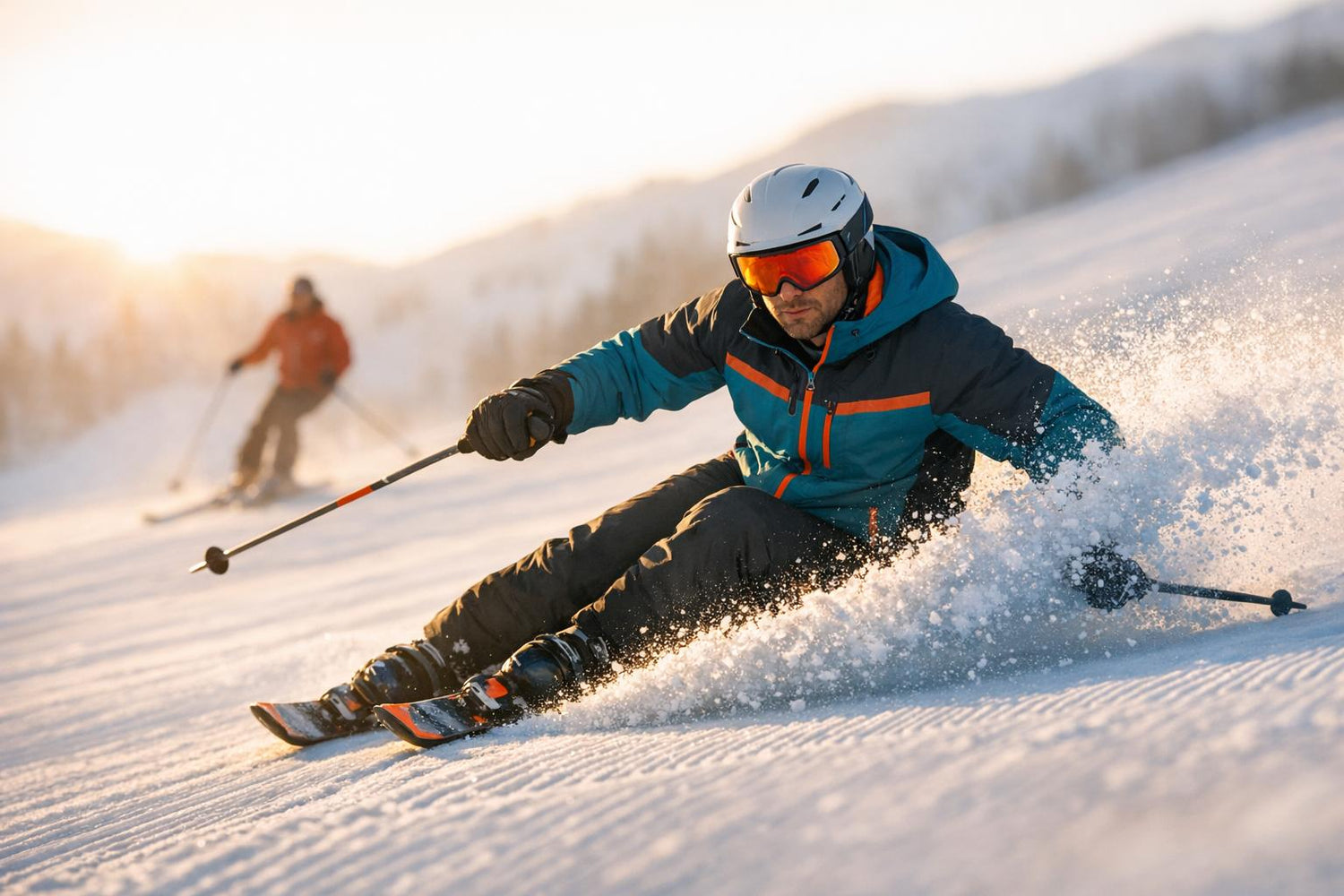
Skiskating and skiing differ significantly in technique, physical demands, and learning curves. Skiskating involves a lateral, V-shaped motion similar to ice skating, while skiing uses a linear "kick and glide" movement. Skiskating is faster and more intense, engaging both upper and lower body, but it requires better balance and coordination. Skiing is easier for beginners, with a motion that feels more natural, like walking.
Key Points:
- Skiskating is more physically demanding but offers higher speeds (10–20% faster).
- Skiing is beginner-friendly and easier to learn.
- Skiskates are compact and portable, while skis provide better stability on deep snow.
- Skiskating suits groomed trails, while skiing excels in varied terrains, including powder.
Quick Comparison:
| Feature | Skiskating | Skiing |
|---|---|---|
| Motion | Lateral, V-shaped | Linear, "kick and glide" |
| Learning Curve | Steeper, requires balance | Easier, feels natural |
| Speed | Faster (up to 19 mph) | Slower |
| Muscles Used | Glutes, hips, core, upper body | Hip flexors, core |
| Terrain | Groomed trails, snow parks | Deep snow, wide-open slopes |
| Gear Cost | Skiskates: $299–$590 | Full setup: $300–$500 |
If you're new to winter sports, skiing is a great starting point. If you enjoy a challenge and have experience in skating or hockey, skiskating might be your next adventure.
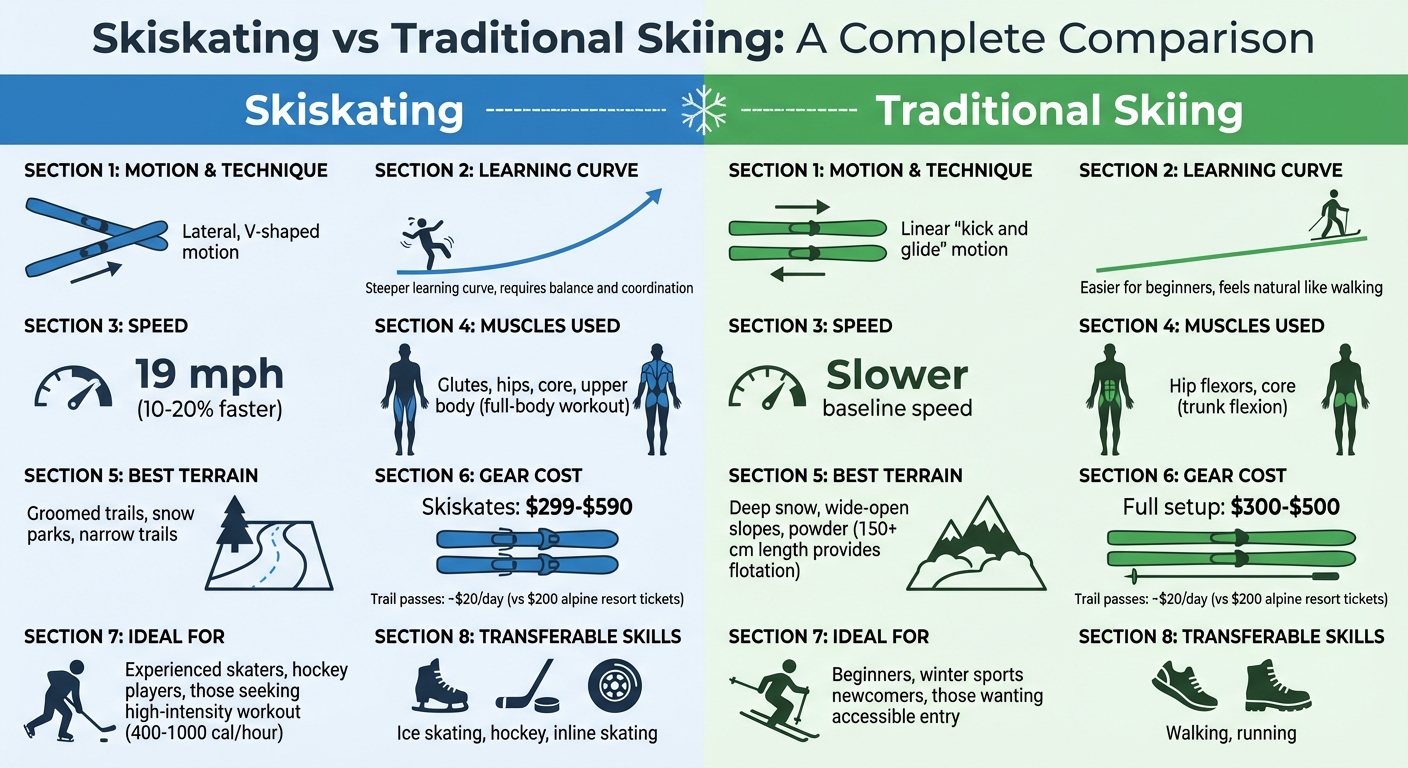
Skiskating vs Traditional Skiing: Complete Comparison Guide
Classic vs Skate Skiing: What's right for you?
What Is Skiskating?
Skiskating is a winter sport technique that blends the forward glide of skiing with the lateral power of skating. Instead of the diagonal stride used in classic skiing, skiskating involves pushing off the inner edges of skis in a skating motion, creating a smooth, rhythmic side-to-side movement. This dynamic technique shifts your weight from one ski to the other, mimicking the mechanics of ice or inline skating while gliding across the snow.
To perform skiskating, you need firm, groomed trails. Unlike traditional skis, which rely on a "wax pocket" for grip, skate skis have a flatter design - known as alpine camber - with glide-only bases. These skis depend entirely on their edges for traction and forward motion, making them distinct from classic skiing equipment. This edge-focused approach highlights the unique gear and terrain requirements of skiskating.
Key Features of Skiskates
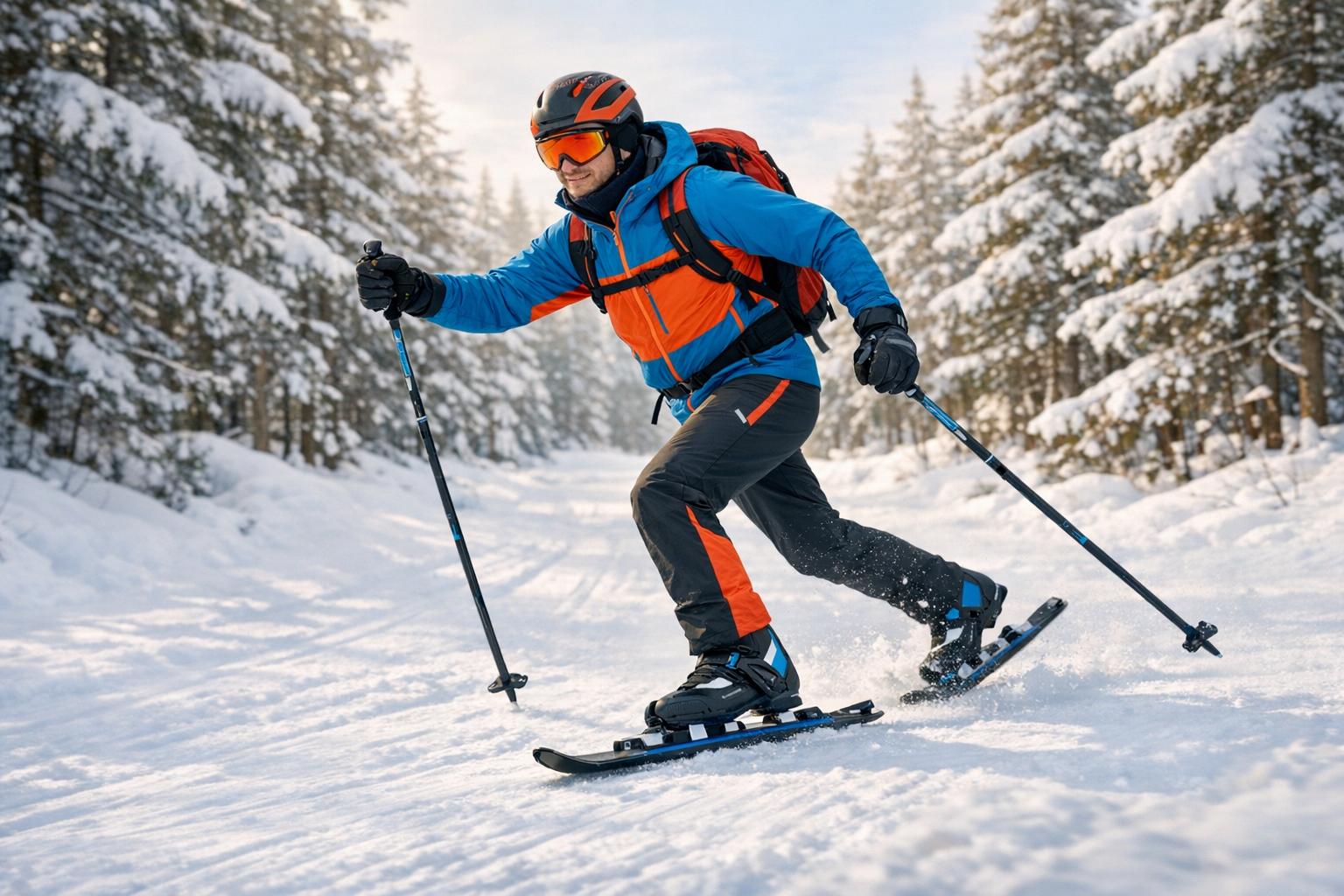
Skiskating calls for specialized gear tailored for agility and ease of use. Skiskates are significantly shorter than traditional skate skis, often about 10 cm shorter than touring skis. Their compact size makes them easy to carry, fitting conveniently into a backpack - perfect for those who want lightweight, portable equipment on the slopes.
The bindings on Skiskates are adjustable and tool-free, compatible with both ski and snowboard boots. This versatility eliminates the need for specialized footwear, allowing quick transitions between boot types. Skiskates are handmade in Europe, featuring a sustainable wood core, steel edges, and cap construction. Their lightweight yet durable design ensures reliable performance across various snow conditions, offering both control and durability.
Why Skiskating Is Growing in Popularity
Skiskating delivers a full-body workout. Once mastered, it’s faster and more efficient on flat or groomed terrain compared to classic skiing. Skilled skiskaters can reach speeds of up to 19 mph, making it an exhilarating way to explore snowy landscapes.
Since gaining traction in the 1980s, skiskating has drawn in winter sports enthusiasts looking for a vigorous and athletic challenge. Its inclusion in global competitions and biathlons has increased its visibility, attracting both recreational and competitive participants. Skiskates, in particular, appeal to a broad audience due to their short learning curve and the ability to perform tricks like spinning, jumping, and even riding backward. These features make skiskating an exciting option for beginners and seasoned athletes alike, offering a unique alternative to traditional skiing.
How Does Traditional Skiing Compare?
Traditional skiing is built around the diagonal stride technique. On groomed tracks, skis remain parallel as you execute a rhythmic "kick and glide" motion. This movement is straightforward enough for beginners to pick up quickly. As Olympic Gold Medalist Jessie Diggins explains:
"If you can walk, you can classic-ski. It's the same motion. You're swinging your foot through like you're kicking a soccer ball".
This foundational motion is key to understanding the design and performance of traditional skiing equipment.
Key Characteristics of Traditional Skiing
Traditional skis are designed for straight-line gliding, with a longer and more flexible build compared to skate skis. Their width, generally no more than 68 mm, ensures they fit neatly into groomed tracks. One standout feature is the "kick zone" under the ski, which provides traction during the kick phase. This grip area often uses fishscale patterns, mohair-like skins, or temperature-specific wax to achieve the necessary hold. Thanks to a cambered design, the grip zone only engages when your full weight is applied.
The gear complements the linear motion of classic skiing. Boots for this style have soft, flexible outsoles, allowing for natural forefoot movement similar to walking. Poles are shorter, typically reaching your armpit or shoulder when held vertically, to support the diagonal arm swing. To determine the right pole length, a common formula is multiplying your height in centimeters by 0.83.
While the equipment is designed to simplify the experience, traditional skiing still demands technical skill and coordination.
Common Challenges in Skiing
Although the walking-like motion feels natural at first, nailing the "kick" requires a fine-tuned sense of coordination. The flex of your skis must match your body weight - too stiff, and they won’t grip; too soft, and they won’t glide efficiently. Karin Moisa-Fuller highlights another challenge:
"The biggest thing to remember is, you don't have metal edges, like in alpine skiing, that help you dig in and stop."
This means braking relies on tipping the ski to create enough friction.
Nordic skiing also tests your balance and weight transfer skills, making it a full-body workout. Depending on intensity and body weight, it can burn anywhere from 400 to 1,000 calories per hour. You'll need to engage your arms, back, and core for stability while balancing on one leg during each glide. For beginners, a complete setup - including skis, boots, bindings, and poles - costs between $300 and $500, with daily trail passes averaging around $20.
Comparing Physical Demands and Skills
Both skiskating and traditional skiing offer a full-body workout, but they engage your muscles in distinct ways due to the unique motion patterns involved in each sport.
Strength, Balance, and Endurance
Skiskating requires significant upper and lower body involvement through continuous lateral movements. The lateral push-off motion activates the glutes and hip muscles, while the core works overtime to maintain stability as you shift your weight. This style also demands explosive strength and the ability to generate rapid force, especially during high-speed techniques or when tackling uphill sections. Once you've got the hang of it, skiskating can be 10–20% faster than traditional skiing.
Traditional skiing, by contrast, relies more on linear movements of the hip flexors and extensors, mimicking the natural motions of walking or running. The double poling technique, a hallmark of this style, depends on trunk flexion and core strength to propel you forward using the poles. While both sports require balancing on one foot, skiskating introduces a more complex side-to-side dynamic. This demands precise vertical alignment of the nose, hip, knee, and toe to maintain control and efficiency.
Both sports challenge your endurance, particularly during uphill stretches, blending aerobic and anaerobic efforts to push your limits. These physical demands highlight the unique skills and learning curves associated with each discipline.
Learning Curve and Skill Transfer
For beginners, traditional skiing's diagonal stride feels more intuitive. On the other hand, skiskating has a steeper learning curve due to its need for advanced balance and coordination. As TrainingPeaks Coach Carrie McCusker puts it:
"Classic offers a balanced, familiar motion accessible for those on the cusp of their snow experience. Skate skiing is vigorous and energetic and often appeals to children and adults who like speed and have some time to master the basics".
If you've dabbled in ice skating, hockey, or inline skating, you're in luck - those skills transfer directly to skiskating. The key technique of pushing off from the inside edges is shared across these activities. To get better at skiskating, practice balancing on one foot at home to improve your weight-shifting ability. Starting without poles can also help you focus on mastering the "waddle skate" or "speed skate" motions and perfecting your body position.
Comparison Overview
| Feature | Traditional Skiing | Skiskating |
|---|---|---|
| Primary Motion | Linear "kick and glide" | Lateral V-shaped skating |
| Learning Curve | Easier; mirrors walking | Steeper; requires dynamic balance |
| Muscle Focus | Hip flexors, core (trunk flexion) | Glutes, hips, core, upper body |
| Speed Advantage | Baseline | 10–20% faster |
| Transferable Skills | Walking, running | Ice skating, hockey, inline skating |
sbb-itb-32287b2
Terrain and Speed Control: Skiskating vs. Skiing
Performance on Different Terrains
Skiskates thrive on groomed slopes, snow parks, and narrow trails. Their compact size - typically under 50 cm - makes them perfect for quick, agile movements in tight spaces.
On the other hand, traditional skis, which are generally 150 cm or longer, shine on wide-open groomed slopes and deep snow. Their length provides better flotation in powder and enhanced stability at higher speeds. When it comes to powder snow, skiskates are limited to lighter conditions, handling up to about 4 inches of fresh snow. For deeper snowfall, longer gear like 99 cm skiboards becomes necessary to maintain proper flotation. Meanwhile, traditional skis equipped with metal edges excel in icy or hard-packed conditions, offering superior grip and control.
While terrain suitability is a key difference, the way speed and turns are managed also sets these two apart.
Managing Turns and Speed
Skiskates are built for sharp, quick turns and come with heel brakes for instant stops. A "hockey-style" stop works particularly well in confined spaces, adding to their versatility. As noted by the Snowfeet Team:
"The smaller size of skiskates makes it easier to control each movement without feeling like you're handling a large piece of equipment".
In contrast, traditional skis require more space and refined techniques for managing speed. Methods like wedge braking (snowplow) or carving turns demand proper form and physical effort. While their longer size provides excellent stability at high speeds, they are less agile when sudden adjustments are needed. Skiskates excel in confined areas with their immediate control, whereas traditional skis dominate long, high-speed descents thanks to their stability.
| Feature | Skiskates | Traditional Skis |
|---|---|---|
| Best Terrain | Groomed slopes, snow parks, narrow trails, sledding hills | Wide groomed slopes, deep powder, backcountry |
| Powder Limit | Up to 4 inches | High flotation in deep snow |
| Maneuverability | Extremely high; quick, tight turns | Lower; requires more space for carving turns |
| Speed Control | Easier; compact size and heel brakes | Relies on technique (snowplow/carving) |
| High-Speed Stability | Lower; requires front-back balance | Higher; stable platform for fast runs |
Tips for Transitioning from Skiing to Skiskating
Adapting Your Technique
If you're already comfortable on skis, you're off to a great start. But skiskating comes with its own set of adjustments. The biggest shift? Moving from an even weight distribution to fully transferring your weight onto one gliding ski. To nail this, align your nose, knee, and toe directly over the ski you're gliding on.
Unlike the straight "kick and glide" motion of traditional skiing, skiskating uses a lateral, V-shaped movement. You'll push off the inside edges of your skis instead of relying on a linear path. As former Norwegian National Team Coach Geir Endre Rogn puts it:
"Balance is the premise for all cross-country skiing techniques, both skate and classic. In skate skiing, the key is to find your balance on one ski at a time in order to generate a powerful push-off".
To get the hang of this, start practicing without poles. This "waddle skating" drill helps you focus on transferring your weight and shifting your hips for better stability. Keep your knees and ankles slightly bent, and position your hips directly over your feet. This soft stance not only improves control but also helps you adapt to changes in terrain. Once you’re ready to use poles, switch to synchronized double-poling - plant both poles together, keeping their tips even with your boot toes. Avoid the alternating diagonal stride used in classic skiing.
Choosing the Right Gear
Once you've adjusted your technique, having the right gear is essential for a smooth transition. Traditional ski equipment won’t work here, as skiskates are much shorter than regular skis and require specialized bindings and boots.
For beginners, Skiskates offers several options. Their models for ski or snowboard boots start at $490.00. If you're looking for something more budget-friendly, the Snowfeet 50 PRO is available for $299.00. For added stability, consider the Skiblades 65 CM ($550.00) or 99 CM ($590.00). All these models are handmade in Europe, featuring sustainable wood cores, steel edges, and cap construction, making them reliable on groomed slopes or in snow parks.
When choosing boots, make sure they fit snugly and hold your heel securely. This prevents internal foot movement, which can lead to blisters. Also, double-check that your boot's toe bar is compatible with the binding system you plan to use.
Conclusion: Which Is Right for You?
Both activities bring something unique to the table, so the decision comes down to your fitness level and what you’re looking for. If you’re brand new to winter sports, classic cross-country skiing might be the way to go. It’s often seen as the most beginner-friendly option since it mimics natural walking and doesn’t demand much physical conditioning upfront. The diagonal stride technique is intuitive, making it a smooth entry point for first-timers.
On the other hand, skiskating is a different beast entirely. It’s more physically demanding, requiring better balance, stronger conditioning, and precise technique - especially when navigating Nordic trails. If you’ve got experience in ice skating, rollerblading, or hockey, the lateral V-shaped motion might feel second nature. For those who enjoy running or cycling and crave a high-intensity workout, skiskating delivers, burning anywhere from 400 to over 1,000 calories an hour depending on how hard you push yourself.
Skiskates themselves offer some practical advantages. Their compact design makes them easy to control, even on varied terrain or downhill slopes. Beginners often find them forgiving, and many users report feeling comfortable with the design after just a day of practice. Plus, they’re lightweight and portable - perfect for tossing in a backpack. Some models are even designed for extra stability and maneuverability, adding to their appeal.
Cost is another factor to consider. Nordic skiskating at cross-country centers typically runs about $20 per day for trail passes, a fraction of the $200 daily lift tickets you’d pay at major alpine resorts. Combine that affordability with the convenience of their compact design, and skiskating becomes an attractive option for anyone looking to enjoy winter sports without breaking the bank.
FAQs
What sports skills can make learning skiskating easier?
If you've ever tried ice skating, inline skating, or roller skating, you're already ahead of the game when it comes to skiskating. These activities help develop balance, weight shifting, and the side-to-side motion that's essential for moving forward on skiskates. Mastering how to smoothly transfer your weight and stay centered over your moving foot can make picking up skiskating a lot easier.
Skills from cross-country skiing or hockey are also a big plus. Both sports teach you how to glide efficiently while using your legs to generate power - an important skill for managing speed and staying stable on skiskates. Even trail running, with its emphasis on lower-body strength and coordination, can prepare you for the quick, alternating strides that skiskating demands.
If you're already familiar with these kinds of movements, skiskating might feel like a natural next step - and a thrilling one at that!
Is skiskating gear more affordable than traditional skiing equipment?
Yes, skiskating gear tends to be much easier on the wallet compared to traditional skiing equipment. A basic pair of Skiskates typically runs between $150 and $690, depending on the model you choose. On the other hand, entry-level alpine ski packages - which usually include skis, bindings, boots, and poles - start at around $550 and can climb to $1,200. If you’re buying skis and bindings separately, expect to pay anywhere from $800 to $2,500 or more.
Even at the top end of the price range, skiskating gear costs only a small fraction of what you’d shell out for traditional skiing equipment. It’s a fantastic option for anyone who loves winter sports but wants to keep expenses in check.
What are the best conditions and terrains for skiskating?
The ideal conditions for skiskating include well-maintained, firm snow surfaces that let you glide effortlessly while executing the V-style push. Wide, freshly groomed cross-country trails with a solid, compact snow base are perfect, especially if they feature flat or gently rolling terrain.
If you're just starting out, flat sections are excellent for honing your balance and rhythm. Gentle slopes, with grades between 5% and 10%, provide a good challenge for refining weight transfer and technique. On the other hand, steep inclines can disrupt your flow and make it tough to maintain speed, so it's best to steer clear of those. For downhill stretches, stick to mild slopes that allow for a smooth, controlled glide. In summary, aim for wide, obstacle-free trails with firm snow and moderate terrain to make the most of your skiskating experience.

Leave a comment
This site is protected by hCaptcha and the hCaptcha Privacy Policy and Terms of Service apply.