

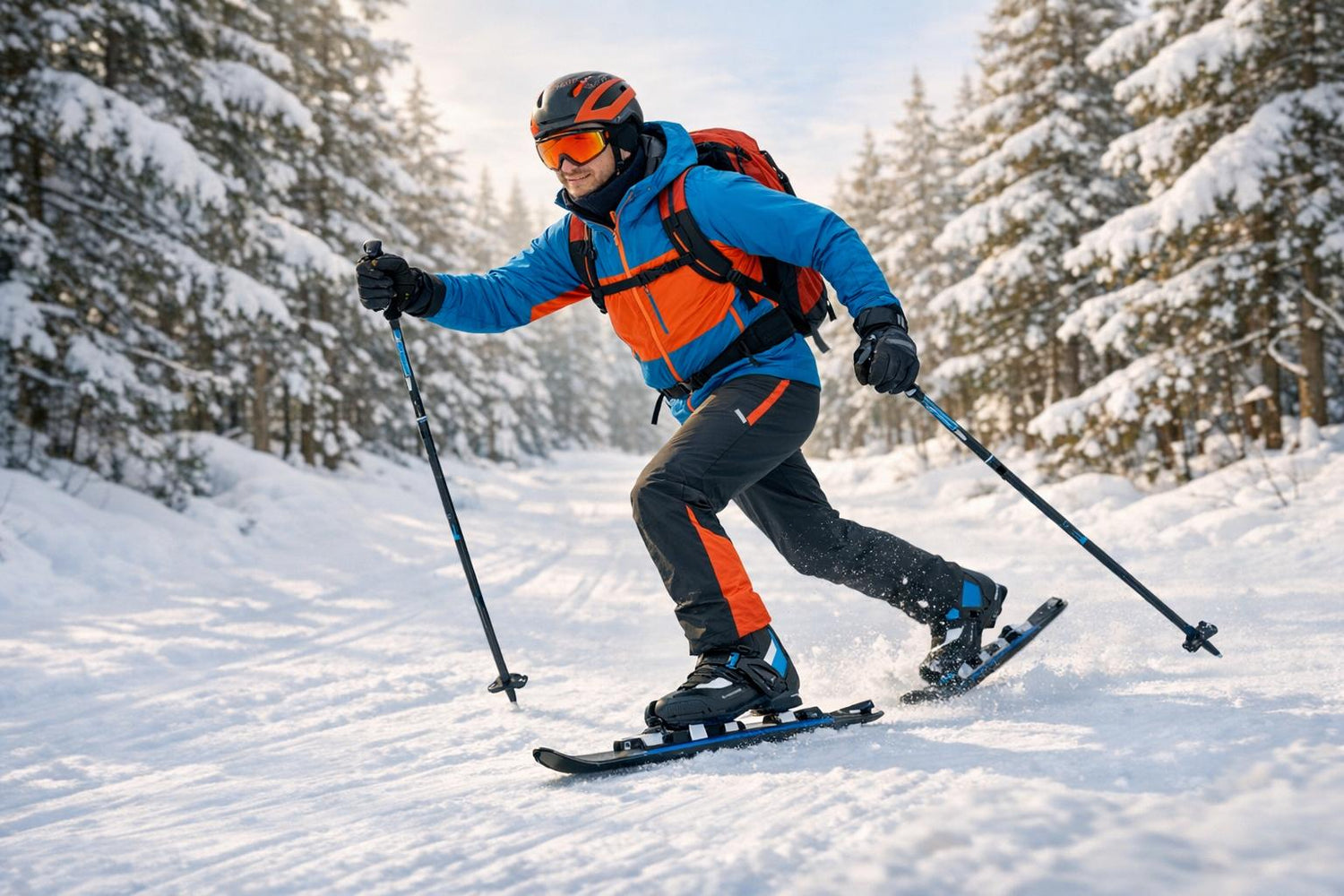
Skiskating combines skiing and ice skating, offering a lightweight, portable option for navigating snow. Using short skiskates (15–26 inches), you can glide like you're skating, making it suitable for various terrains like slopes, hiking trails, and parks. Beginners often master it in minutes, especially those with skating or skiing experience. Skiskates are easy to carry, fit regular winter shoes or snowboard boots, and allow for quick turns, spins, and even tricks. They’re perfect for anyone looking for an engaging winter activity that’s also a full-body workout. Just strap them on, and you’re ready to go!
How Skiskating Works

Skiskating vs Traditional Alpine Skiing: Key Differences
Basic Skiskating Movements
At its core, skiskating mimics the movements of skating. You push off the inside edge of one skiskate while gliding on the other, creating a smooth, side-to-side rhythm. This involves shifting your full body weight from one foot to the other, maintaining a straight vertical alignment from your armpit down through your hip, knee, and toe.
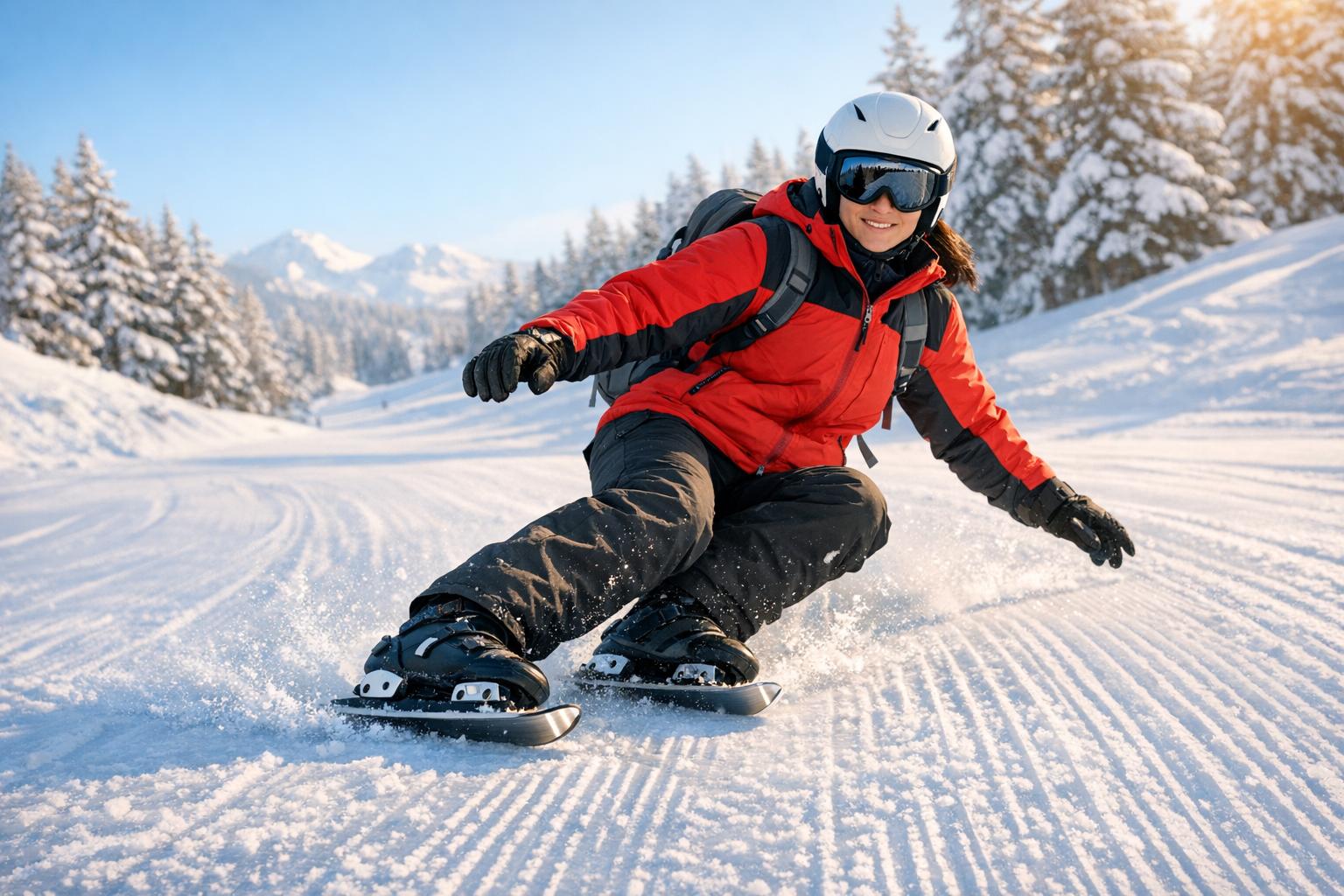
To begin, position your skiskates in a V shape with your toes pointing outward. By shifting your hips forward, you initiate the glide. Unlike the sweeping, carving turns of traditional skiing, skiskating enables quick step turns and wedge turns for agile movement. Thanks to their compact 17-inch (44 cm) length, skiskates allow for advanced techniques like spins, reverse riding, and navigating tight trails - maneuvers that are challenging with longer skis.
Experienced skiskaters fine-tune their technique based on terrain, switching between styles like low (V1) for uphill climbs and high (V2-Alternate) for flat sections. This adjustment involves varying the balance between double-pole pushes and leg pushes.
Now, let’s look at the gear that makes these movements possible.
Equipment You Need for Skiskating
Skiskates are compact, measuring about 17 inches (44 cm) in length - far shorter than traditional skis, which range from 59 to 79 inches or more. They feature steel edges and a flatter alpine camber profile, making it easier to push off the edges for forward motion.
The bindings are tool-free and adjustable, designed to fit both standard ski boots (sizes 4.5–14.5 US) and snowboard boots. Unlike traditional bindings, which are boot-specific and release-rated, skiskate bindings are versatile and non-release, simplifying setup. The lightweight design makes them easy to carry in a backpack, eliminating the need for roof racks or bulky bags.
For propulsion, poles should reach about 90% of your height, helping you engage your core and upper body effectively. Skiskates are built with a durable wood core and cap construction, handcrafted in Europe using sustainable materials.
Skiskating vs. Traditional Skiing
| Feature | Skiskating | Traditional Alpine Skiing |
|---|---|---|
| Primary Motion | Skating/side-to-side push | Parallel gliding/carving |
| Typical Length | 17 inches (44 cm) | 59–79+ inches (150–200 cm) |
| Binding Type | Adjustable, non-release | Fixed, release-rated (boot-specific) |
| Turning Style | Rapid turns, spins, tricks | Long, arcing carving turns |
| Portability | Fits in a backpack | Requires roof rack or large bag |
The learning curve for skiskating is quite different from traditional skiing. Many beginners, especially those with ice skating or inline skating experience, can pick up the basics quickly. However, skiskating requires sharper front-to-back balance, as the shorter length provides less longitudinal stability compared to traditional skis.
Terrain suitability also sets the two apart. While traditional skis shine on groomed slopes and deep powder, skiskates are ideal for downhill trails, snow parks, and narrow paths or hiking trails where long skis struggle. As Geir Endre Rogn, a former Norwegian National Team Coach, explains:
Balance is the premise for all cross-country skiing techniques, both skate and classic. In skate skiing, the key is to find your balance on one ski at a time in order to generate a powerful push-off.
sbb-itb-32287b2
Getting Started with Skiskating
Tips for Your First Time Skiskating
Before hitting the snow, try practicing at home on flat ground. Work on engaging and releasing your bindings to get a feel for them. Once you're out on the snow, start without poles to focus entirely on your balance. Stand with your feet shoulder-width apart, keeping your knees and ankles slightly bent and your hips centered over your feet. Keep your head up and eyes looking ahead - this helps with maintaining spatial awareness and balance.
To begin, try the split skate movement. Point your toes outward and shift your hips forward to let the skiskates naturally glide apart. Next, practice the side-to-side skate by shifting your weight from one skiskate to the other as you move forward. Finally, work on the wedge technique - push your heels outward while bringing the tips of your skiskates together to form a triangle shape. This move is essential for controlling your speed and stopping safely.
If you take a tumble, roll onto your back, lift your skiskates and poles, and then roll onto your side to stand up. Avoid using your hands to break your fall, and never plant your poles directly in front of you, as this can increase the risk of injury. Aim to fall on your side, shoulder, or buttocks to minimize impact.
Once you’ve got these basic movements down, it’s time to find the perfect terrain for safe practice.
Picking the Right Terrain
After learning the basics and how to recover safely, choosing the right terrain is crucial for building confidence. Start on groomed trails at Nordic centers or ski resorts, where the snow is packed and consistent. These controlled environments are ideal for practicing your skating motion and wedge stops without worrying about unpredictable terrain. Look for gentle slopes with a flat area at the bottom - this gives you plenty of room to practice slowing down and controlling your speed.
Avoid ungroomed or backcountry areas when you're just starting out. If you come across a slope that feels too steep, use the side-stepping technique. With your skiskates perpendicular to the slope, step sideways to ascend or descend with more control. Once you feel more confident, you can start exploring snow parks or narrow trails, but mastering the basics on easier terrain should always come first.
Safety Guidelines
Always wear a helmet and consider wrist guards, especially during your first few outings. Skiskating requires sharper balance from front to back compared to traditional skiing, so falling is a normal part of learning. Dr. Elan Goldwaser, a Pediatric and Adult Sports Medicine Physician, advises:
"Staying warm, staying loose, staying conditioned, and knowing your limits are all great ways to reduce the risk of injury while enjoying winter sports."
– Dr. Elan Goldwaser
Make sure to use the safety leashes that come with your skiskates every time you head out. These leashes prevent your skiskates from sliding away if you fall, which helps protect both you and others nearby. Before each session, double-check that your tool-free bindings are properly adjusted to fit your boots.
If you create divots in the snow after a fall, take a moment to smooth them out. This small gesture keeps the trail safe for other skiskaters. Start slowly, know your limits, and build your skills step by step as your confidence increases.
Safety is your responsibility. No internet article or video can replace proper instruction and experience.
– Ken Knapp, REI Editor Emeritus
Benefits of Skiskating
Fun and Recreation
Skiskating adds a dynamic twist to snow sports, offering agility and movement that traditional skiing can't match. Whether you're doing twists, jumps, spins, or even gliding backward, it’s all possible without needing years of practice or professional lessons. In fact, most people can get the hang of it in just about five minutes.
What’s even better? You’re not confined to groomed slopes. Skiskating is versatile enough for snow parks, narrow hiking trails, forest paths, sledding hills, or even your backyard. Many users describe the motion as intuitive and natural, especially those with experience in ice skating or inline skating, who often find the transition seamless.
Physical Fitness
Skiskating isn’t just fun - it’s a full-body workout. It engages your legs, core, and even your upper body when you use poles. Plus, the constant shifting of weight improves balance and coordination, much like speed skating. The rhythmic, energetic motion gets your heart pumping, making it a great way to boost cardiovascular endurance while having a blast on the snow.
Using poles adds another layer of fitness benefits by activating your core for better stability. And because skiskates are so maneuverable, carving and turning require less effort, which can be gentler on your knees. The natural movements also make skiskating an excellent way to stay in shape during the off-season.
On top of all that, the compact design of skiskates makes them incredibly portable.
Easy to Carry and Store
One of the standout perks of skiskates is their portability. They’re small enough to fit into a standard backpack, making them perfect for public transit, walking through town, or hiking to find untouched snow. Forget about roof racks or bulky cargo boxes - they’re simply not needed.
When it’s time to store them, skiskates take up hardly any space. Toss them into a boot bag or a closet, and you’re good to go. With adjustable bindings that fit boot sizes from 4.5 to 14.5 US, one pair can work for multiple family members. This makes them a practical choice for those living in apartments or anyone looking for a hassle-free way to enjoy winter sports.
Conclusion
Skiskating brings a fresh twist to winter activities with its sleek design and ease of use. Whether you're gliding down a packed trail, navigating snowy paths, or enjoying an invigorating workout, skiskating delivers an engaging and portable way to enjoy the season.
What truly sets skiskating apart is its simplicity. Beginners can quickly pick up the basics on flat, groomed surfaces - no need for pricey lift tickets or resort access. Its straightforward motion and practical design make it accessible to just about anyone ready to explore winter in a new way.
But it’s not just about the fun. Skiskating also provides a fantastic full-body workout while improving balance. Plus, its compact size makes it easy to pack up and take anywhere your winter adventures lead.
If you're searching for an exciting way to embrace the colder months, give skiskating a shot. It’s intuitive, energizing, and a whole lot of fun. Strap on a pair of skiskates and experience the thrill for yourself!
FAQs
Is skiskating harder to learn than traditional skiing?
Skiskating can be a bit trickier to pick up than traditional skiing. It demands stronger balance and side-to-side coordination, which can make it feel like a steeper climb for beginners.
That said, with time, practice, and a little patience, many people discover that skiskating is not only exciting but also highly rewarding. Once you get the rhythm, it becomes a fun and unique way to enjoy the snow while boosting your fitness and agility.
What safety tips should beginners follow when learning to skiskate?
Before you dive into skiskating, it’s important to have the right gear. Start with skiskates that fit snugly but comfortably, and always wear a certified helmet to protect yourself. If you’re new to the activity, adding wrist, knee, and elbow pads can offer extra protection. Dress smartly with moisture-wicking layers, insulated clothing, and a waterproof outer layer to stay warm and dry. Don’t forget gloves - they’ll shield your hands in case of a fall.
When practicing, stick to gentle, well-maintained trails. Avoid crowded or steep areas until you’ve built up your confidence and control. A beginner lesson can be a great way to learn the basics, like maintaining balance and even how to fall without injury. Make sure your skiskates are in top shape, with sharp, undamaged edges. Stay hydrated, watch out for others on the trail, and keep emergency contact info with you just in case. With these steps, you’ll be set to enjoy the thrill and fitness benefits of skiskating!
Can you skiskate on any type of snow?
Skiskating thrives on groomed or hard-packed snow, where the surface is firm and smooth. On the other hand, it can be tricky to pull off on loose, powdery, or unpacked snow because it’s harder to stay stable and in control.
For an optimal experience, stick to trails or areas with compacted snow. This kind of surface allows for better gliding and makes it easier to keep up your momentum. While skiskating can adapt to different terrains, the quality of the snow has a huge impact on how enjoyable and effective your session will be.

Leave a comment
This site is protected by hCaptcha and the hCaptcha Privacy Policy and Terms of Service apply.