

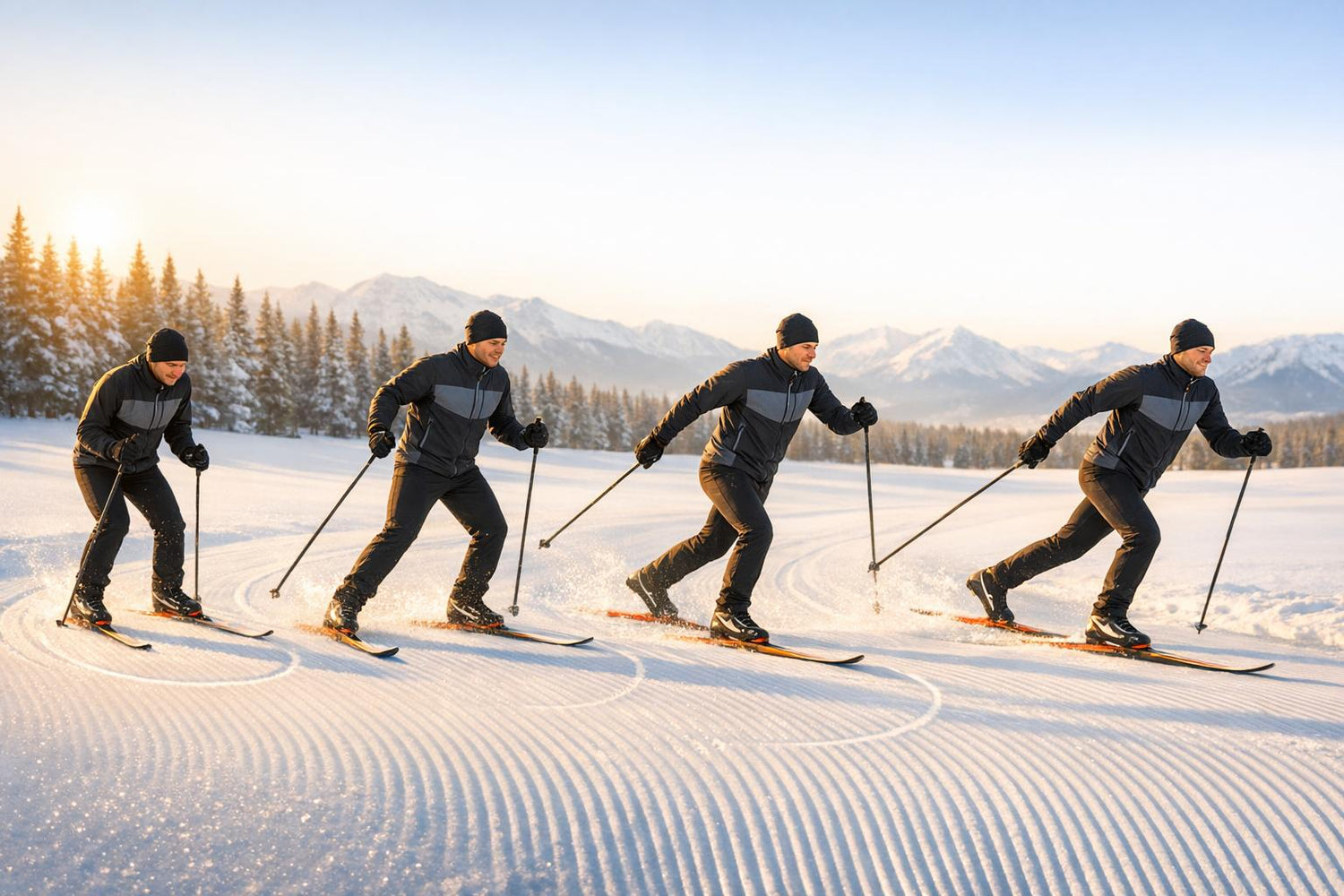
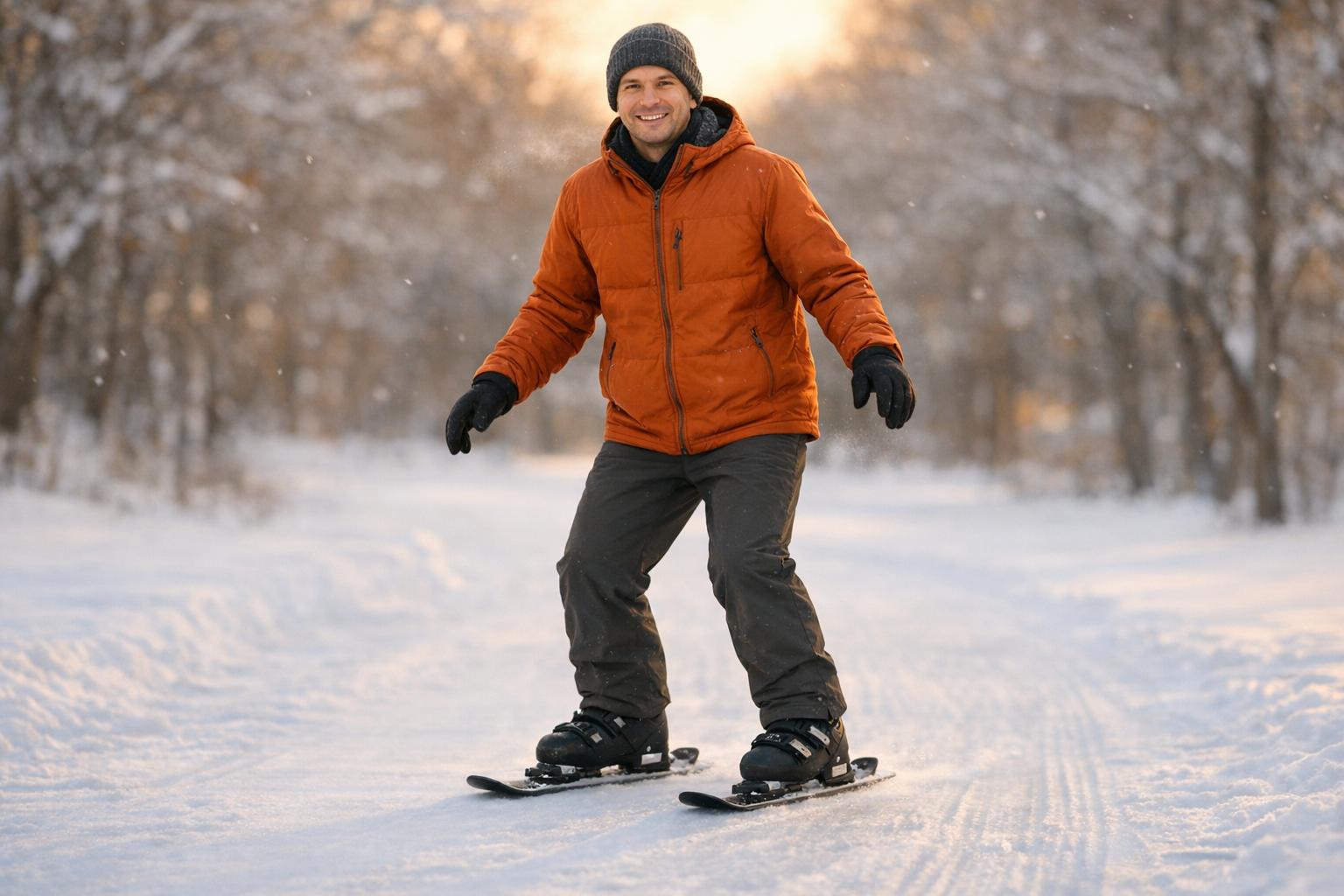
Skiskating combines skiing and ice skating, using short skis for jumps, twists, and tricks. It's portable, beginner-friendly, and works with most winter boots. Here's what you need to know:
- Beginners: With no prior experience, expect 3–5 practice days (2–3 sessions/week) to grasp basics like gliding, stopping, and turning.
- Intermediate Skiers/Skaters: Typically master basic skiskating in 1–3 sessions due to transferable skills.
- Advanced Skiers/Skaters: May refine techniques like crossovers and high-speed control within 4–6 months of regular practice.
Factors like fitness, balance, and quality instruction affect progress. Kids often learn faster, while adults may take longer. High-quality gear and consistent practice (short, frequent sessions) speed up learning. Starting on gentle slopes helps build confidence before tackling advanced terrain.
Key Tip: Professional lessons can boost progress by 30–50%. Stick to well-fitted, lightweight equipment for the best results.
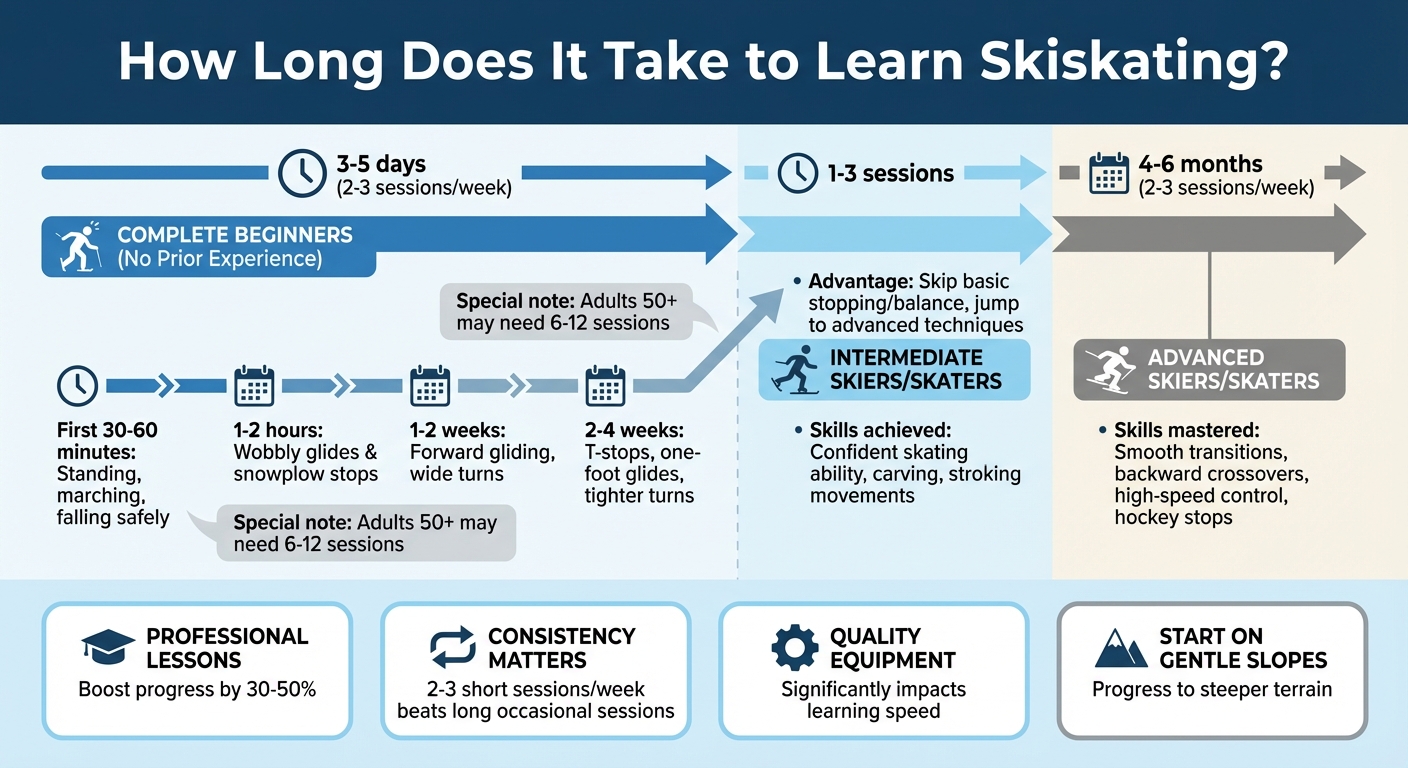
Skiskating Learning Timeline by Experience Level
What Affects How Fast You Learn Skiskating
The speed at which you pick up skiskating depends on a mix of factors, including your prior experience, physical fitness, and the quality of your training.
Your Background in Skiing or Skating
If you’ve skied or ice skated before, you might think you’ll have an easy time transitioning to skiskating. But it’s not always that simple. One common challenge for beginners is overcoming "walking feet" - a natural tendency to step heel-first and roll through to the ball of the foot. This movement, while fine for walking or ice skating, can cause issues in skiskating.
"In ice skating you can roll through the ball of the foot without penalty. In skate skiing, rolling through the ball of the foot drives the tip of the ski into the snow and trips you up." - Nordic Ski Lab
Instead, you’ll need to focus on using the inside edge of the ski for smooth gliding. For ice skaters, this often means unlearning old habits. However, if you’ve developed balance and body awareness through other sports, that can still give you an advantage.
Physical Fitness and Balance
How fit and balanced you are plays a big role in how quickly you progress. Strong legs and a stable core are essential for maintaining the low, bent-knee posture that’s key to skiskating. Without this strength, beginners often stand with straight legs, which makes balancing much harder.
Natural balance can speed up the process. Some people move from shaky gliding to confident skating in just 2–4 weeks. Age also matters - children generally pick up the basics faster, while adults over 50 may require more time and practice. Flexibility helps too, allowing for quicker recovery after falls and smoother adaptation to the movements.
The quality of your training and practice environment also affects your learning curve.
Training Resources and Practice Conditions
Good instruction can make a huge difference. Those who take professional lessons typically improve 30–50% faster than those who try to teach themselves. While group lessons are helpful, private one-on-one sessions often produce the fastest results. With dedicated, guided practice, most beginners can grasp the basics within 3 to 5 days.
Consistency is key. Practicing 2–3 times a week is far more effective than occasional long sessions because it helps build muscle memory more efficiently. Equipment quality also matters. As Nordic Ski Lab explains:
"Skate skiing on poorly fitting, heavy, cheap gear is brutally hard. ... the quality of your gear will greatly influence how rapidly you learn to skate ski."
For beginners, starting on gentle, well-maintained slopes is ideal, as it allows you to focus on technique without the added challenge of difficult terrain.
sbb-itb-32287b2
Learning Timelines by Experience Level
Complete Beginners (No Prior Experience)
If you're starting with no experience, expect to spend about 3–5 days of regular practice (2–3 sessions per week) to get the hang of basic speed control and turning. The key here is consistency - spreading out practice sessions works better than cramming everything into a single weekend.
In your first session, focus on the essentials: learning how to fall safely (aim to fall to the side onto your hip), keeping a bent-knee posture, and getting comfortable with the feeling of gliding. Most people transition from using supports to gliding independently within 30 minutes to 2 hours of ice time. By the third to fifth practice day, you should feel more confident with basic stops and navigating beginner-friendly slopes.
For adults over 50, the timeline may stretch to 6–12 sessions or more. This is often due to balance concerns and a natural caution about falling. However, if you have prior skiing or snowboarding experience, you may progress faster, as some skills will carry over.
Intermediate Skiers or Snowboarders
If you're already skiing or snowboarding at an intermediate level, you're ahead of the curve. Your existing skills in edge control, weight distribution, and balance give you a solid foundation for skiskating. While beginners spend their early sessions learning to stop and stay upright, you can usually skip those steps and dive straight into carving and stroking movements, which resemble ice skating.
Most intermediate-level athletes achieve confident skating ability within 1 to 3 sessions. Your familiarity with snow and developed leg strength make it easier to tackle tight turns and moderate speeds. Taking one or two professional lessons can also help refine your technique and introduce advanced maneuvers safely.
Advanced Skiers or Skaters
For advanced athletes, skiskating presents an opportunity to build on an already strong skill set. Experienced ice skaters bring edge awareness and one-foot glide skills, which form the basis of many advanced techniques. Similarly, advanced skiers who are comfortable with high speeds and challenging off-piste terrain will find their control translates well to the quick, sharp turns that skiskates require.
Advanced skaters typically need about 4 to 6 months of regular practice (2–3 sessions per week) to master techniques like smooth transitions, backward crossovers, and high-speed control. However, if you're already proficient in ice skating, you may adapt even faster. Skills like hockey stops and transitioning between forward and backward movement often come naturally after just a few focused sessions, thanks to your existing edge control.
How Skiskates Equipment Speeds Up Learning
Skiskates are designed to tackle the common challenges beginners face. Measuring just 44 cm in length, these compact skis reduce the risk of crossing tips or tails, making them easier to control and boosting your confidence as you learn.
Thanks to their lightweight build, Skiskates minimize leg fatigue, allowing you to practice longer and more effectively. This extra time on the slopes is crucial for building muscle memory, especially during those early learning stages.
What sets Skiskates apart is their natural side-to-side glide, which mimics the movements of ice or inline skating. By leveraging motions your body already knows, they help you pick up the basics more quickly.
These thoughtful design elements make Skiskates an excellent choice for anyone looking to ease into skiing or improve their skills at a comfortable pace.
Best Skiskates Models for Beginners
If you're just starting out, the Snowfeet Basic ($190.00) is a great option. Its compact design and simple bindings make it easy to learn foundational movements without feeling overwhelmed.
Once you're ready to level up, the Snowfeet 50 PRO ($299.00) offers better durability and performance, making it suitable for varied terrains. For those seeking advanced features, the Skiskates Ski Boots Model ($490.00) stands out with its adjustable, tool-free bindings, steel edges, and lightweight design. Plus, it’s portable enough to carry in a backpack, making it ideal for diverse slopes.
Skiskates Model Comparison
| Model | Price | Length | Best For | Key Features |
|---|---|---|---|---|
| Snowfeet Basic | $190.00 | Compact | Beginners learning the basics | Simple design, easy to use, budget-friendly entry point |
| Snowfeet 50 PRO | $299.00 | Short | Beginners advancing to intermediate | Durable materials, improved handling on varied terrain |
| Skiskates Ski Boots Model | $490.00 | 44 cm | All skill levels, frequent use | Tool-free adjustable bindings, steel edges, handmade in Europe, portable |
| Skiskates Snowboard Boots Model | $490.00 | 44 cm | Snowboarders transitioning to skiskating | Similar to ski boots model, compatible with snowboard boots |
| Snowfeet Skiblades 65 CM | $550.00 | 65 cm | Intermediate to advanced users | Greater stability at high speeds, premium construction |
Practice Strategies and Progress Milestones
Building on your foundational skills and realistic timelines, here are some practical drills and milestones to help you improve your skills efficiently.
Learning Basic Movements First
Start by mastering your body positioning: bend your knees, flex at the ankles, and keep your hips forward. This positioning helps maintain momentum while letting gravity assist your movements.
"The key to skate skiing fast is preserving your forward momentum and letting gravity do all of the work for you... you've got to bend at the ankles and knees to get your hips forward." - Charlotte Ogden, Retired Nordic Ski Team Member
One useful drill is the V-stance. Place your skis in a V shape, lean forward slightly, and perform small hops to practice proper weight transfer. Many beginners progress from holding onto a support to gliding independently within 2 to 4 hours of practice.
Keep your gaze forward, not down at your feet, as your body naturally follows where you're looking. It's also helpful to practice falling safely during your first session. Aim to fall to the side onto your hip rather than forward onto your wrists. Getting comfortable with falling can reduce fear and speed up your learning process.
Practicing on Different Slopes
Once you’ve got the basics down, it’s time to tackle different types of terrain. Begin on flat, well-maintained areas where you can focus on balance without worrying about speed. Once you’re comfortable gliding and can stop using basic techniques like the snowplow, move on to gentle slopes with natural flat runouts.
After 1 to 2 weeks of consistent practice (2 to 3 sessions per week), you should feel confident enough to experiment with wider turns. As you build confidence, progress to tighter turns and slightly steeper terrain. Many beginners can navigate easy green runs after just 2 to 3 days of practice.
Setting Goals and Measuring Progress
To track your progress, set clear milestones. Start with basic skills like standing, marching in place, and falling safely during your first 30 to 60 minutes. Within 1 to 2 hours, aim for wobbly gliding and basic forward movement. By 2 to 4 weeks, you should be able to perform T-stops and one-foot glides.
Instead of practicing for long stretches, break your training into 2 to 3 shorter sessions per week. For instance, two 45-minute sessions are more effective for building muscle memory than one extended session. If possible, take a professional lesson - this can speed up your learning by 30% to 50% compared to teaching yourself. Recording your practice sessions on video can also help you identify technical issues, such as leaning too far forward or twisting your torso.
| Skill Level | What You'll Achieve | Timeline (2–3 sessions/week) |
|---|---|---|
| Complete Beginner | Standing, marching, falling safely | First 30–60 minutes |
| Novice | Wobbly glides & snowplow stops | 1–2 hours |
| Basic Skater | Forward gliding, wide turns | 1–2 weeks |
| Confident Skater | T-stops, one-foot glides, tighter turns | 2–4 weeks |
| Intermediate | Crossovers, backward skating | 2–4 months |
Conclusion
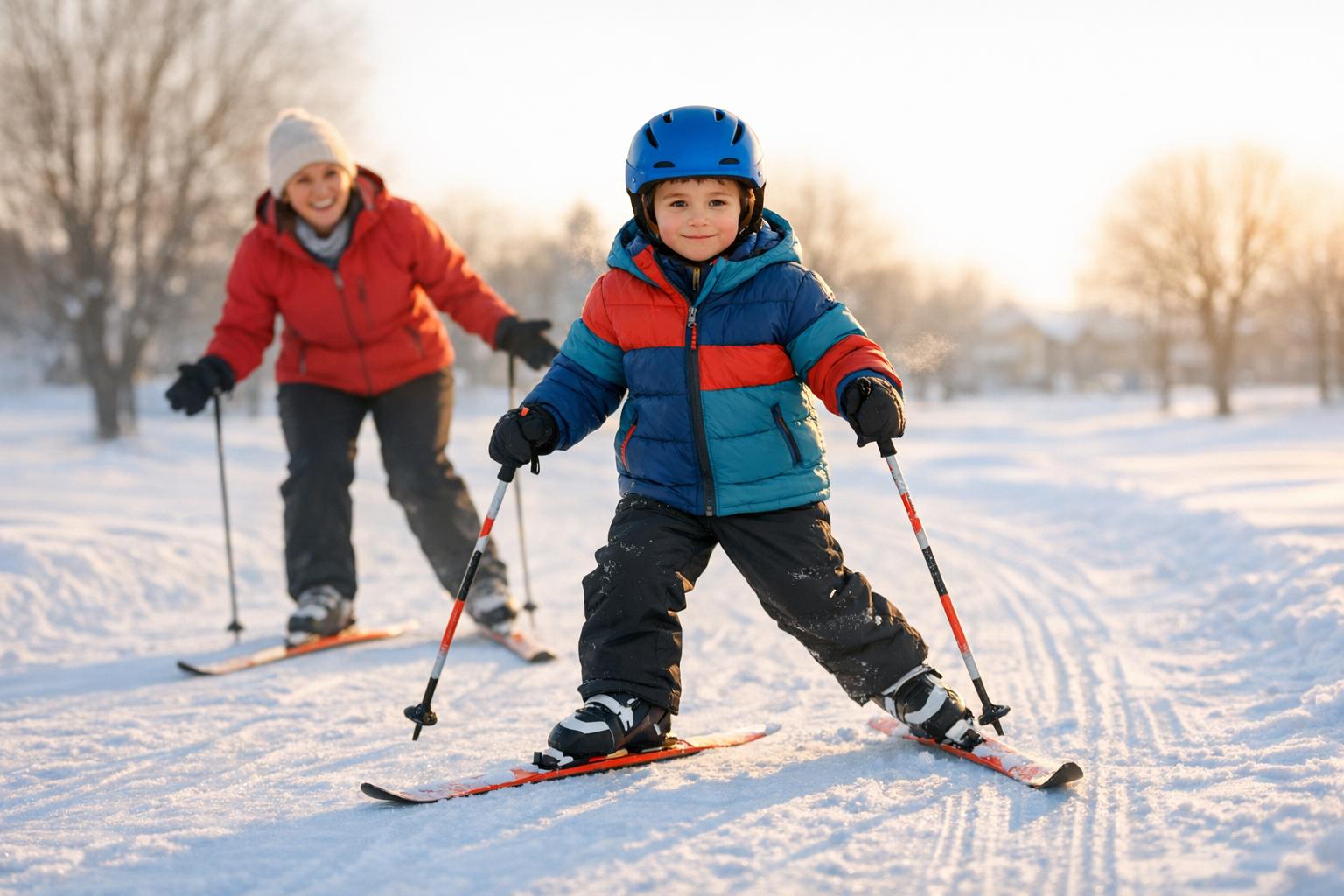
Building on the techniques and equipment insights discussed earlier, this guide outlines the steps to mastering skiskating. While progress varies from person to person, beginners typically gain basic control and learn to stop within 3 to 7 days of consistent practice. Several factors influence the learning curve, including prior experience with skating or skiing, physical fitness, and how often you practice. Children often pick up the skill faster due to their lower center of gravity and fearless approach, while adults benefit from better body awareness and an ability to follow technical guidance.
Consistency plays a huge role in your success. Regular practice helps you develop muscle memory more effectively, and working with a professional instructor can speed up the process significantly. The right equipment also makes a difference - properly fitting gear boosts your confidence and encourages more focused practice.
"Regular, consistent practice is key. Skiers who hit the slopes frequently each season will progress faster than those who only ski a few times a year. There is no substitute for getting on the snow." – Snow.com
Each milestone is worth celebrating, whether it's standing independently for the first time or completing a controlled turn. These small victories add up, bringing you closer to mastering the sport. With patience and dedication, you'll soon find yourself gliding effortlessly down the slopes.
FAQs
What should I learn first in skiskating?
The first step in skiskating is mastering how to stand and balance on your skates. For beginners, the main goal should be to feel stable and comfortable on the ice or snow before moving on to gliding or attempting more advanced techniques. This initial skill typically requires about 2–4 hours of practice and is crucial for building the confidence needed to progress to forward gliding or learning how to stop effectively.
Which boots and gear work best for beginners?
When you're starting out with skate skiing, the right boots and gear can make all the difference. Comfort and fit are key when it comes to skate ski boots. They should feel snug but not overly tight, providing the support you need without any discomfort.
As for the gear, look for skate skis, poles, and boots that are specifically designed for beginners. Equipment that's tailored to your skill level not only makes the learning process smoother but also helps you gain confidence as you glide across the snow.
What mistakes slow down learning the most?
Learning to skate can be incredibly rewarding, but certain missteps can slow your progress. One of the most common mistakes is picking up bad habits early on, like an improper stance or poor technique. These habits can be tough to break later and may hold you back from advancing.
Another pitfall is rushing through the basics without truly mastering them. Skipping foundational skills might feel like you're speeding things up, but it often leads to frustration and slower progress in the long run.
Focusing on building proper form and technique right from the start is crucial. Taking the time to get these fundamentals right sets the stage for consistent improvement and makes learning much smoother over time.

Leave a comment
This site is protected by hCaptcha and the hCaptcha Privacy Policy and Terms of Service apply.