

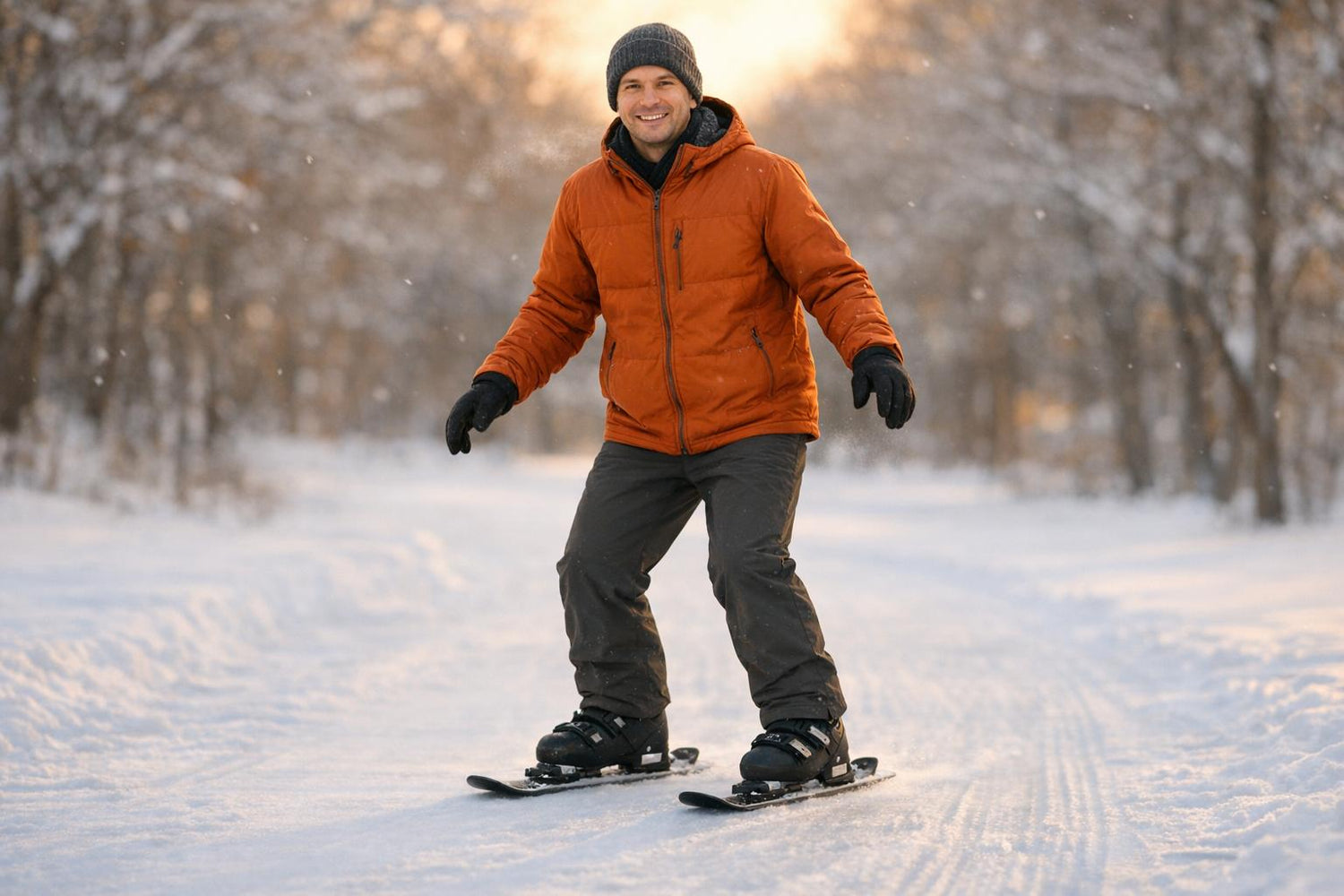
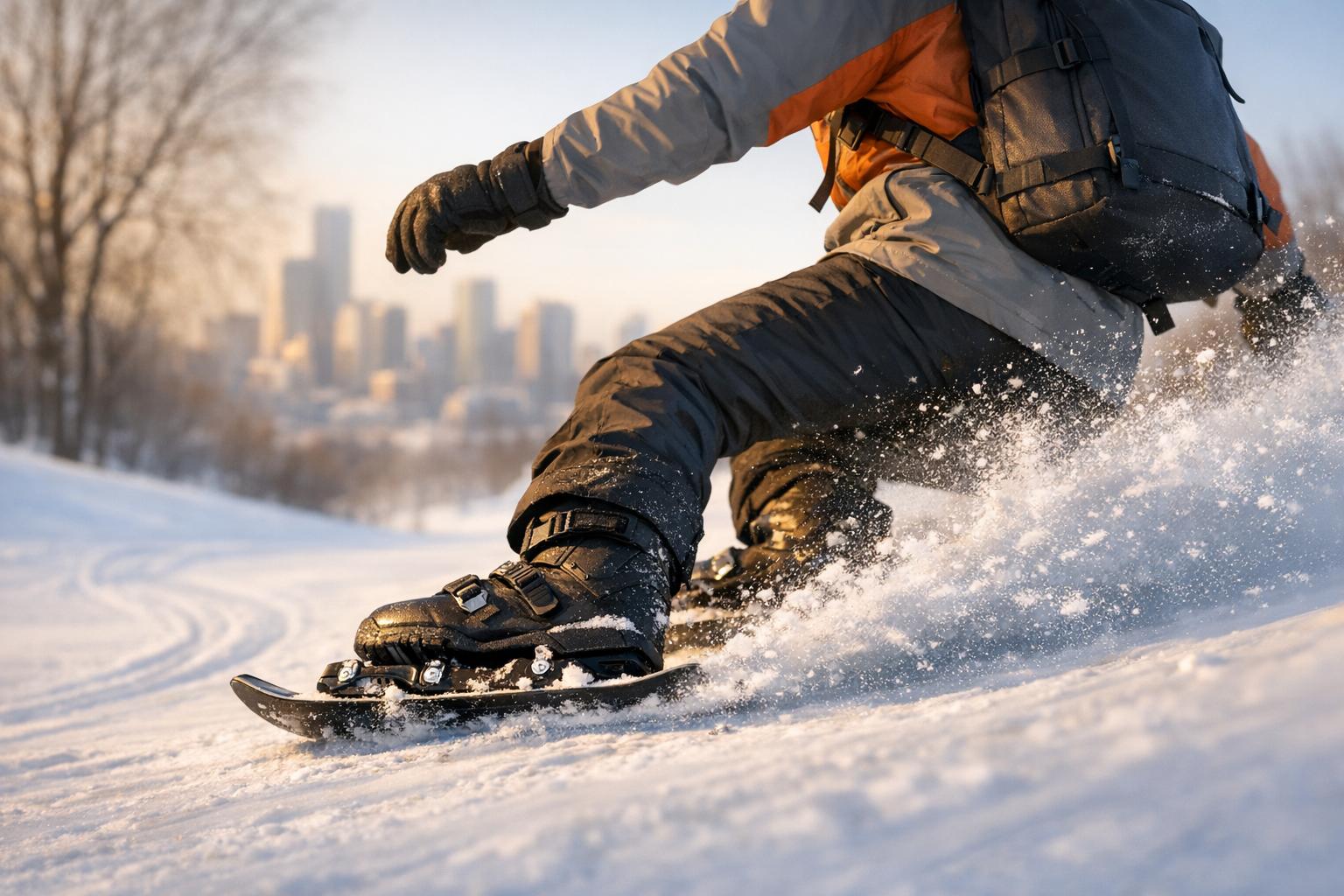
Skiskating swaps the rigid, traditional ski stride for a side-to-side motion inspired by ice skating. It’s easier to learn, burns 600–900 calories per hour, and is gentler on your joints. You’ll need compact Skiskates, snug boots (ski or snowboard), and basic protective gear like a helmet and gloves.
Key benefits:
- Easy to learn: Feels natural for ice skaters or rollerbladers.
- Portable gear: Skiskates fit in a backpack.
- Affordable: Costs less than traditional ski equipment.
- Versatile: Works on trails, parks, and gentle slopes.
Getting started is simple: adjust your bindings, practice the V-shaped push, and build your balance on flat ground before tackling slopes or trying tricks. Whether you’re gliding through trails or experimenting with jumps, Skiskates offer a fun, low-impact way to stay active in winter. No bulky gear, no steep learning curve - just pure movement and outdoor enjoyment.
What Makes Skiskating Different
Easier to Learn
The side-to-side motion of skiskating feels natural to anyone familiar with ice skating or rollerblading, making it easy to pick up. For beginners - especially kids - it's even simpler since they can start without poles, focusing entirely on balance and gliding.
Lightweight and Portable
Skiskates are designed to be compact enough to fit in a backpack, making them easy to carry. This portability means you can enjoy winter activities almost anywhere, without the hassle of bulky gear.
Works for All Skill Levels
Skiskating is accessible to everyone. Beginners can dodge the steep learning curve and high costs of traditional skiing - private ski lessons can run close to $1,000 a day. Meanwhile, experienced skiers can enjoy new challenges without the pressure of competitive or exclusive ski culture. Plus, adjustable bindings allow you to use either ski or snowboard boots, offering flexibility for everything from casual workouts to park tricks.
Next, let’s dive into the gear you’ll need to start your skiskating adventure.
sbb-itb-32287b2
What You Need to Get Started
Getting into skiskating is simple and doesn't require a hefty investment. The essential gear includes Skiskates, boots, and protective equipment. Compared to traditional skiing - which can cost around $650 for beginner skis - skiskating is a more budget-friendly option. Here's a closer look at what you'll need to hit the slopes.
The right boots are key. Whether you go with ski boots or snowboard boots, they need to fit snugly to give you control while still being comfortable enough to avoid cutting off circulation. Safety is just as important, so always wear a helmet to reduce the risk of head injuries. Other essentials include waterproof gloves, goggles (affordable options like Goodr are available for about $75), and a three-layer clothing system. This setup should include a moisture-wicking base layer, an insulating mid-layer, and a waterproof outer layer to keep you warm and dry.
Skiskates Features
Skiskates are designed with convenience and performance in mind. The adjustable bindings are tool-free and compatible with both ski and snowboard boots, so you can choose whichever boot type you prefer. Each pair is built with steel edges for grip and a handmade wood core sourced sustainably. The lightweight cap construction not only makes them easy to carry in a backpack but also ensures durability for tricks and smooth runs.
Picking the Right Model
The choice of Skiskates depends on your boots and the terrain you plan to tackle. Both the Skiskates Ski Boots Model and the Skiskates Snowboard Boots Model are priced at $490 and share the same high-quality construction, differing only in binding compatibility. These models are versatile enough for downhill runs, snow parks, and hiking trails.
If you're new to skiskating, renting gear is a good way to test the waters before committing. However, beginners are encouraged to invest in new equipment, as used gear can be difficult to evaluate for wear and safety. Picking the right model ensures you'll get the most out of your experience, whether you're practicing tricks or enjoying a long downhill ride.
| Model | Price | Best For | Boot Type |
|---|---|---|---|
| Skiskates Ski Boots Model | $490 | All terrain, tricks, downhill | Ski boots |
| Skiskates Snowboard Boots Model | $490 | All terrain, tricks, downhill | Snowboard boots |
How to Learn Skiskating
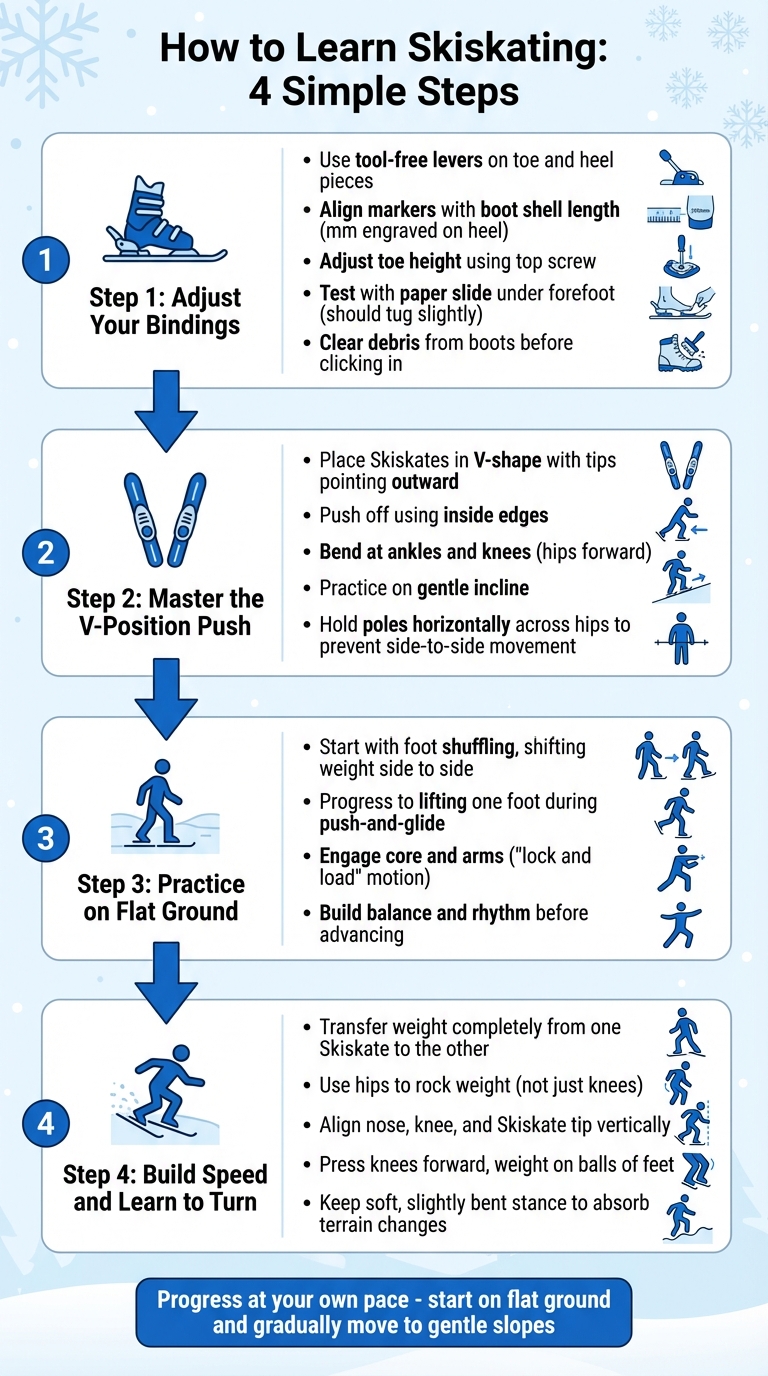
4-Step Guide to Learning Skiskating for Beginners
Skiskating is easy to pick up thanks to its short length and skating-like movement. Start on flat ground to get comfortable, and as your balance improves, move on to gentle slopes to build confidence.
Now that you’ve got your gear ready, let’s break down the steps to begin skiskating.
Step 1: Adjust Your Bindings
First, make sure your Skiskates bindings are set up to fit your boots. The tool-free design makes this simple. Look for the millimeter (mm) length engraved on the side of your boot heel. Use the levers on the toe and heel pieces to slide them along the rail until the markers align with your boot's shell length. This measurement is crucial for safety and performance - it’s based on your boot shell length, not your regular shoe size.
Next, adjust the toe height. There’s a screw on top of the toe piece for this. To check if it’s set correctly, slide a folded sheet of paper under the forefoot of your boot. The paper should come out with a slight tug but shouldn’t fall out on its own. Before clicking into the bindings, make sure your boots are free of debris. As Ski Exchange highlights:
The proper binding of your ski boots to your skis is one of the most critical pieces of your ski set-up.
Step 2: Master the V-Position Push
The V-position push is the heart of skiskating. Start by placing your Skiskates in a V-shape, with the tips pointing outward. Push off using the inside edges of the Skiskates to generate forward motion. To do this effectively, bend at your ankles and knees to get your hips forward - don’t just hinge at the waist.
Practice on a gentle incline. Begin in an athletic stance, lean forward to start moving, and use a small hop to reset the V-position. To avoid losing power from side-to-side hip movement, hold your poles horizontally across your hips while practicing. Focus on keeping them steady and level as you skate forward.
Step 3: Practice on Flat Ground
Flat terrain is perfect for building your balance and rhythm. Start by shuffling your feet, shifting your weight from one foot to the other. Once this feels natural, try lifting one foot entirely during a single push-and-glide motion.
Engage your core and arms to support each push. Think of it as a “lock and load” action - your core crunches slightly to help drive your body forward as your legs push outward. This coordination between your arms, core, and legs is what makes skiskating feel intuitive for many people compared to traditional skiing.
Once you’ve got the hang of balancing and gliding, you can work on increasing your speed and learning to turn.
Step 4: Build Speed and Learn to Turn
After mastering the basics on flat ground, it’s time to pick up speed and practice turning. The key is transferring your weight completely from one Skiskate to the other. Use your hips to rock your weight over, rather than just bending your knees. Keep your nose, knee, and the tip of your Skiskate aligned in a straight vertical line, and square your shoulders over the gliding skate.
For momentum, press your knees forward and shift your weight onto the balls of your feet. Keep your eyes up to stay balanced. A soft, slightly bent stance will help you absorb changes in terrain and remain stable even at higher speeds. As Carrie McCusker, a Level 2 TrainingPeaks Coach, explains:
A stiff, upright skier falls easily while a relaxed, poised skier absorbs terrain changes with less issue.
Tricks and Techniques
Once you've got the hang of the basics, Skiskates open the door to a whole new level of fun. They make winter sports less about effort and more about playful exploration.
Simple Tricks to Try
- Hop in place: Start with soft, controlled landings. Keep your knees bent to absorb impact and maintain a balanced, athletic posture.
- 180° jump: Add a twist to your jumps by rotating mid-air and landing backward. Focus on keeping your shoulders aligned and engage your core for smooth control.
- Backward gliding: Thanks to their shorter length, Skiskates make moving backward a breeze. Begin on flat terrain to get the feel, then gradually test gentle slopes.
- Nose butter roll: Tilt the front of your Skiskates and spin 180° on the snow. It’s a flashy move that doesn’t need much speed but looks impressive.
"Just getting outside and having fun is always more important than having perfect technique".
Using Skiskates in Parks and Trails
Skiskates shine in areas where traditional skis can feel clunky. For example, snow parks are perfect for trying out box slides, small jumps, or rail touches. Their compact size makes navigating tight features much easier. On narrow hiking trails, Skiskates fit where regular skis might struggle, giving you access to spots that would otherwise be off-limits.
When facing uphill sections on trails, adopt a wide V-shape stance and keep your body low. Around 60% of your push should come from your legs moving outward. Avoid rolling through the ball of your foot like you would in ice skating - this can cause the tips to dig into the snow. Instead, shift pressure along the inner edge of your foot for smoother movement.
This adaptability to different terrains makes Skiskates a versatile choice and sets them apart from regular skiing.
Skiskating vs. Regular Skiing
Here’s a quick look at how Skiskates compare to traditional skis:
| Feature | Skiskating | Regular Skiing |
|---|---|---|
| Portability | Compact - fits in a backpack | Requires a ski bag or roof rack |
| Learning Curve | Easy for ice skaters and rollerbladers | Demands mastering kick-and-glide rhythm |
| Physical Impact | Low-impact, full-body engagement | Focuses on lower body and hip flexors |
| Terrain Flexibility | Works on trails, parks, and narrow paths | Best on groomed tracks or deep powder |
The standout benefit? Skiskates let you move with freedom. There’s no need to perfect rigid techniques - just dive in, experiment, and enjoy the ride.
"Taking risks, moving fast, and forgetting to think too much can be a great way to grow comfortable on your new skis".
Conclusion
If traditional skiing feels like too much hassle, Skiskates offer a refreshing alternative. They ditch the bulky gear and complicated techniques, replacing them with a lightweight, straightforward option that feels natural from the moment you start.
With Skiskates, you can glide across snowy trails, explore parks, or try out new moves - all while enjoying a low-impact, full-body workout. Plus, they’re gentle on your joints, making them a great option for anyone looking for a more approachable way to stay active in winter.
But there’s more to it than just fitness. For those who find traditional skiing overwhelming, Skiskates provide a whole new level of freedom. Imagine spending time outdoors, soaking up the crisp winter air and natural light. It’s a great way to shake off the seasonal blues. The rhythmic motion of skating through snow-covered landscapes isn’t just physical - it’s a mental escape, a chance to reset and recharge. No heavy equipment, no steep learning curves - just you, the snow, and the joy of movement.
"Getting outside and exercising in the winter is a helpful way to relieve stress. Cross-country skiing is a meditative form of exercise, and nature is a powerful stress reliever."
– Lindsay Knake, Brand Journalist, Blue Cross Blue Shield of Michigan
This mix of simplicity and freedom makes Skiskating the perfect way to embrace winter. Grab a pair, find a groomed trail or snow park, and give it a shot. It’s not about mastering a sport - it’s about rediscovering the fun and excitement of being active in the snow.
FAQs
Where can I skiskate legally and safely?
You can enjoy skiskating legally and safely by heading to designated ski areas that permit snow sports and meet established safety standards. Be sure to follow all posted signs, hazard warnings, and safety rules while on the slopes. It's a good idea to contact local ski resorts or snow parks beforehand to confirm whether skiskating is allowed. For additional safety tips, consult guidelines from organizations like the National Ski Areas Association to make your experience both fun and secure.
Do I need poles to start skiskating?
No, poles aren't necessary to start skiskating. This activity centers on mastering balance, edge control, and smooth, low-impact movements - skills that can be practiced without poles. Unlike traditional skiing, where poles provide stability, skiskating relies on techniques more akin to hockey. Beginners can skip poles entirely, though you always have the option to incorporate them later if you feel they’d offer additional support.
How do I stop and control speed on Skiskates?
To manage your speed and come to a stop while using Skiskates, you can rely on techniques similar to those used in skiing, such as the snowplow. To perform this, angle your Skiskates into a wedge shape by pointing your toes inward and pushing your heels outward. Begin practicing this maneuver on flat terrain to get the hang of it, and then move on to a gentle slope. The wider your snowplow stance, the more it slows you down, making it a great method for controlling your speed or coming to a stop effectively.

Leave a comment
This site is protected by hCaptcha and the hCaptcha Privacy Policy and Terms of Service apply.