

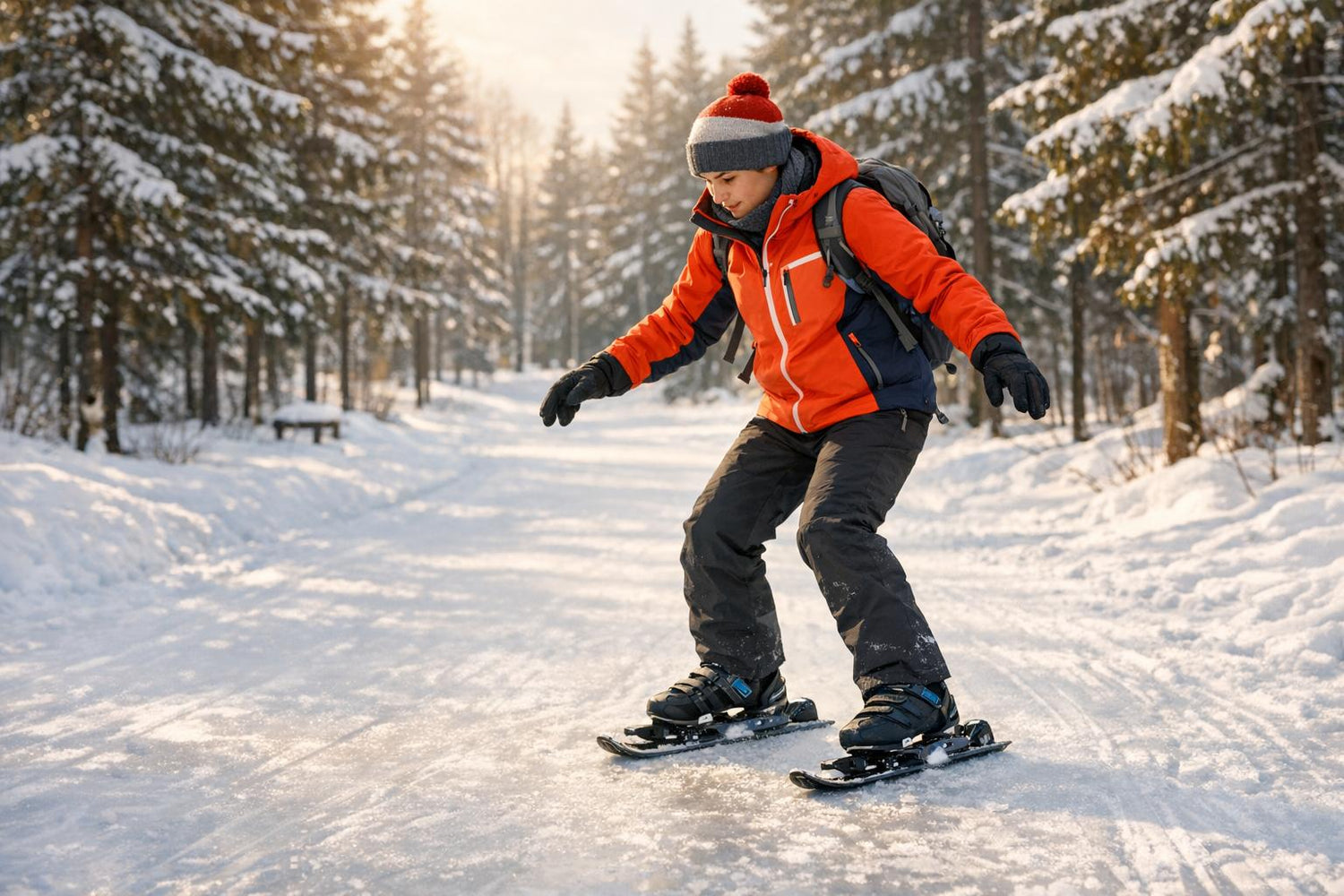
Skiskating is a winter sport blending skiing and skating, using compact skis and side-to-side movements. If you've ice skated or rollerbladed, it may feel familiar, and many beginners grasp the basics in minutes. Skiskates are lightweight, easy to carry, and compatible with various boots, making them beginner-friendly. Here's what to know:
- Gear: Skiskates, helmet, goggles, and waterproof clothing are essential. Models like Snowfeet Basic ($190) and Snowfeet 50 PRO ($299) are great for beginners.
- Learning Curve: Start on flat ground to practice balance and gliding. Use a "V" stance to push off and shift weight for smooth movement.
- Tips: Adjust bindings at home, dress in layers, and warm up before starting. Falls are normal - learn to fall safely and focus on balance.
Skiskating offers a fun way to enjoy snowy slopes with less hassle than skiing, but expect some practice to get comfortable. Stick to groomed trails and take breaks as needed to build confidence.
Gear and Preparation for Your First Skiskating Session
Beginner Skiskates Models Comparison: Features, Prices, and Ratings
To kick off your skiskating journey, you'll need a few essentials: skiskates, compatible boots, a helmet, goggles, and waterproof winter clothing. The setup is simple, and most skiskates work with boots you likely already own. Once you've gathered your gear, take a moment to explore the best skiskates models and safety tips to ensure a smooth start.
Best Skiskates Models for Beginners
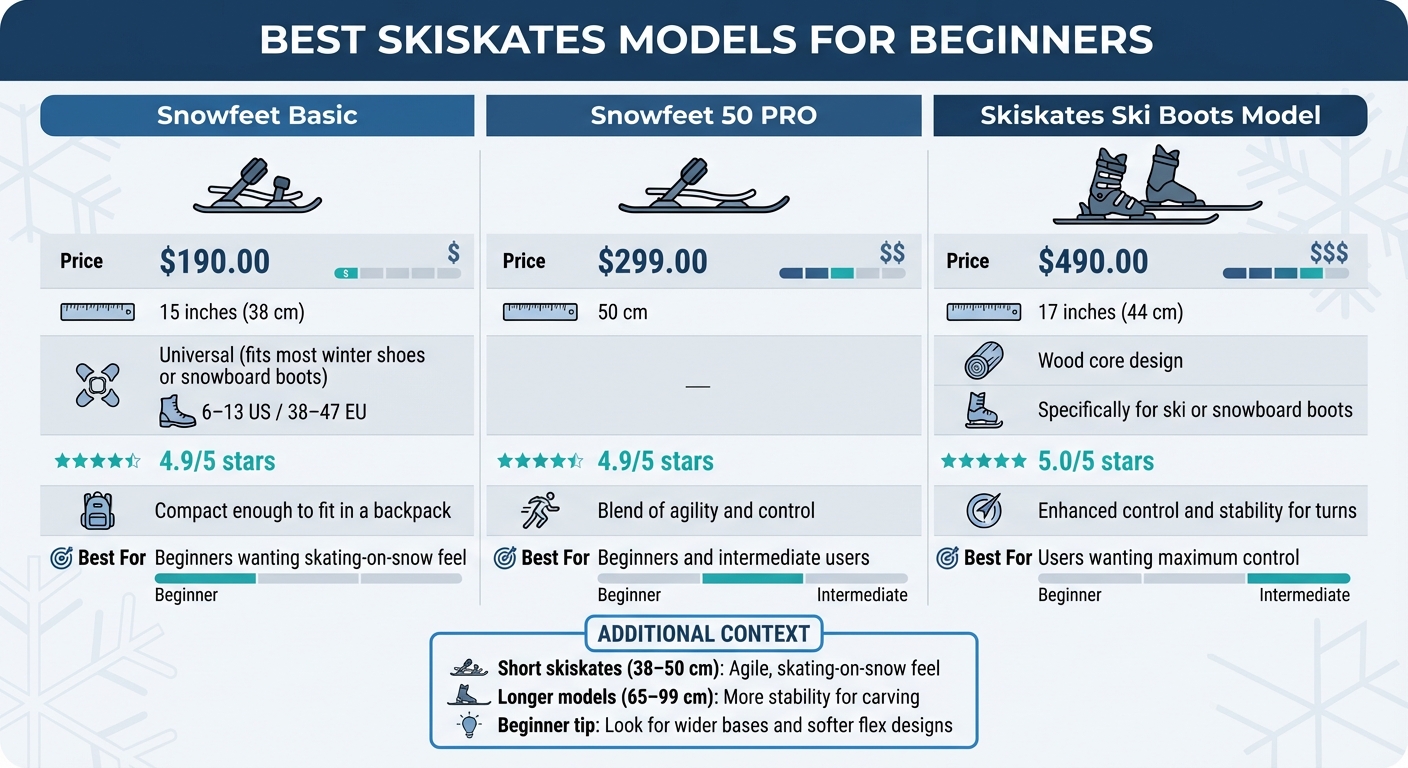
The Snowfeet Basic, priced at $190.00, features universal bindings that fit most winter shoes or snowboard boots (sizes 6–13 US / 38–47 EU). With a compact length of just 15 inches (38 cm), these skates are small enough to fit in a backpack. They’ve earned an impressive 4.9/5 star rating from verified customers, making them an excellent option for those new to skiskating who want that skating-on-snow feel.
For enhanced control, the Skiskates Ski Boots Model is a great pick. At $490.00, it offers a 17-inch (44 cm) wood core design with bindings specifically made for ski or snowboard boots, giving you added stability for turns. This model has received a perfect 5.0/5 star rating. If you're searching for a middle ground between portability and performance, the Snowfeet 50 PRO at $299.00 delivers a blend of agility and control, ideal for both beginners and intermediate users.
Short skiskates (38–50 cm) offer an agile experience, mimicking skating on snow, while longer models (65–99 cm) provide more stability for carving. Beginners should look for wider bases and softer flex designs to make balancing and turning easier as they learn.
Safety Equipment and Setup Tips
Safety should always come first. A helmet is non-negotiable - it can reduce the risk of head injuries by up to 60% for winter sports enthusiasts. Pair it with goggles to maintain clear visibility and gloves to keep your hands warm and protected during falls.
When it comes to footwear, choose boots that match your needs: snowboard boots offer flexibility, while ski boots provide precise control for carving. For casual outings on hiking trails, waterproof winter shoes with solid ankle support are a practical choice.
"To avoid hassle on the slopes, take your time and adjust the bindings at the comfort of your home, using a screwdriver and a shoe you are going to wear." - Snowfeet Official Guide
Properly adjusted bindings are crucial. Loose bindings can lead to dangerous falls, while overly tight ones increase the risk of knee injuries. Even though many skiskates feature tool-free adjustments, it's a good idea to double-check the fit at home. For those with smaller feet, adjusting the toe and ankle straps to different holes can ensure a snug fit.
Don’t forget to maintain your skiskates. After each use, dry the metal edges, apply oil to prevent rust, and wax fiberglass models to keep them gliding smoothly.
How to Prepare Yourself for Skiskating
Dressing appropriately is key. Wear three layers: a moisture-wicking base layer, an insulating mid-layer, and a waterproof outer shell. This combination helps regulate your body temperature as you warm up. Waterproof pants and jackets are particularly important since falls are inevitable when you're learning.
Before stepping onto the snow, spend a few minutes warming up your muscles. Stretch your legs, ankles, and core to improve balance and reduce the risk of injury. Since skiskating involves side-to-side movements similar to ice skating, focus on loosening your hip flexors and inner thighs.
Mentally prepare yourself for a few tumbles - they’re just part of the learning process. Start on groomed snow or gentle hiking trails rather than challenging slopes or deep powder (over 4 inches). If you’ve ice skated or rollerbladed before, you’ll likely pick up the basics quickly - most beginners get the hang of it within minutes. These steps will help you build confidence and set the stage for a successful first outing on skiskates.
sbb-itb-32287b2
Your First Day on Skiskates: What to Expect
Getting Your Balance and Learning to Glide
Start on flat, level ground to get a feel for your skiskates and test how the binding release mechanism works. Stand with your feet shoulder-width apart, keep your knees and ankles slightly bent, and try small hops while shifting your weight from side to side. This will help you find your balance. Imagine a straight line running from your nose to your toes to maintain proper posture. Before attempting to glide, practice simple movements like shuffling or marching to get comfortable with the equipment.
"Being proficient and remaining balanced atop one foot is a trait shared by advanced skiers, so the more you practice this skill... at home, the better you'll be the next time you hit the snow." - Ken Knapp, REI Editor Emeritus
To get moving, place your feet in a V-shape with your toes pointing outward and your heels together. Push off using the inside edge of one skiskate, shifting your weight onto the other foot to glide. The steel edges of your skiskates provide control - use them to brake by pushing your heels outward into a wedge shape while rolling your ankles inward. Once you feel steady, you can start refining your technique for smoother pushes and turns.
Basic Techniques: Pushing and Turning
When you’re comfortable gliding, focus on building momentum. Bend your knees and ankles more deeply as you push off, and keep your eyes looking ahead to help maintain balance. Positioning one foot slightly in front of the other can also improve your stability from front to back.
For turning on flat ground, try a step turn: lift the inside skiskate, angle it in the direction you want to go, step down, and then bring your other skiskate parallel. On gentle slopes, a wedge turn is a great option. Picture your skiskates forming a "pizza" shape, and apply extra pressure on the side you want to turn toward. Thanks to their compact 17-inch length, skiskates are highly responsive, making it easier to maneuver as you develop your skills.
"Falling doesn't mean you're bad. It means you're trying! Just learn to fall safely." - Aly Rusciano, wikiHow Staff Writer
Falling is part of the learning process, so don’t worry if it happens. Try to fall sideways and roll onto your hands and knees. Adopting a "dead bug" position - with your skiskates (and poles, if you’re using them) in the air - can help you untangle yourself before standing back up.
Should You Use Poles?
After you’ve gained confidence with gliding and turning, you might wonder if poles could help improve your stability. For beginners, it’s best to start without them. Skipping poles allows you to focus on balancing and transferring your weight effectively with your legs and feet. Your arms will naturally assist in keeping you steady as you adjust to the side-to-side motion of skiskating.
Once you feel more comfortable, poles can be a helpful addition, especially if you’re looking for extra propulsion on flat terrain. They can also provide added stability as you pick up speed. However, during your first hour or two on skiskates, it’s better to keep your hands free so you can concentrate on mastering the basics of balance and technique.
Common Beginner Challenges and How to Fix Them
Typical Problems and Solutions
One of the most frequent hurdles for beginners is leaning too far back. When you're nervous about speed, your hips might shift behind your heels, making it hard to control your skiskates. A simple fix? Try the split skate drill. Stand with your skiskate tips wide apart and shift your hips forward until your skiskates start sliding naturally. This helps you find the sweet spot where your weight is centered over the balls of your feet.
Another issue is wobbling on one foot, which usually comes from misalignment. Since skiskating relies on constant weight shifts, balancing on one skiskate is essential. Focus on aligning your "nose-hip-knee-toe" in a straight vertical line as you glide. Keep your joints - ankles, knees, and hips - slightly flexed, not locked. Tighten your core and imagine standing like a football linebacker: hands near your waist, joints bent, and weight centered on the balls of your feet.
Here's a quick guide to some common challenges and how to tackle them:
| Common Challenge | What's Causing It | How to Fix It |
|---|---|---|
| Leaning Back | Hips behind heels; fear of speed | Move hips forward until skiskates naturally slide apart |
| Wobbling on One Foot | Poor vertical alignment; stiff joints | Align nose, hip, knee, and toe vertically |
| Falling Inside Turns | Weight on the inside skiskate | Balance weight against the outside skiskate |
| Loss of Control on Slopes | Not using edges properly | Push heels out and roll ankles in to create friction |
| Getting Tired Quickly | Muscles fatigued from slow reactions | Increase endurance with planks and wall sits |
Another common challenge is catching edges, which often happens when your weight isn't evenly distributed between both feet. When stopping or turning, make sure your weight is balanced instead of favoring one side.
How to Stay Motivated While Learning
Falling is just part of the learning curve - it doesn’t mean you’re doing something wrong. As Ron LeMaster, author of Ultimate Skiing, puts it:
"The lower body - the legs and feet - plays a distinctly different role from the upper body... You ski with your legs. You balance with your upper body".
This perspective helps you focus on the right things during practice.
Listen to your body and take breaks when needed. Learning new movements can be exhausting, and your muscles need time to recover. If you're feeling drained, it’s okay to pause. Most beginners can grasp the basics within 5 to 30 minutes, but overexerting yourself won’t speed up the process. While skiskates are lighter than traditional skis, reducing overall fatigue, regular breaks are still essential.
Celebrate small victories. Instead of dwelling on what you can’t do yet, acknowledge progress. Glided a few feet without wobbling? That’s a win. Completed a turn without falling? Even better. Learning happens step by step, and recognizing these moments keeps you motivated. Stick to groomed trails where conditions are predictable, and steer clear of deep powder (over 4 inches) until you’re more confident.
Drills and Exercises for Skiskating Beginners
Practice Drills for Beginners
Once you've got the basics down, it's time to put those balance skills to work with some practical drills. These exercises will not only sharpen your technique but also give you the confidence to glide smoothly. Start with the "Waddle Skate", which helps you get used to moving forward. Position your skiskates in a V-shape, shift your hips forward, and let your skiskates glide slightly apart. Before they drift too far, transfer your weight onto one skiskate and glide, then bring the other skate back to the center. This simple drill introduces the rhythm of weight shifting without focusing on speed or distance .
Next, try the "1-1-Thousand" drill to build single-leg balance. Glide on one skiskate while counting "1-1-thousand" out loud. As your balance improves, challenge yourself by extending the count to "2-1-thousand" or longer before switching legs. This drill reinforces stability while helping you maintain proper alignment .
Another key exercise is no-pole skating, which shifts your focus to leg power instead of relying on your arms. Swing the opposite hand toward the tip of the skiskate you're gliding on to create momentum for longer glides. As Calisa Kastning, Executive Director of Skiku Inc., notes:
"Skiing with more efficiency means you can cover more distance with less effort."
For upper-body coordination, practice double-poling by holding your poles at eye level and pushing them down toward the tips of your boots in unison. This move strengthens your core and arms while keeping your movement synchronized .
Use V-steps for uphill climbs and small step turns for sharp directional changes. For V-steps, angle your skiskates into a wide V with the tips pointing outward, roll your ankles inward to engage the edges, and take short, stepping glides. Adjust your tempo to match the terrain . Step turns, on the other hand, are perfect for skiskates since they’re shorter than traditional skis. Take quick, light steps while staying low in an athletic stance for better control .
Moving on to Tricks and Advanced Techniques
Once you've nailed the basics, step up your game with more dynamic and playful drills. Start with self-righting hops, which involve small jumps while gliding. These hops help you recover balance on the go and improve your agility. Begin on flat terrain and gradually increase the height of your hops as you gain confidence.
For a fun twist, try playing "Freeze Tag" with friends while on skiskates. This playful activity encourages risk-taking and helps you develop dynamic balance. As you grow more comfortable, these exercises will bridge the gap between beginner drills and more advanced techniques, setting you up for even greater challenges.
Conclusion: Is Skiskating Easy? What You Need to Know
Is skiskating easy? Well, that depends on your background and preparation. If you’ve spent time inline skating or ice skating, you’ll likely pick it up faster since the motions are quite similar. For many beginners, the learning curve isn’t too steep because the movement feels natural - almost like walking or skating on snow. Plus, the compact design of skiskates gives you more control compared to traditional skis, and you can skip the hassle of stiff ski boots by using your regular winter or snowboard boots instead.
That said, don’t expect it to be completely effortless from the start. Balancing and shifting your weight will take some practice, and falling is part of the process. The good news? Falls on skiskates are usually less intimidating because the shorter length reduces leverage. And with over 5,500 verified reviews averaging 4.9 out of 5 stars, it’s clear that most people find the learning experience both manageable and enjoyable.
To set yourself up for success, preparation is key. Start on groomed trails rather than tackling deep powder right away. Equip yourself with essential safety gear like a helmet and knee pads to build confidence as you learn. Take the time to nail down your stance before moving on to more advanced techniques.
With the right mindset, skiskating is a beginner-friendly way to enjoy the slopes. Quality gear, basic safety precautions, and a little patience can help you develop smooth, confident gliding. Whether you’re after a fun winter activity or a fresh way to explore the mountains, skiskates offer an exciting entry point that grows with your abilities.
FAQs
What should I wear for my first time skiskating?
For your first skiskating adventure, the key is starting with the right gear. Begin with comfortable winter or snowboard boots that work well with Skiskates. Look for boots that offer solid ankle support while still allowing your feet to move naturally. They should fit snugly - secure enough to keep your feet in place, but not so tight that they become uncomfortable.
Dressing for the weather is just as important. Opt for warm, flexible clothing that won’t get in the way of your movements. Don’t forget to add gloves to keep your hands warm and a helmet for an added layer of safety. Staying comfortable and protected will make your first skiskating experience much more enjoyable.
How do I choose the best skiskates for beginners?
Choosing skiskates as a beginner comes down to prioritizing comfort, ease of use, and the right fit. Go for shorter skiskates, typically between 15–47 inches, as they’re lighter, more manageable, and make the learning process smoother. Features like soft flex, lightweight construction, and bindings that work with regular winter boots can make your experience much more enjoyable.
Pay close attention to sizing. Skiskates often run smaller than regular shoe sizes, so it’s important to measure your foot carefully and check the size chart to ensure a snug, secure fit. This not only prevents discomfort but also helps you improve your skills faster. Beginner-friendly models usually start at around $150 and are compact enough to fit in a backpack, making them perfect for anyone looking for a simple and convenient way to dive into the sport.
What are the most common mistakes beginners make when learning to skiskate?
Beginners often stumble into a few pitfalls when learning skiskating, but knowing what to watch out for can make your journey much smoother and more enjoyable.
One big misstep is skipping protective gear. Always suit up with essentials like knee pads, wrist guards, and a helmet - your safety should be a top priority. Another common error? Rushing into high speeds before nailing the basics. Take your time to focus on balance and controlled movements first; speed will come naturally as your skills improve.
Body positioning is another key area where beginners sometimes go wrong. Keep your knees slightly bent, center your weight, and stay in control to maintain stability. And here’s a tip: start practicing on flat, beginner-friendly terrain. It’s a great way to build confidence while minimizing the risk of falls. Stick with it, and soon enough, you’ll be gliding effortlessly!

Leave a comment
This site is protected by hCaptcha and the hCaptcha Privacy Policy and Terms of Service apply.