

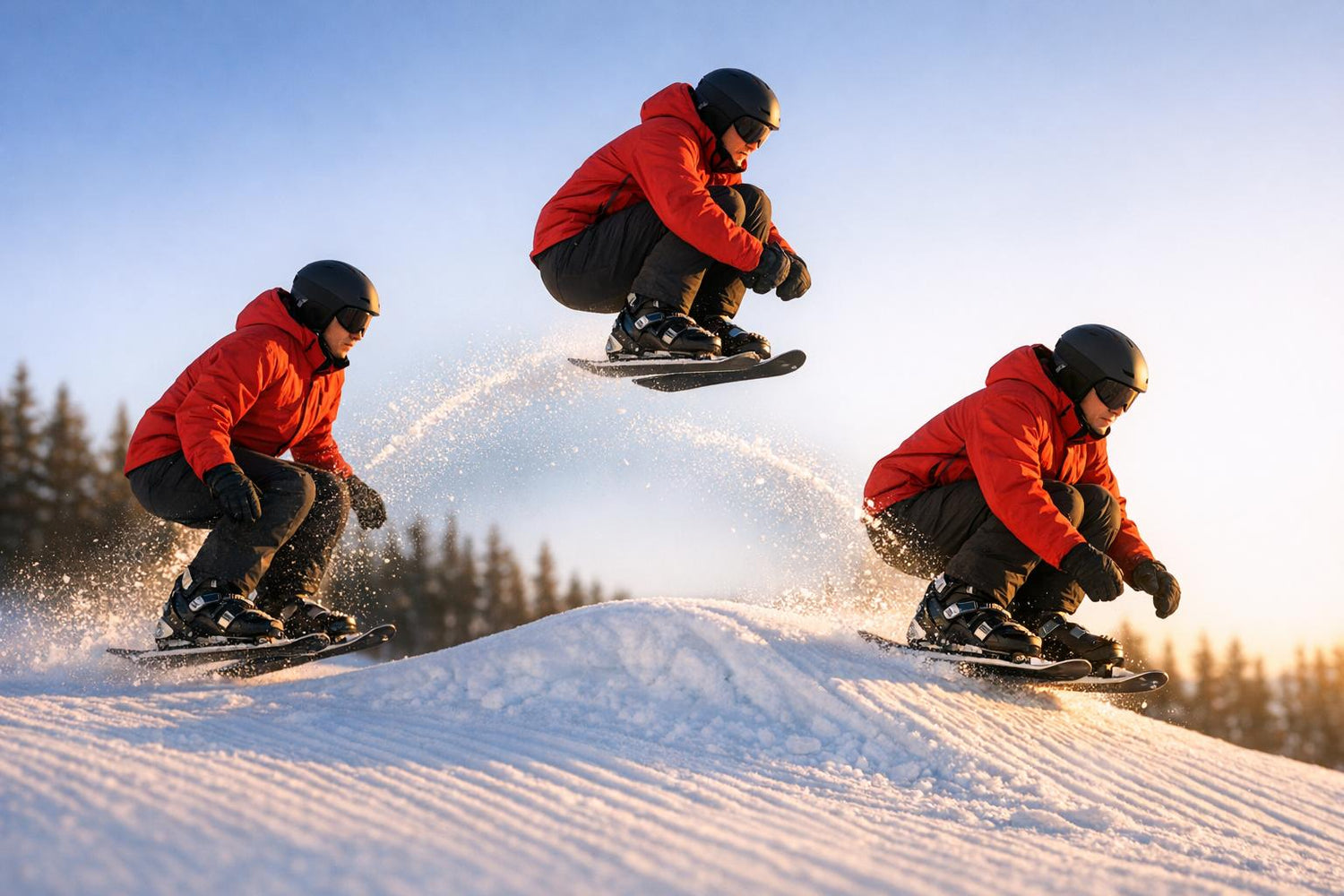
Yes, you can jump on skiskates. Their small size and lightweight design make them suitable for controlled jumps, but they require proper technique and safety precautions. Here's what you need to know:
- Design: Skiskates are shorter and lighter than traditional skis, making them easier to maneuver mid-air. Steel edges and durable materials help with stability and impact resistance.
- Technique: Focus on steady speed, bending your knees during takeoff, and keeping your body balanced mid-air. Beginners can start with small hops and progress to advanced tricks like spins and grabs.
- Safety: Always wear protective gear like helmets and gloves, and practice on safe terrain with clear landing zones. Avoid locking your knees during landings to reduce injury risks.
Skiskates allow for dynamic movement and fun jumps, but mastering timing and control is key. Start small, practice consistently, and prioritize safety to enjoy the experience.
How Skiskates Are Built for Jumping
Short Length and Low Weight
Skiskates are designed with a compact and lightweight frame that makes jumping easier and more controlled. Amy Pope, Senior Lecturer of Physics and Astronomy at Clemson University, explains:
Long skis are not always the best as the heavier the ski, the more lift you need to produce to stay airborne.
This streamlined build allows for better control of your body mid-air, making it easier to maintain balance and execute tricks. The shorter length also facilitates mid-air grabs, adding flair to freestyle maneuvers.
Steel Edges and Binding Systems
Steel edges are a game-changer for skiskate jumps, especially when performing carved takeoffs. This technique involves approaching the jump at an angle instead of straight on, requiring strong edge grip to execute spins like 180s, 270s, or 360s. The steel edges provide the bite and stability needed for a clean and controlled launch.
The bindings, which are adjustable and tool-free, securely hold both ski and snowboard boots. This tight connection is crucial during landings, ensuring your boots stay firmly in place while absorbing the impact of touchdown. Together, these features enhance performance and durability during high-impact activities.
Construction Materials and Impact Resistance
The materials used in skiskates are just as important as their design. Made in Europe, these skiskates feature a sustainable wood core that balances flexibility with durability, making them perfect for repeated landings. The cap construction method, combined with steel edges, creates a sturdy structure that resists the impact forces experienced during jumps. The wood core also helps absorb shock while maintaining the stiffness needed for stability in flight.
Skiskates' limited surface area also plays a role in their performance. While they don’t generate as much lift as longer skis, their smaller size prioritizes quick maneuverability and sharp responsiveness, which are key for executing tricks and maintaining control.
sbb-itb-32287b2
The Reality of Learning How to Jump on Skis | Beginner Freestylers Progression
How to Jump on Skiskates
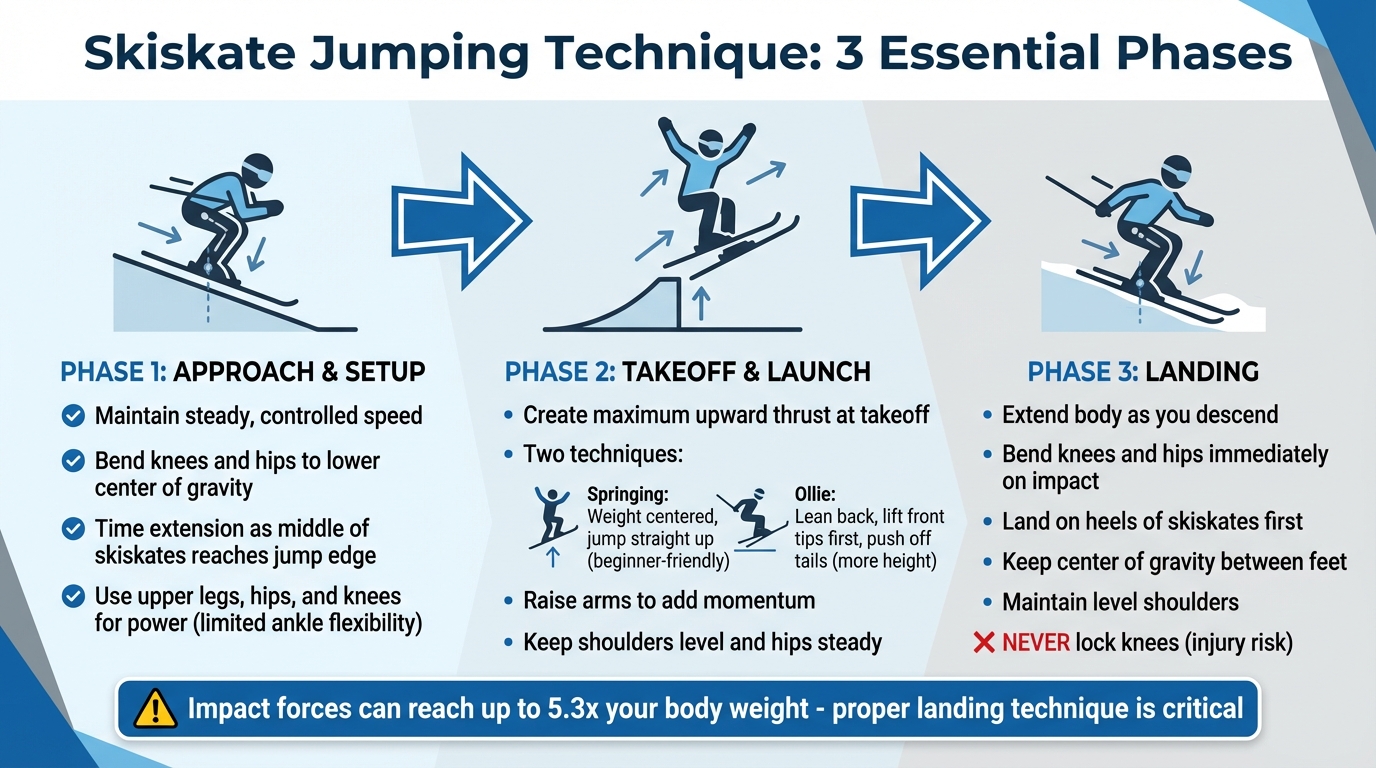
How to Jump on Skiskates: 3-Step Technique Guide
Jumping on skiskates may look tricky, but with their solid design and quick responsiveness, it's definitely doable with the right technique. Here's a breakdown of how to pull it off safely.
Setting Up Your Approach
The key to a good jump starts with your approach. Focus on maintaining a steady speed and controlled momentum. This helps you generate enough upward force while keeping your balance. As you get closer to the edge of the jump, bend your knees and hips to lower your center of gravity. Timing is everything - start extending your body just as the middle of your skiskates reaches the jump's edge. Since skiskate boots limit ankle flexibility, rely on your upper legs, hips, and knees to power your jump.
Launching Into the Air
The launch is all about creating a strong, upward motion. As Tutorialspoint puts it:
A strong jump depends on maximum upward thrust at takeoff.
There are two common techniques you can try:
- Springing: This method is straightforward - keep your weight centered and jump straight up. It's a great option for beginners because it offers more stability.
- The Ollie: For those looking to get more height, lean back slightly to lift the front tips of your skiskates first, then push off the tails. This move requires precise timing but delivers impressive results.
To stabilize your jump, raise your arms as you take off, which adds momentum. Keep your shoulders level and your hips steady to avoid losing balance mid-air.
Landing Technique
Landing properly is just as important as the jump itself. As you come down, start extending your body and prepare to bend your knees and hips immediately upon impact. This helps absorb the shock and keeps you in control. As wikiHow explains:
Keeping your knees bent is important both for avoiding knee injury and keeping control of the board.
For the smoothest landing, aim to touch the snow with the heels of your skiskates first. This helps direct your momentum forward without throwing you off balance. Keep your center of gravity between your feet and your shoulders level to avoid tipping forward or backward.
Safety Guidelines and Mistakes to Avoid
Required Protective Equipment
Once you've nailed the basics of jumping technique, safety becomes the next priority. To protect yourself while jumping on skiskates, always gear up properly. A helmet - whether it's a bike helmet or a multi-sport one - is non-negotiable for reducing the risk of head injuries. Gloves are a must to shield your hands from the cold and any sharp edges. For added protection, padded shorts or crash pads can cushion your hips and tailbone during falls. If you're using non-release bindings on shorter skiskates, safety leashes are essential to ensure your equipment stays securely attached.
How Beginners Should Progress
Don't rush into high jumps right away. Start small with "baby jumps" - tiny hops that barely lift you off the snow. These help you safely practice timing and landing mechanics. Begin by jumping on flat ground in just your boots to get a feel for the motion. Once comfortable, attach your skiskates and try small jumps where there's no gap between takeoff and landing. Always perform a speed check first by skiing up to the jump and pausing at the lip to assess how much momentum you'll need. Only increase the height of your jumps once you're landing consistently and with control. Building skills gradually while avoiding common mistakes is key to progressing safely.
Common Jumping Errors
One of the most dangerous mistakes is landing with locked knees. Straight legs can't absorb impact properly, which increases the risk of injury. As Adults Skate Too explains:
A good landing is quiet and controlled. You should land... with a bent knee, not crash down.
Another frequent error is leaning backward or looking down, which throws off your balance and spatial awareness, making falls more likely. Professional skier Ahren Stein highlights the importance of timing:
Ideally you want to be fully extended right at the lip of the jump.
Lastly, attempting jumps at high speeds before mastering the basics can lead to a loss of control. Always warm up thoroughly and ensure your landing zone is clear before trying any jump. Taking these precautions will help you stay safe while building your skills.
Where to Practice and How to Improve
Recommended Terrain Types
When choosing a spot for skiskating jumps, look for areas with four main sections: an in-run (the approach ramp), a take-off table, a landing hill, and an out-run - a flat or slightly uphill area where you can safely slow down after landing. Start small by practicing on hills with features no more than 150 feet, and only move to terrain parks or more advanced areas once you're confident in the basics.
Safety is key. Always check that the landing zone is free of people, trees, rocks, or icy patches. Stay away from roads, parking lots, or bodies of water. If you're practicing on natural ice, ensure it's smooth and at least 4 inches thick. Additionally, never stop in areas where you're not visible from above or where you could block a trail. Once you've found a safe spot, you can focus on improving with specific drills and checks.
Training Exercises
To build your jumping skills, start with off-snow exercises. Practice jumping straight up and down in your ski boots on flat ground to get used to the motion of popping off your toes. Once you're comfortable, repeat the drill using your skiskates to adjust to their extra weight. Balance is crucial, so try the Self-righting Hop Drill and work on ankle flexion exercises to improve your ability to absorb impacts during landings.
When you're ready to tackle actual jumps, perform a "speed check" by skiing up to the lip of the jump, stopping briefly to visualize your flight path and estimate the speed you'll need. As professional skier Ahren Stein advises:
Ideally you want to be fully extended right at the lip of the jump.
Once you're nailing your landings, you can start adding flair. Try small grabs or shifties (twisting your skiskates mid-air) to improve your air awareness. For off-season practice, trampolines are a great option. Use them with training skis to work on aerial movements, but keep the skis flat on the trampoline bed instead of pointing your toes.
Conclusion
Skiskates open up the possibility for jumps when proper technique and safety are at the forefront. Thanks to their lightweight and responsive design, they allow for dynamic movement, but they also demand precision. Successful jumps require pushing off from the balls of your feet, extending at the right moment on the lip, and absorbing impacts that can reach up to 5.3 times your body weight. Without these techniques, hard landings and potential injuries become a real risk.
Start by practicing on flat ground to fine-tune your timing. Gradually progress by using speed checks to gauge momentum before attempting more advanced jumps. Watching skilled riders and choosing slopes with clear landing zones can also make a big difference. Landing correctly is key - flex your hips and knees to absorb impact effectively and reduce the chance of injury.
As emphasized earlier, consistent practice is what builds muscle memory and confidence. Focus on controlled arm movements, stay alert to your surroundings, and avoid tackling features you're not ready for.
With a cautious approach and attention to detail, skiskate jumps can become an exciting highlight of your time on the slopes. Take your time, celebrate small improvements, and enjoy the thrill of mastering each jump on your chosen terrain.
FAQs
What jump size should I start with on skiskates?
To begin, start with a small jump where the landing area is close and easy to manage. This will help you build both comfort and confidence. Before attempting any jumps, practice the motion on flat ground to get a feel for it. Once you’re comfortable, move on to a minor jump in a controlled setting, like a park or a manageable terrain. As you gain experience and confidence, you can gradually take on larger jumps.
Which boots and bindings work best for jumping on skiskates?
When it comes to jumping on skiskates, the right boots and bindings can make all the difference. Look for snowboard or ski boots that are fully compatible with skiskate bindings. These options provide the security and support needed for optimal performance.
It's also important to ensure that your gear is properly fitted and works well with the compact design of skiskates, which typically start at $190. A snug, functional setup not only boosts your performance but also keeps you safe while pulling off those jumps.
How can I get more airtime without landing hard?
To get more airtime on skiskates while steering clear of hard landings, focus on refining your techniques. Keep your head up, maintain a strong and stable body posture, and stay centered throughout the jump. Work on your approach speed and angle, and avoid leaning backward during landings to reduce impact. Practicing on trampolines can also boost your aerial awareness, making it easier to land softly and in better balance.


Leave a comment
This site is protected by hCaptcha and the hCaptcha Privacy Policy and Terms of Service apply.