

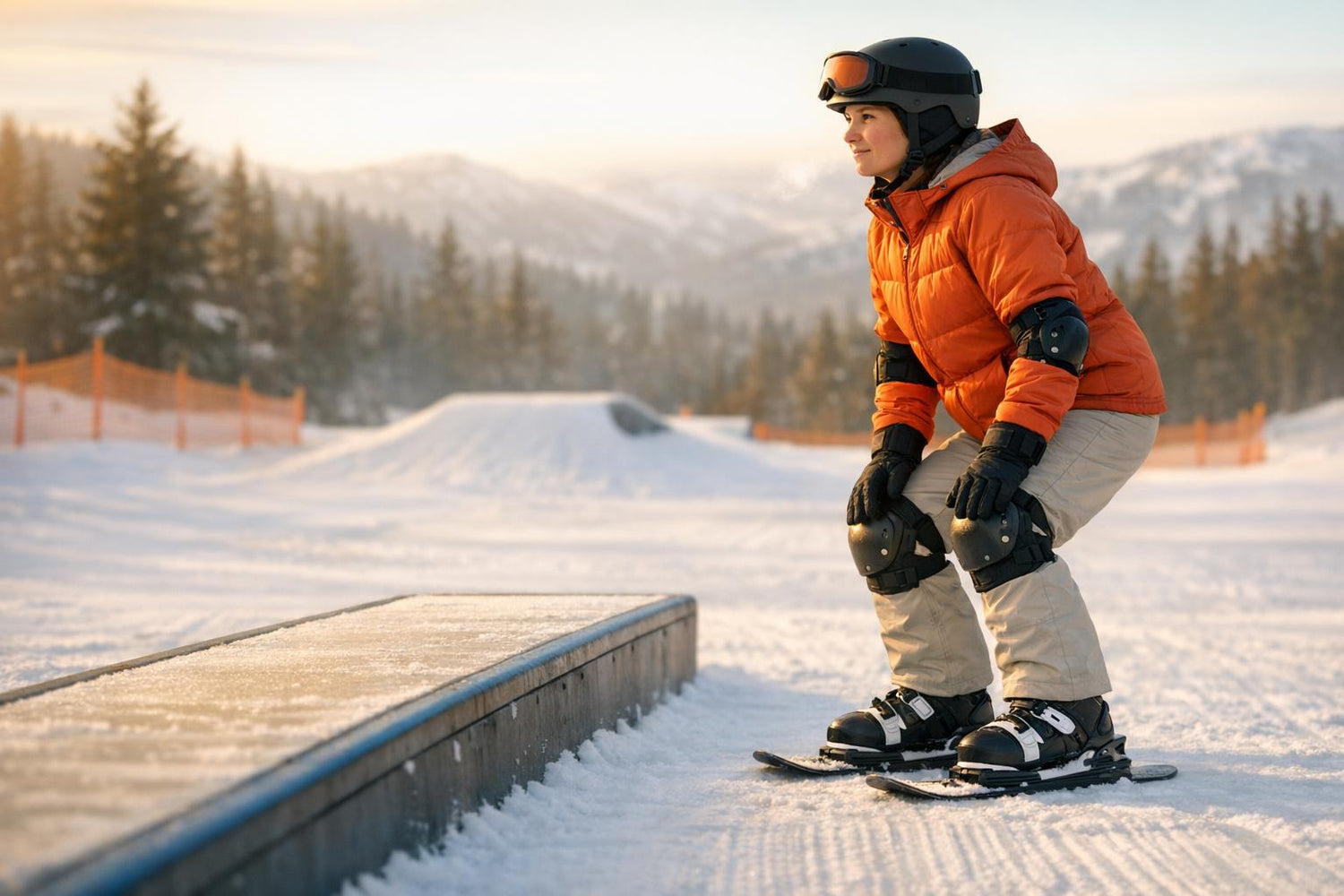
Skiskates are compact, lightweight skis designed for agility and control, making them ideal for terrain parks. They’re easy to carry, fit in a backpack, and allow precise movements for tricks like spins, jumps, and slides. In this guide, you'll learn:
- What makes skiskates different: Steel edges, adjustable bindings, and wood core construction for balance and responsiveness.
- Safety essentials: Helmets, goggles, gloves, and proper layering to stay protected.
- Basic skills: Weight shifting, small jumps, and riding switch (backward).
- Beginner tricks: Straight air, ollies, and 50/50 box slides.
- Choosing skiskates: Lengths range from 44 cm (easy to control) to 99 cm (better for speed and stability).
Start small, practice consistently, and follow park rules to build confidence and improve your skills step by step.
Getting Started with Skiskates
What Makes Skiskates Different
Skiskates are designed to be compact and versatile, offering features that set them apart from traditional skis. Their steel edges provide excellent grip on snow, giving you the control needed for smooth turns and slides. This is especially helpful when you're working on tricks involving boxes or rails, where precision is everything.
Another standout feature is their adjustable bindings, which are compatible with both ski and snowboard boots. You won’t need to invest in new footwear, and the bindings adjust without tools, making setup quick and hassle-free. At just about 27 inches long, skiskates are much shorter than traditional skis, which can exceed 70 inches. They’re lightweight and portable enough to fit in a backpack, making them easy to carry around the resort or up to your favorite features.
The wood core construction adds flexibility and responsiveness, giving you a better feel for the snow beneath you. This kind of feedback is essential when you're learning jumps or balancing on rails. Meanwhile, the cap construction protects the core and keeps the weight low, so you’re not lugging around heavy gear.
While skiskates offer these technical benefits, it’s important to pair them with the right safety equipment and follow terrain park rules to make the most of your experience.
Safety Gear and Park Rules
Safety gear is non-negotiable when it comes to terrain parks. According to the National Ski Areas Association, wearing a helmet can make you seven times less likely to experience a head injury. A good snow helmet with a hard shell made from ABS or polycarbonate materials is a must. For added protection, look for helmets with MIPS (Multi-directional Impact Protection System) technology, which helps reduce rotational forces during falls.
Your helmet should fit snugly - not so loose that it shifts on impact, but not so tight that it’s uncomfortable. Pair it with antifog goggles to maintain clear vision (budget options start around $75). Waterproof, breathable outerwear, like a Gore-Tex jacket with an internal snow skirt, is also essential for staying dry during falls.
Don’t forget waterproof gloves to protect your hands from the snow and metal rails. Layering is key: start with a moisture-wicking thermal base layer, add a fleece or lightweight down mid-layer, and finish with your waterproof outer shell. Your boots are just as important - they should fit snugly to give you control while still allowing proper blood circulation.
Terrain parks also have specific rules to ensure everyone's safety. Always look uphill before dropping into a feature, avoid stopping in landing zones, and wait your turn. Following these guidelines helps keep the park safe and enjoyable for everyone.
With the right gear and an understanding of park etiquette, you’re ready to focus on developing your stance and balance.
Learning Your Stance and Balance
Before hitting the slopes, spend 10–15 minutes practicing your stance on flat ground. Stand with your feet shoulder-width apart, knees slightly bent, weight centered, and arms extended for balance. This position will be your foundation.
Practice shifting your weight from your toes to your heels while maintaining this stance. You can also try small hops in place to get a feel for how the skiskates respond to movement. Their shorter length means even slight weight shifts can noticeably change your direction, so staying centered is key.
Once you’re comfortable, move to a gentle slope and practice gliding while maintaining your stance. Focus on keeping your weight centered as you move. Make sure your boots are laced snugly to give you the control you need to maneuver the skiskates effectively.
sbb-itb-32287b2
Core Skills to Practice First
How to Shift Your Weight
Mastering weight distribution is crucial when learning to maneuver skiskates. A great starting point is practicing nose and tail presses on flat snow. Shift your weight forward to the nose or backward to the tails to explore your balance limits in a low-risk environment. This exercise helps you build confidence before tackling terrain park features. As Nelson Bryant explains, "Shift your weight to your ski tips or tails to press along a box or flat snow."
One of the most common beginner mistakes is leaning too far back, which can throw off your control and make landings unstable. Bryant underscores this:
Leaning back... will wreck your landings. Stay centered. Knees bent. Chest up.
To avoid this, focus on maintaining a centered stance. Keep your weight evenly distributed between both feet, with bent knees and your chest upright. Practice this posture during warm-up runs on standard slopes. Once you're comfortable, you'll be better prepared for smooth jumps and sharp directional changes.
Practicing Small Jumps and Direction Changes
Once you've nailed weight shifting, move on to small jumps to improve control. Start with the ollie, a basic move to get airborne without using a ramp. To perform an ollie, bend your knees deeply and push off the tails of your skiskates. Begin with small hops on flat ground to build muscle memory, then progress to bumps or rollers.
For directional changes, practice 180-degree spins on side hits or natural rollers. Keep your hands low and your eyes focused ahead to maintain balance. Watching other riders can also help you understand the right speed and approach for different features.
Riding Switch (Backward)
After developing confidence in weight control and directional changes, it's time to tackle riding switch (backward). This skill is essential for terrain park tricks, as many require landing in a switch stance. Start on a gentle slope and practice gliding backward, keeping your knees bent and your weight centered.
Expect to fall - it’s part of the learning process. Bryant offers some wise advice:
Learn how to fall. Seriously - tuck and roll.
Mastering the tuck-and-roll technique can help reduce the impact of falls. If you do fall on a feature, clear the landing zone quickly to prevent accidents. Recording your practice sessions is another helpful tool - it allows you to spot technical errors and track your progress over time.
Snowfeet* & Skiskates Tutorial - How to Become a PRO Skiskater
Simple Tricks for Beginners
Now that you've got a handle on shifting your weight and making small jumps, it's time to dive into some basic park tricks.
Straight Air: Mastering the Jump
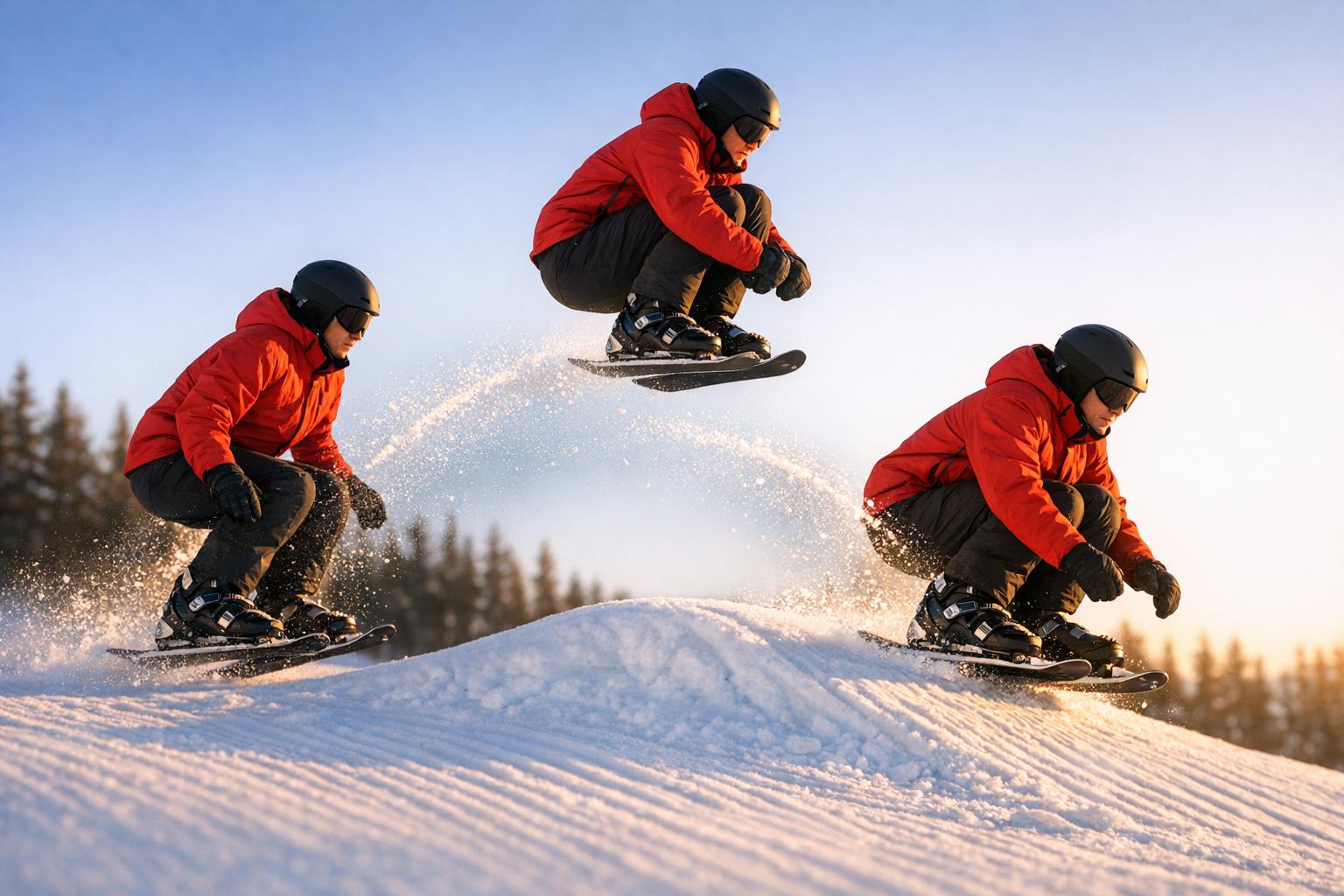
The straight air is the starting point for all terrain park jumps. Begin by approaching the jump at a moderate speed. Keep your chest up, knees bent, and maintain a balanced stance. As you reach the kicker, focus on a controlled pop - push off lightly and pull your knees up to stay stable in the air.
While airborne, keep your eyes on the landing spot. Land with your knees flexed to absorb the impact and stay steady throughout the jump. A helpful tip: watch other riders to get a sense of the right speed and trajectory before attempting your jump.
Once you've nailed the straight air, start practicing the ollie to refine your jumping skills even further.
Ollie: Boost Without a Ramp
The ollie is a great way to generate lift without relying on a ramp. It’s all about using the tails of your skis or board to create that upward motion. Ollie Barbour from Ski Addiction explains it like this:
An Ollie is where the pop is made off the tails of your skis rather than by jumping directly upwards.
To perform an ollie, begin by shifting your weight over the tails. Roll your weight back while dropping your hips to load the tails with pressure. Keep your knees bent, then quickly extend them while leaning your shoulders forward and swinging your arms upward. This motion helps you pop off the tails and push your hips forward, setting you up for a smooth, centered landing.
When practicing, start stationary to get the feel for it. Once you're comfortable, try it at slow speeds before gradually increasing both your speed and the height of your ollies.
After mastering the ollie, you're ready to move on to sliding features.
50/50 Box Slide
The 50/50 is the simplest box trick and a great place to start. All you need to do is ride straight across the box with your skis or board flat on the surface. Use the balance and centered stance you've practiced to stay steady.
Approach with your feet shoulder-width apart and keep your base completely flat - engaging your edges can cause you to slip. Focus on the end of the box rather than looking down at your feet. Keep your knees bent, chest up, and hands low for stability. Surprisingly, a bit more speed can make this easier, as you’ll spend less time on the slick surface.
Start with ride-on boxes that have a snow ramp leading directly onto the feature, so you don’t need to jump to get on. As you near the end of the box, add a small pop to control your exit and land with bent knees. If you feel yourself sliding off, don’t panic - just hop off early and ride away smoothly.
These foundational tricks will set you up for more advanced park skills down the road.
Selecting Skiskates for Park Riding
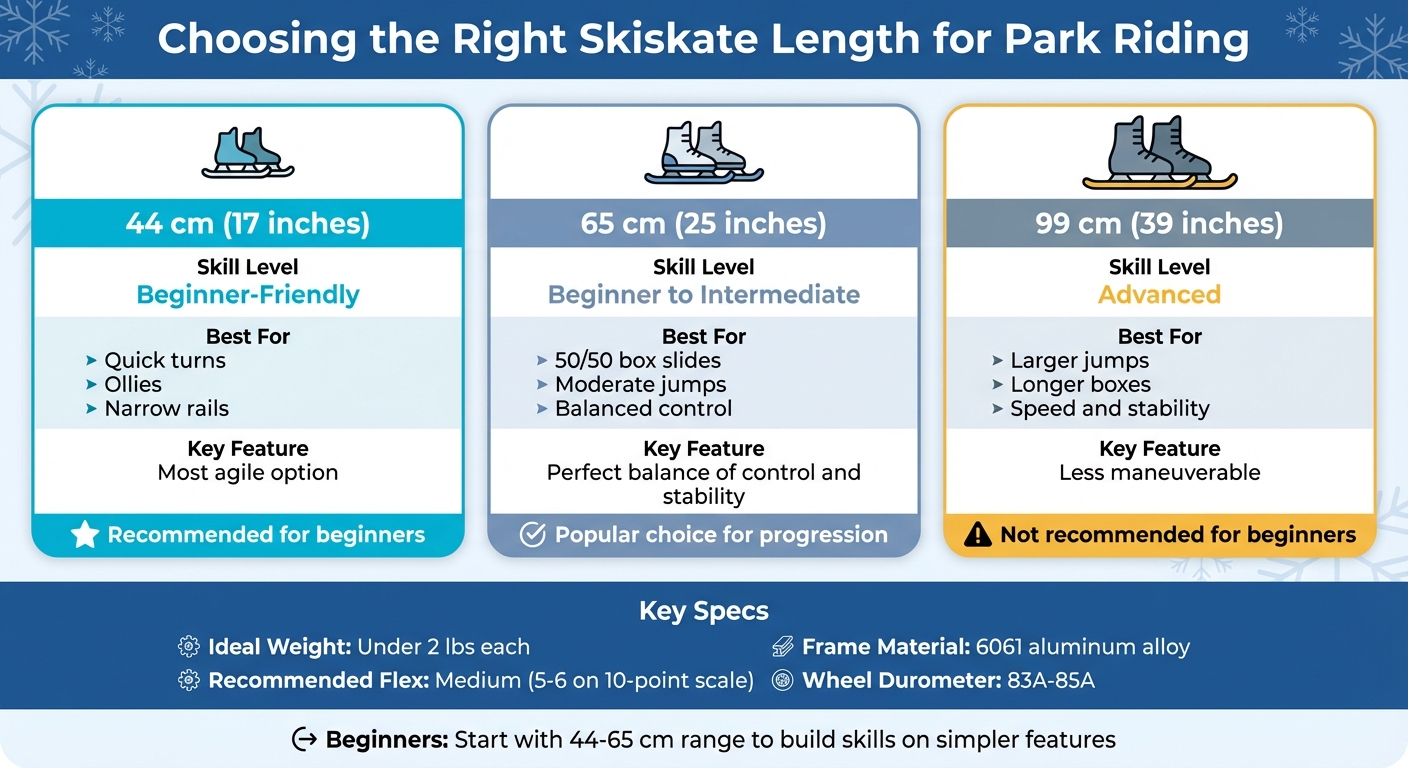
Skiskate Length Comparison Guide for Terrain Park Beginners
Once you've sharpened your skills, picking the right skiskates becomes a key step in moving forward with park riding. Factors like length, weight, and construction quality play a big role in how quickly you can transition from basic slides to more intricate tricks.
Comparing Skiskate Lengths
Skiskates come in three main lengths, each tailored to different park challenges:
- 44 cm models (about 17 inches): These are the most agile and beginner-friendly option, perfect for quick turns, ollies, and narrow rails. Their compact size makes them great for building confidence early on.
- 65 cm models (roughly 25 inches): Striking a balance between control and stability, these are ideal for 50/50 box slides and moderate jumps. They provide enough speed while maintaining responsiveness, making them a popular choice for those transitioning from basic to intermediate tricks.
- 99 cm skiskates (about 39 inches): Designed for stability and speed, these excel on larger jumps and longer boxes. However, their reduced maneuverability makes them less suitable for beginners. If you're just starting, stick with the 44–65 cm range to develop your skills on simpler features first.
What to Look for in Park Skiskates
For park riding, skates weighing under 2 lbs each with a medium flex (rated 5–6 on a 10-point scale) work best. Surveys show that beginners using skiskates in the 1.2–1.8 lb range progress faster compared to those using heavier models.
Durability is another crucial factor. Look for aluminum frames made from 6061 alloy, as they can withstand the wear and tear of repeated box slides. Wheels with an 83A–85A durometer provide the right balance of grip and rebound for jumps, minimizing chatter and enhancing control. Park tests suggest that skates with these specs last twice as long, giving you more time on the features and less time dealing with repairs.
Skiskates Advantages for Freestyle Riding
One of the biggest perks of skiskates is their portability - they fold down to a size that easily fits in a backpack, making it simple to move between park features. Their ski-like stance also helps beginners pick up tricks like the 50/50 slide faster, with less risk of injury during the learning process.
How to Progress in the Terrain Park
Now that you've nailed the basics, it's time to step up your game and tackle more challenging features in the terrain park. Progressing here is all about building on your foundation and advancing step by step.
Starting with Easy Features
Kick things off with smaller, simpler features like flat boxes and small kickers. These are perfect for honing air control and practicing fundamental moves, such as the 50/50 slide and basic 180° turns. Most terrain parks are organized by size - small (S), medium (M), and large (L) - so stick with the small features until you're comfortable. When sliding, keep your skiskates parallel and shoulder-width apart for better control. Small kickers are also ideal for learning safety grabs and gaining confidence in the air.
Before attempting spins on official jumps, try practicing 180° rotations on side hits or rollers, whether natural or man-made. Even flat snow areas are excellent for drilling foundational moves like ollies and nose or tail presses. These basics will set you up for success as you tackle more advanced features.
"Terrain parks are usually set up with varying levels of features: small, medium, and large. Start small. Master the basics. Then move up." - Nelson Bryant, Author
Practice and Gradual Difficulty Increases
Take time to observe others in the park to get a sense of proper approaches and speeds for different features. Recording your sessions can also help pinpoint areas for improvement. Celebrate small wins, like landing your first clean 180 or sliding smoothly across a box. These milestones keep you motivated.
Before hitting the park, warm up with a few laps on regular runs to loosen up your muscles. And remember, communication is key - always call out "Dropping!" to let others know you're starting your run.
"Don't compare your day-one to someone else's year five." - Nelson Bryant, Author
As your consistency grows, you'll be ready to tackle tougher tricks and features.
Moving to More Difficult Tricks
Once you're comfortable with the basics, it's time to refine your skills and take on more advanced techniques. Focus on perfecting your form rather than chasing speed or height. Keep your knees bent, your chest upright, and your weight centered to ensure solid landings. Committing fully to a trick is crucial - hesitation can lead to falls.
Break down complex tricks into smaller steps and master each part before putting it all together. And don't underestimate the importance of learning how to fall properly. Tucking and rolling can make a huge difference in reducing the risk of injury.
Conclusion
Starting your journey with skiskates in terrain parks boils down to three key elements: safety gear, consistent practice, and choosing the right equipment. Prioritize safety by gearing up properly, practice systematically to build confidence, and select beginner-friendly skiskates to set yourself up for success.
Take your time mastering the basics. Experts suggest dedicating 2–4 weeks to foundational skills like balance, weight shifting, and small jumps before progressing to tricks like ollies or box slides. This steady approach not only sharpens your technique but also minimizes setbacks. After all, even the pros started with the basics.
Terrain parks aren’t just about skill - they’re a space for creativity. Each jump, slide, or trick is a milestone on your personal skiskating journey. Celebrate every achievement, whether it’s landing your first ollie or nailing a smooth box slide.
Lastly, don’t underestimate the value of community. Connect with other skiskaters at your local terrain park, watch and learn from experienced riders, and don’t be afraid to ask for advice. The support and camaraderie of the skiskating community can make your progress even more enjoyable.
So, gear up, start small, and embrace the thrill and creativity that terrain parks have to offer. This is just the beginning of your skiskating adventure!
FAQs
What size skiskates should I start with for park riding?
If you're into park riding, make sure to pick skiskates that align with your height. For someone around 6'4" (193 cm), skiskates in the 180–200 cm range are ideal. If you're a beginner, go for shorter skiskates - closer to 180 cm. These shorter options provide better control and make it easier to pull off tricks and jumps in terrain parks, helping you gain confidence as you learn.
How fast should I go into a box or small jump on skiskates?
For those just starting out, it’s a good idea to tackle a box or small jump at a steady, moderate pace. This approach helps you stay balanced and concentrate on your technique, all while minimizing the chances of falling or getting hurt. Begin with a pace that feels comfortable, and as you build confidence and get the hang of navigating park features, you can gradually pick up speed.
How do I safely fall on skiskates in the terrain park?
To fall safely while using skiskates in a terrain park, it's important to stay composed, tuck your head, and roll upon impact to minimize the risk of injury. Avoid extending your hands to break your fall, as this can lead to wrist injuries. Using protective gear such as helmets, pads, and wrist guards is strongly advised. Additionally, refining your braking skills and staying alert to your surroundings can go a long way in preventing accidents.


Leave a comment
This site is protected by hCaptcha and the hCaptcha Privacy Policy and Terms of Service apply.