


Skiskating offers a fresh way to enjoy snow sports. Combining the glide of skiing with the side-to-side motion of ice skating, it’s ideal for both beginners and seasoned riders. Skiskates are compact, easy to carry, and designed for smooth movement on various terrains. With prices starting at $190, they’re a cost-effective alternative to traditional skis. Whether you’re looking for a fun workout or a new challenge, skiskating is worth exploring.
Key Points:
- What it is: A mix of skiing and ice skating with a V-shaped motion.
- Who it’s for: Beginners to advanced riders; great for tight spaces and quick turns.
- Gear: Compact skiskates with adjustable bindings, compatible with ski or snowboard boots.
- Price: Models range from $190 to $590.
Quick Overview:
- Compact and portable (fits in a backpack).
- Easier to learn than skiing.
- Suitable for groomed runs, small hills, and tricks.
Skiskating reinvents how you move on the snow, making every ride engaging and practical.
How Skiskating Changes the Way You Ride
Technique and Movement Differences
Skiskating introduces a whole new way of moving on the snow. Instead of the forward, linear motion typical of traditional skiing, skiskating relies on a side-to-side V-shaped movement, much like ice skating. The key is in pushing off the inside edges of your skiskates, which creates a dynamic and efficient glide pattern. To stay in control, it's crucial to maintain a slightly bent posture - keeping your ankles, knees, and hips flexed. Standing too tall can throw off your balance and reduce responsiveness. Nordic Ski Lab explains it well:
"Lower your center of mass by maintaining some soft flexion at the ankle, knee and hip joints at all times. Never stand fully upright."
Instead of rolling heel-to-toe as you would when walking, skiskating demands precise pressure through the inside edge of your foot. This technique not only improves edge engagement but also makes each push more effective.
Maneuverability Across Different Terrain
One of the standout benefits of skiskating is how it handles tricky terrain. The shorter length of skiskates gives you an edge when navigating tight spaces or making quick turns. As editor Lucy Higgins puts it, "Shorter skis mean quicker turns and easier maneuverability". The lighter, more compact design allows for faster transitions from edge to edge, making it easier to pivot when needed.
This agility shines on smaller hills and groomed runs, where staying nimble is essential. By keeping your joints slightly flexed - what some refer to as "skiing small" - your body naturally absorbs changes in the terrain, giving you smoother control. This adaptability also makes skiskating appealing for beginners looking to build confidence quickly.
Shorter Learning Curve
Skiskating’s design makes it easier to pick up than traditional skiing. The shorter, lighter skiskates are less intimidating for beginners, and their design encourages quicker mastery of the basic movements. The V-shaped skating motion feels natural once you get the hang of the side-to-side push.
Simple drills can help new skiskaters lock in the technique. These exercises focus on establishing the wide V-shape and glide rhythm that are essential to the sport. Once you’ve nailed the basics, adding poles and increasing speed feels like a natural progression. The learning process is streamlined, making skiskating an accessible option for those new to snow sports.
sbb-itb-32287b2
Gear Guide: Picking the Right Skiskates
Skiskates Models at a Glance
Whether you're a beginner or a seasoned rider, there's a skiskate model designed to suit your style and skill level. The Snowfeet Basic is the most budget-friendly option, making it a great starting point for newcomers. For those who enjoy skating-style movements, the 44 cm Skiskates are perfect, closely mimicking techniques like the V-push. On the other hand, Skiblades offer more stability, bridging the gap between traditional skis and skiskates. Below is a quick comparison of the available models:
| Model | Length | Best For | Skill Level | Price |
|---|---|---|---|---|
| Snowfeet Basic | 50 cm | Beginners / Value | Beginner | $190 |
| Skiskates (Ski Boots) | 44 cm | Skating / Tricks | Intermediate | $490 |
| Skiskates (Snowboard Boots) | 44 cm | Skating / Tricks | Intermediate | $490 |
| Skiblades 65 cm | 65 cm | Carving / Balance | Beginner–Intermediate | $550 |
| Skiblades 99 cm | 99 cm | Powder / Speed | Intermediate–Advanced | $590 |
Build Quality and Materials
What sets great skiskates apart is the attention to construction. Handmade in Europe, these models are built with a wood core, prized for its ability to absorb impact and maintain consistent flex over time. Beneath the surface, sintered polyethylene bases provide excellent wax absorption and are more resistant to scratches compared to extruded bases. Steel edges ensure solid grip and carving ability, while thicker edges enhance durability for handling rocks or icy conditions.
How to Choose the Right Model
Start by considering your boot type. Snowboard boot bindings offer a more casual, comfortable experience, making walking easier. Ski boot bindings, on the other hand, provide tighter control, which is ideal for a more aggressive ride. If you already own ski boots, the Ski Boots Model is a convenient choice.
For beginners, the Snowfeet Basic or 65 cm Skiblades are ideal. Their extra length and stability make learning easier. Intermediate riders will enjoy the precision and control of the 44 cm Skiskates, which are perfect for mastering skating techniques or attempting tricks. Advanced riders looking for high speed or deep powder performance (over 10 inches) will benefit from the 99 cm Skiblades, which are built to handle those challenges.
Pro Tip: Models with a wood core come pre-waxed, making them low-maintenance. Fiberglass options, however, need regular waxing to maintain their glide. If you're after convenience, go for a wood core option.
Snowfeet* & Skiskates Complete Guide | All you need to know about Skiskating
Step-by-Step: Moving From Skis to Skiskates
Switching from skis to Skiskates is easier than you might think - as long as you focus on a few essential techniques. These habits can make the difference between struggling and mastering the basics right from the start.
Starting Out: Flat Terrain Drills
Before tackling any slopes, spend time practicing on flat, groomed terrain. Begin without poles to help you develop a natural sense of balance. A good first exercise is weight rocking - slowly shift your weight from one foot to the other to find your balance point.
Next, try duck walking. This involves bending your knees, turning your feet outward into a V-shape, and moving forward in a low, squatted position. While it might feel awkward at first, it’s great for building the coordination and leg strength you’ll need for skating pushes. Most beginners feel comfortable with these basics after about 3–5 days.
Core Skiskating Skills to Learn
To build confidence, focus on mastering three key skills:
- The snowplow (pizza wedge) for controlling your speed.
- The falling leaf technique to practice edge control.
- The skating push, which involves pushing off the inner edge of your foot rather than rolling heel-to-toe.
"In skate skiing, rolling through the ball of the foot drives the tip of the ski into the snow and trips you up." - Nordic Ski Lab
For effective propulsion, aim to generate about 60% of your power from your legs. Think of each push as a sideways press rather than a forward step. These techniques are essential for avoiding beginner mistakes and establishing good habits on the snow.
Common Mistakes and How to Fix Them
One of the most frequent mistakes is leaning back. When your weight shifts backward, the tips of your Skiskates lift, making it harder to stay in control. To fix this, focus on pressing your shins into the front of your boots and keeping your ankles flexed forward.
Another common issue is standing too tall.
"A stiff, upright skier falls easily while a relaxed, poised skier absorbs terrain changes with less issue." - Carrie McCusker, Level 2 TrainingPeaks Coach
To maintain stability, keep a soft bend in your ankles, knees, and hips. This lowers your center of mass and helps you adapt to uneven terrain. Lastly, always keep your eyes forward to anticipate changes in the terrain.
Why Riders Keep Coming Back to Skiskates
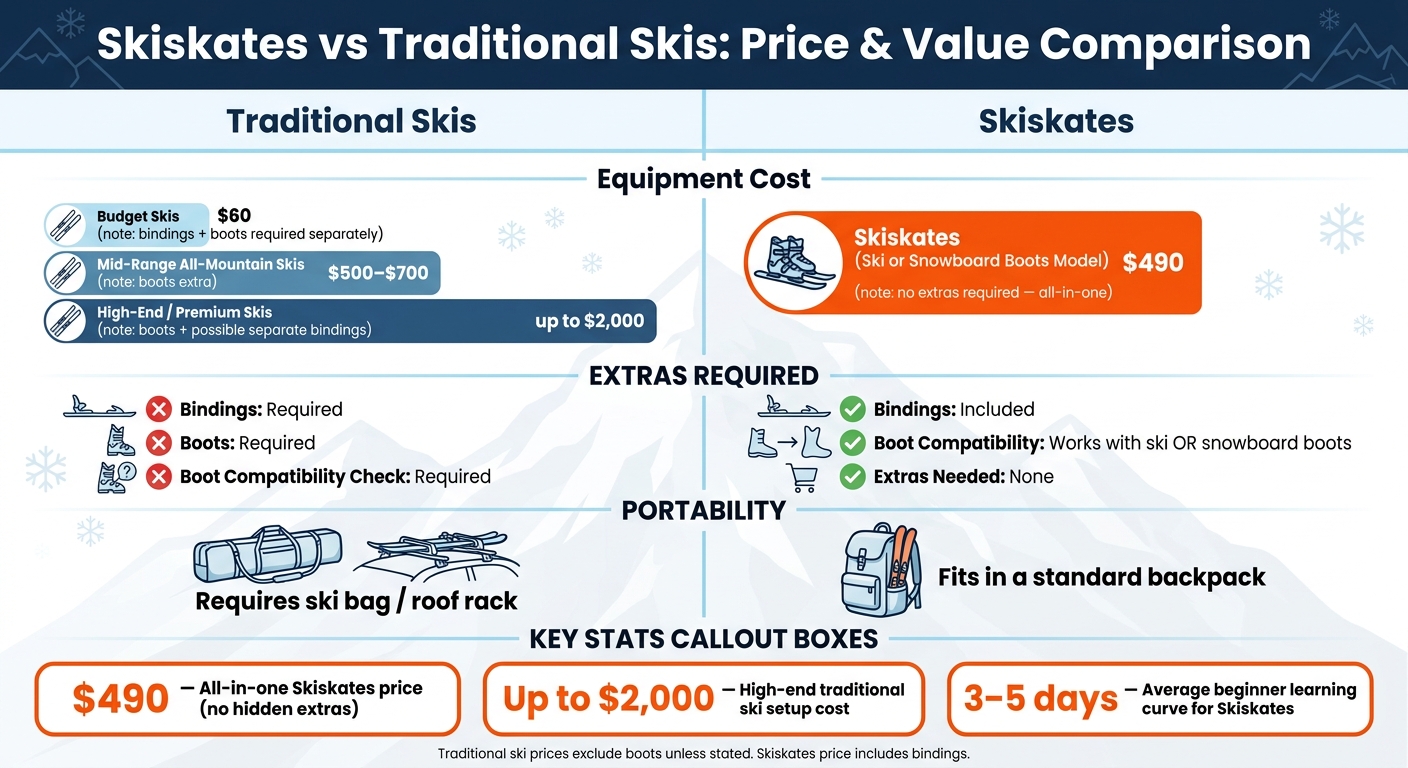
Skiskates vs Traditional Skis: Price & Value Comparison
Skiskates have carved out a loyal following, and it’s easy to see why. With their compact design and versatility, they offer a fresh take on mountain sports. Once riders get the hang of them, going back to traditional skis feels unnecessary. They’re more engaging on the slopes, incredibly travel-friendly, and a budget-conscious alternative to conventional ski gear.
More Fun on the Mountain
Skiskates bring a whole new level of excitement to the slopes. Their dynamic lateral motion makes it easy to pull off spins, jumps, and other playful moves. Whether you’re popping off natural features, riding backward, or mixing in park-style tricks on a regular run, these compact skis make the mountain feel like your personal playground. Plus, their smaller size lets you explore tighter spaces and terrain that traditional skis might struggle with. It’s not just about practicality - it’s about turning every ride into an adventure.
Easy to Carry and Travel With
Traveling with Skiskates is a breeze compared to lugging around traditional ski gear. Their compact size means they can fit into a standard backpack, making them perfect as carry-on luggage for flights, easy to toss in your car trunk, or convenient for hiking up a hill for a quick descent. With Skiskates, even sledding hills, hiking trails, and backcountry terrain become accessible without the hassle of extra equipment.
Price and Value
One of the standout benefits of Skiskates is their affordability. Traditional ski setups can get pricey fast. A mid-range all-mountain ski setup typically costs $500–$700, not including boots, while high-end setups can hit $2,000 or more. And let’s not forget skis tend to depreciate quickly, making resale a challenge.
Skiskates, on the other hand, are priced at $490 for both the Ski Boots and Snowboard Boots models. There’s no need to buy separate bindings, worry about boot compatibility, or invest in multiple pairs for different riding styles. For anyone looking for a straightforward, high-performance option without the hefty price tag, Skiskates stand out as a smart choice.
| Equipment | Price Range | Extras Required |
|---|---|---|
| Budget skis | ~$60 | Bindings, boots |
| Mid-range all-mountain skis | $500–$700 | Boots (style-dependent) |
| High-end / premium skis | Up to $2,000 | Boots, possible separate bindings |
| Skiskates (Ski or Snowboard Boots Model) | $490 | None |
Conclusion: Is Skiskating Worth It?
Skiskating brings a fresh twist to mountain sports with its unique approach and sleek design. It offers a workout that engages your entire body, delivers genuine fun on the slopes, and helps you gain confidence in the snow quickly. As physical therapist Catherine Braden, D.P.T., from UW Medicine Sports Medicine Center puts it:
"It's something you can learn in a day and at least be functional at."
That’s not something you hear often in winter sports. The efficient design of Skiskates not only speeds up your learning curve but also makes your time on the mountain more enjoyable.
Priced at $490 for both models, Skiskates offer a practical, all-in-one solution by doing away with the need for separate bindings or boot compatibility concerns. Their durable construction ensures they’re built to last, adding to their overall value.
Whether you're a seasoned skier or a complete beginner, Skiskates provide an exciting challenge and an easy way to dive into snow sports. Their compact size, adjustable bindings, and ability to handle different terrains make them a tough option to resist once you’ve tried them.
And as Charlotte Ogden, former Nordic ski racer and Bivo Team Member, wisely reminds us:
"Just getting outside and having fun is always more important than having perfect technique."
FAQs
Are Skiskates allowed at most ski resorts?
Skiskates are usually not allowed at most ski resorts. Many resorts enforce safety guidelines that require skis and snowboards to stay within designated zones and steer clear of restricted paths. Although resorts may not always have explicit rules about Skiskates, it’s a good idea to contact the resort directly to confirm their policies.
Do I need poles to start skiskating?
Skiskating doesn’t require poles to get started. In fact, skating without them can help you focus on the essentials: balance, control, and technique. By concentrating on leg positioning, weight shifts, and core stability, beginners can develop a solid foundation. While poles are useful for support and maintaining rhythm on challenging terrain, starting without them allows you to build these skills first. Once you're more confident, adding poles can make your movements smoother and more efficient.
What safety gear should I wear on Skiskates?
When using Skiskates, it's crucial to wear the right safety gear. Essentials include a helmet to protect your head, knee pads and elbow pads to cushion falls, and wrist guards to prevent injuries during impact. Look for gear that's not only durable but also fits snugly, so you stay protected without sacrificing comfort or ease of movement.

Leave a comment
This site is protected by hCaptcha and the hCaptcha Privacy Policy and Terms of Service apply.