

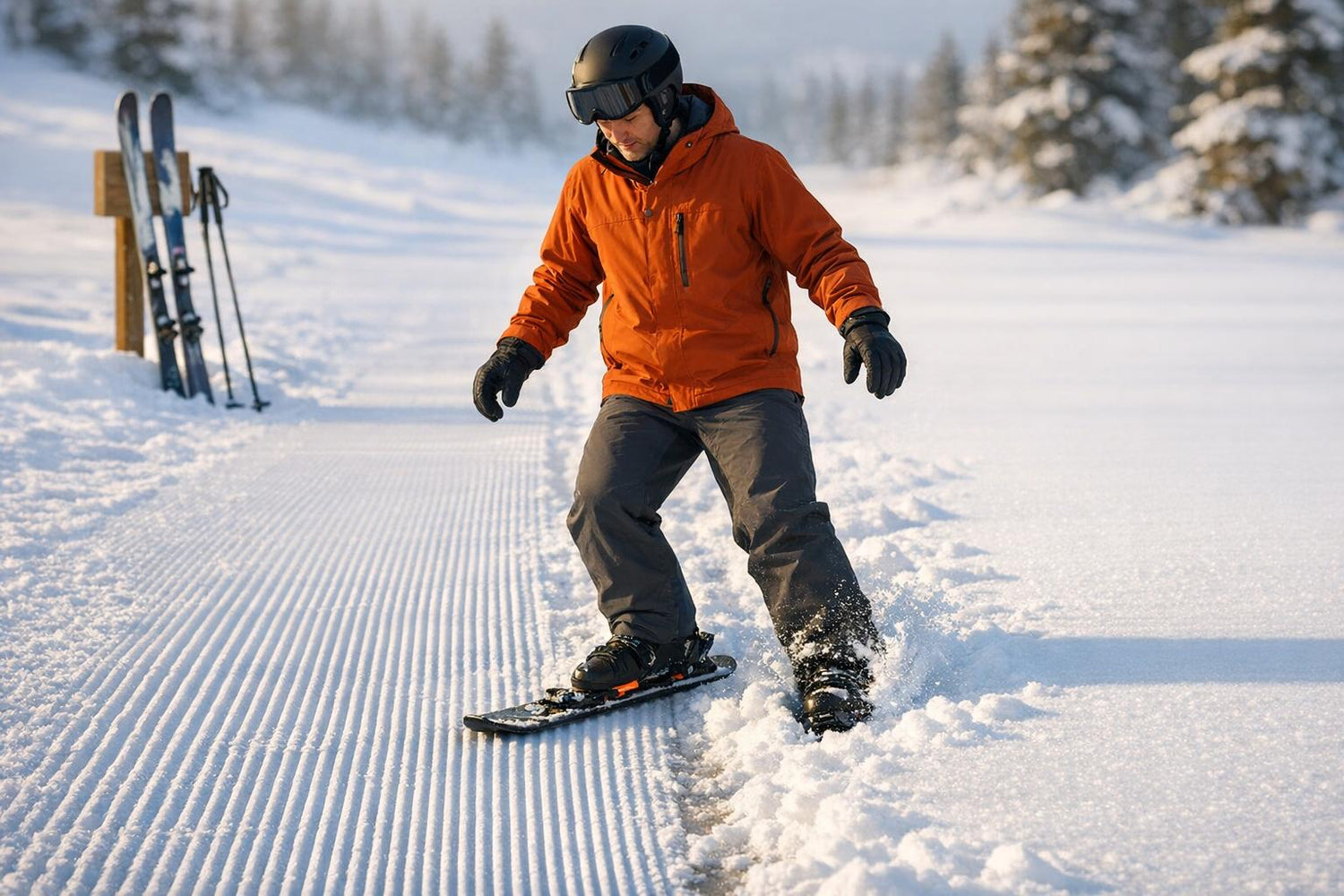
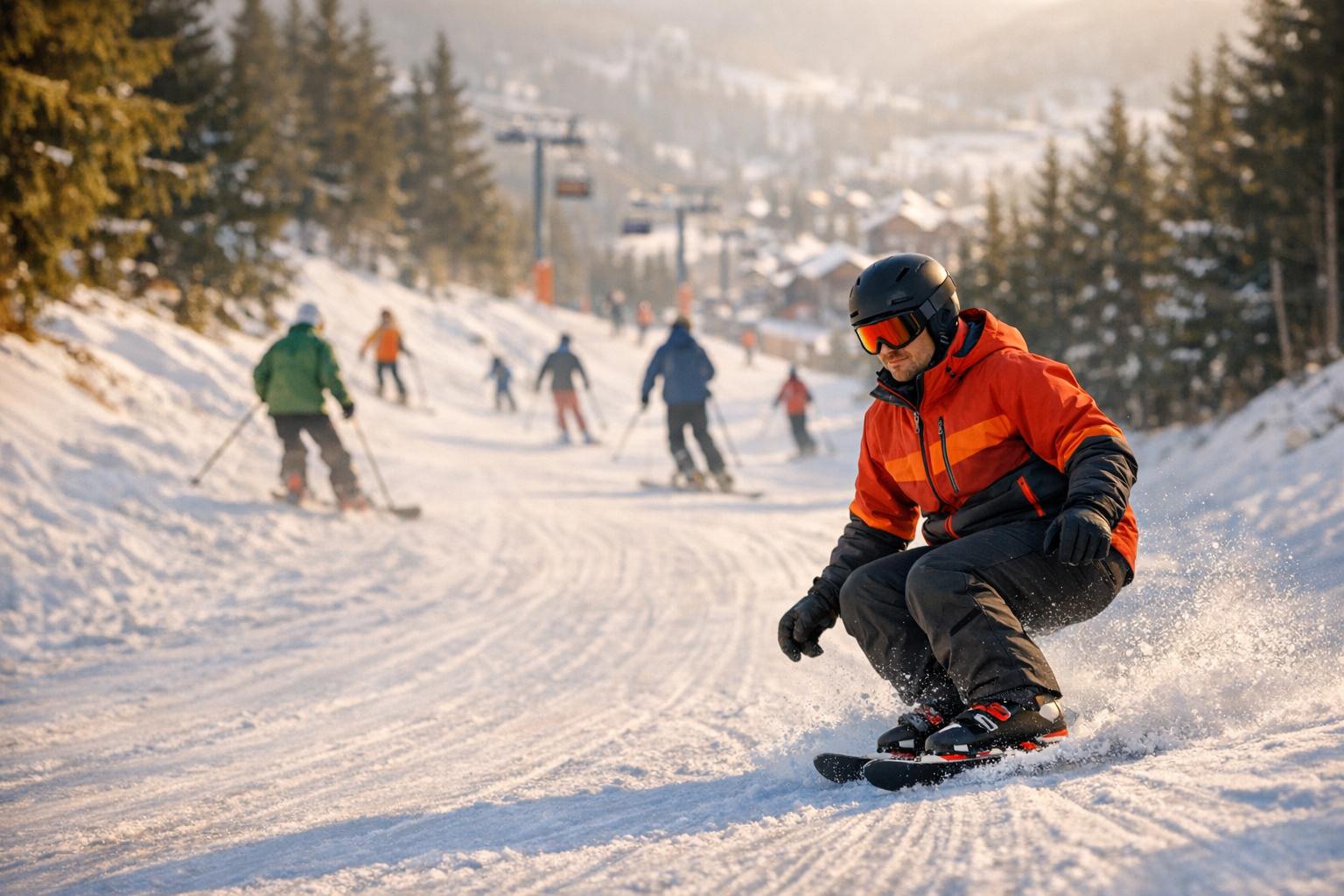
Skiskates are fun and compact, blending skiing and skating. However, they struggle in deep snow due to their small size and limited surface area. These are best for firm, packed snow, where they glide easily and maintain balance. In powder deeper than 4 inches, they lose stability, sink, and become difficult to control. For moderate snow, adjusting your stance, using poles, and choosing longer models like the Snowfeet Skiblades 99 CM can help. Stick to groomed trails and snow parks for the best experience.
| Model | Length | Best Terrain | Deep Snow Performance | Price |
|---|---|---|---|---|
| Snowfeet Skiblades 99 CM | 39 inches | Light to moderate powder | Best | $590.00 |
| Snowfeet Skiblades 65 CM | 26 inches | Light powder, packed snow | Moderate | $550.00 |
| Snowfeet 50 PRO | ~20 inches | Groomed slopes, snow parks | Limited | $299.00 |
| Snowfeet Basic | ~19 inches | Packed trails, snow parks | Not Recommended | $190.00 |
Key Takeaway: Skiskates excel on groomed terrain but are not ideal for deep snow. For powder conditions, consider longer models or alternative equipment.
Skiskates Performance in Deep Snow
Design Features That Affect Snow Navigation
Skiskates are built with a "long enough to ski, short enough to skate" design, which prioritizes portability and quick turns over extended snow contact. These models typically range between 44 cm (17 inches) and 65 cm (26 inches), making them easy to store and transport, but this compact size comes at the expense of flotation.
Their lightweight build includes steel edges for carving and bindings that can be adjusted without tools, accommodating both ski and snowboard boots. These features shine on hard-packed snow, where precision and agility are key. However, in deep snow, the steel edges fail to grip effectively, and the lightweight design becomes a disadvantage. Without enough weight to compress the powder, skiskates lose the stability required to stay above the surface. This also makes maintaining proper balance tricky, as the tips tend to sink. While these design elements work beautifully on firm terrain, they create significant challenges in deeper snow.
Why Skiskates Struggle in Deep Snow
The primary issue with skiskates in deep snow is their limited surface area, which prevents them from staying afloat in more than about 4 inches (10 cm) of snow. According to Nordic Ski Lab, the skating motion depends on pushing off the inside edge against a solid base. In deep powder, there's no firm surface to push against, making forward movement nearly impossible.
Their short length and forward stance often lead to a "tip dive", where the front sinks into the soft snow, disrupting balance and momentum. Additionally, the camber doesn't compress effectively in deep snow, removing the rebound needed for propulsion. As noted by the Snowfeet store, skiskates can manage light powder up to 4 inches (10 cm), but for deeper conditions, longer alternatives like 99 cm or 120 cm Skiblades are better suited.
In snow deeper than 4 inches, skiskates become bogged down, making carving and speed control difficult. The V-shaped stance, which works well on hard-packed snow, becomes ineffective as both the tips and edges sink, turning what should be a smooth glide into a challenging and frustrating experience.
sbb-itb-32287b2
How to Use Skiskates in Light Powder Conditions
Adjust Your Stance and Balance
When you're gliding through light powder, your stance can make or break your experience. To avoid having the tips dive or the tails slide out, you'll need to fine-tune your front-to-back balance.
Start by adopting a slight V-stance, where the tips of your skiskates are wider than the tails. This positioning helps you push off with more control and compress the camber, giving you a springy rebound effect when moving forward. Leaning back just a bit shifts your weight toward the center and rear, which stabilizes your ride and keeps you from sinking too much into the powder.
Don't forget your poles - they're not just for show! Actively using them adds extra stability and helps with propulsion, especially in tricky spots. Once your stance feels solid, it's time to focus on mastering turns and keeping your speed in check.
Control Speed and Turns
Managing speed in powder is a whole different ballgame compared to packed snow. Start by distributing your weight evenly across both skiskates. This prevents you from sinking unevenly and keeps your movements smooth. If you need to slow down, the integrated heel brake is your best friend for controlled deceleration.
As for turning, aim for wide, sweeping motions rather than sharp, jerky stops. While a hockey stop is still an option, smoother transitions help you maintain momentum and avoid losing balance. Gentle turns not only keep you steady but also let you enjoy the flow of the powder without unnecessary effort.
The Snowblader - Ski Utah Powder People Episode 3
Best Skiskates Models for Deep Snow
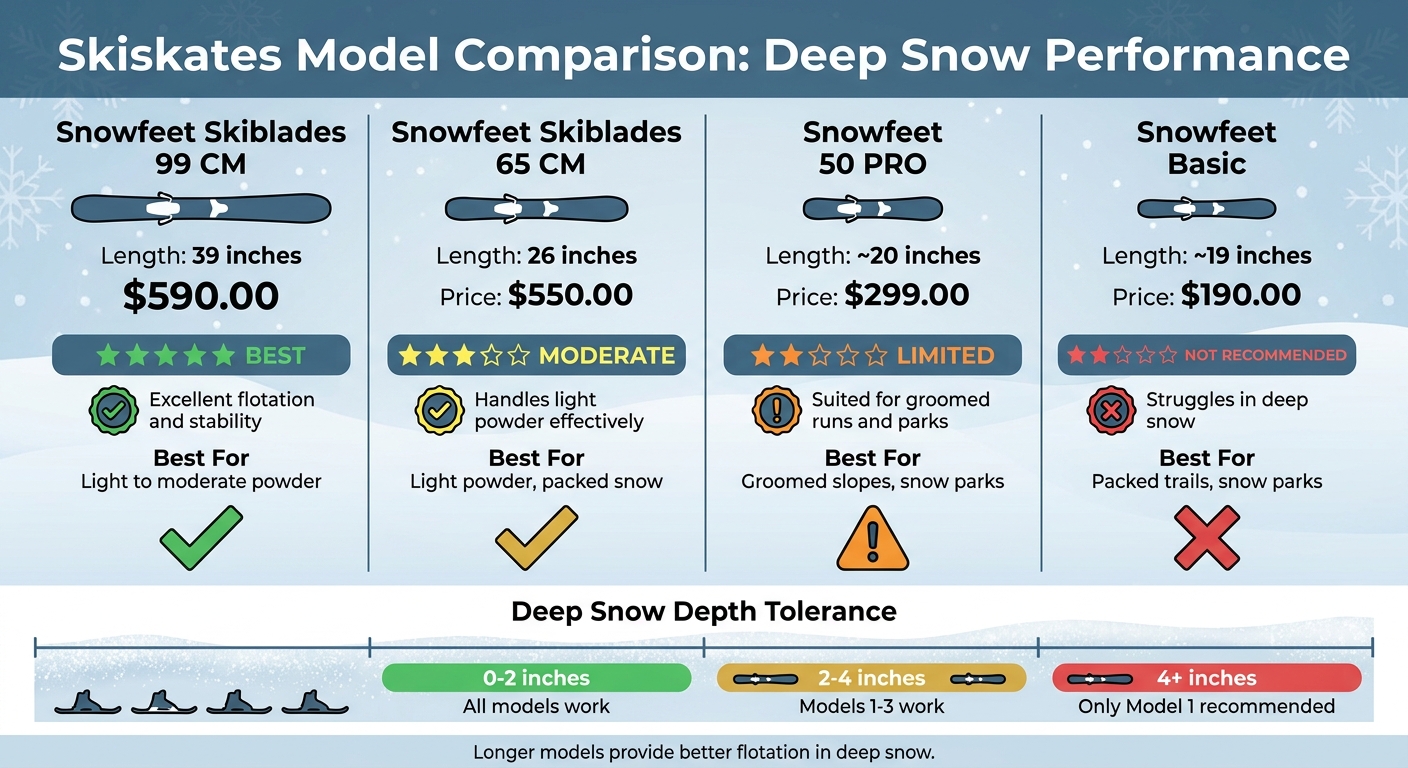
Skiskates Model Comparison for Deep Snow Performance
Recommended Models and Features
Finding the right skiskates for deep snow can make all the difference when you're riding in challenging conditions. Performance varies significantly between models, especially when the snow gets deeper.
The Snowfeet Skiblades 99 CM stands out as a top choice for moderate deep snow. With a length of 39 inches, it provides excellent surface area for better flotation, helping you stay on top of the snow. The added length also boosts speed and carving stability, making it easier to maintain control without sinking.
If you're looking for a balanced option, consider the Snowfeet Skiblades 65 CM. Measuring about 26 inches, this model offers more surface area than compact skiskates. It performs admirably in light to moderate powder, thanks to its durable construction, which includes steel edges and a cap design to enhance control.
On the other hand, the Snowfeet 50 PRO and Snowfeet Basic models are not ideal for deep snow. These shorter skiskates, designed for groomed trails, snow parks, and packed terrain, lack the flotation needed for powder. Their compact size does, however, make them highly agile in environments where deep snow isn't a concern.
Model Comparison Table
Here's a quick breakdown of the key features to help you decide:
| Model | Length | Price | Deep Snow Rating |
|---|---|---|---|
| Snowfeet Skiblades 99 CM | 39 inches | $590.00 | Best – Excellent flotation and stability |
| Snowfeet Skiblades 65 CM | 26 inches | $550.00 | Moderate – Handles light powder effectively |
| Snowfeet 50 PRO | ~20 inches | $299.00 | Limited – Suited for groomed runs and parks |
| Snowfeet Basic | ~19 inches | $190.00 | Not Recommended – Struggles in deep snow |
Longer, higher-priced models are built with premium materials to handle powder riding demands. If deep snow performance is your priority, the 99 CM model is worth the investment.
When to Avoid Deep Snow and Where Skiskates Work Best
Best Terrains and Snow Depths
Skiskates shine on well-groomed snow. Their design relies on pushing off the inside edge in a V-shaped stance, which works best when the surface is firm enough to compress the camber and generate the rebound needed for forward motion.
Ski resort trails are perfect for this. These trails are typically firm and smooth, giving your edges the grip they need and allowing for efficient gliding. A thin layer of fresh snow is manageable as long as it rests on a compact, prepared base. However, deep, soft snow can make the V-stance technique difficult and reduce overall performance.
Now that we’ve covered the ideal terrain, let’s look at how to make the most of your skiskates.
How to Get More from Your Skiskates
Snow parks and terrain parks are where skiskates truly stand out. Their lightweight, compact build makes them perfect for tricks, jumps, and spins. They’re also great for quick trips to local sledding hills or parks with packed snow, offering a fun and spontaneous way to enjoy winter activities.
To get the best experience, check grooming reports from ski resorts before heading out. This ensures you can plan your day around freshly groomed runs and packed Nordic trails, giving you the smooth surfaces needed to refine your technique and pick up speed.
Conclusion
Skiskates perform best on firm, groomed snow because their design depends on a precise V-stance to create the necessary rebound. As Nordic Ski Lab explains:
Skate skiing through deep snow is almost impossible.
Without a solid, packed base, the ski's camber can't compress effectively, and deep powder adds friction, making smooth gliding difficult.
That said, moderate snow conditions are more forgiving. A light layer of fresh snow over a groomed trail works well. To adapt, adjust your stance, engage your poles more actively, and consider skiskates with high camber and softer tips - they can handle slightly warmer or softer snow better.
For the best experience, stick to areas suited to skiskates' design. Groomed trails, snow parks, and terrain parks offer the packed surfaces that allow for speed, tricks, and control. Checking grooming reports before heading out ensures you're riding on freshly prepared runs.
When used in the right conditions, skiskates deliver a thrilling mix of speed and agility. Take advantage of their compact design and enjoy the ride on firm, well-prepared snow.
FAQs
What’s the deepest snow skiskates can handle?
Skiskates aren't made for deep snow. In fact, using them in such conditions is almost impossible. They work best on hard-packed or groomed snow, where their design lets you move more smoothly and maintain better control.
How do I keep skiskates from sinking in powder?
To keep skiskates from sinking in powder, focus on using the right technique and equipment. Balance your weight evenly to reduce pressure on the skiskates, allowing them to stay on top of the snow. Opting for shorter or wider skiskates can also enhance flotation in deep snow, making it smoother to glide without getting bogged down.
Which skiskates length works best for softer snow?
Currently, there’s no definitive answer about which skiskate length works best in softer snow. Performance can depend on factors like the depth of the snow, your technique, and your skill level. Trying out various lengths or checking the recommendations provided by the skiskate manufacturer might help you figure out what suits you best.

Leave a comment
This site is protected by hCaptcha and the hCaptcha Privacy Policy and Terms of Service apply.