

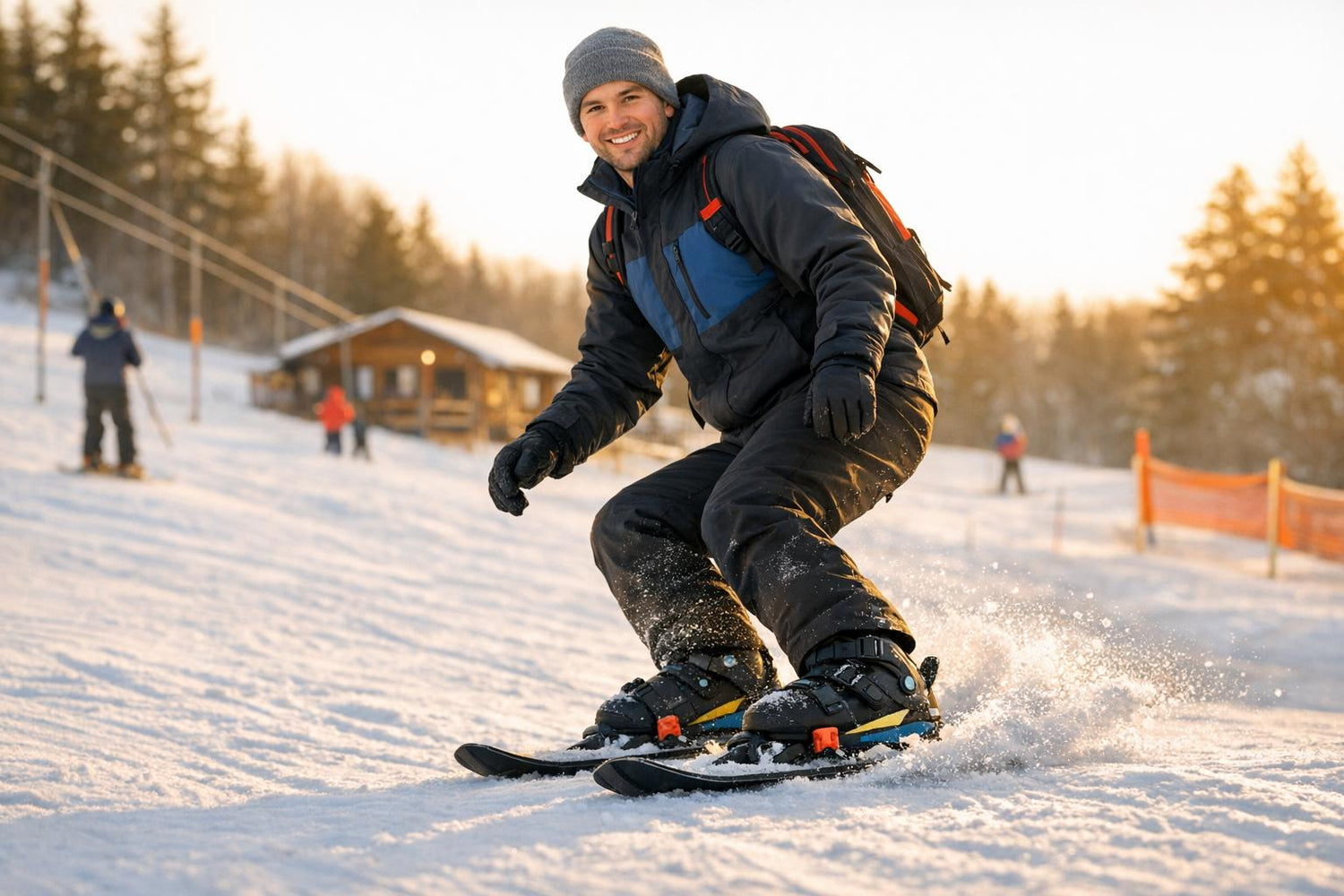
Skiskates are a compact and fun alternative to traditional skis or snowboards, perfect for small ski resorts or local hills. These mini skis (17–20 inches long) are portable, easy to learn, and work with regular winter boots. They excel on groomed slopes, light powder, and tight trails, offering excellent control for beginners and freestyle enthusiasts alike.
Key Highlights:
- Portability: Fits in a backpack; no bulky gear required.
- Ease of Use: Learn the basics in 5 minutes; ideal for kids (5+) and adults.
- Versatile Performance: Handles tight turns, light powder (up to 4 inches), and freestyle tricks.
- Top Models: Options range from beginner-friendly Snowfeet Basic ($190) to advanced Snowfeet 50 PRO ($299) and professional-grade skiblades ($550–$590).
- Maintenance Tips: Regular waxing and edge sharpening extend their lifespan.
Skiskates turn small hills into playgrounds, combining convenience, agility, and a lot of fun for casual winter adventures.
Benefits of Skiskates at Small Ski Resorts and Local Hills
Better Maneuverability and Control
Skiskates, measuring under 20 inches, are perfect for navigating tight and winding trails. Their compact size allows for sharp turns and quick adjustments, making them ideal for the shorter, more intricate runs often found at smaller ski resorts. You can easily weave through tree-lined paths, handle sudden changes in terrain, or glide through crowded areas near the lodge - all with minimal effort. The shorter base also means quicker energy transfer, giving you responsive control even at the slower speeds typical of local hills. Plus, their agility makes them easy to carry, even in bustling resort areas.
Easy to Carry and Transport
Forget about roof racks or lugging around oversized gear. Skiskates are small enough to fit in a backpack, making them a breeze to transport. Imagine walking from your car in regular winter boots, tossing your skiskates into your bag, and strapping them on when you're ready to hit the slopes. This convenience is a game-changer for families juggling gear for kids or anyone who values hassle-free winter adventures. The lightweight design not only simplifies transport but also pairs perfectly with the dynamic riding experience skiskates provide.
Great for Tricks and Freestyle Riding
Skiskates turn small slopes into an opportunity for creativity. Their compact and lightweight build is perfect for pulling off jumps, spins, and twists. The shorter base makes aerial maneuvers smoother and landings more precise - key advantages when working with the limited space of smaller terrain parks. As Snowfeet puts it:
Snowfeet and Skiskates are skates for snow... they allow for new kinds of jumps, twists and tricks.
Whether you're trying out a 360 or inventing your own moves, skiskates let you transform even a modest hill into a freestyle playground.
sbb-itb-32287b2
Snowfeet* & Skiskates Complete Guide | All you need to know about Skiskating
Best Skiskates Models for Small Resorts and Hills
Skiskates Models Comparison: Features, Prices, and Best Use Cases
Skiskates are all about agility and versatility, making them perfect for small resorts and local hills. Whether you're a beginner or a seasoned rider, there's a model tailored to your needs. Here's a closer look at some top options and their features.
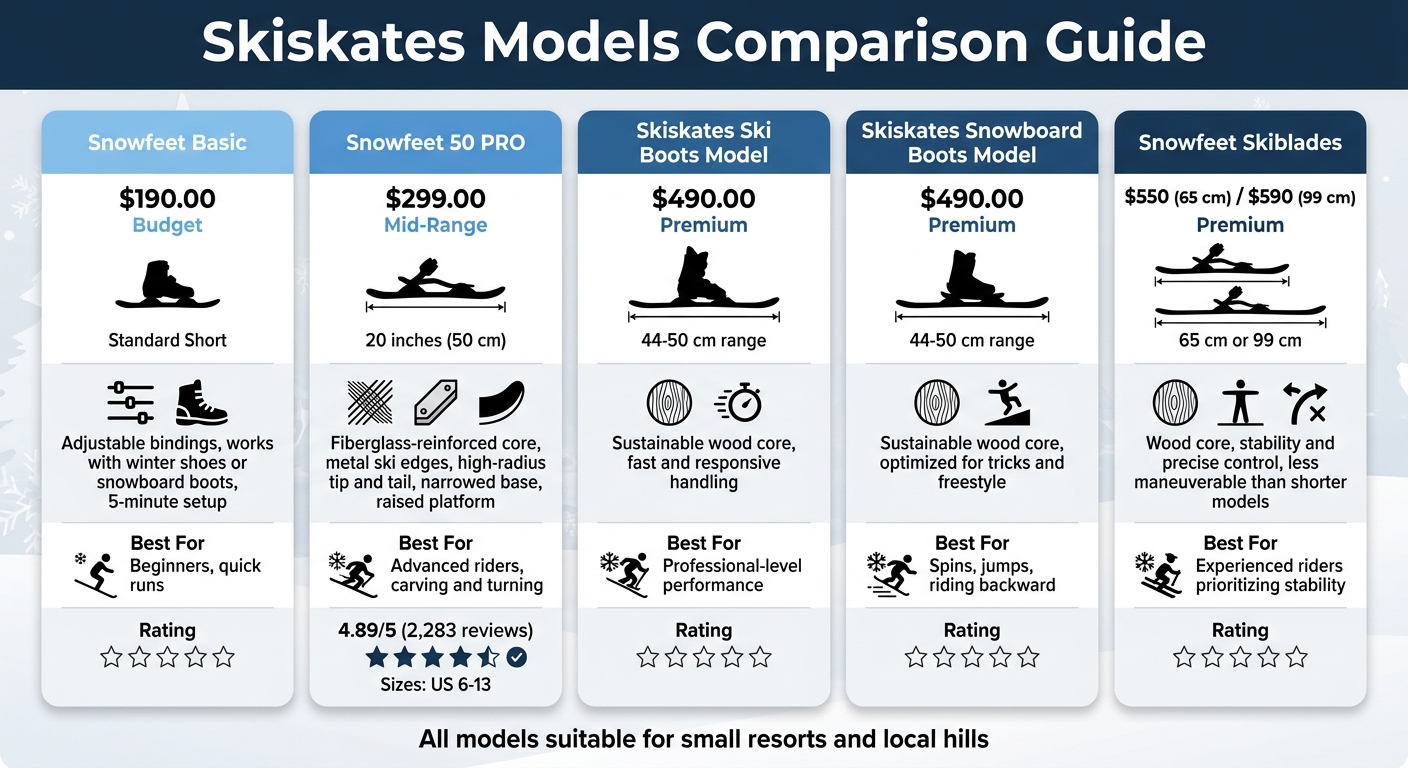
Snowfeet Basic is a great starter model priced at $190.00. Its adjustable bindings work with standard winter shoes or snowboard boots, making it incredibly convenient. You can gear up in just five minutes, which is perfect for quick runs at your local hill.
For those seeking a more advanced option, the Snowfeet 50 PRO ($299.00) steps up the game. At 20 inches long, it boasts a fiberglass-reinforced core and metal ski edges for better stopping power and durability. The design includes a high-radius tip and tail, a narrowed base, and a raised platform, all of which make carving and turning a breeze. It’s highly rated at 4.89/5 by 2,283 reviewers and fits US sizes 6–13, offering excellent balance and control.
If you're after professional-level performance, consider the Skiskates Ski Boots and Snowboard Boots models, both priced at $490.00. These models feature a sustainable wood core for fast and responsive handling. The Snowboard Boots version stands out for tricks and freestyle riding, thanks to the flexibility and comfort snowboard boots provide. It’s a fantastic choice for spins, jumps, and riding backward on compact terrain.
For riders who want a blend of stability and portability, Snowfeet Skiblades are worth checking out. They come in two sizes: 65 cm for $550.00 and 99 cm for $590.00. The wood core ensures stability and precise control, though the longer length means they’re less maneuverable compared to shorter skiskates. These are ideal for experienced riders who prioritize stability while still enjoying the convenience of a compact design at small resorts and local hills.
How to Choose the Right Skiskates
Consider Your Skill Level
When it comes to picking the perfect skiskates, your skill level and riding style play a major role in the decision.
If you're just starting out with winter sports, skiblades around 99 cm are a great option. These longer models provide more stability and are easier to balance, making them a forgiving choice for beginners. They mimic the feel of traditional skiing, allowing you to focus on mastering basic techniques like weight shifting and speed control without the added challenge of ultra-short skates.
On the other hand, shorter skiskates - those under 50 cm - demand precise balance, which can be tricky for newcomers. However, if you have experience in activities like ice skating, hockey, or inline skating, you'll likely adapt to these shorter models more quickly. While it typically takes a day to get the hang of them, expect a few tumbles as part of the learning curve.
For those into tricks, spins, or freestyle riding, skiskates in the 44–50 cm range are ideal. Their compact design makes it easier to perform jumps, pivots, and even ride backward. If you're all about carving aggressively or reaching higher speeds, consider longer models between 65 and 99 cm. These provide better control at faster paces while still being compact enough for quick maneuvers.
Once you've considered your skill level, think about the terrain you'll be riding on.
Match Skiskates to Your Terrain
The type of terrain you plan to ride is another key factor in choosing the right skiskates.
For groomed slopes and packed trails, common at small resorts and local hills, any skiskate model will work. If your hill includes a snow park with features like jumps and rails, the 44–50 cm skiskates or 65 cm skiblades are perfect for quick turns and freestyle tricks.
In light powder, shorter models under 50 cm perform well, but for deeper snow, the 99 cm skiblades are a better choice. Shorter skiskates also shine on moguls and in tight spaces, allowing for rapid adjustments.
Finally, consider how you'll get to your riding spot. If hiking is involved, opt for ultra-portable Snowfeet models that fit in a backpack and work with regular winter boots. For ski resorts where you'll use ski or snowboard boots, professional models with wood cores offer better performance and durability, making them worth the investment for frequent riders.
Tips for Using Skiskates on Small Hills
Learn the Basic Techniques
When tackling compact slopes with skiskates, it’s all about mastering the basics. Start by bending your ankles and knees while keeping your hips forward - this helps maintain momentum as you move uphill. Align your shoulders with your hips to ensure your energy flows directly down the trail.
"To maximize the power that you can create from your legs and upper body, you need to keep your upper body steady. It's helpful to imagine a box between your hips and shoulders that keeps you facing forward." - Charlotte Ogden, Retired Nordic Ski Team Member
Another key skill is weight shifting. Practice gliding on one foot, then smoothly transfer your weight to the other. For gentle slopes, position your skiskates in a V-shape, lean slightly forward, and add a light hop to reset while climbing. Progress takes time, so focus on steady improvement rather than chasing perfection.
"Just getting outside and having fun is always more important than having perfect technique"
Once you’ve got the basics down, it’s time to prioritize safety.
Stay Safe While Having Fun
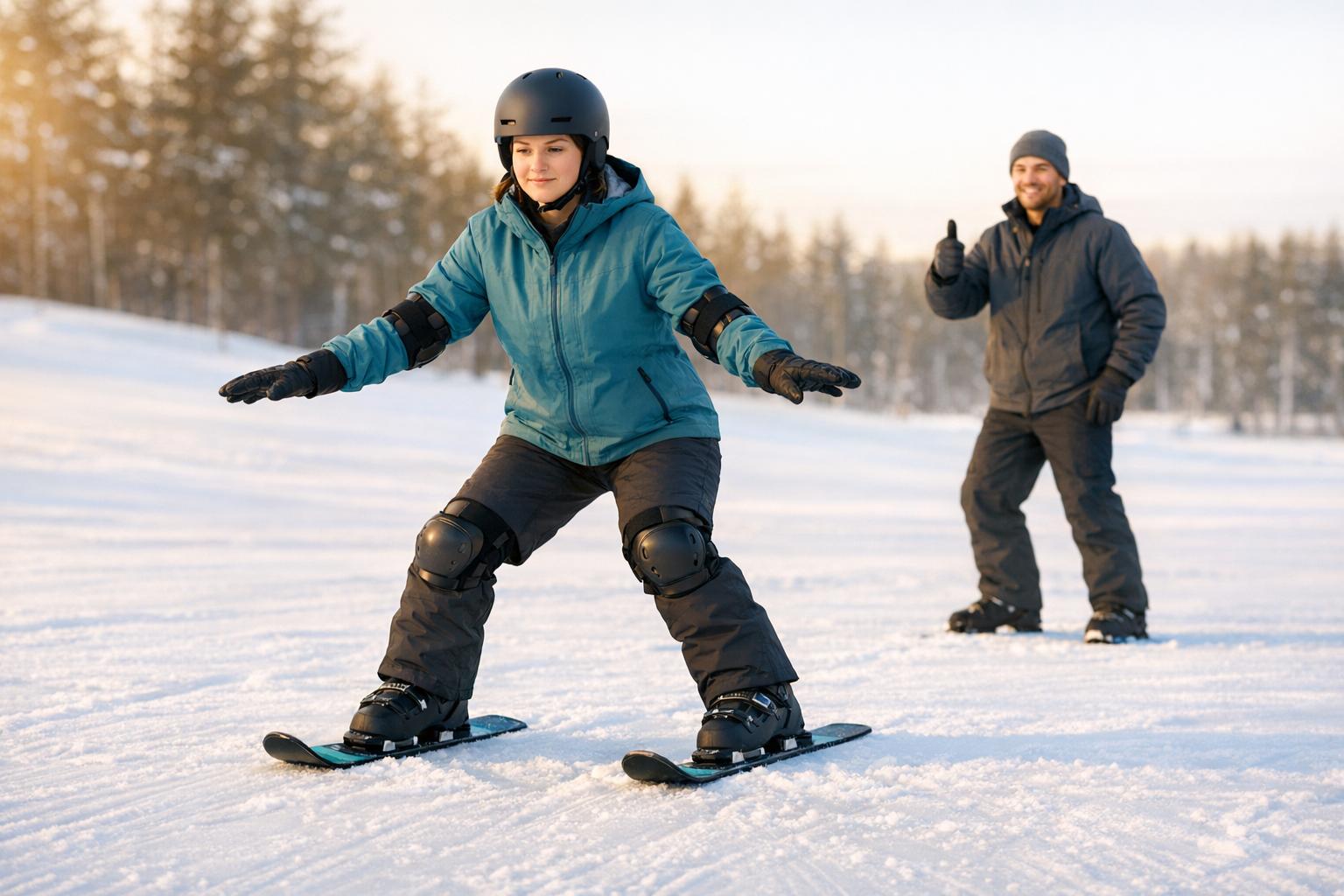
Safety should always come first. Wear protective gear like a helmet, wrist guards, and knee pads to reduce the risk of injury as you learn. Start on beginner-friendly slopes with gentle gradients and plenty of visibility. Small local hills are a great choice since they’re often less crowded, giving you more room to practice without worrying about other riders.
Keep an eye on snow conditions, as they can change throughout the day. Icy patches are more common in the morning or late afternoon when temperatures drop. Fortunately, the steel edges on skiskates give you better grip on these tricky surfaces. As you gain confidence, you can explore steeper terrain or try features in a snow park - but always stay within your comfort zone.
Maintain Your Skiskates
Taking care of your skiskates is just as important as honing your skills. After each session, dry all parts thoroughly to prevent rust and wear. Store them in a cool, dry place, avoiding hot areas like car trunks or garages, as heat can damage the core and reduce the springy feel of your ride.
"Avoid leaving skis strapped too tightly or baking in a hot garage - it kills camber faster than you think." - Kris Steigerwald, Alpine Base & Edge
Regular waxing is essential to keep the base from drying out and to ensure smooth gliding on variable snow conditions. Don’t forget about the steel edges - they need occasional sharpening to maintain grip on icy surfaces. Professional sharpening removes about 0.05 mm of edge material per session. Before committing to a major tune-up, check the base thickness to decide whether a full stone grind is necessary or if a simple wax and sharpen will extend the life of your skiskates for future seasons.
Conclusion
Skiskates are a game-changer for casual winter sports enthusiasts, offering a blend of portability, simplicity, and fun that's perfect for small ski resorts and local hills. Take models like the Snowfeet Basic, for example - they're small enough to fit in a backpack, making them an ideal companion for weekend getaways without the hassle of lugging around heavy gear.
One of their standout features? The minimal learning curve. Most people can get the hang of skiskates in just a few minutes, making them a great choice for families and beginners who might find traditional skiing a bit daunting. In fact, independent reviews show that skiskaters spend 40% more time on local hills compared to regular skiers, thanks to reduced fatigue and an overall boost in enjoyment.
When it comes to compact terrain, skiskates truly shine. They’re perfect for tight runs and less crowded slopes, which are common at smaller resorts. Plus, their steel edges provide excellent grip on icy patches - something you'll appreciate during those crisp morning sessions when temperatures dip below freezing. And if you keep up with regular maintenance, like waxing and edge sharpening, these little powerhouses can last up to five seasons while delivering peak performance.
Portability is another major draw - 85% of users cite it as the top benefit. And with 92% of skiskaters recommending them for beginners on small hills, it’s no surprise that sales of portable winter gear have jumped 25% during the 2024-2025 season. More and more recreational skiers are finding joy in hitting local slopes without committing to big-resort trips.
Whether you're gliding down a Midwest bunny hill or tackling a regional resort with under 1,000 feet of vertical, skiskates turn compact terrain into your personal playground. Their maneuverability, ease of transport, and freestyle potential make every trip to your favorite local spot a whole lot more exciting.
FAQs
Can I use skiskates at my local ski hill?
Skiskates are a great choice for local ski hills. They’re built for slopes and hiking trails, offering a fun way to enjoy snow sports on smaller, less crowded terrains. Their small size and ease of movement make them perfect for casual, recreational outings in these settings.
Do skiskates need ski boots or regular winter boots?
Skiskates are typically designed to work without the need for traditional ski boots or standard winter boots. Instead, they use specialized bindings that accommodate regular footwear or specific skiskate boots, depending on the model. To make sure everything fits correctly, always verify the compatibility requirements for your particular skiskate model.
Are skiskates safe on icy runs?
Skiskates are a reliable option for tackling icy runs. Their design offers excellent grip and sharp edge control, which helps maintain stability even on slippery slopes. With improved maneuverability, they give you better control, making them a safer choice for navigating icy terrain.


Leave a comment
This site is protected by hCaptcha and the hCaptcha Privacy Policy and Terms of Service apply.