


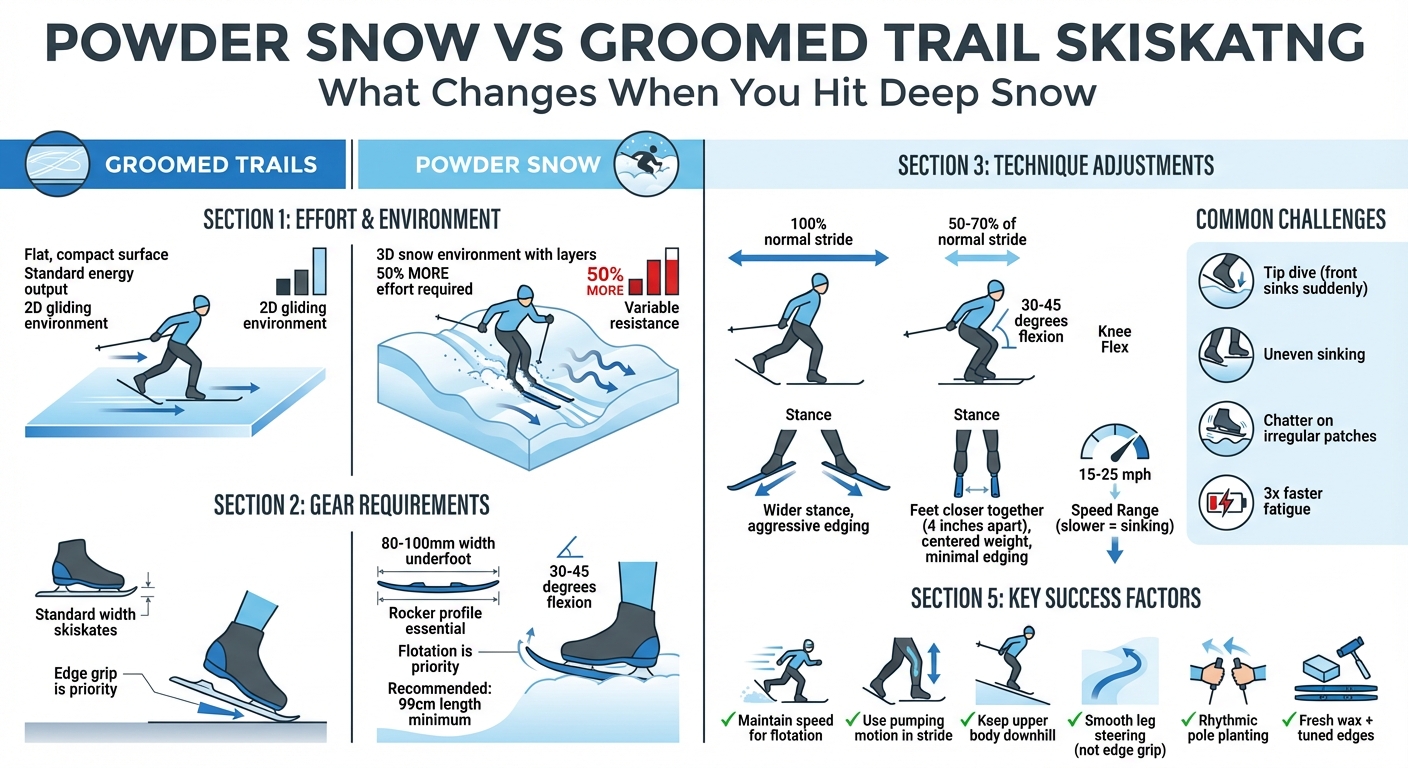
Skiskating in powder snow is a challenge that requires a shift in technique, gear, and mindset. Unlike groomed trails, powder snow creates more resistance and demands more energy - up to 50% more effort. To succeed, you need the right skiskates, proper stance, and an understanding of how to manage speed and balance in deep snow.
Key Takeaways:
- Gear: Use skiskates with 80-100mm underfoot and a rocker profile for better floatation. Wax your skis and tune edges for mixed conditions.
- Technique: Shorten strides to 50-70% of normal, keep knees flexed at 30-45 degrees, and maintain a centered stance. Avoid leaning back too much.
- Speed Control: Stay in the 15-25 mph range to avoid sinking. Use smooth, fluid leg movements instead of aggressive edging.
- Challenges: Tip dive and uneven sinking are common issues. Adjust weight distribution and use a rhythmic bounce to recover.
- Poles: Use them for rhythm and stability, especially in variable snow conditions.
Mastering powder skiskating takes practice but opens up thrilling off-piste experiences. Start on gentle slopes and build confidence before tackling deeper snow.
Powder Snow vs Groomed Trail Skiskating: Key Differences and Techniques
How Powder Snow Affects Skiskating
What Makes Powder Snow Different
Powder snow creates a 3D snow environment where your skiskates interact with layers of snow rather than gliding on a flat, compact surface like groomed runs. The light, airy nature of powder means your equipment has to contend with varying resistance, which isn't an issue on firmer terrain.
In powder, flotation becomes the main priority. Unlike on hard-packed snow, where edge grip is critical, powder requires your skiskates to generate enough pressure to stay on or near the surface. As CIMA explains, "The faster you go, the more floatation you'll experience". If your speed drops, you'll sink deeper into the snow, increasing drag and making movement more strenuous.
Problems Short Skis Face in Powder
Short skiskates come with a smaller surface area, which limits their ability to float and often causes them to dig into the snow instead of gliding over it. This "plowing" effect forces you to exert more energy to free the skis and maintain momentum.
Another challenge is tip diving - when the front of the ski suddenly sinks into the snow. This can lead to abrupt stops, throwing off your balance and rhythm. Short skis also struggle to distribute weight evenly in deep powder, so techniques like aggressive edging or crossing the fall line, which work well on groomed trails, can cause you to lose speed and stall. As fisheater, a Construction Manager, puts it, "Skiing powder requires you to point skis downhill. You greatly reduce edging, keeping the skis pointed downhill".
In mixed snow conditions, short skiskates are more prone to chatter - a noticeable vibration underfoot - when they hit irregular patches of snow within the powder. Unlike longer skis, which can absorb these bumps thanks to their greater mass and surface area, skiskates transfer every jolt straight to your legs, leading to quicker fatigue.
Recognizing these challenges can help you make better equipment choices for tackling powder snow effectively.
sbb-itb-32287b2
Gear Setup for Powder Snow Skiskating
Selecting the Right Skiskates Model
When it comes to powder snow, the Snowfeet Skiblades 99 CM model stands out. Its 99 cm length offers more surface area compared to shorter models, which helps distribute your weight evenly across the snow. This prevents that dreaded sinking feeling. As 4FRNT Skis puts it, "A powder ski is going to have at least 100 mm of width underfoot, providing much more surface area for the base of the ski to make contact with the snow and 'float'".
Another feature to prioritize is a rocker profile - that upward curve at the tips and tails. This design is essential for keeping the front of your skiskates above the surface, especially in deep snow. 4FRNT Skis explains, "Rocker in the tip of the ski initiates turns easier and prevents the tips from diving below the surface. This means you won't get tired from leaning back to keep the tips above the snow". Pairing this design with the right bindings ensures a smoother ride and better performance in powder conditions.
Bindings for Powder Conditions
The Skiskates Snowboard Boots Model ($490.00) is a solid choice for powder. This setup provides a stable platform, giving you the balance and control needed for deep snow. A secure connection between your boots and bindings is crucial for quick adjustments and maintaining control when conditions shift.
Preparing Your Equipment for Deep Snow
Before hitting the powder, make sure your gear is prepped:
- Wax your bases thoroughly. Fresh wax reduces friction and prevents snow from sticking, keeping your glide smooth.
- Tune your steel edges. Even if you’re not carving aggressively, sharp edges are essential for navigating mixed conditions like packed snow, wind crust, or hidden icy patches. Properly tuned edges give you the control you need when the snow texture changes unexpectedly.
With your gear in top shape, you'll be ready to tackle the challenges of powder snow with confidence and precision.
Techniques for Skiskating in Powder Snow
Body Position and Balance
Leaning back in powder might feel like the right move to keep your ski tips up, but that approach can actually work against you. Jens from Stomp It Tutorials explains:
"Leaning back too much while skiing in powder drains energy and makes turning difficult".
Instead, keep your body upright and let your boots support you. Centering your weight and engaging your core will help you stay balanced and in control.
Another tip: bring your feet closer together compared to skiing on groomed trails. A narrower stance helps distribute your weight evenly, reducing the risk of one ski sinking deeper than the other and causing a spin-out. Practicing this stance can improve your stability and set you up for smoother strides in powder.
Adjusting Your Stride for Powder
Speed is your best friend in powder snow. Jens emphasizes:
"Skiing too slow can cause sinking, similar to water skiing, and speeding up can help to float on top of the snow".
By maintaining momentum, you’ll glide over the powder rather than getting bogged down.
To stay afloat, add a pumping motion to your stride. This gentle up-and-down movement helps keep your ski tails from sinking and makes it easier to initiate turns. Start practicing this on a mild slope to get a feel for how the snow reacts to your movements. Keep your upper body projected downhill and engage your core to stay balanced, even as the terrain changes. With these adjustments, you’ll find it easier to maintain speed and control.
Using Poles for Better Control
Poles aren’t just for balance - they’re key tools for timing and rhythm in powder. Proper pole planting helps you control your turns and manage rotation, especially when snow conditions are unpredictable. Keeping your hands forward and steady also supports your overall stability.
When the snow texture shifts from light and fluffy to heavier and denser, rely on your poles to maintain rhythm and balance. A consistent hand position will keep your upper body aligned downhill, helping you link turns smoothly without catching an edge. By using your poles effectively, you’ll navigate powder with greater confidence and fluidity.
How To Ski Powder | Ski Tips For Deep Snow
Controlling Your Skiskates in Variable Powder
Once you’ve grasped the unique challenges of powder - its resistance and the need for flotation - it’s time to focus on managing your speed and recovering when things don’t go as planned.
Managing Speed in Deep Snow
Controlling speed in powder calls for a different strategy compared to groomed trails. As highlighted by Maison Sport Blog:
"It is important to maintain a moderate, consistent speed when skiing in powder. This allows you to stay on top of the snow and makes turning and controlling your movements easier."
The key here is to maintain a steady rhythm with linked turns. This helps you manage your momentum while keeping control. Maison Sport Blog also emphasizes:
"In powder snow you won't be able use the edges of your skis to grip like you can on compact snow. Try to steer with your feet and legs, guiding your skis in the direction you want to go."
Instead of relying on edges, focus on steering with smooth, fluid movements of your feet and legs. And here’s a tip: don’t stop abruptly in heavy snow. Losing momentum can make restarting a real challenge. By mastering these techniques, you’ll not only keep your speed in check but also position yourself for quick recoveries if your skiskates lose their glide.
Recovering from Sinking or Tip Dive
When your skiskates start to sink or the tips dive into the snow, quick adjustments are crucial. This often happens when you lean too far forward, pushing the ski tips into the powder. If you notice this happening, shift your weight slightly back toward your heels to level out the skis.
Another helpful move is the "unweighting" technique. Use a rhythmic bounce to compact the snow beneath you as you descend, which helps lift your skis back to the surface. Coordinate your pole plants with this motion to assist in resetting your skis’ position.
To stay balanced, keep your arms forward and your upper body pointed downhill, especially when the snow density changes unexpectedly. Maintain an even weight distribution across both skis, and keep a small gap - about 4 inches - between them to avoid uneven sinking. Paired with proper gear and stride adjustments, these techniques will give you more control and confidence when tackling deep snow.
Conclusion
Skiskating in powder snow demands a different set of skills and the right equipment. For starters, having the proper gear is essential - wider skiskates with rocker profiles are ideal for keeping you afloat while turning through deep snow. And when it comes to "true" powder conditions, aim for at least 12 inches of fresh snow, especially on steeper slopes.
Your technique plays a huge role too. Focus on maintaining a centered stance with your core engaged, and position your upper body downhill to conserve energy while staying in control. Keep your feet closer together than you might on packed snow to avoid uneven weight distribution. A rhythmic bouncing motion can also help your skiskates pop out of the snow, making it easier to glide.
One key tip - embrace speed. Moving too slowly can cause you to sink into the snow. Momentum is your best friend when it comes to skimming across the surface.
Powder skiskating has a learning curve, so don’t expect to nail it right away. Start on gentle slopes to refine your stance and practice the pumping motion before venturing into deeper snow. With each session, you’ll build confidence and develop the muscle memory needed to handle powder runs. Once you’ve got the hang of it, these challenging conditions can become some of the most enjoyable and satisfying experiences on the slopes.
FAQs
How deep is “powder” for skiskating?
For ski skating, powder refers to snow that's typically at least a foot deep, especially on steeper slopes. This depth creates the conditions most commonly linked to genuine powder snow.
How do I avoid tip dive in powder?
To avoid tip dive while skiskating in powder snow, it's all about staying balanced. Keep your weight centered over your skis to prevent the tips from sinking. Using wider skis can also make a big difference, as they help spread your weight more evenly across the surface. Adjust your stance slightly higher and avoid leaning too far forward onto the tips - this will give you better control and keep the tips from getting buried in the snow.
What width should skiskates be for powder?
There isn’t a definitive guideline on the best width for skiskates in powder snow. However, focusing on adjusting your technique and maintaining good balance can significantly enhance your performance when tackling deep snow conditions.

Leave a comment
This site is protected by hCaptcha and the hCaptcha Privacy Policy and Terms of Service apply.