

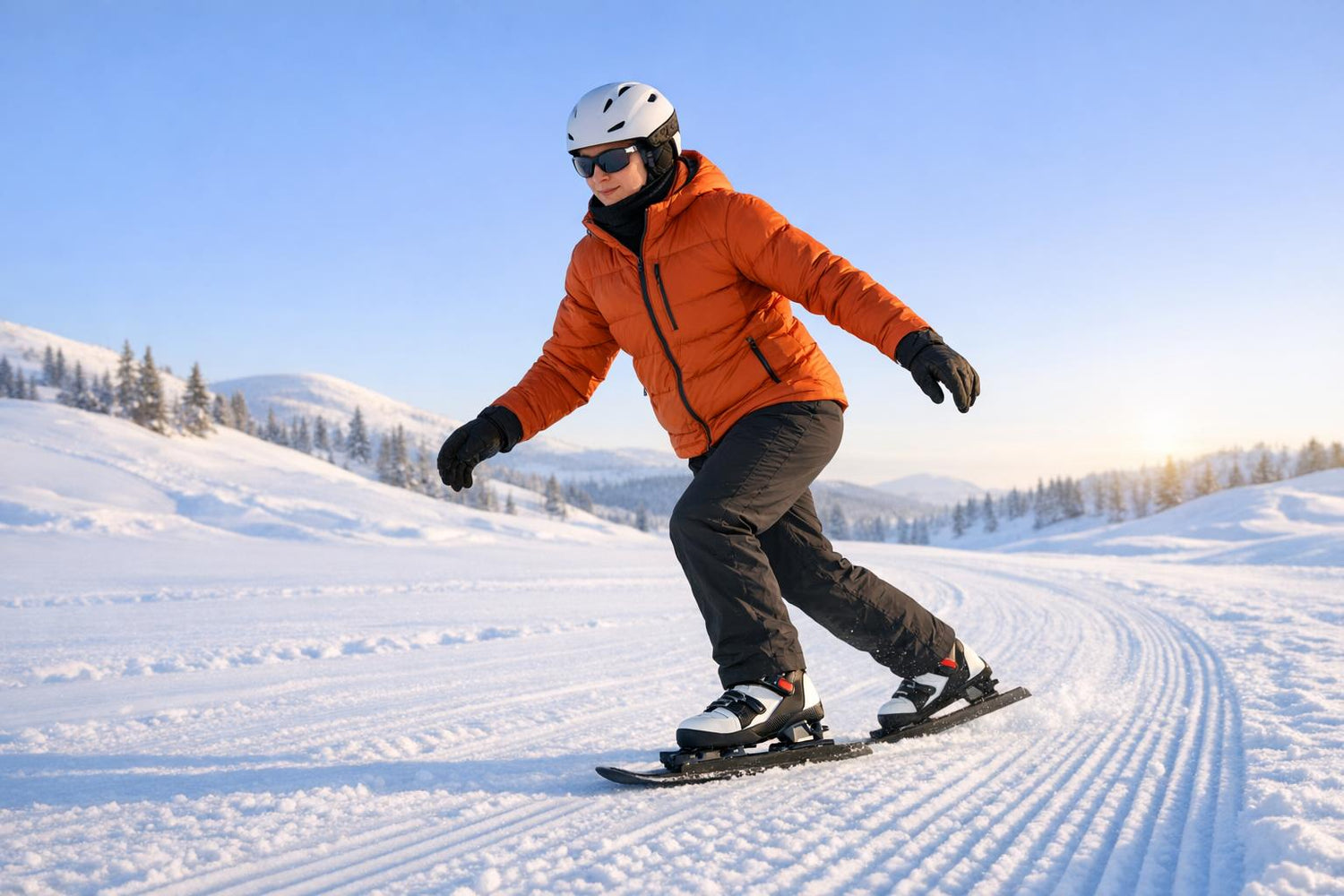
Want to combine skating and skiing into one fun winter activity? Skiskating might be for you. Using short, portable skis (15–20 inches long), skiskates are easy to control, lightweight, and ideal for beginners. Whether you’ve skated before or are completely new to winter sports, skiskating offers a straightforward way to enjoy snowy slopes without bulky gear.
Why Skiskating is Beginner-Friendly:
- Compact design: Skiskates fit in a backpack and are easier to handle than traditional skis.
- Simple learning curve: Short skis make turning and stopping more manageable.
- Versatile footwear: Works with ski boots, snowboard boots, or even regular winter shoes (depending on the model).
- Affordable starting point: Entry-level models start at $190, with no need for expensive ski gear.
Key Features:
- Skiskates are about 17.3 inches long, with steel edges and wood or fiberglass cores.
- They allow independent leg movement, mimicking ice skating or rollerblading.
- Best for groomed trails, snow parks, and gentle slopes - not for deep powder or icy conditions.
Getting Started:
- Recommended gear: Helmet, insulated gloves, goggles, and layered clothing.
- Basics to practice: Balance, gliding in a V-shape, wedge braking, and simple turns.
- Beginner tip: Start on flat terrain or bunny hills to build confidence.
Top beginner option: The Snowfeet Basic model ($190) is lightweight, works with regular boots, and is easy to control. For more advanced options, wood-core skiskates or longer skiblades offer added durability and balance.
Skiskating is a fun, approachable way to enjoy winter sports. With the right gear and practice, you’ll be gliding down slopes in no time.
What is Skiskating?
Skiskating blends the techniques of ice skating with the adaptability of skiing. Instead of the traditional long skis, skiskating uses short, compact skis - about 17.3 inches (44 cm) in length - that glide on snow like skates. These skiskates are crafted with steel edges and a core made of wood or fiberglass, featuring cap construction similar to professional-grade skis. This design not only mirrors the quality of full-sized skis but also offers improved agility for navigating the slopes.
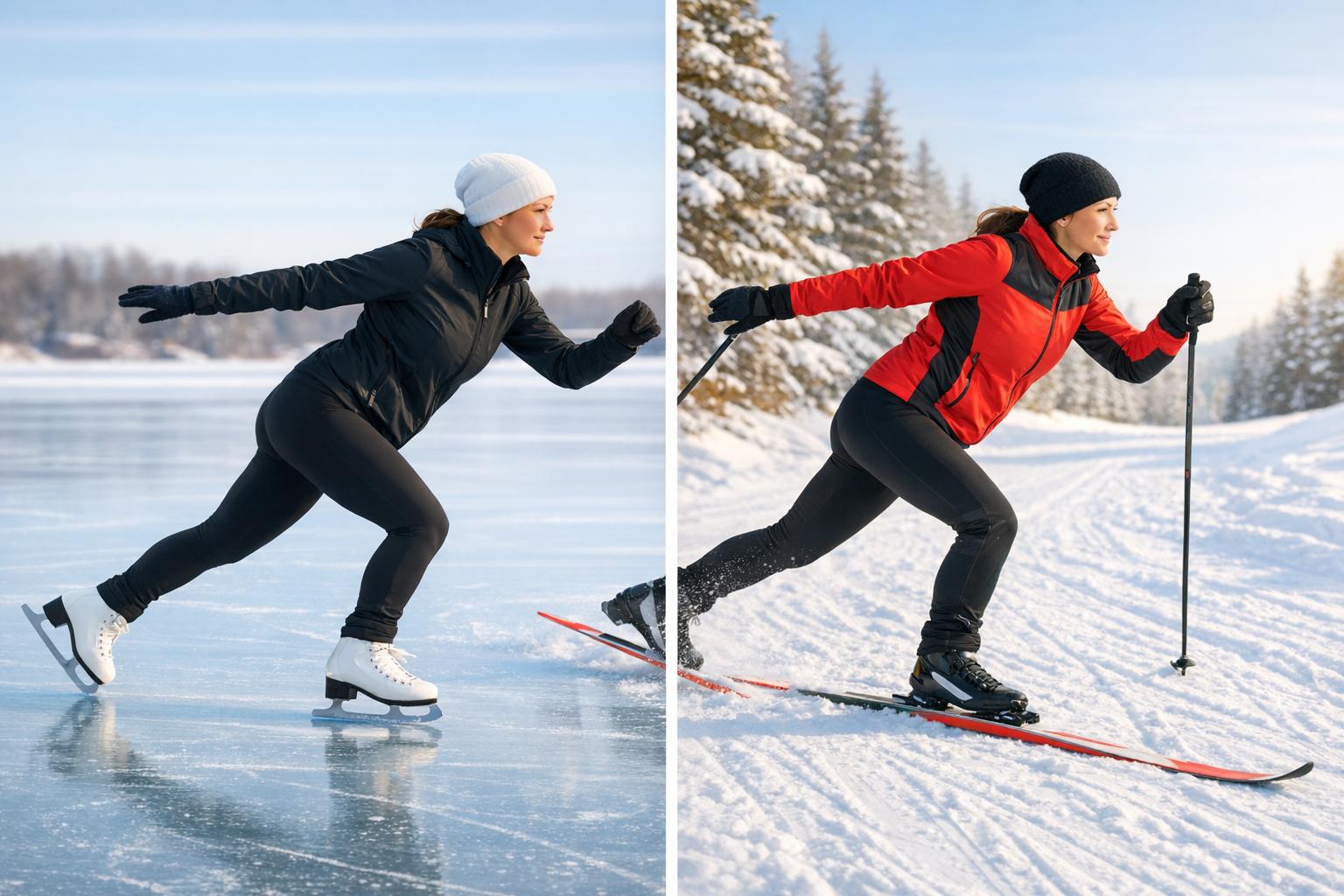
What makes skiskating stand out is the freedom it offers. While traditional skiing emphasizes carving downhill, skiskates let you perform skating strides on flat terrain or even gentle inclines - resembling the motion of inline or ice skating.
"It's like ice skating, but with the freedom of skiing." - Snowfeet Store
The compact size of skiskates solves one of the most common frustrations for beginners: crossed ski tips. At just about a foot and a half long, they dramatically reduce the chances of skis tangling during turns. This makes it easier to execute quick turns, spins, jumps, and even ride backward - maneuvers that are much harder to pull off with standard skis.
Unlike snowboarding, where both feet are strapped to a single board, skiskates allow each leg to move independently. This added freedom gives you more control and agility, making it easier to navigate the slopes with precision and confidence.
sbb-itb-32287b2
Why Skiskates Work Well for Beginners
Skiskates, measuring just 17.3 inches (44 cm), are designed with portability in mind. They’re compact enough to fit into a backpack, eliminating the hassle of lugging around bulky ski bags or dealing with roof racks. Thanks to their fiberglass or wood cores, they’re lightweight and easy to carry - whether you’re hiking to a trail or navigating through a crowded lodge. This convenience also makes them beginner-friendly.
"Skiskates are 44 cm (17.3 in) long. It makes them short and light, so you can easily carry them in a backpack and take them anywhere." - Snowfeet
Their shorter length not only makes them easy to transport but also simplifies the learning process. Beginners can often get the hang of the basics within a day. Why? The compact design reduces the chance of crossing tips, a common challenge with longer skis. As Snowfeet explains, "Shorter means easier to control and less likely to cross tips when compared to longer skis". The combination of lightweight construction and manageable size helps new users build confidence quickly.
Terrain versatility is another strong point. Skiskates shine on groomed trails, snow parks, and gentle hills, but they’re less suited for deep powder or icy conditions. By blending skiing and skating motions, they open up opportunities to explore various winter settings, adding an element of fun and flexibility for those just starting out.
User feedback consistently highlights how easy they are to handle. The 44 cm model, for instance, boasts an impressive 5.0/5 rating, while other sizes are rated nearly as high at 4.9/5. Even experienced skaters appreciate the freedom of movement skiskates provide.
How to Choose Your First Skiskates
Skiskates Model Comparison Guide for Beginners
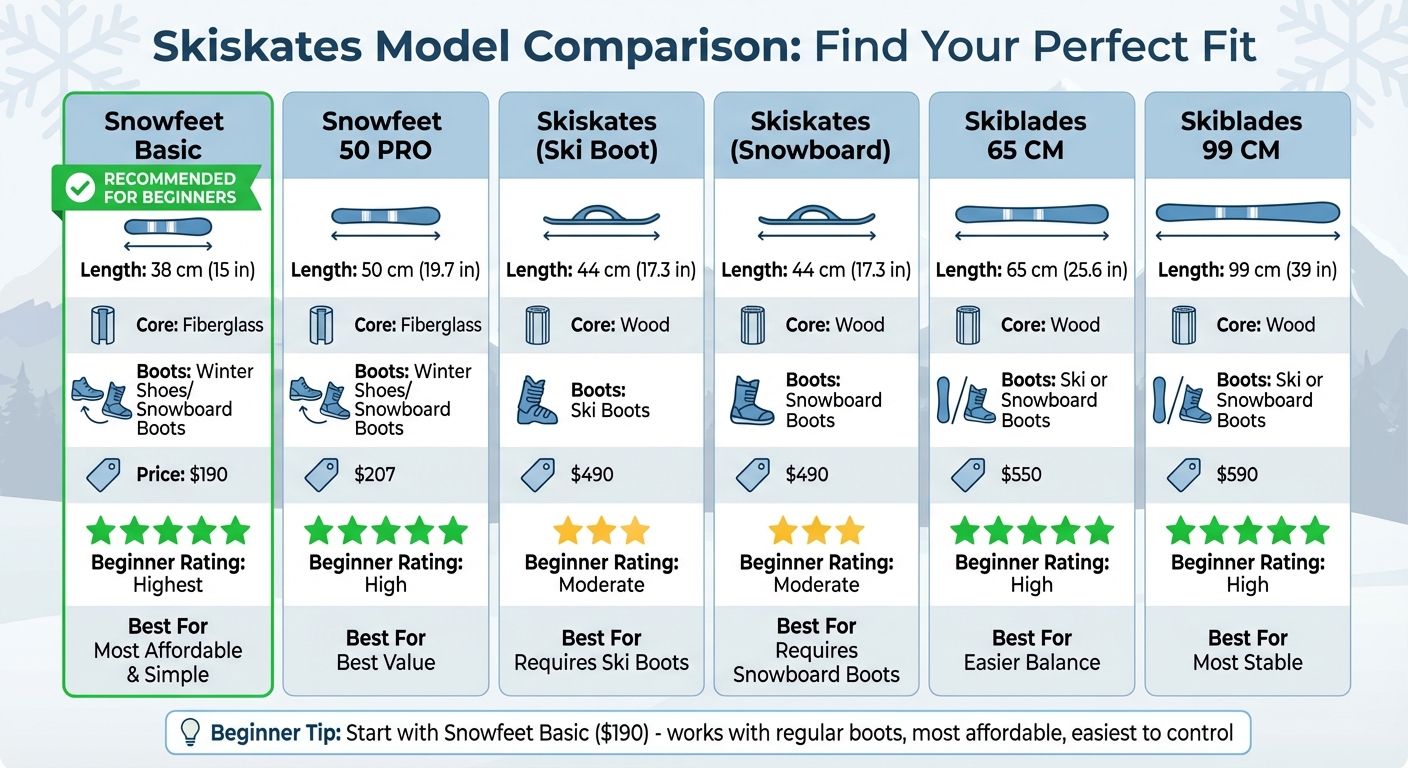
When picking your first skiskates, focus on boot compatibility, ski length, and your budget. Snowfeet models, available in 38 cm and 50 cm lengths, are designed to work with standard winter shoes or snowboard boots. This makes them a convenient choice if you don’t own specialized ski gear. On the other hand, Skiskates models (44 cm) are built for ski boots or snowboard boots, depending on the binding type. Choosing the right skiskates ensures you get the fun and control that skiskating promises. Let’s break down these considerations further.
Length matters. For a fast, agile skating experience, stick to skiskates under 50 cm. Longer options, like Skiblades (ranging from 65 cm to 99 cm), provide better balance and smoother carving. If you’re looking for durability and glide, premium wood-core models come pre-waxed and ready to go. Fiberglass models, such as the Snowfeet Basic and 50 PRO, are a lighter and more budget-friendly option, though they’ll need regular waxing to maintain performance.
Entry-level skiskates start at $190, while premium wood-core models can cost up to $590. If ski boots feel too stiff or uncomfortable, consider snowboard boot bindings for added flexibility and comfort. You can also adjust your bindings at home with a screwdriver to ensure a snug, secure fit before heading out to the slopes. The comparison table below highlights key details to help you decide.
Skiskates Model Comparison
| Model | Length | Core Material | Boot Compatibility | Price (From) | Beginner Suitability |
|---|---|---|---|---|---|
| Snowfeet Basic | 38 cm (15 in) | Fiberglass | Winter Shoes / Snowboard Boots | $190 | Highest (Price/Simplicity) |
| Snowfeet 50 PRO | 50 cm (19.7 in) | Fiberglass | Winter Shoes / Snowboard Boots | $207 | High (Best Value) |
| Skiskates (Ski Boot) | 44 cm (17.3 in) | Wood | Ski Boots | $490 | Moderate (Requires Ski Boots) |
| Skiskates (Snowboard) | 44 cm (17.3 in) | Wood | Snowboard Boots | $490 | Moderate (Requires Snowboard Boots) |
| Skiblades 65 CM | 65 cm (25.6 in) | Wood | Ski or Snowboard Boots | $550 | High (Easier Balance) |
| Skiblades 99 CM | 99 cm (39 in) | Wood | Ski or Snowboard Boots | $590 | High (Most Stable) |
Recommended Model for Beginners
If you’re just starting out, the Snowfeet Basic is the best option to kick things off. At $190, it’s the most affordable choice and works with regular winter boots, so you won’t need to invest in pricey ski gear right away. Its compact 38 cm size makes it easier to control, which is perfect while you’re learning the ropes. Once you’ve built up your skills and confidence, you can explore premium wood-core models for improved performance and durability.
Gear You'll Need for Skiskating
Once you've picked out your skiskates, having the right gear is just as important for staying safe and performing well on the slopes. The right combination of protective equipment and clothing ensures comfort and safety as you get the hang of skiskating.
First and foremost, a ski helmet is a must. It protects your head from injuries and keeps you warm in cold weather. As Ed Zebrowski, Product Information Specialist at REI, explains:
"A ski helmet is a nonnegotiable piece of gear... We're human, we crash. You've got to protect the most important part of your body".
Next, you'll need waterproof, insulated gloves or mittens. Mittens are better for keeping your hands warm, while gloves offer more dexterity for handling gear. Look for options with long cuffs (also called gauntlets) that extend to your mid-forearm to keep snow out. Goggles are another essential item - they shield your eyes from wind, snow, and glare. Compared to regular sunglasses, goggles are much safer on the slopes. Use lenses suited to the weather: dark lenses for sunny days and yellow or rose-tinted ones for overcast conditions.
When it comes to clothing, stick to the three-layer system:
- Base layer: Opt for moisture-wicking materials like merino wool or synthetic fabrics to keep sweat away from your skin.
- Mid-layer: Choose an insulating layer, such as fleece, to trap warmth.
- Outer shell: A waterproof and windproof jacket protects you from the elements.
Avoid cotton at all costs - it absorbs moisture and loses its insulating properties when wet, leaving you cold and uncomfortable. Nicholas Allen, Senior Sales Specialist at REI, puts it bluntly:
"Wet jeans might be one of the most uncomfortable things on the planet... Cotton doesn't dry well. You get cold and your experience can take a downward spiral".
For your lower body, windproof Nordic tights (priced around $100) paired with wool or synthetic socks will keep your legs and feet warm and dry. These work well with winter or snowboard boots, ensuring comfort during your skiskating adventures.
Since skiskating is a full-body workout that generates a lot of heat, start with minimal layers to avoid overheating and excessive sweating. With the right gear in place, you're all set to dive into skiskating techniques in the next section.
How to Get Started with Skiskating
Securing Your Boots and Finding Balance
Before you hit the slopes, make sure your boots are properly secured. To do this, align the binding's groove with your boot's metal toe bar and press down until you hear a click. Spend a few minutes practicing this mechanism on flat, groomed snow - clicking in and releasing - so you’re comfortable with how it works.
Once you’re strapped in, balance becomes your main focus. Stand with your feet shoulder-width apart, keeping a slight bend in your ankles and knees, and position your hips directly over your feet. Your shoulders should lean forward just a bit. Ken Knapp, Editor Emeritus at REI, advises:
"Stand upright but relaxed, with feet shoulder width apart. Bend softly at your ankles and knees, and stand so that your hips are right over your feet".
Shift your weight onto the balls of your feet, avoiding the temptation to lean back onto your heels.
To find your natural athletic stance, try a quick "hop test." Perform a few small hops and notice how you land - this position, with flexed knees and ankles, is ideal for maintaining balance. You can also practice balancing on one foot by shifting all your weight onto one leg while keeping a straight line from your nose to your toe. Knapp highlights the importance of this skill:
"Being proficient and remaining balanced atop one foot is a trait shared by advanced skiers, so the more you practice this skill... at home, the better you'll be the next time you hit the snow".
Finally, keep your eyes focused on where you want to go, not on your feet. Once you feel steady, you’re ready to work on gliding.
How to Glide
Gliding is at the heart of skiskating and feels a lot like ice skating. Start with your skiskates in a V-shape - tips wide, tails close together. From your balanced stance, shift your weight onto one foot while staying upright. Push off with the inside edge of one skiskate and glide forward on the other. Then, switch sides: transfer your weight to the opposite foot and push off again. This creates a smooth, side-to-side rhythm.
To build this skill, try a "waddle drill." Shift your weight from one skate to the other, focusing on finding a steady rhythm. Stay relaxed - tensing up will make it harder to balance and move fluidly. Begin on flat terrain and move at a slow pace until the weight transfer becomes second nature. As you gain confidence, you can gradually increase your speed.
How to Turn and Stop
Once you’re comfortable gliding, turning and stopping are your next priorities. Knowing how to stop safely is essential. Beginners often rely on the wedge brake, also called the "pizza" or snowplow. To do this, push your heels outward to form a V-shaped wedge. To slow down more effectively, roll your knees and ankles inward to engage the inner edges of your skiskates. The wider your wedge and the more pressure you apply, the quicker you’ll stop.
For turning, stay in the wedge position and shift your weight to the outside skate - the one opposite the direction you want to turn. For example, to turn right, put more weight on your left foot; to turn left, lean more on your right foot. On gentler slopes, you can also use step turns: lift your inside skate, angle it toward the turn, step down, and then bring the other skate parallel. Practice these techniques on flat ground first, and always maintain a flexed, athletic stance. As Ken Knapp warns:
"Never stick your poles out ahead of you to slow down because that can cause injury or break your poles".
Practicing on Easy Slopes
Once you’ve mastered the basics - binding, balance, gliding, and turning - test your skills on gentle slopes. Start with bunny hills or beginner areas with minimal incline. These slopes give you a chance to practice wedge braking and turning without picking up too much speed.
Keep your knees bent and your stance centered to maintain control. Avoid leaning back, as this can throw off your balance. Use wide, sweeping wedge turns to regulate your speed. If you happen to fall, try the "dead bug" method: roll onto your back with your skiskates and poles in the air to untangle them, then roll to one side, align your skiskates parallel, and push yourself up from your hands and knees.
Take your time building confidence on easy slopes. Spend a few sessions practicing proper weight transfer, edge control, and stopping techniques. With repetition, these skills will feel like second nature, setting you up for success on steeper terrain.
Safety Tips for Beginners
Before diving deeper into the world of skiing, it’s important to keep these safety tips in mind to protect yourself and make the most of your time on the slopes.
Start on groomed terrain. Stick to machine-groomed trails when you're just starting out. These trails provide a smooth and predictable surface, making it easier to maintain balance and control. Look for trails marked with a "green circle" at Nordic centers - these are beginner-friendly and have gentle inclines. Steer clear of deep powder or un-groomed areas, as they demand more advanced skills and specialized backcountry equipment.
Wear the right protective gear. Proper gear can make all the difference. Opt for boots with high, stiff cuffs to support your ankles and protect them from the twisting forces involved in the skating motion. Make sure your boots fit snugly and keep your heel securely in place. When choosing poles, they should reach somewhere between your chin and lips - this is about 90% of your height and helps with balance and efficient use of your core muscles.
Check snow conditions before you go. Always verify the conditions before heading out. Stick to flat, well-established trails to reduce the risk of avalanches. If you encounter icy snow, keep in mind that standard skate skis might not provide enough grip. In such cases, metal-edge skis can give you better control. As Ken Knapp, REI Editor Emeritus, wisely puts it:
"Snowsport safety is your responsibility. Be sure to use proper technique and take steps to minimize risk whenever you go".
Once you're confident the conditions are safe, focus on pacing yourself as you learn.
Know your limits and advance gradually. Don’t rush into steeper terrain - make sure you’ve mastered speed control first. Take breaks when you’re tired to avoid mistakes caused by fatigue. If you’re exploring a new area, inspect the trail beforehand, approach it cautiously, and only pick up speed once you’re comfortable. Always look uphill before merging onto a new trail, and yield to skiers already on the move.
Warm up and stay hydrated. Start your session with dynamic stretches to loosen up and reduce the risk of injury. Stay hydrated by drinking water before, during, and after your time on the slopes - cold and high-altitude environments can dehydrate you faster than you might expect. Dress smartly in layers: a synthetic base layer to wick away moisture, an insulating mid-layer for warmth, and a waterproof outer shell to protect against the elements. This approach helps prevent hypothermia and overheating.
Beginner-Friendly Snow Parks in the U.S.
Finding the right places to learn skiskating can make all the difference for beginners. Cross-country ski centers are a great starting point, offering wide, groomed trails perfect for practicing the side-to-side skating motion. Here are some of the best beginner-friendly spots in the U.S. to help you get started.
If you're in Wisconsin, Lapham Peak State Forest is a fantastic choice. It features 17.5 miles of groomed trails, including 2.5 miles lit for evening use. As of January 2026, Nordic Specialists operates a rental center at the Evergreen Shelter, making it easy for newcomers to try skiskating without committing to buying gear. Other nearby options include the Nordic Trail, with 18.2 miles of groomed terrain, and Brown Deer Park, which offers a shorter 4.5-mile loop - perfect for quick practice sessions. For those looking to learn with guidance, the Nordic Ski Club of Milwaukee organizes trips and lessons tailored to beginners and intermediates at places like Valley Spur in Munising, MI, and Minocqua Winter Park in Minocqua, WI.
In the Northeast, New York City's Central Park transforms into a skiskating haven when snowfall reaches 6 inches or more. Flat areas like Sheep Meadow (between 66th and 69th Streets), the Great Lawn (spanning 79th to 85th Streets), and North Meadow (near 97th Street) provide ideal spaces to practice your technique. Just keep in mind that urban parks typically don’t offer equipment rentals, so you’ll need to bring your own gear.
For beginners heading to ski resorts, look for slopes marked with green circles near magic carpet lifts. These runs are short and manageable, making them great for practicing skiskating. Be sure to check the resort’s trail map to locate these beginner zones and confirm that the trails are groomed for skiskating.
Whether you're exploring state parks, urban spaces, or ski resorts, these locations offer excellent opportunities to ease into skiskating and refine your skills.
Conclusion
Skiskating blends simplicity with a compact design, making winter sports more approachable for beginners. These lightweight, portable skiskates eliminate the hassle of bulky gear while making it easier to turn and stop smoothly .
What truly sets skiskating apart is its inclusivity. Whether you're gliding down groomed slopes, trekking along snowy trails, or enjoying the hills in your neighborhood, skiskates provide a flexible way to soak in the beauty of winter . If you’ve ever tried ice skating or hockey, the movements will feel naturally intuitive. The sport focuses on ease and doesn’t demand specialized gear.
"Skiskates have been developed to allow all kinds of movements on the snow and you don't have to be limited by going downhill only." - Snowfeet Team
Skiskating isn’t just fun - it’s a great workout, too. The dynamic movements strengthen your core, enhance balance, and can burn anywhere from 300 to 600 calories an hour. On top of that, spending time outdoors in the winter can lift your spirits, thanks to endorphins and the benefits of natural sunlight.
FAQs
What makes skiskates a great choice for beginners compared to traditional skis?
Skiskates are a fantastic choice for beginners, thanks to their ultra-short length - measuring about 17 inches. This compact size makes them much easier to handle compared to traditional skis. New riders can turn and stop with less effort, allowing them to focus on building balance and refining their technique without feeling overwhelmed.
Another big advantage is their lightweight and portable design. Skiskates are easy to carry, pack, and store, eliminating the hassle of lugging around bulky ski equipment. Their wider base adds extra stability and lateral support, making them forgiving on groomed trails and even small jumps.
If you’ve got experience with skating or rollerblading, you’ll find skiskates to be a natural transition into snow sports, which can make learning even faster. On top of that, they’re a budget-friendly option, with entry-level models starting at around $140. This makes it easier for newcomers to dive into snow sports without breaking the bank.
How can I choose the right skiskates for my skill level and budget?
To find the right skiskates, start by considering your skill level. Beginners should look for shorter skiskates, roughly 35 inches long, with a softer flex and a wider platform to provide better stability. Intermediate users might prefer slightly longer skiskates with medium stiffness, offering a good balance of glide and control. Advanced riders should lean toward the longest and stiffest options, designed for maximum speed and precision.
Next, think about your budget. Entry-level skiskates, priced between $100 and $150, are ideal for beginners, offering the basics without breaking the bank. For intermediate users, mid-range models costing $150 to $250 provide upgraded materials and better performance. If you're experienced and want top-tier performance, premium skiskates priced at $250 and above deliver lightweight builds and advanced features.
Lastly, make sure the skiskates are suitable for your weight and work well with your winter footwear. If possible, try them out before purchasing to ensure a good fit and feel. By aligning your skill level, budget, and personal preferences, you’ll be able to pick skiskates that are just right for you.
What gear do I need to start skiskating safely as a beginner?
To get started with skiskating safely, you’ll need a few key items. Begin with a pair of skiskates - these are short, lightweight skis that are easy to control, making them ideal for beginners. Depending on the type of skiskates you choose, you’ll need the right boots. Some models work with regular winter shoes, while others require ski or snowboard boots. Ensure the bindings are secure and properly adjusted to your boots for a snug fit.
Next, grab a pair of lightweight poles to help with balance and momentum. Don’t forget protective clothing to keep warm and safe. An insulated jacket, snow-proof pants, gloves, and a helmet are all must-haves. Dressing in layers is a smart move, as it lets you stay comfortable as you warm up or cool down. With the right gear, you’ll be ready to glide into your first skiskating adventure!

Leave a comment
This site is protected by hCaptcha and the hCaptcha Privacy Policy and Terms of Service apply.