

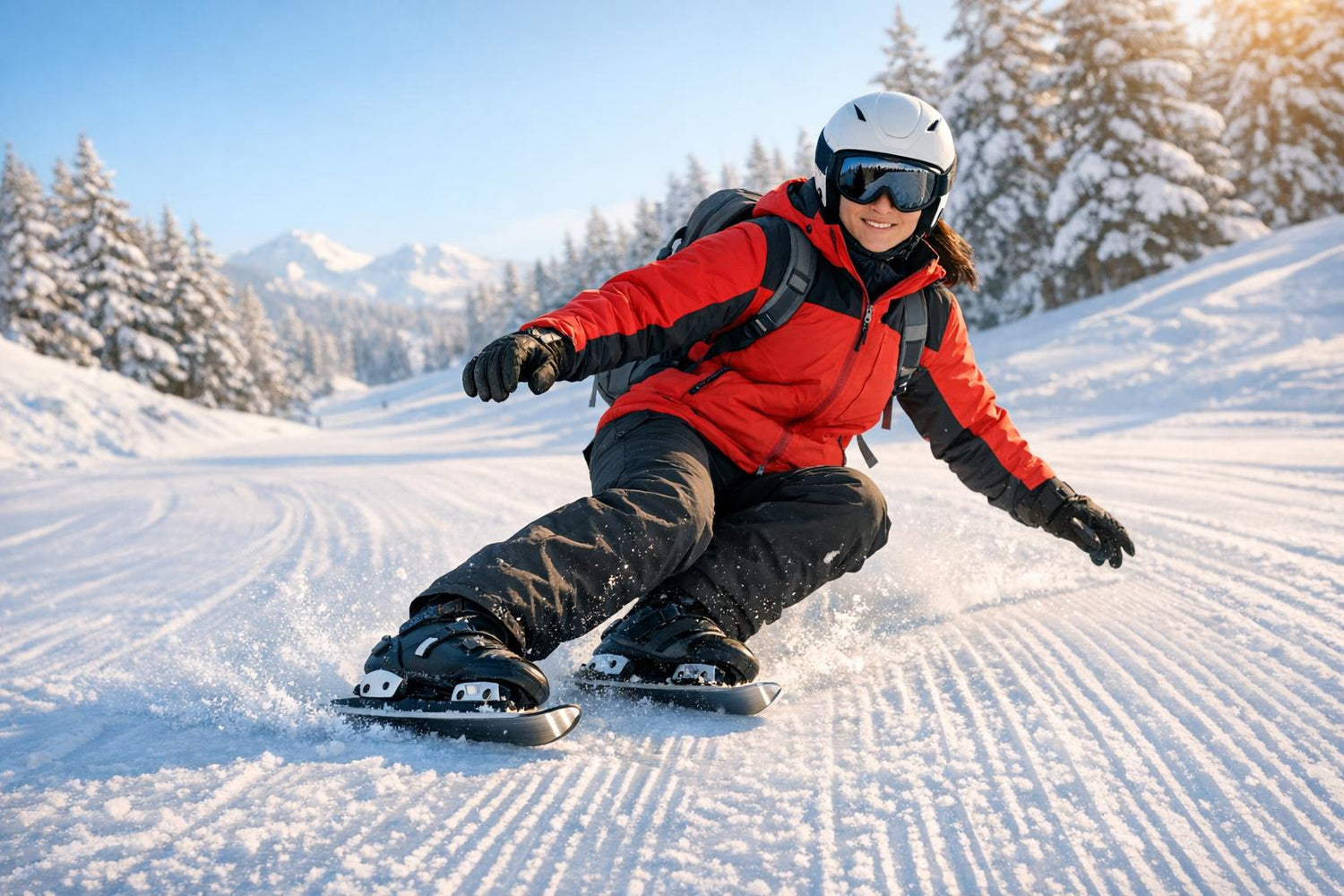
Skiskates let you glide on snow with the agility and motion of ice skating. At just 17 inches long, they’re lightweight, portable, and easy to learn - most people master the basics in minutes. Designed with steel edges and a durable wood core, they offer excellent control for carving, tricks, and sharp turns. Compatible with ski and snowboard boots, skiskates are perfect for groomed slopes, snow parks, and even hiking trails. If you’ve ever wanted the freedom of skating combined with the fun of snowy terrains, skiskates might be your next go-to gear.
Key Features:
- Size: 17 inches; fits in a backpack.
- Compatibility: Works with ski or snowboard boots (US sizes 4.5–14.5).
- Terrain: Ideal for groomed slopes and packed snow.
- Learning Curve: Quick to pick up - just minutes to get started.
- Price: $490 for the wood core model.
Skiskates make skiing feel like skating, offering a fun, portable, and dynamic way to enjoy winter sports. Whether you’re carving turns or pulling off spins, they’re a great alternative to bulky skis or snowboards.
The Problem: Traditional Winter Gear Falls Short
Challenges of Long Skis and Snowboards
Traditional winter gear, like long skis and snowboards, often limits the kind of quick, dynamic movements that make activities like ice skating so enjoyable. Standard skis, which typically range from 5 to 6.5 feet in length, make sharp twists and rapid side-to-side weight shifts - movements essential in sports like hockey - nearly impossible. Their design prioritizes forward gliding and carving, leaving little room for agility.
Transporting this bulky gear adds another layer of inconvenience. Roof racks or specialized bags are often necessary, making it harder to explore narrow hiking trails or forest paths where nimble, skating-like motions could shine. For beginners, the challenge is even greater. Long skis frequently lead to the dreaded "crossed tips" issue, a stumbling block that ultra-short gear easily avoids.
The drawbacks of traditional equipment extend beyond usability. According to 2018 data from the U.S. Consumer Product Safety Commission, skiing and snowboarding accounted for nearly 65% of winter sports injuries. The steep learning curve and design of these sports often clash with the natural balance techniques familiar to ice skaters, making them less intuitive for those accustomed to skating. And while ice skates excel on ice, their design is fundamentally incompatible with snow.
Why Ice Skates Don't Work on Snow
Ice skates, while perfect for frozen rinks, are simply not built for snowy terrain. Their thin, sharp blades are designed to cut into hard ice, providing precision and speed. On snow, however, these blades lack the necessary surface area to stay on top, causing them to sink rather than glide.
Snowy conditions also demand features that ice skates just don’t have. For instance, metal edges are essential for grip, and sintered bases are crucial for smooth gliding over varied winter surfaces. Ice skates lack both of these. Additionally, the physics of snow and ice differ significantly. Snow, with its lower density and insulating properties, doesn’t allow for the same efficient heat transfer that makes ice skating possible. In fact, water conducts heat roughly 25 times more effectively than air, which is why the mechanics that work so well on ice fail miserably on snow.
How Skiskates Replicate Ice Skating on Snow
Design Features That Enable Skating Movements
Skiskates bring the fluidity of ice skating to snowy terrain through a thoughtful combination of design elements. Measuring just 17 inches (44 cm) in length, these compact skates allow for sharp turns and sideways pushes - movements that feel second nature to ice skaters. Unlike traditional skis, which are much longer and optimized for straight-line motion, skiskates keep your feet light and free for quick, dynamic maneuvers.
The steel edges are another key feature, functioning much like ice skate blades. They provide excellent grip on snow, making it possible to perform hockey stops and execute precise, aggressive turns. A centered stance, similar to the balance required in ice hockey or inline skating, keeps your weight distributed over the middle or heels of your feet, enhancing control and stability.
Built with professional-grade ski technology, skiskates feature a sustainable wood core, cap construction, and sintered graphite bases. These materials ensure durability and speed while maintaining a compact and portable frame. Beyond their performance capabilities, skiskates are designed to be easy to carry, making them a practical choice for winter sports enthusiasts.
Lightweight and Portable Build
One of the standout features of skiskates is their portability. With a 17-inch frame that fits neatly into a standard backpack, they eliminate the hassle of roof racks or oversized ski bags. This compact design makes them perfect for accessing narrow trails and backcountry routes, as you can easily pack them away and take them wherever you go.
Their lightweight construction also reduces physical strain during long sessions. Instead of dealing with heavy, cumbersome gear, skiskates offer a responsive feel that makes quick weight shifts and agile movements nearly effortless.
Adjustable Bindings for Different Boot Types
Adding to their versatility, skiskates come with adjustable bindings that cater to a range of boot types. There are two binding models available - one for traditional ski boots and another for snowboard boots. These bindings are tool-free and can accommodate ski boots in sizes 4.5–14.5 US and snowboard boots in sizes 6–14.5 US, eliminating the need for professional adjustments.
The type of boot you choose can impact your experience on the slopes. Ski boots are ideal for those seeking maximum stability and edge control, making them perfect for carving sharp turns. On the other hand, snowboard boots offer more flexibility and comfort, which is great for tricks, jumps, or simply walking around when you're off the slopes. Both binding models include anti-slip surfaces for added grip and safety leashes to keep the skiskates securely attached during falls.
SkiSkates!!! It's like ice skating down the mountain.
sbb-itb-32287b2
Techniques and Tricks: Skating on Snow with Skiskates

Skiskates vs Traditional Snow Gear Comparison Chart
Basic Techniques for Beginners
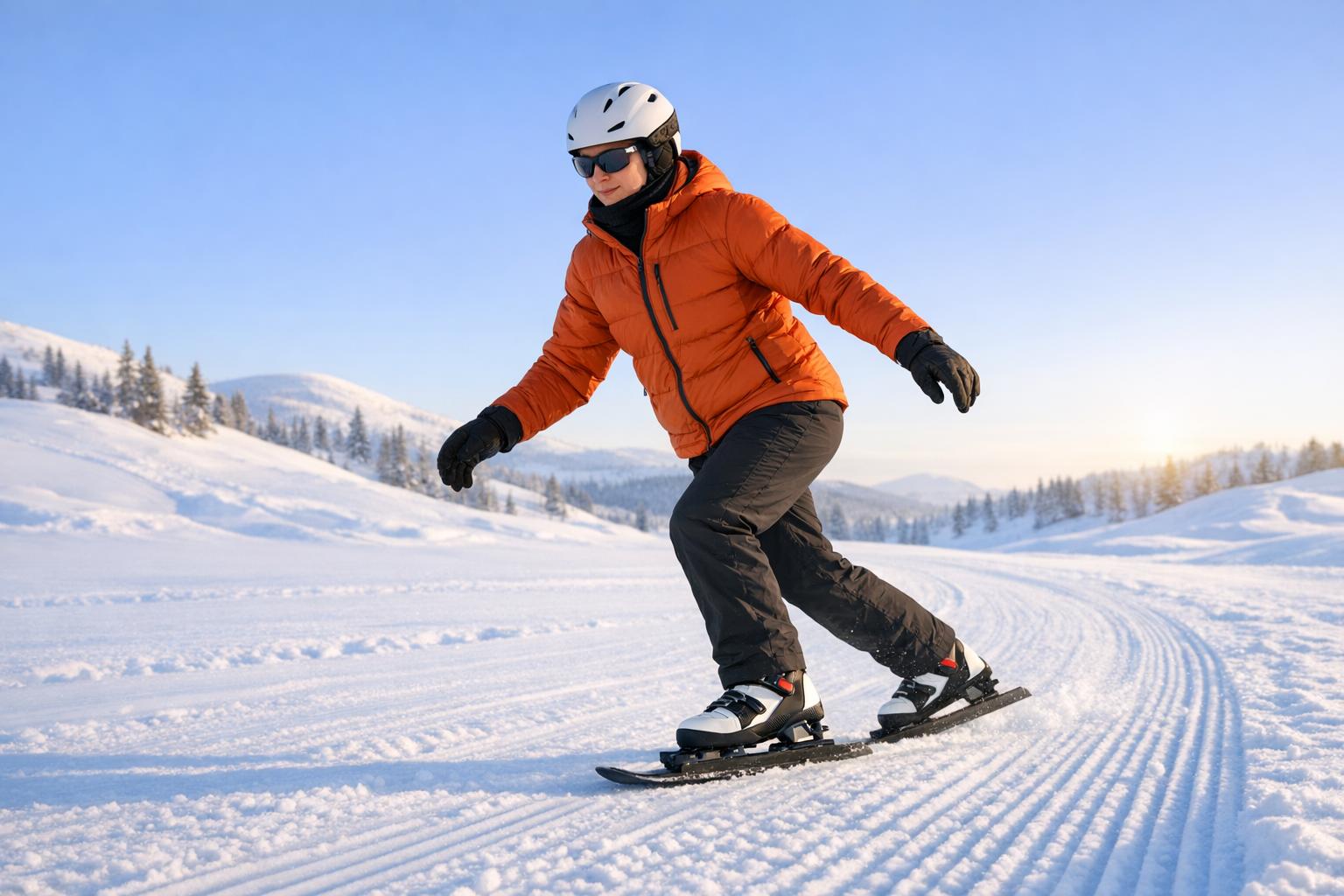
Getting started with skiskates is surprisingly quick - most people pick up the basics in about five minutes. The key to success lies in mastering your balance from front to back. Since skiskates are only 17 inches long, they offer less natural stability than traditional skis, so keeping your weight centered - or slightly leaning toward your heels - helps prevent the tips from digging into the snow.
To glide, push sideways, much like you would when ice skating or inline skating. This sideways motion allows you to move smoothly across flat terrain. For stopping, you can use a hockey stop by turning both skiskates perpendicular to the slope and distributing your weight evenly. Alternatively, you can slow down gradually with a heel brake.
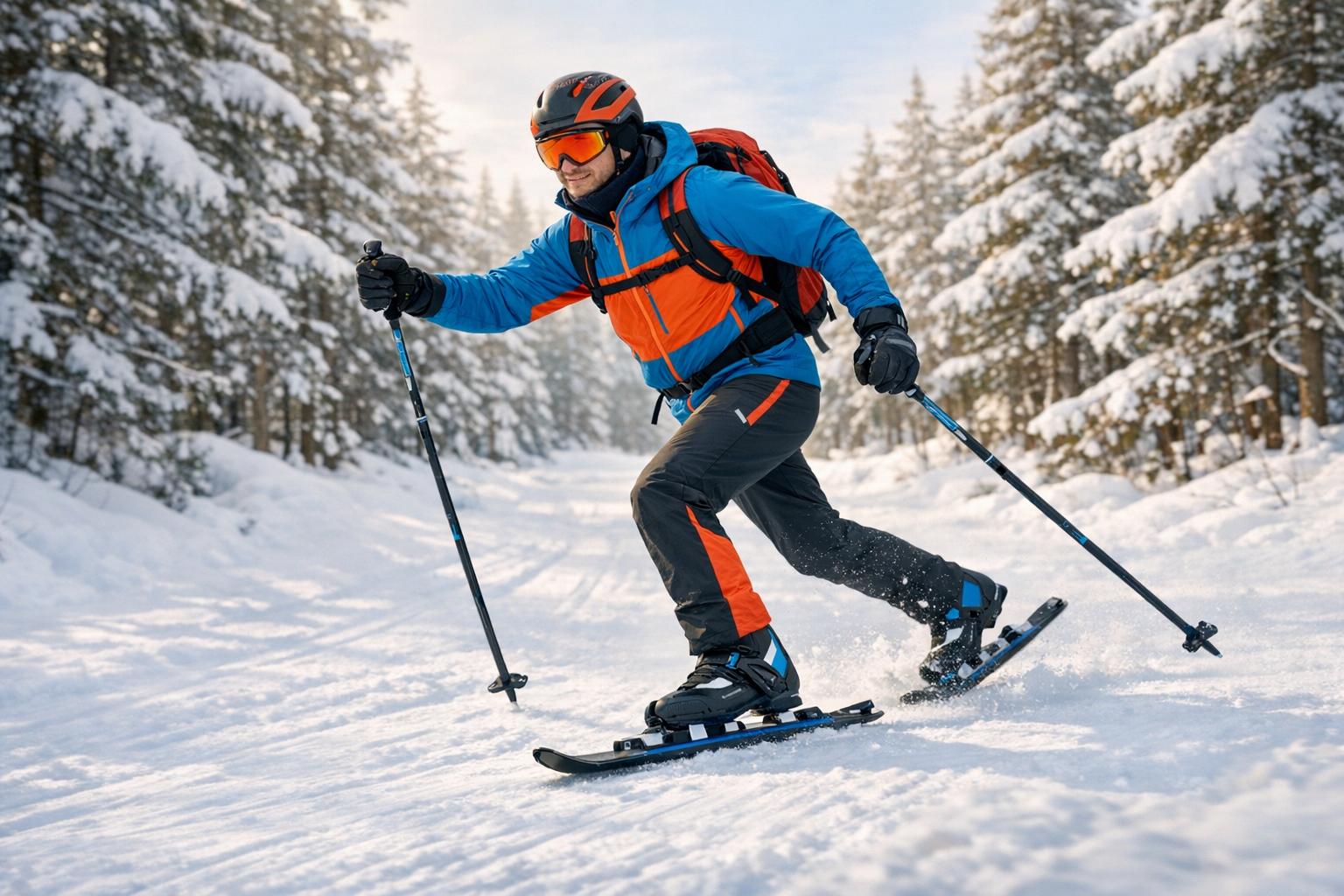
Turning feels natural with skiskates, thanks to their compact size. Maintain a low stance by bending your ankles, knees, and hips, and keep your legs shoulder-width apart. Position one foot slightly ahead of the other for better stability and control. Once you’ve nailed these basics, you’ll be ready to explore more advanced tricks.
Advanced Tricks for Experienced Users
Once you’re comfortable with the fundamentals, you can move on to tricks like spins, jumps, and even riding backward (fakie). The short 17-inch frame of skiskates makes them perfect for performing spins and jumps with ease. As Zbyněk, the founder of Snowfeet, puts it:
"In my opinion, Skiskates is the best product for slopes we developed so far. I love how easy they are to ski and skate and how many different kinds of tricks I can perform without much effort and almost no restrictions."
For jumps, focus on getting a strong "pop" by extending your knees as you take off to achieve maximum lift. When attempting grabs, avoid reaching downward, as this can throw off your balance. Instead, pull your knees toward your chest. Advanced riders can try specific tricks like the Safety grab (grabbing the outside edge near the boot), the Mute grab (crossing the skis and using the opposite hand to grab the other ski), or the Tail grab (reaching back to grab the tail of the ski).
These advanced techniques highlight how skiskates bring the finesse of ice skating to the slopes, opening up a world of creative possibilities.
Comparison Table: Skiskates vs. Standard Snow Gear
Here’s a quick breakdown of how skiskates stack up against traditional snow gear in key areas like maneuverability, portability, and terrain adaptability:
| Feature | Skiskates | Standard Skis | Snowboards |
|---|---|---|---|
| Maneuverability | Extremely high; allows skating, spins, and tight turns | Lower; limited by length and turning radius | Moderate; optimized for carving |
| Portability | Compact and lightweight; fits in a backpack (17") | Bulky; requires a roof rack or large bag | Bulky; needs a rack or carry bag |
| Learning Curve | Very short; basics learned in about 5 minutes | Moderate; usually requires lessons | Steep; takes several days to master |
| Best Terrain | Groomed slopes, snow parks, and trails | All-mountain, deep powder, and steep slopes | All-mountain, including powder |
| Boot Compatibility | Works with ski or snowboard boots | Requires rigid ski boots | Requires specific snowboard boots |
This comparison shows how skiskates stand out for their ease of use, portability, and versatility, making them an exciting option for snow enthusiasts looking for something different.
Where and How to Use Skiskates Effectively
Best Terrains for Skiskates
Skiskates are designed for agility, and their performance truly shines on specific types of terrain. They work best on groomed ski slopes with packed, corduroy-patterned snow, making them ideal for smooth rides. They’re also great for snow parks, where you can try out jumps and tricks, as well as hiking trails and forest paths, thanks to their compact 17-inch frame that easily maneuvers through narrow areas. You can even enjoy them on sledding hills or in your own backyard. Their short length makes navigating moguls much easier compared to traditional skis. However, they perform optimally on packed snow up to 4 inches deep - deeper powder can cause them to sink, so stick to groomed surfaces for the best experience.
Once you've chosen the right terrain, honing your balance and control is key to unlocking their full potential.
Tips for Maintaining Balance and Control
Balancing on skiskates requires a bit more attention than traditional skis because of their shorter length. Unlike long skis that naturally stabilize you, the compact 17-inch frame demands careful weight distribution. Keep your weight centered or slightly shifted toward your heels to avoid catching the tips in the snow. Stand with your feet shoulder-width apart, knees and ankles softly bent, and maintain a relaxed but upright posture.
For turning and stopping, mastering edge control is crucial. Slightly roll your knees and ankles inward to engage the metal edges, allowing them to grip the snow. To stop, try a hockey stop by turning both skiskates perpendicular to your direction while evenly distributing your weight across both feet. Alternatively, you can slow down gradually using the heel brake.
Once you’ve nailed the basics of balance and control, it’s important to follow safety guidelines to ensure a smooth and safe experience.
Safety and Preparation Guidelines
Start your practice on flat, groomed terrain or a gentle hill to get the hang of the skating motion before attempting steeper slopes. This helps build the core stability needed for proper balance. Always wear a helmet and wrist guards, especially when you’re just starting out.
Skiskates come equipped with safety leashes that attach them to your boots, which is essential since most models use non-release bindings. Avoid extremely steep slopes, deep powder, or ungroomed areas with large bumps or holes. To keep your skiskates performing smoothly, wax the base regularly - ideally every day during a trip - to prevent snow buildup and ensure a consistent glide. While most ski resorts have no issues with skiskates, if staff questions your gear, you can point out the metal edges, which meet standard slope requirements.
Conclusion: Skiskates Bring Ice Skating to Snow
Key Takeaways
Skiskates bring the smooth, flowing motion of ice skating to snowy terrains, filling a gap traditional winter gear often leaves behind. With a compact 17-inch design that fits in a backpack and a quick 5-minute learning curve, they make it easy to get started right away. Whether you're carving down groomed slopes, weaving through forest trails, or pulling off tricks in the snow park, these short skis excel where conventional gear might fall short. With over 50,000 users worldwide and a stellar 4.9/5 rating from more than 5,500 reviews, the growing skiskates community is a testament to their appeal.
Why not see what the buzz is about for yourself?
Try Skiskates for Your Next Winter Adventure
Skiskates offer a fresh way to experience winter sports. If you've ever dreamed of blending the nimbleness of ice skating with the thrill of mountain skiing, these innovative skis make it a reality. Crafted with durable, sustainable wood cores and steel edges, they deliver high performance while being mindful of the environment. Priced at $490 for the wood core model, they open the door to a whole new kind of winter fun.
Once you’ve nailed basic moves like hockey stops and turns, you’ll understand why Zbyněk, the founder of Snowfeet, shared his enthusiasm:
"In my opinion, Skiskates is the best product for slopes we developed so far. I love how easy they are to ski and skate and how many different kinds of tricks I can perform without much effort."
– Zbyněk, Snowfeet founder
With skiskates, you can spin, jump, and glide with a freedom that redefines how you connect with the mountain - all without needing extensive lessons.
FAQs
Are skiskates easier or harder to learn compared to traditional skis?
Skiskates might feel a bit more challenging for beginners compared to traditional skis. The key difference lies in the movement: skiskates use a side-to-side skating motion, while traditional skis rely on a forward gliding motion, which is often easier for first-timers to grasp. This is especially true on groomed trails, where the movement can feel similar to walking.
That said, if you've spent time ice skating, inline skating, or playing hockey, you're in luck. The technique for skiskates is very similar, so you might find them easier and more intuitive to use. For those without a skating background, the side-to-side motion might take a bit more practice, but it’s a lively and exciting way to enjoy the snow once you get the hang of it.
Can you use skiskates in deep snow, or are they only for groomed trails?
Skiskates are at their best on packed or groomed snow. Their specialized design ensures smooth, controlled gliding, making them a perfect fit for these conditions. However, they struggle in deep powder due to limited flotation, which can make turning and maneuvering more difficult.
To get the most out of skiskates, stick to well-maintained trails or compact snow surfaces where their performance truly stands out.
What safety tips should I follow when using Skiskates?
To have a safe and enjoyable time using Skiskates, there are a few precautions you should keep in mind. First, always wear protective gear, including a helmet and padded clothing, to help minimize the risk of injury. Before hitting the slopes, take a moment to check your Skiskates and bindings to ensure they’re in good condition and securely attached to your boots.
Stick to slopes that align with your skill level. It’s best to stay on groomed trails or areas specifically suited for Skiskates. Avoid overly steep or icy terrain, and always stay alert to your surroundings to prevent accidents or collisions. Lastly, for detailed safety advice, consult the official Skiskates user manual or the manufacturer’s guidelines.

Leave a comment
This site is protected by hCaptcha and the hCaptcha Privacy Policy and Terms of Service apply.