

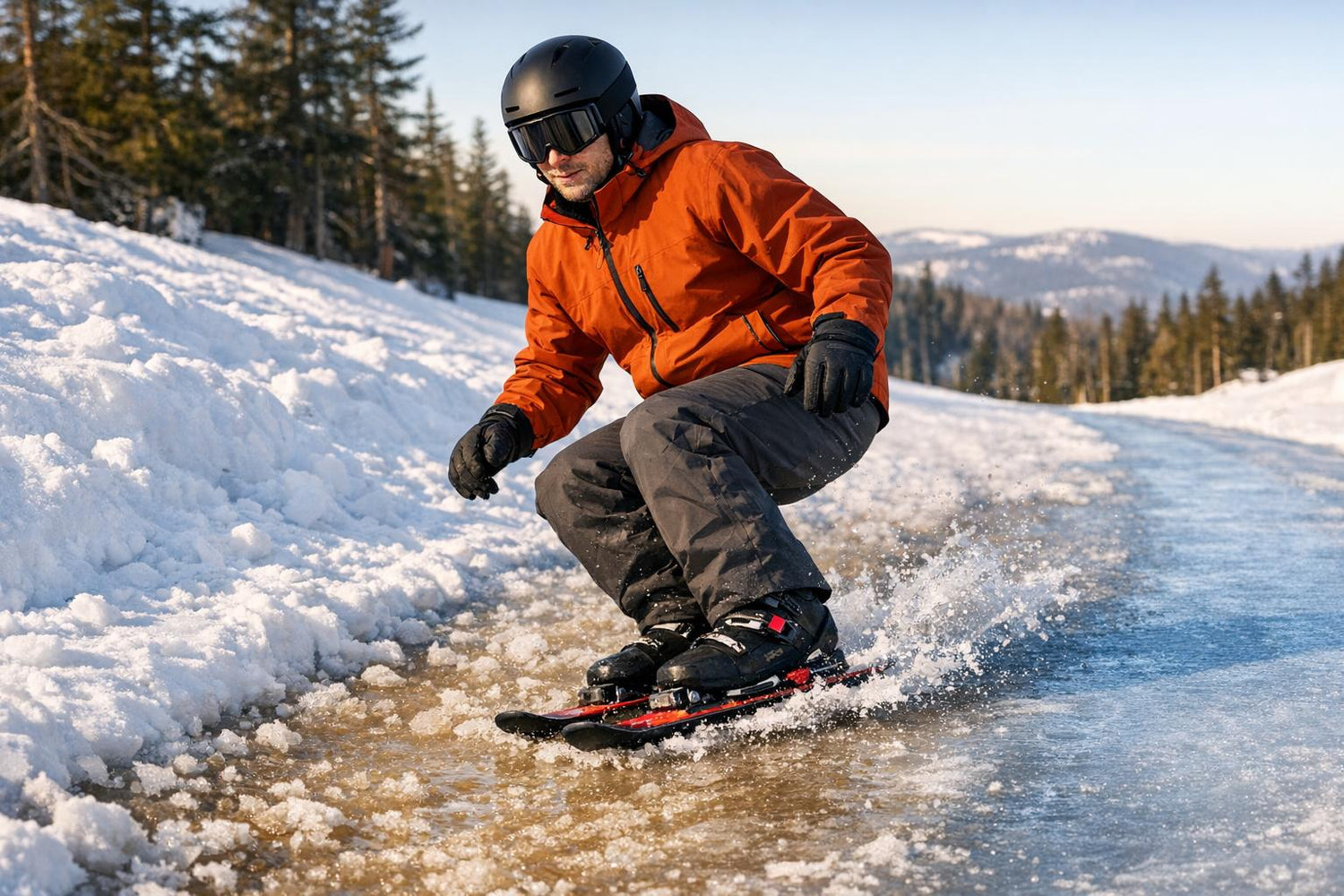
Skiskates are a solid choice for navigating challenging snow conditions like slush, icy patches, and uneven terrain. Their shorter length makes them easier to control, especially in soft or heavy snow, where longer skis may struggle. However, they aren't ideal for deep powder or hard-packed icy slopes at high speeds. Here's what you need to know:
- Slushy Snow: Skiskates glide well over wet, heavy snow, reducing suction and improving maneuverability.
- Icy or Uneven Terrain: Their compact design helps with control, but they can feel unstable at higher speeds.
- Deep Snow: Skiskates lack the surface area to float effectively, making them less suitable for deep powder.
- Mixed Conditions: A stiffer flex and proper waxing can improve performance in unpredictable snow.
Key Takeaway: Skiskates are great for moderate speeds on groomed runs or slushy spring snow but fall short in extreme conditions like deep powder or icy hardpack. Pair them with good technique and well-fitted boots for the best experience.
1. Skiskates
Performance in Challenging Snow Conditions
Skiskates are designed with a shorter length that makes them easier to handle in tricky snow conditions. This compact design is especially helpful in slushy snow, where longer skis can get bogged down by suction. The shorter profile offers better maneuverability, though you'll still need to maintain your speed and use the right wax to minimize friction effectively.
Skiskates are available in two lengths - 65 cm and 99 cm - each offering different levels of stability depending on the snow conditions.
This thoughtful design improves handling in less-than-ideal snow and highlights the importance of managing speed and friction for a smoother experience.
Speed and Friction Management
To maximize performance, tuning the flex and camber of your skiskates is crucial. The ideal setup depends on the snow conditions. In cold, dry snow, a softer, lower-camber design allows for quicker acceleration. On the other hand, wet snow benefits from a stiffer, high-camber setup to counteract suction caused by moisture. Ian Harvey from NordicSkiRacer explains:
"In such cold slow snow, addressing breakaway speed is the primary concern. Generally speaking, to achieve such long contact zones in the tip and tail, the skis need to be softer than normal as well as be a ski with a lower camber."
For mixed conditions like graupel or powder over a packed base, a stiffer flex helps reduce the "braking" effect caused by the snow’s texture.
Control and Stability
Navigating unpredictable snow conditions with skiskates requires a strong focus on control. Carving techniques are particularly effective when dealing with heavy slush. If your skis feel stuck in deep, wet snow, trying to force a pivot can make things worse. Instead, refined carving techniques can help you glide more smoothly. As Tom, an experienced instructor, advises:
"When your skis feel like they are stuck deep in the slush, and seem like they just won't turn, don't try to force your skis around by pivoting. Instead, rely on the carving that you perfected in 'better' snow conditions."
In soft, deep snow often referred to as "mashed potato" snow, a stiffer platform offers better performance. It provides a stable base by cupping the snow, making movement much easier.
sbb-itb-32287b2
2. Traditional Skis
Performance in Challenging Snow Conditions
Traditional skis are designed to excel in specific snow conditions, unlike skiskates, which are more versatile. These skis are carefully engineered to match particular snow types. For example, in icy conditions, they feature a lower camber and extended tip and tail contact zones, ensuring better handling. On the other hand, in slushy snow, a higher and stiffer camber helps reduce suction for smoother performance.
In mixed or uneven conditions, such as powder layered over a firm base, a stiffer flex can make a noticeable difference. It reduces drag at higher speeds, improving the ski's overall feel. Ian Harvey from NordicSkiRacer explains:
"The additional stiffness prevents suckiness especially in the form of a high-speed drag and in general the skis feel much more 'free' than with a traditional all around or cold ski".
Suitability Across Snow Types
The trade-off with traditional skis is their specialization. Skis optimized for cold, hard snow can struggle in wet conditions, where less base contact is crucial. Similarly, a powder-specific ski used on firm snow may feel unstable and less effective.
For snow mixed with graupel or dirt, a stiffer ski helps reduce drag and maintain performance. Ian Harvey highlights the risks of using the wrong flex in wet conditions:
"If too soft, these skis are a disaster in speed and handling".
While this specialization allows for peak performance in specific scenarios, it also means traditional skis lack the adaptability that skiskates offer in unpredictable or varied snow conditions.
Why Skiing Heavy, Wet Spring Snow Feels So Hard to Ski Quick Tip with Snow Camps Europe
Pros and Cons
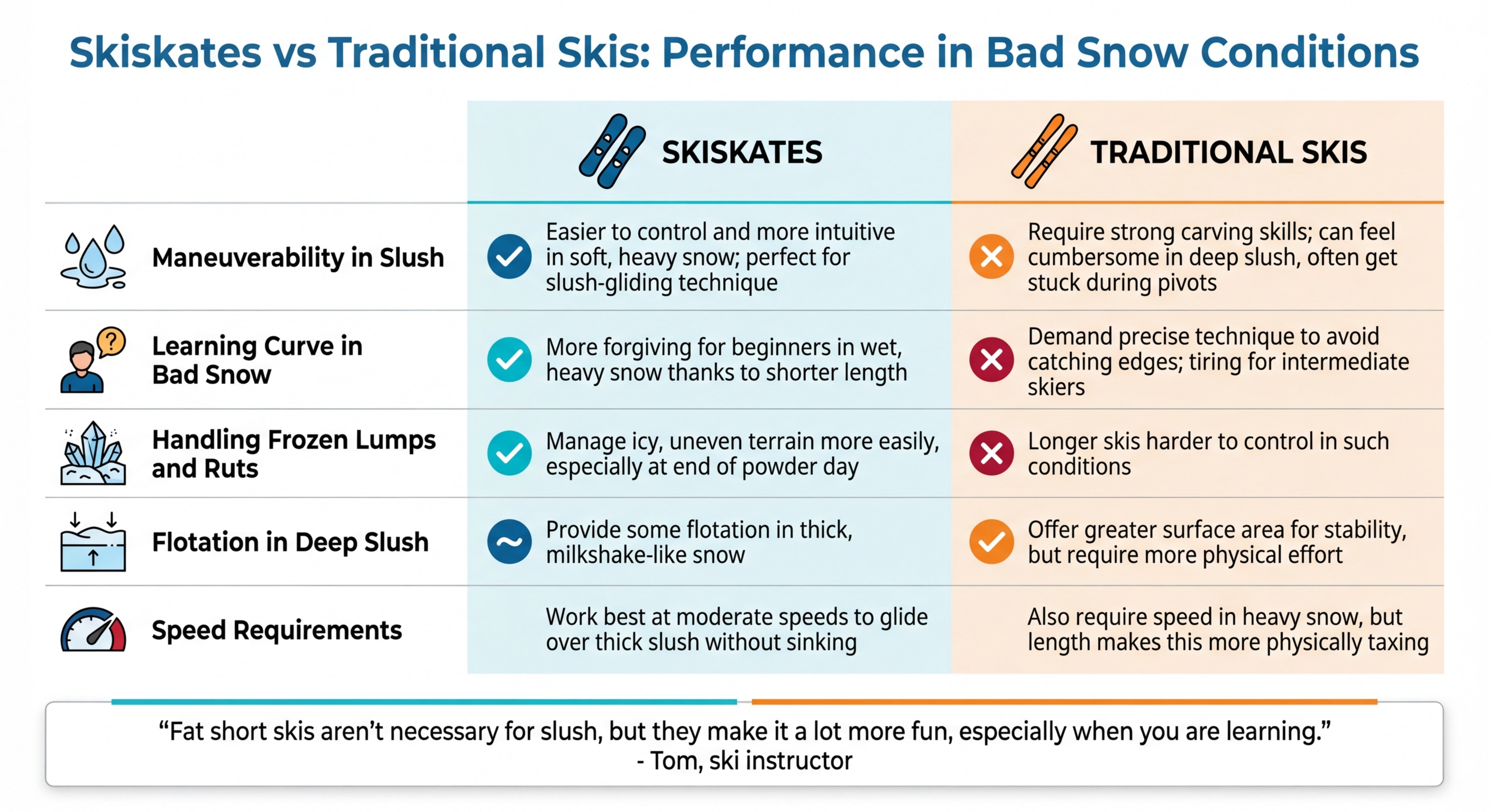
Skiskates vs Traditional Skis Performance Comparison in Different Snow Conditions
Choosing between skiskates and traditional skis can depend heavily on the conditions and your skill level. Here's a side-by-side look at how they stack up:
| Feature | Skiskates | Traditional Skis |
|---|---|---|
| Maneuverability in Slush | Easier to control and more intuitive in soft, heavy snow; perfect for the "Firngleiten" (slush-gliding) technique | Require strong carving skills and can feel cumbersome in deep slush, often getting stuck during pivots |
| Learning Curve in Bad Snow | More forgiving for beginners in wet, heavy snow thanks to their shorter length | Demand precise technique to avoid catching edges, which can be tiring for intermediate skiers |
| Handling Frozen Lumps and Ruts | Manage icy, uneven terrain more easily, especially at the end of a powder day | Longer skis, like the older "2-meter planks", are harder to control in such conditions |
| Flotation in Deep Slush | Provide some flotation in thick, milkshake-like snow | Offer greater surface area for stability, but at the expense of added physical effort |
| Speed Requirements | Work best at moderate speeds to glide over thick slush without sinking | Also require speed in heavy snow, though their length makes this more physically taxing |
This breakdown shows how skiskates can make navigating challenging snow conditions easier compared to their traditional counterparts.
"Fat short skis aren't necessary for slush, but they make it a lot more fun, especially when you are learning." – Tom, ski instructor
Tips for Using Skiskates in Bad Snow Conditions
When snow conditions take a turn for the worse, these tips can help you get the most out of your skiskates and keep your experience enjoyable.
Keep a balanced, slightly forward stance. In slushy snow, leaning back can cause the tails to sink, making it harder to steer. Distribute your weight evenly across both feet to help the skis glide more smoothly over wet or heavy snow.
Prioritize control over speed. On icy or uneven terrain, stability and grip are far more important than chasing velocity. Techniques like short pivot turns or jump turns are especially effective when tackling chopped-up snow or semi-mogulled runs. Trying to carve through unpredictable debris often leads to frustration.
Recognize the limits of skiskates. These are not ideal for deep powder. Their short, narrow design doesn't provide the float needed to glide over soft snow, so you'll end up sinking instead. Similarly, they're less stable on hardpack or icy surfaces at high speeds, where their shorter length can lead to twitchiness and increased vibration. Deep crud or heavily chopped snow can also make them feel unstable due to their narrow profile.
Invest in a precise boot fit. With skiskates, every movement directly impacts your edges, so having well-fitted boots is crucial. Custom-fitted boots, if available, can enhance your control significantly. If you frequently deal with mixed snow conditions, consider skates with metal components like Titanal to reduce vibrations and improve performance on rough surfaces.
Pick the right terrain. In challenging conditions, stick to groomed runs, snow parks, or moderate slopes. Save the deep powder and high-speed hardpack for longer, more specialized skis that are designed to handle those situations better.
Conclusion
Skiskates shine in certain tricky conditions but aren't the best choice for every scenario. Their short, agile design offers better control in slushy snow. As ski instructor Tom puts it, "Fat short skis aren't necessary for slush, but they make it a lot more fun, especially when you are learning". Success with skiskates often comes down to technique, including proper waxing and carving.
That said, skiskates have their downsides. In very soft, deep snow, their smaller surface area can cause them to sink instead of float. On icy or hard-packed terrain, their short length may lead to instability and increased vibration at higher speeds.
If you stick to groomed runs, snow parks, or occasionally hit slushy spring snow, skiskates could be a fun and practical choice. However, for those who frequently face deep powder or icy conditions, other gear might serve you better.
FAQs
What wax works best for slushy snow on skiskates?
The F1 Summer Slush Graphite wax is the top choice for skiskates when dealing with slushy snow. This universal, all-temperature wax is tailored for spring and summer conditions, offering excellent performance on wet, slushy surfaces. It helps ensure a smoother and more consistent glide, even in tough conditions.
Which skiskate length (65 cm or 99 cm) is better for icy runs?
The 65 cm skiskate performs well on icy runs due to its shorter length, which offers improved maneuverability and control. This design helps users handle tricky, icy terrain with greater precision and ease.
How can I improve stability on skiskates at higher speeds?
To stay steady on skiskates at higher speeds, prioritize edge control and maintain proper body positioning. Incorporate drills like one-foot glides and figure eights into your routine to sharpen your balance and control. Focus on perfecting your push-offs, applying the right amount of edge pressure, and smoothly transferring your weight. Regular practice with these techniques will boost your ability to stay balanced and in control during fast descents.


Leave a comment
This site is protected by hCaptcha and the hCaptcha Privacy Policy and Terms of Service apply.