
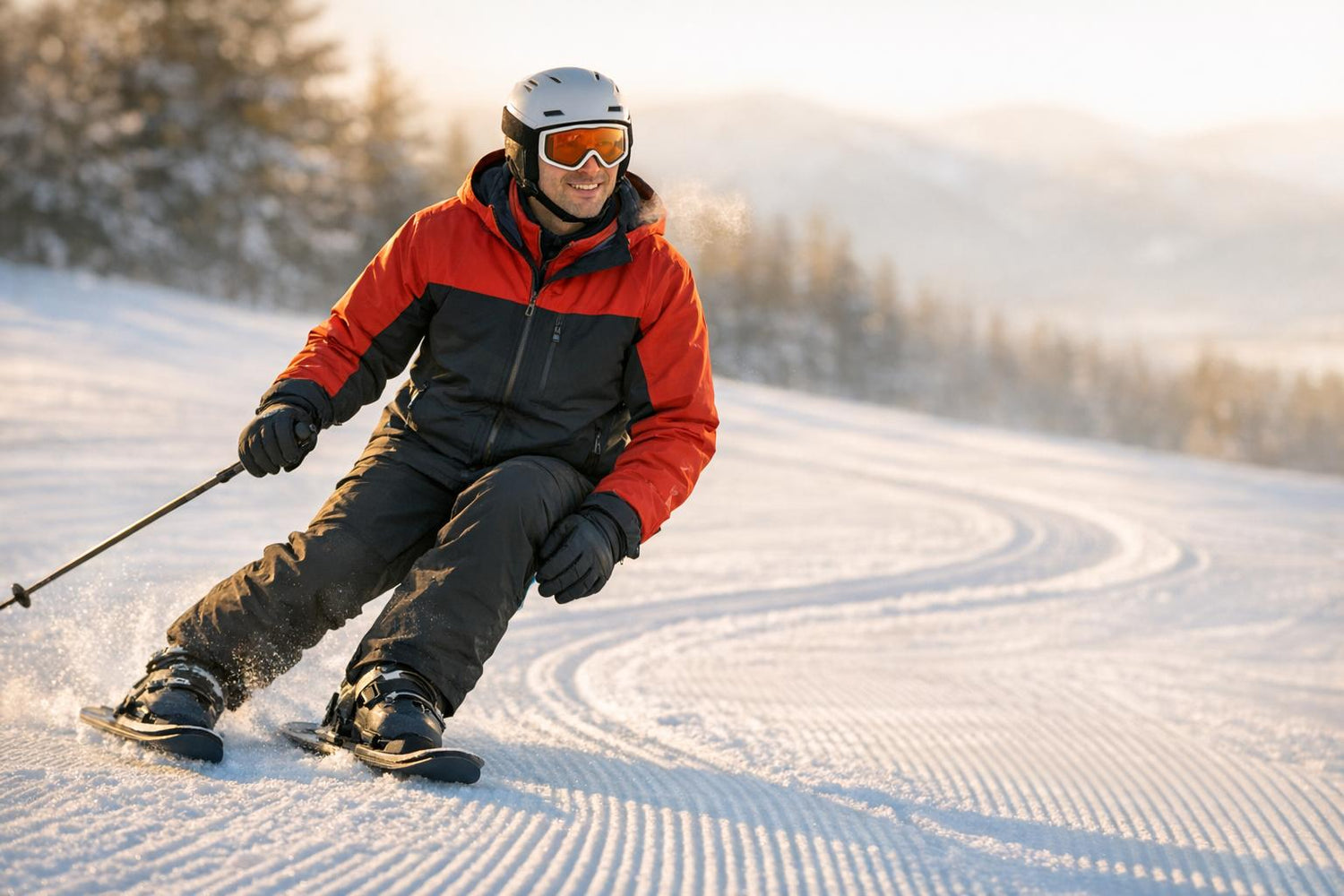
Skiskates, the shortest skis for slopes, are designed to reduce physical strain compared to regular skis. Their compact, lightweight build makes them easier to maneuver and carry, while also decreasing knee strain and muscle fatigue. Regular skis, on the other hand, require more energy due to their longer length, heavier weight, and higher physical demands for stability and control. Here's why skiskates are less tiring:
- Length: Skiskates are shorter, allowing for easier turns and quicker energy transfer.
- Weight: Their lightweight design reduces effort during use and transport.
- Knee Strain: Skiskates mimic a skating motion, reducing impact on knees.
- Portability: They’re small enough to fit in a backpack, unlike heavier regular skis.
Quick Comparison
| Feature | Skiskates | Regular Skis |
|---|---|---|
| Length | 15-26 inches | 5-6 feet |
| Weight | Lightweight, portable | Heavy, harder to carry |
| Physical Effort | Low knee strain, easier turns | Higher strain, more effort |
| Terrain | Slopes, trails, parks | Best for groomed slopes |
Skiskates are a practical choice for anyone seeking comfort and reduced physical effort on the slopes.
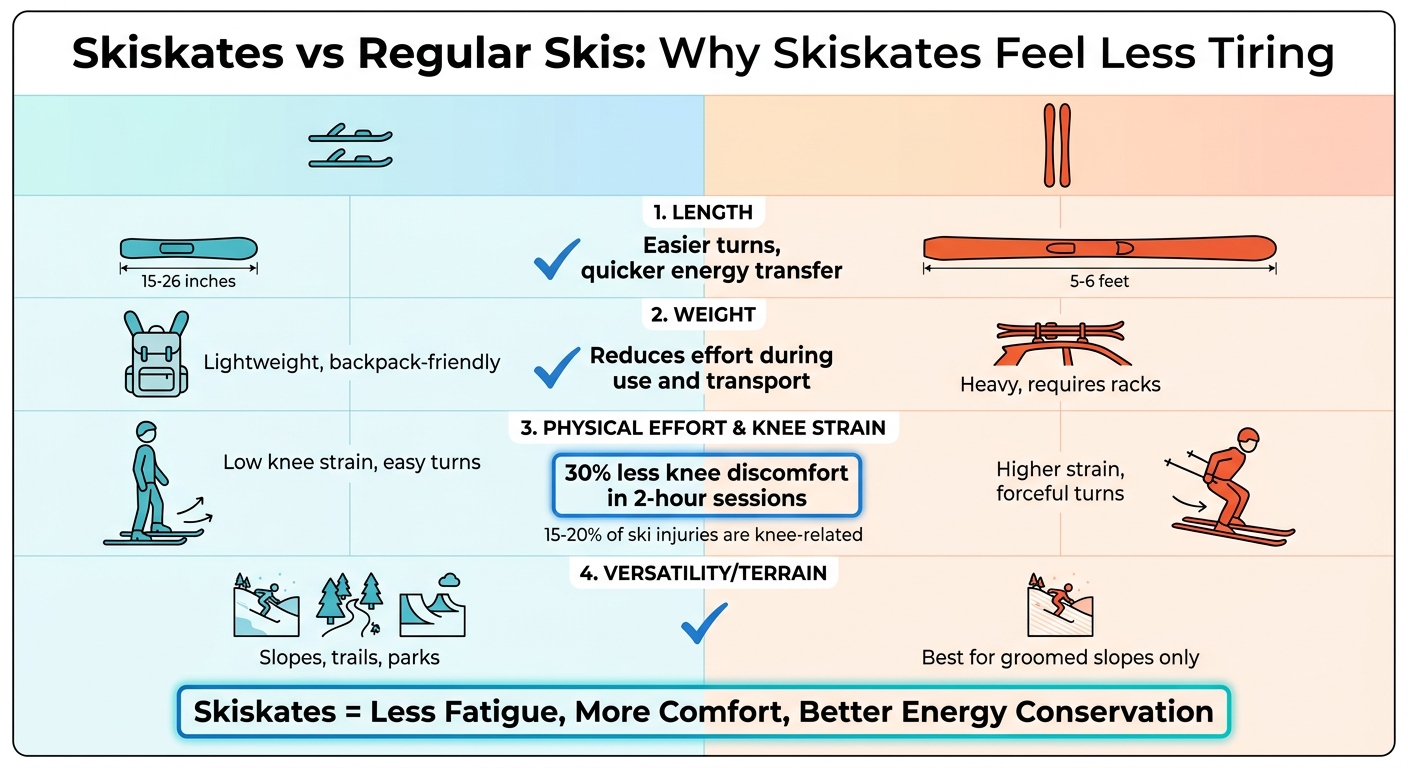
Skiskates vs Regular Skis: Physical Effort and Design Comparison
1. Skiskates
Length and Maneuverability
Skiskates are designed with a shorter length, which means they offer more direct energy transfer. This gives you better control, especially on steeper slopes. Their compact size makes it easier to navigate tight spots and respond quickly to changes in terrain, all without the added effort that comes with longer equipment. This can help reduce fatigue, keeping you sharp and ready for more time on the slopes.
Weight and Portability
One of the standout features of skiskates is their lightweight build. This reduces the physical effort required during extended sessions, making every movement feel less burdensome. Plus, they’re small enough to fit into a backpack, so carrying them to and from the slopes is hassle-free. This portability not only saves you energy but also helps protect your knees by reducing strain before you even hit the snow.
Knee Strain and Physical Effort
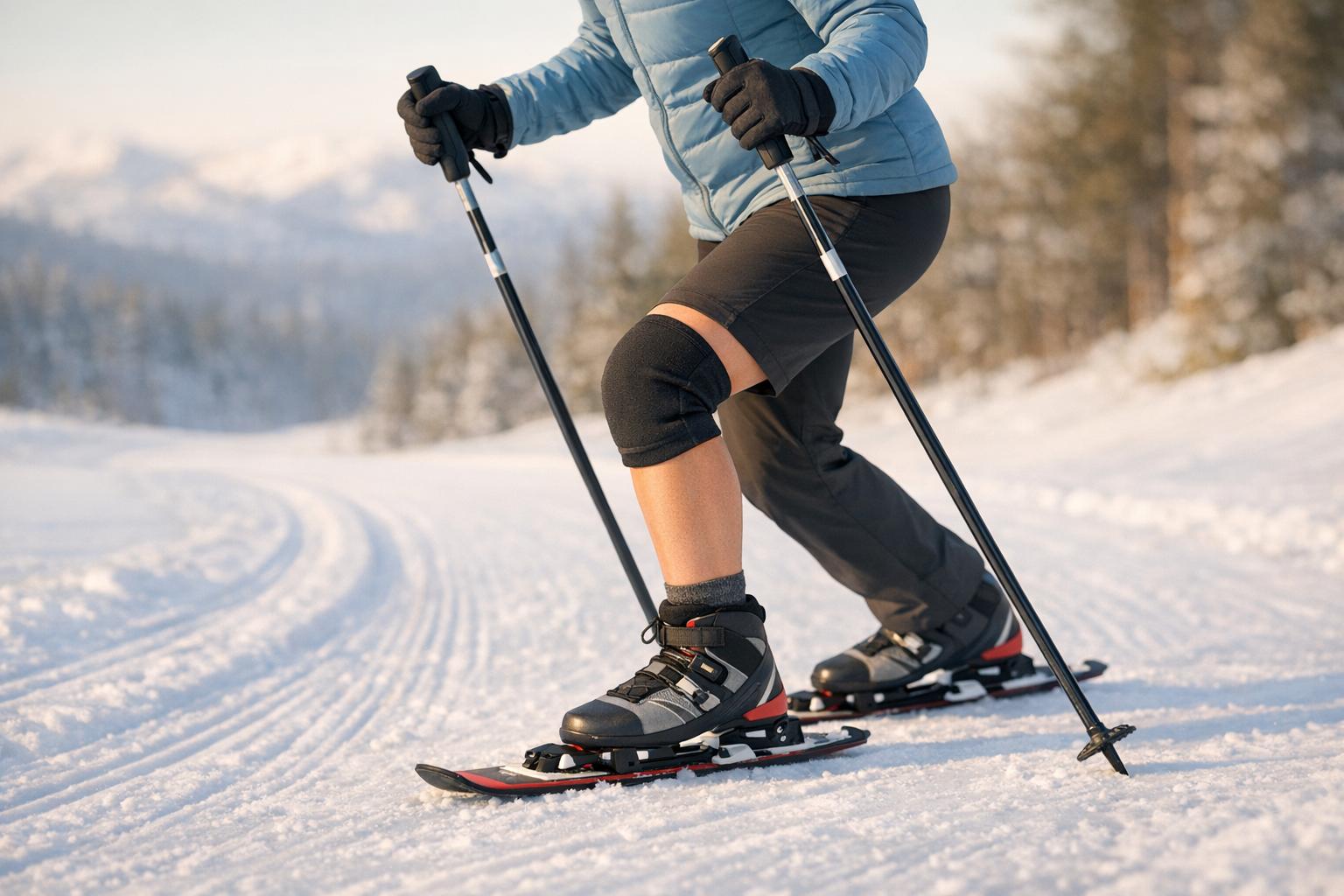
Knee injuries are a common concern in skiing, accounting for 15% to 20% of all skiing-related injuries, with MCL injuries being the most frequent. Skiskates are designed to mimic the natural motion of skating, encouraging an upright stance and evenly distributing weight. This helps reduce the impact on your knees, especially during turns and stops.
"Skiskates provide a more natural skating motion that significantly reduces the impact on the knees, making them a great option for recreational skiers."
- Dr. Emily Johnson, Sports Medicine Specialist, Ski Injury Prevention Institute
A 2023 study found that skiskate users experienced 30% less knee discomfort compared to traditional ski users during a two-hour session. These features highlight how skiskates combine performance with reduced physical strain, making them a smart choice for anyone looking for a more comfortable experience on the slopes.
sbb-itb-32287b2
2. Regular Skis
Traditional skis, unlike skiskates, require consistent muscle engagement to balance both stability and control.
Length and Maneuverability
Regular skis are built for stability at higher speeds, thanks to their longer length. For beginners, skis typically reach chin height, while experts often use skis that extend to head height. However, this added length can make navigating tight spaces - like moguls or dense tree runs - more challenging. The concept of swing weight plays a big role here. Longer and heavier skis demand more energy to pivot quickly, making rapid direction changes a workout. Luke Koppa, Editor, explains it well:
The longer version is generally going to be more stable at high speeds, while the shorter length is generally going to be easier to ski at slower speeds.
This means every turn takes a toll on your muscles, especially during long sessions, leading to quicker fatigue.
Weight and Portability
The weight of traditional skis adds another layer of physical demand. An improper stance - like leaning too far back - puts extra strain on the quadriceps, forcing stabilizer muscles to pick up the slack. If your core and glutes aren't strong enough to maintain proper form, your legs end up doing the heavy lifting, which drains energy faster.
Knee Strain and Physical Effort
On technical terrain, such as moguls, traditional skis require a forward-leaning stance, which increases the physical effort needed. Luke Koppa emphasizes this point:
In general, the stiffer and heavier a ski is, the more stable it will be in rough conditions at speed, but the more demanding it will be in moguls and tight spots.
All these factors highlight why traditional skis demand more physical energy, especially over extended periods. In comparison, the lighter, shorter design of skiskates offers a more efficient alternative that helps reduce fatigue.
Advantages and Disadvantages
The table below outlines the key differences between skiskates and regular skis, focusing on how their design impacts energy use and overall experience on the slopes.
| Feature | Skiskates | Regular Skis |
|---|---|---|
| Length | Short (15-26 in) | Long (5-6 ft) |
| Weight | Lightweight, backpack-friendly | Heavy, requires racks |
| Physical Effort | Low knee strain, easy turns | Higher strain, forceful turns |
| Versatility | Works on slopes, trails, parks | Best for groomed slopes only |
Skiskates stand out for their compact and lightweight design, which reduces knee strain and makes turning much easier. Their adaptability allows users to transition seamlessly between slopes, trails, and snow parks, unlike traditional skis that are primarily suited for groomed slopes. These features make skiskates a great option for conserving energy and staying comfortable during longer sessions, offering a more user-friendly alternative to regular skis.
Conclusion
Skiskates are designed to reduce physical strain while helping you maintain proper posture during your runs. By promoting a centered stance, they evenly distribute weight, which minimizes fatigue and eases the muscle strain that often comes with longer sessions. As SkyTechSport explains, "Leaning back = More strain on quads = Faster fatigue". Thanks to their compact and lightweight design, skiskates naturally encourage better posture and smoother turns, making it easier to conserve energy whether you're navigating groomed slopes, trails, or snow parks.
Their adaptability means you can pick terrain that suits your energy level without adding unnecessary strain. Plus, you’ll spend less time lugging around heavy equipment and more time enjoying the mountain.
Good form is key to maximizing your experience. Keeping your knees bent and your weight centered over your skiskates not only reduces physical effort but also makes your time on the slopes more enjoyable. Skiskates combine energy efficiency with the thrill of winter sports, creating a smoother, more exhilarating ride.
FAQs
Are skiskates easier to learn than skis?
Skiskates are often crafted with beginners in mind, thanks to their shorter length, lighter build, and ergonomic design. These features make them easier to handle, reducing physical strain and enhancing control. Compared to traditional skis - which demand more effort to balance and coordinate over longer surfaces - skiskates provide a smoother, less intimidating learning experience for those new to the slopes.
Do skiskates need special boots or bindings?
Skiskates don’t need any special boots or bindings to use. That said, the bindings should match your boot soles, just like with traditional skis, to ensure they’re safe and perform as they should.
What terrain and snow conditions are skiskates best for?
Skiskates are designed to excel across a range of terrains and snow conditions, from crust to powder and everything in between. Thanks to their shorter length and improved agility, they offer excellent control, making it easier to handle transitions between different surface types.

Leave a comment
This site is protected by hCaptcha and the hCaptcha Privacy Policy and Terms of Service apply.