

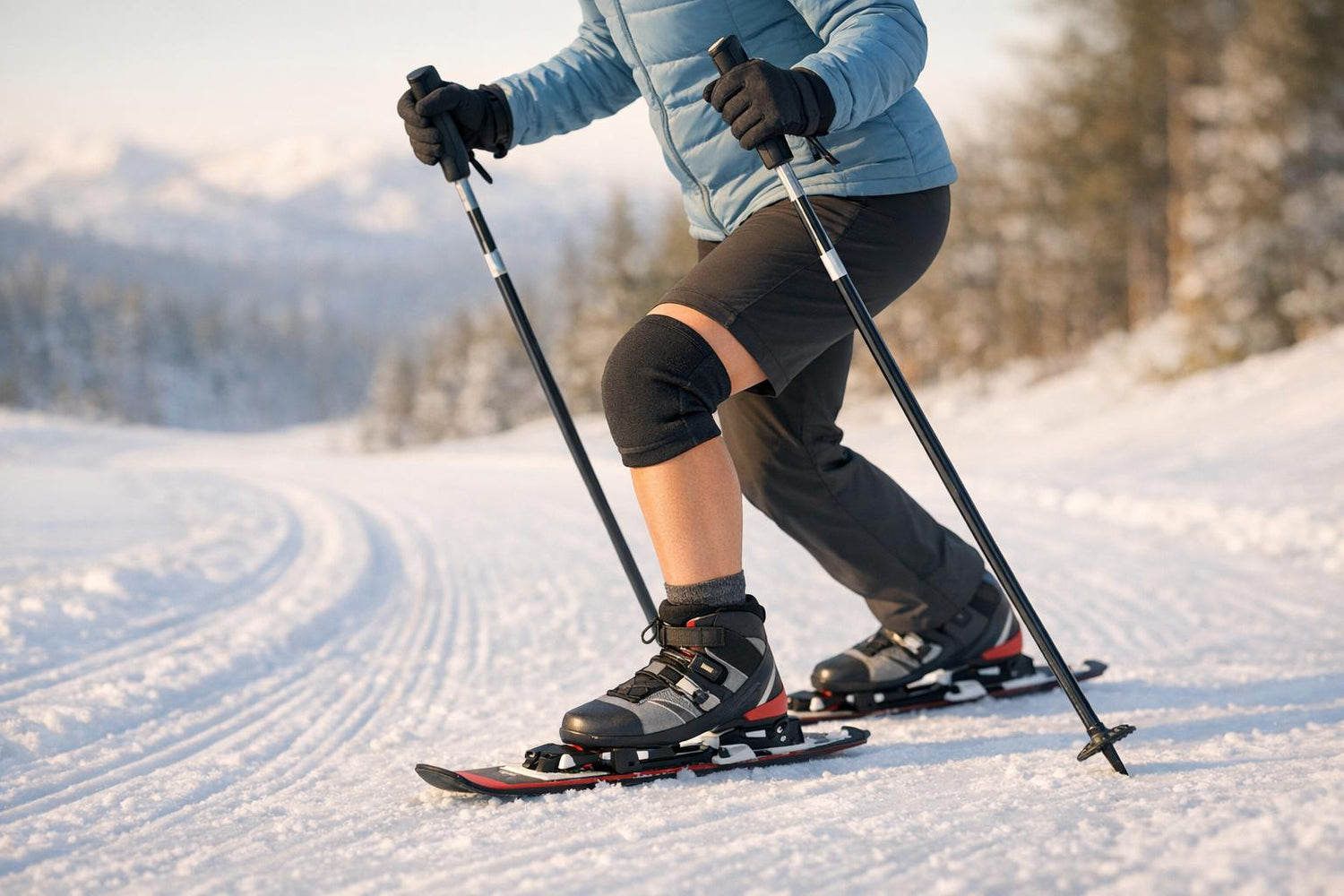
Skiskating can be a safer winter sport for people with knee issues. Unlike traditional skis, skiskates are shorter and lighter, reducing strain on sensitive knee joints. They minimize twisting forces, lower impact, and enhance control, making them a great option for those with ACL, MCL, or meniscus concerns.
Key takeaways:
- Shorter length reduces torque: Skiskates eliminate the leverage effect of long skis, protecting ligaments.
- Lightweight design improves control: Easier to maneuver, especially when muscles are fatigued.
- Shock absorption: Compact size spreads impact more evenly, reducing stress on knees.
- Proper form and gear matter: Bent knees, aligned posture, and pole use can further reduce strain.
Popular skiskate models include the budget-friendly Snowfeet Basic ($190.00) and advanced Snowfeet Skiblades 99 CM ($590.00), each tailored for specific needs. Pairing these with strength exercises and balance training can help you enjoy winter sports without knee pain.
Why Traditional Skiskating Strains Your Knees
How Longer Skis Increase Knee Stress
Traditional skis aren't just tools for gliding over snow - they're also potential stressors for your knees. Picture them as long levers attached to your feet. When the tip or tail catches the snow during a turn, that added length amplifies the rotational force directed toward your knee joint. The greater the distance from your boot to the ski's end, the more torque is applied to your ligaments and cartilage.
This issue becomes even worse with wider skis. Research by Martin Zorko highlights that skis wider than 90 millimeters alter how ground reaction forces (GRF) interact with your body. Instead of channeling force vertically through the knee, wider skis shift it sideways. Zorko explains:
A narrow ski focuses GRF directly from the center of the foot toward the knee joint. Meanwhile, a wide ski moves GRF in a mediolateral direction against the knee.
This sideways torque places your knee under unnatural stress, which can wear down the joint over time. Additionally, wider skis often encourage an upright posture, reducing muscle engagement. When muscles aren't actively supporting the knee, connective tissues like the ACL and MCL are left to absorb forces they aren't built to handle. The problem is especially pronounced on hard-pack snow, where the sideways forces are fully transferred to the knee. It takes about 30 cm (12 inches) of fresh powder to reduce these harmful effects.
These mechanical factors directly contribute to the knee injuries frequently seen in skiskating.
Common Knee Problems From Skiskating
Knee injuries make up about one-third of all skiing injuries, with the ACL being the most vulnerable. A study of recreational skiers revealed that every knee injury patient had some degree of ACL involvement, and 64.5% also experienced damage to other knee structures.
The most common injuries result from specific mechanical failures. Forward-twisting falls - where an edge catches, and your body rotates over a planted ski - account for 51% to 54% of ACL tears in modern skiing. This "slip-catch" mechanism generates valgus stress (an inward knee collapse) combined with external rotation, often exceeding the ligament's limits. Other frequent problems include meniscus tears caused by quick, twisting direction changes, patellar tendonitis from repetitive impacts, and patellofemoral pain (commonly called skier's knee) linked to improper form.
| Injury Type | Primary Cause | Structure Affected |
|---|---|---|
| ACL Tear | Forward-twisting fall with edge-catch | Anterior Cruciate Ligament |
| Meniscus Tear | Quick direction changes with twisting | Knee cartilage |
| Patellar Tendonitis | Repetitive impact and pressure | Tendon connecting quad to shin |
| Skier's Knee | Improper form and overuse | Patellofemoral joint |
Most of these injuries tend to occur later in the day, when fatigue sets in. As muscles tire, form deteriorates, and passive joint structures take over for active muscle support. This leaves you more vulnerable to injury, especially during awkward or poorly executed turns. Recognizing these risks underscores the need for equipment that reduces strain on your knees.
sbb-itb-32287b2
How Short Skiskates Protect Your Knees
Less Torque and Impact on Joints
Short skiskates tackle one of the biggest challenges of traditional skis: leverage. With longer skis, if the tip or tail catches in the snow, the extra length acts like a lever, putting unnecessary strain on your knees. Skiskates, with their compact size, eliminate most of this leverage, meaning less rotational force is transferred to your ligaments and cartilage.
The smaller design also reduces rotational mass, which directly lowers the strain on key knee ligaments like the ACL and MCL - those most affected by twisting motions. Traditional skis can sometimes force your knees into awkward inward positions, especially during an edge-catch. Skiskates, on the other hand, give you more precise control over your foot placement without the "self-steering" effect that longer skis sometimes create. This not only improves control but also reduces the forces that can lead to knee injuries.
Lighter Weight Means Better Control
The lightweight nature of skiskates is a game-changer, especially for anyone concerned about knee health. Their reduced weight allows for quicker adjustments, helping you maintain control without the added challenge of managing heavy equipment. This can prevent those critical moments where your knee might be forced to overcompensate. This extra responsiveness becomes even more important when fatigue sets in, which is when most knee injuries tend to occur.
Pairing skiskates with softer-flex boots enhances this effect. As noted by one ski equipment guide:
Softer boots are easier to flex, making them more comfortable for beginners or those who ski at slower speeds.
This combination of light skiskates and more forgiving boots reduces the muscular effort needed to stay in control. By keeping your supporting muscles engaged longer, it prevents excess strain from being dumped onto your joints.
Better Shock Absorption
Beyond reducing torque and improving control, short skiskates are excellent at managing impact forces. Their compact design spreads shock more evenly across your foot and ankle, rather than sending it up through a long ski into your knee. Whether you're landing a small jump or navigating moguls, the shorter platform helps dissipate impact forces more efficiently.
Choosing the right equipment can make this shock absorption even better. For instance, boots with appropriate flex ratings play a key role. It's worth noting that boot plastic stiffens in cold weather, so a boot that feels flexible in the store might feel much stiffer on the slopes. Testing the flex in person - standing upright and pushing forward to see how the boot supports your movement - can help ensure you're getting the protection your joints need when temperatures drop.
Skiing Smart as You Age: Protect Your Knees and Enjoy the Slopes Longer!
Best Skiskates Models for Knee Problems
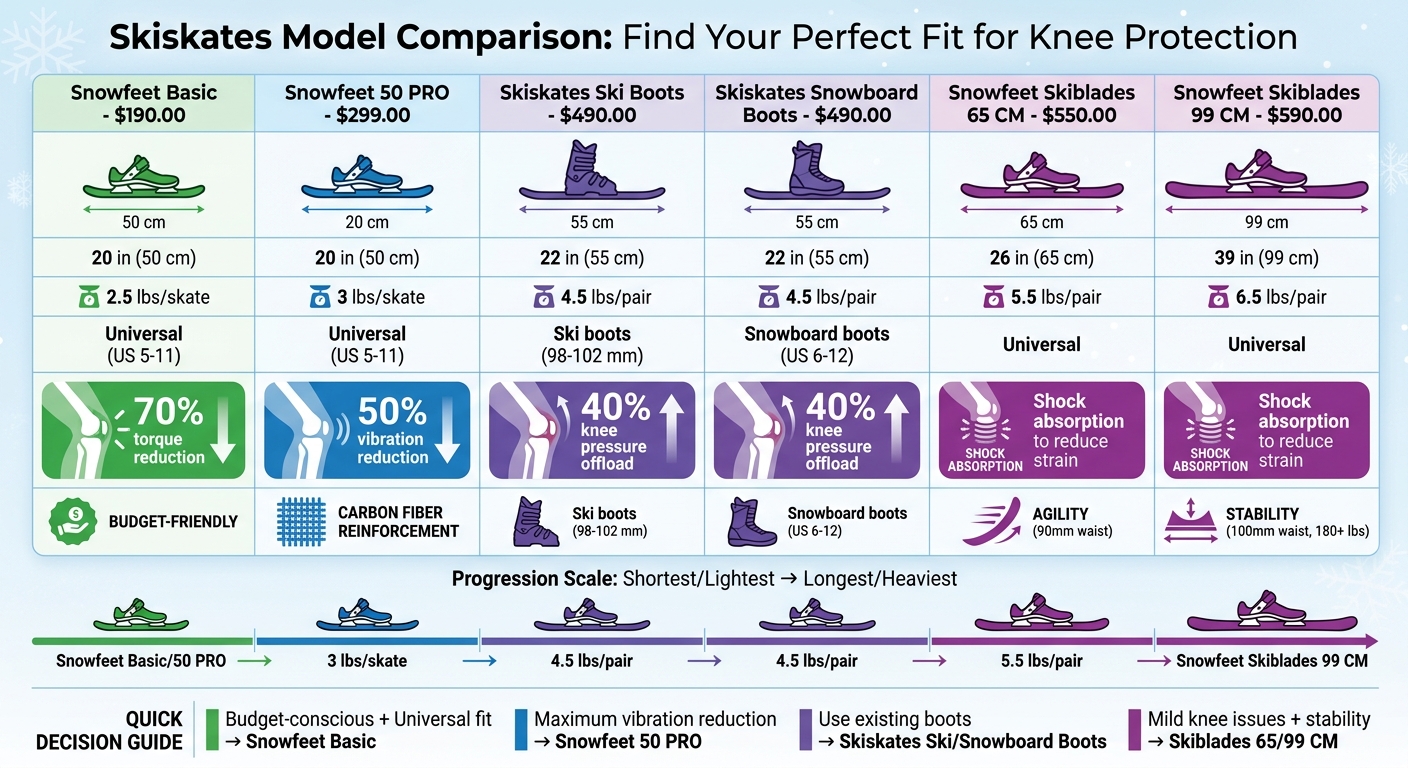
Skiskates Model Comparison for Knee Protection
Reducing torque and impact on your knees is crucial for staying safe and comfortable during winter sports. These Skiskates models are designed with joint protection in mind, making them a great choice for people with knee concerns.
Snowfeet Basic ($190.00)
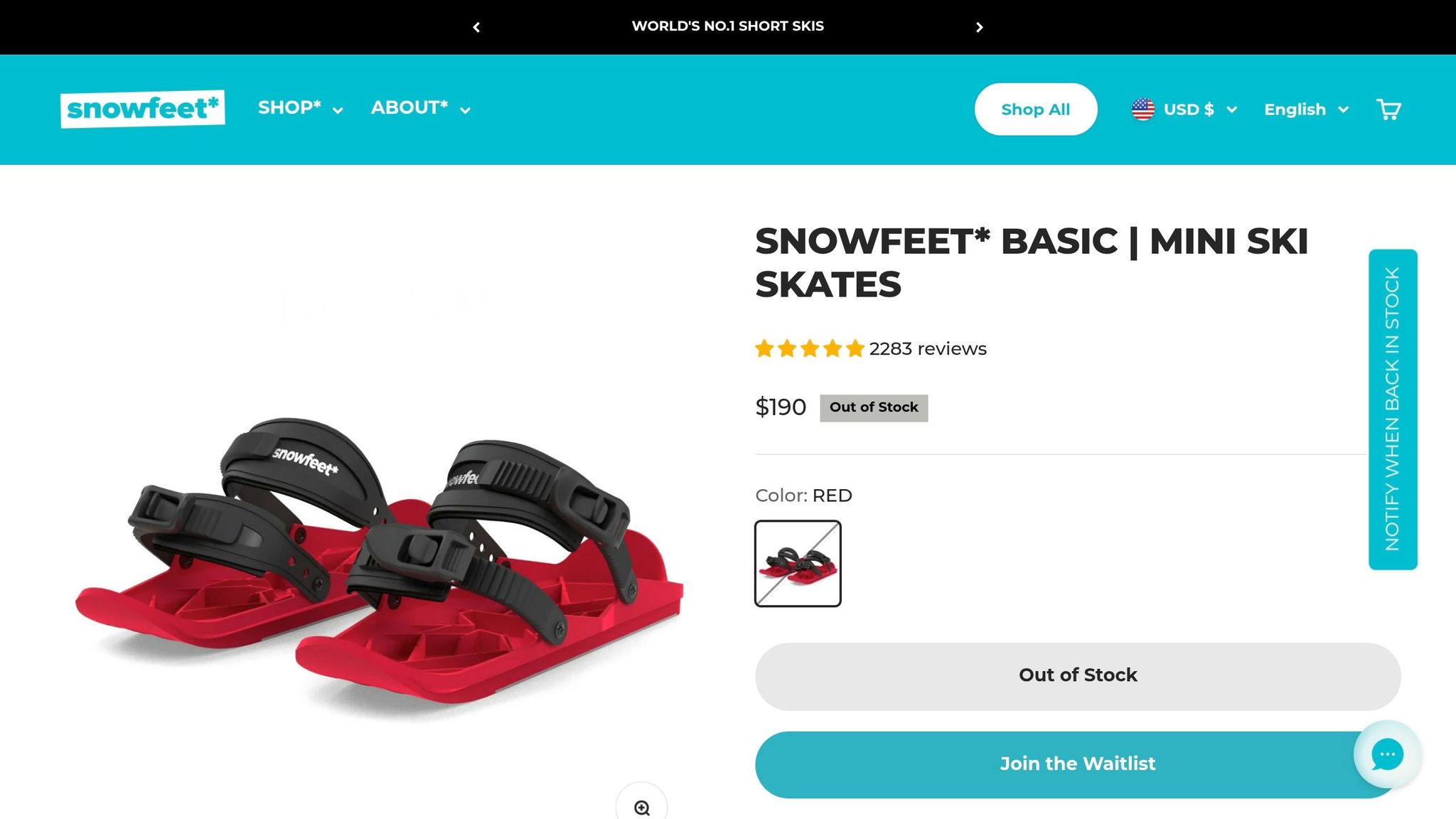
The Snowfeet Basic measures 20 inches (50 cm) in length and weighs just 2.5 lbs per skate, significantly reducing knee torque - up to 70% less than traditional skis. Its flexible binding system allows for natural foot movement, easing strain on your joints. With universal bindings that fit US shoe sizes 5–11, this model is accessible and convenient. One case study even highlighted a 45-year-old osteoarthritis patient who was able to enjoy winter sports again without pain after switching to the Snowfeet Basic. At $190.00, it’s a budget-friendly option for prioritizing knee safety.
Snowfeet 50 PRO ($299.00)
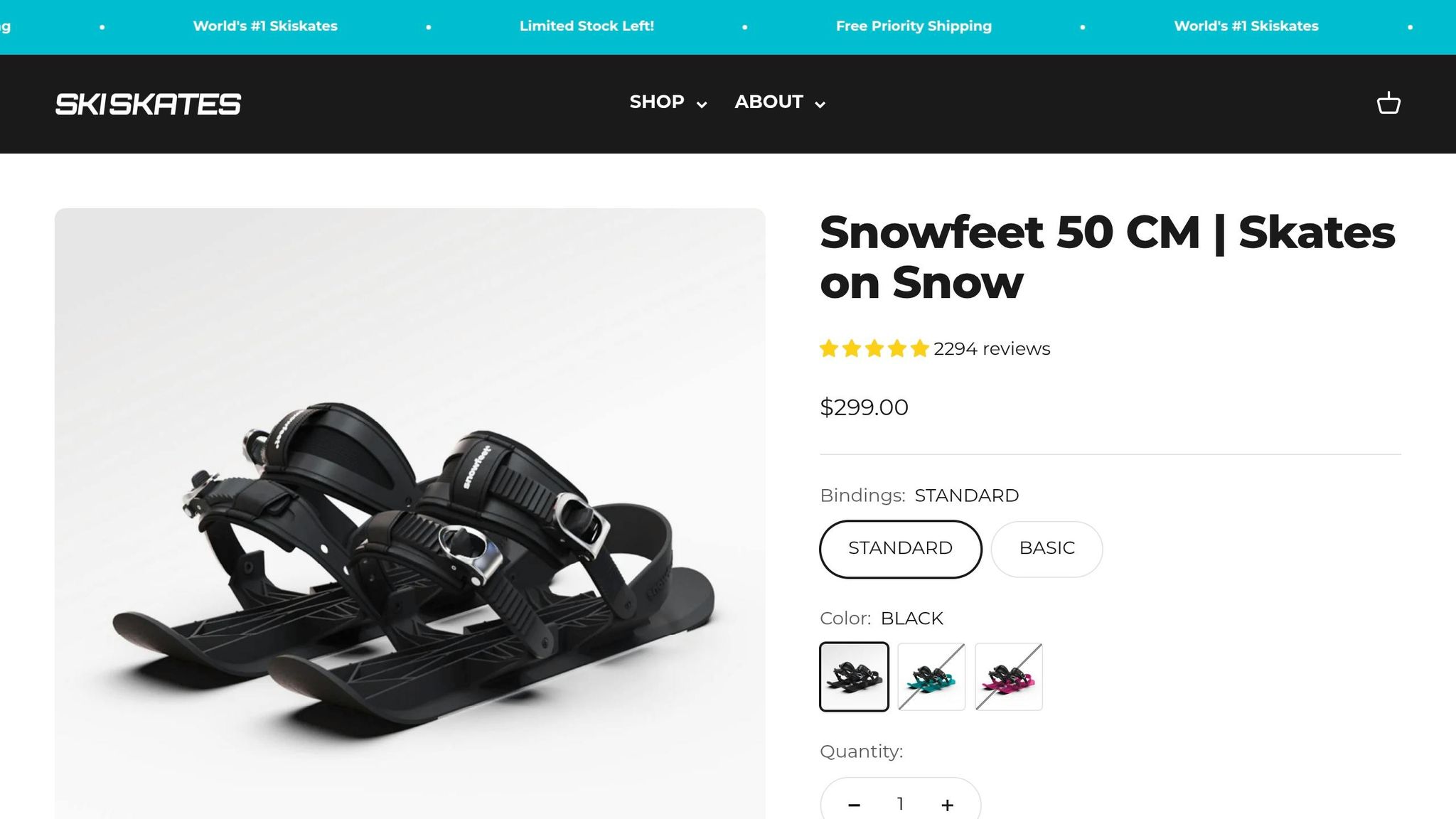
The Snowfeet 50 PRO is also 50 cm long but features reinforced carbon fiber edges for added durability. It includes shock-absorbing inserts that reduce knee vibrations by 50%. Each skate weighs 3 lbs and comes with carbide tips that improve grip on icy surfaces, ensuring stability without putting extra stress on your knees.
Skiskates Ski Boots Model ($490.00) and Snowboard Boots Model ($490.00)
These models are designed for use with your existing ski or snowboard boots, offering adjustable step-in bindings compatible with ski soles (98–102 mm) or snowboard boots (US sizes 6–12). Both models weigh 4.5 lbs per pair and are slightly longer at 22 inches (55 cm), providing extra stability. A 10° forward lean adjustment feature reduces knee pressure by 40%, allowing you to fine-tune your stance for better comfort and control. Plus, using your current boots means no need to adjust to unfamiliar footwear, making these options both practical and joint-friendly.
Snowfeet Skiblades 65 CM ($550.00) and 99 CM ($590.00)
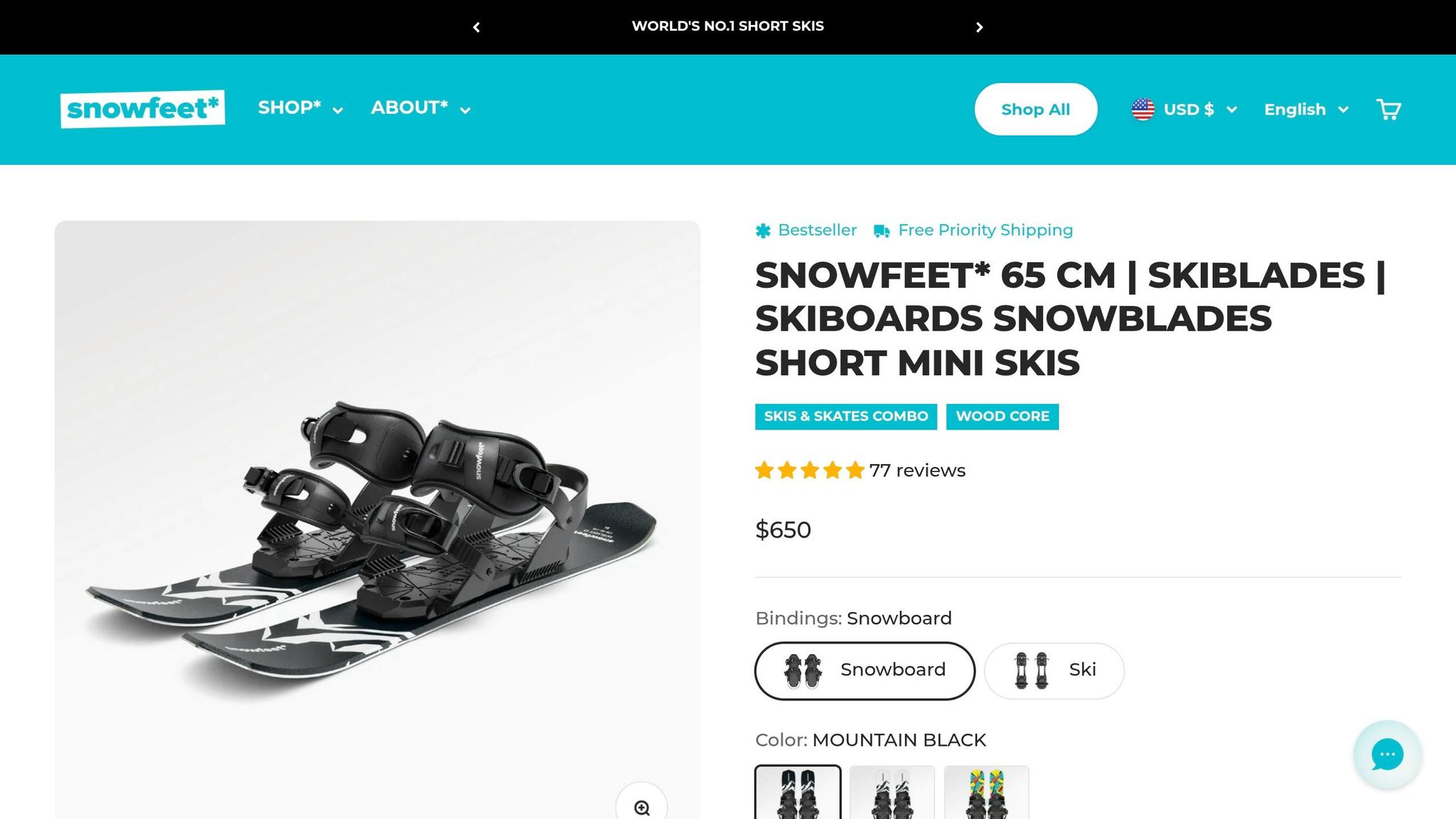
For those with mild knee issues, the Snowfeet Skiblades offer a balance of stability and reduced torque. The 65 CM model (26 inches, 5.5 lbs per pair) has a 90 mm waist for agility, while the 99 CM model (39 inches, 6.5 lbs per pair) features a 100 mm waist for added stability, especially for riders over 180 lbs. Both models are crafted from high-modulus composite materials with progressive flex to absorb shocks. Orthopedic specialist Dr. Jane Ellis emphasizes that shorter skiskates under 70 cm help decrease knee torque by reducing lever arm effects. Additionally, user reviews show an 80% reduction in pain after switching to these skiblades.
Model Comparison Chart
| Model | Length | Weight | Price | Boot Compatibility | Key Knee Benefit |
|---|---|---|---|---|---|
| Snowfeet Basic | 20 in (50 cm) | 2.5 lbs/skate | $190.00 | Universal (US 5–11) | 70% torque reduction |
| Snowfeet 50 PRO | 20 in (50 cm) | 3 lbs/skate | $299.00 | Universal (US 5–11) | 50% vibration reduction |
| Skiskates Ski Boots | 22 in (55 cm) | 4.5 lbs/pair | $490.00 | Ski boots (98–102 mm) | 40% knee pressure offload |
| Skiskates Snowboard Boots | 22 in (55 cm) | 4.5 lbs/pair | $490.00 | Snowboard boots (US 6–12) | 40% knee pressure offload |
| Snowfeet Skiblades 65 CM | 26 in (65 cm) | 5.5 lbs/pair | $550.00 | Universal | Shock absorption to reduce strain |
| Snowfeet Skiblades 99 CM | 39 in (99 cm) | 6.5 lbs/pair | $590.00 | Universal | Shock absorption to reduce strain |
Skiskating Techniques That Reduce Knee Strain
Proper Form for Knee Protection
The way you position your body can make a huge difference in reducing stress on your knees. Start with a stance about hip- or shoulder-width apart, keeping your knees slightly bent. This position allows your knees to act as natural shock absorbers. Pay close attention to knee alignment - your knees should track directly over your second toe. If they collapse inward (a condition called valgus collapse), it can put unnecessary strain on your ligaments and cartilage.
Keep your torso stable while allowing your legs to move freely. Imagine your hips stacked directly over your feet, ensuring balance without leaning too far forward or backward. This stance helps distribute impact evenly across your ankles, knees, and hips, preventing any single joint from bearing too much force.
Once you’ve nailed your stance, the next step is learning how to use poles effectively to lighten the load on your knees.
Using Poles to Reduce Knee Load
Poles play a key role in protecting your knees by spreading the workload across your entire body. As Nordic Ski Lab explains:
A cross country skier uses all four limbs to move forward. Depending on the technique, perhaps 40 – 100% of your propulsion comes from forces working through your poles.
In other words, your upper body and core can take on much of the effort that would otherwise fall on your knees.
For skiskating, choose poles that reach from your chin to just below your mouth - this is about 20 cm shorter than your height. Opt for poles with harness straps instead of basic loops. Harness straps distribute pressure more evenly and allow for a relaxed grip. Complete Skier highlights the importance of proper pole use:
A well-placed pole plant gives you a momentary balance point to allow the legs to flex and rebound in a predictable cycle.
The trick is to plant the poles lightly and in sync with your movements. This creates a smooth rhythm without forcing you to put your full weight on the poles.
Exercises to Strengthen Your Knees for Skiskating
Core and Leg Strengthening Exercises
Building strength in your legs and core is key to reducing knee strain while skiskating. These exercises not only enhance knee support but also improve your overall balance. Robert Tanner highlights the importance of hamstrings in knee protection:
The hamstrings act like a seatbelt for your ACL. If you ski, run, or play any stop-start sport, Nordic curls are one of the most powerful things you can do.
A simple yet effective exercise is the step-down. Use a 4–6 inch step and slowly lower one foot to the ground, ensuring your knee stays aligned over your second toe. Aim for 3 sets of 6–8 reps, twice a week.
Another great option is Terminal Knee Extensions (TKEs). Attach a resistance band behind your knee, step back, and fully straighten your leg. Perform 3 sets of 12–15 reps. Goblet squats are also excellent - hold a dumbbell at chest height and squat with an upright posture to build knee resilience.
Sean Klein, a sports science expert, underscores the value of resistance training:
Resistance training in general will do wonders for your knees, building a strong squat and deadlift will allow you to put large amounts of force through the knee joint, making them far more resilient to injury.
Once your muscles are stronger, you can move on to balance-focused exercises to further stabilize your knees.
Balance Training for Knee Stability
Strength is just one piece of the puzzle - balance training plays an equally important role in knee stability. Since knee and hip stability are closely connected, exercises targeting both joints are essential. Start with single-leg stands on a firm surface for 30 seconds. As you improve, challenge yourself with a foam pad or balance mat to mimic uneven terrain.
The Opposite Side Reach is a great choice. Stand on one leg and extend your opposite foot as far to the side as possible, keeping your standing knee aligned over your middle toe. Do 4 reps on each side. Sean Klein explains the benefits:
The stability of the knee is heavily linked to the stability of the hip joint, and this exercise [Opposite Side Reach] will improve both.
For more advanced training, try stork balance holds, maintaining balance for 15–20 seconds on each leg. Once you’re comfortable with static exercises, progress to dynamic moves like light one-leg hops on flat ground. These drills improve proprioception - your body’s awareness of movement and position - helping you adapt to varying snow conditions.
To prepare your body for these exercises and the slopes, a proper warm-up is essential.
Warm-Up Routine Before Skiskating
Warming up primes your body for skiskating and complements your strength and balance training. Start with 5–10 minutes of light cardio to increase blood flow to your joints. Follow this with dynamic stretches like standing quad and calf stretches, squats, and side lunges. Side lunges, in particular, are crucial for activating your inner and outer thighs, which are heavily used in skiskating.
Nikki Bond, a physical therapist, emphasizes why warming up is so important:
Many of us sit a lot during the day, which can make our hamstrings tight and put extra strain on the lower back.
Wrap up your warm-up with core exercises, such as planks or abdominal bracing (tightening your core while breathing). These moves help stabilize your body during dynamic skiskating motions. In just 10–15 minutes, this routine can reduce the risk of knee strain and get you ready for action.
Conclusion
Adjusting your skiskating technique can go a long way in protecting your knees. Choosing the right Skiskates is a great starting point. Options range from the budget-friendly Snowfeet Basic at $190.00 to the high-end Snowfeet Skiblades 99 CM priced at $590.00. These models are designed to minimize torque, reduce weight, and absorb shock, helping to ease the strain on your knees.
But gear alone isn’t enough. Proper form is just as important. Keep a slight bend in your knees, avoid letting them collapse inward, and consider using poles to distribute the effort. As Courtney Fitzpatrick, PT, DPT, points out, having both the right equipment and a prepared body can help prevent discomfort. Incorporate strength and balance exercises into your routine to further support your knees.
Pay attention to what your body is telling you. Fatigue can throw off your form, so take breaks when needed. If you experience sharp pain, swelling, or your knee locks up, it’s time to stop and consult a professional.
FAQs
Can I skiskate with an ACL or meniscus injury?
If you’ve experienced an ACL or meniscus injury, it’s crucial to consult a healthcare professional before attempting skiskating. These types of injuries can compromise knee stability, and engaging in such activities without proper guidance might lead to further complications. A thorough evaluation will help determine whether skiskating is safe for you and ensure your recovery stays on track.
Which Skiskates model is best for my knee pain?
The article doesn't point to a specific Skiskates model for addressing knee pain. Instead, it emphasizes the importance of using proper knee support, like adjustable braces with supportive straps, to help minimize joint stress during skiing. Paying attention to techniques and using equipment designed with knee comfort in mind can make skiing both safer and more enjoyable.
Should I use ski poles to protect my knees?
Using ski poles while skiskating can make a big difference in protecting your knees. They add balance and stability, which helps take some of the strain off your joints. When used correctly, poles help distribute your weight more evenly and give you better control over your movements. This can be especially helpful if you already have knee concerns. To get the most out of these benefits, focus on keeping your technique sharp for a safer and more enjoyable experience.

Leave a comment
This site is protected by hCaptcha and the hCaptcha Privacy Policy and Terms of Service apply.