

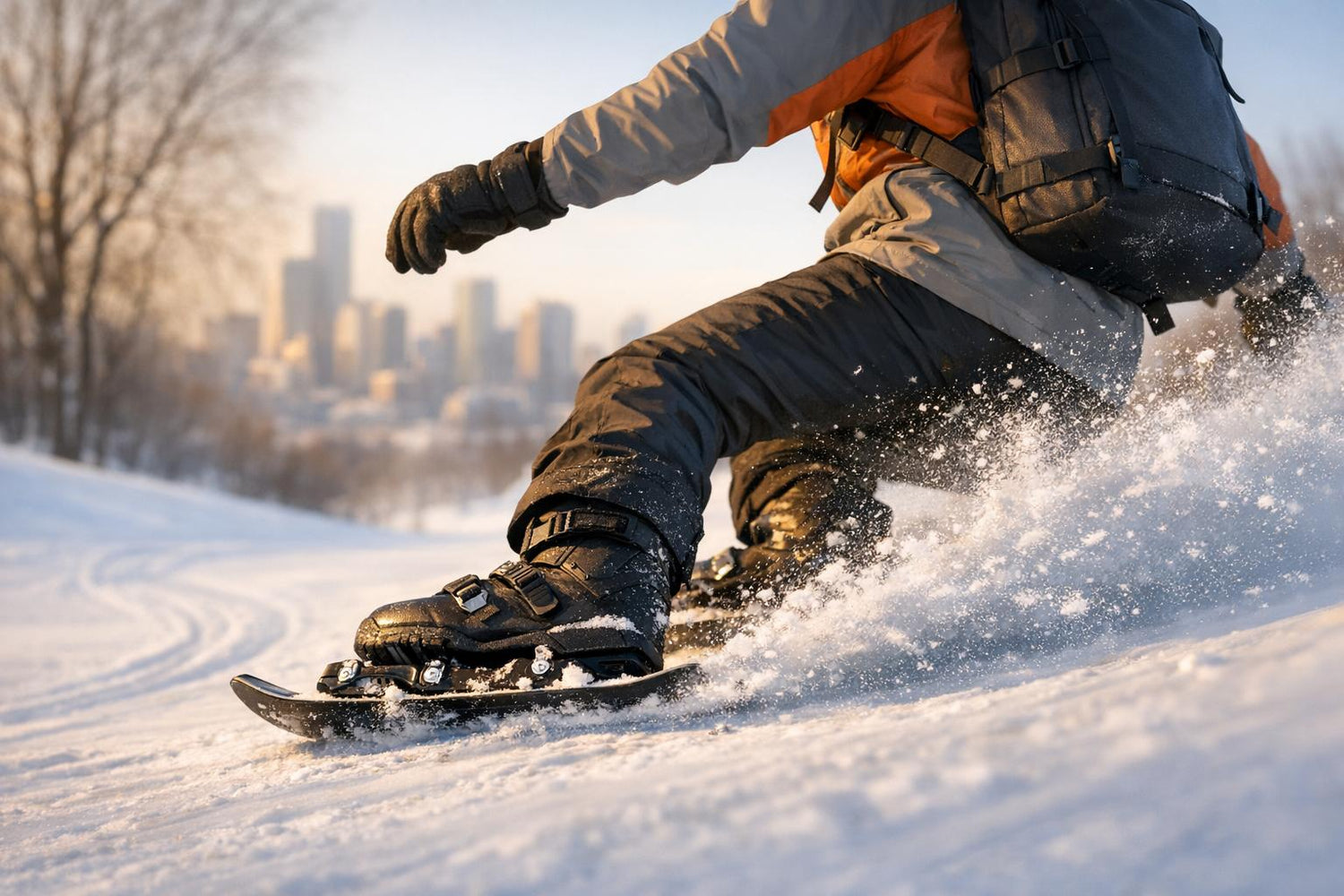
Skiskates are a compact alternative to traditional skis, designed for travelers who want to enjoy winter sports without the hassle of bulky equipment. Measuring as short as 17.3 inches, they fit into a standard backpack and work with ski, snowboard, or regular winter boots. Skiskates combine skiing and skating mechanics, offering agility for quick turns, freestyle tricks, and smooth gliding on various terrains, from groomed slopes to urban snow. Lightweight yet durable, they’re built with steel edges, a wood core, and adjustable bindings, making them easy to transport and use.
Key Features:
- Size & Portability: As short as 17.3 inches, fits in a backpack.
- Boot Compatibility: Works with ski, snowboard, or winter boots.
- Terrain Use: Groomed slopes, snow parks, hiking trails, and urban snow.
- Materials & Build: Steel edges, wood core, and cap construction for durability.
- Weight: Most models weigh 2.5–6 lbs per pair.
Skiskates are beginner-friendly yet perform well for advanced users. Prices range from $190 to $590, with options for every skill level and travel style.
Skiskates - Skis that Fit Into your Backpack | by Snowfeet*

sbb-itb-32287b2
What Are Skiskates?
Skiskates are compact skis that combine the mechanics of skiing with the agility of skating. Unlike traditional skis that usually measure 5–6 feet in length, skiskates are much shorter, ranging from 17 to 39 inches, making them the shortest skis available. They’re designed to work with both ski boots and snowboard boots, thanks to adjustable bindings that offer flexibility in footwear.
Inspired by Nordic skating techniques, their small size allows for quick, dynamic movements. They feature a twin-tip design, with both ends curving upward, enabling smooth bidirectional skiing. This makes them perfect for performing tricks, tackling jumps, and navigating terrain parks where precise maneuvering is essential. Their design not only enhances performance but also makes them incredibly travel-friendly, as explained below.
Backpack-Friendly Design
One of the standout features of skiskates is their compact size, which makes them ideal for travelers. The shortest model, measuring just 17.3 inches, can easily fit into a standard backpack. Unlike traditional skis that require bulky ski bags or roof racks, skiskates are easy to carry through airports, store in overhead compartments, or pack alongside your regular luggage.
Their lightweight design adds to the convenience. Weighing only a few pounds, they’re much easier to transport than full-length skis, whether you’re navigating busy terminals or climbing hotel stairs. Despite their light weight, skiskates are made with durable materials similar to those used in traditional skis. This makes them an excellent choice for spontaneous trips to ski destinations like Park City or Breckenridge, as they fit seamlessly into your usual travel gear.
Construction and Materials
Skiskates are crafted using cap construction, a process that forms a structural shell around the core in a single step. This method results in a lighter product without compromising strength. The core is made from sustainable wood, often hardwoods like birch or ash, which are known for their density and ability to absorb shocks - qualities that have long been valued in high-performance skis.
To handle icy surfaces and sharp turns, skiskates are equipped with steel edges. This feature, first introduced in Austria in 1928, provides excellent grip and enables precise carving. Additionally, the sidecut design - where the ski narrows underfoot but remains wider at the tip and tail - allows for natural flexing during turns.
The bindings are tool-free and adjustable, making it easy to switch between different boot sizes or styles. This is particularly useful for travel, as you might rent boots at your destination or share your skiskates with a friend. Every pair of skiskates is handmade in Europe, ensuring meticulous craftsmanship and high-quality standards.
Benefits for Travelers
Skiskates transform winter travel by eliminating the hassle of bulky gear and complex planning. Their compact and lightweight design means they can easily fit into your backpack, making them perfect for spontaneous trips to the Rockies or even surprise snow days in your local area. Unlike traditional skis that require roof racks and meticulous preparation, skiskates allow for impromptu adventures with minimal effort. Plus, they deliver reliable performance across a variety of snowy terrains, making them a versatile choice for winter getaways.
Their adaptability is a game-changer. Whether you're carving on groomed slopes, exploring hiking trails, or sliding down neighborhood sledding hills, skiskates handle it all. They even perform on urban streets with just a light dusting of snow, giving you the freedom to explore diverse winter landscapes without switching equipment.
Performance on Different Terrains
On groomed slopes, skiskates offer a nimbleness that feels similar to inline skating. Their shorter blades allow for quick, sharp turns and dynamic movements that traditional skis can't replicate. This creates a carving experience that feels responsive and natural, more like skating on snow than skiing.
In snow parks or on challenging terrain, their compact design makes freestyle tricks like spins and controlled jumps feel effortless. On hiking trails and cross-country paths, skiskates perform well even without groomed tracks, providing excellent maneuverability. They're also easy to carry when navigating wooded areas or climbing hills.
Urban environments with fresh snowfall are another playground for skiskates. Their lightweight build allows for quick stops and agile movements on ungroomed surfaces. Picture yourself gliding through Central Park after a snowstorm or tackling neighborhood hills with ease - all with gear that’s small enough to fit in your bag.
Learning Curve and Skill Requirements
Skiskates aren’t just versatile - they’re also beginner-friendly. Their design, which mimics the feel of inline skates, makes them approachable for newcomers. You can strap them on and start gliding in minutes. Plus, they work with standard winter or snowboard boots, so there’s no need for stiff, specialized ski boots. This makes the initial learning experience both simple and comfortable.
For seasoned skiers and snowboarders, skiskates offer a chance to elevate their skills. The combination of snowboard boot compatibility and a design that blends skiing’s edge control with skating’s quick responsiveness makes advanced moves like carves, spins, and jumps more accessible. Whether you’re just starting out or looking to push your limits, skiskates add excitement to every winter adventure while keeping gear requirements to a minimum.
How to Choose Skiskates for Travel
Selecting the right skiskates for your travels boils down to three main considerations: the type of boots you have, your skill level, and how much weight you’re comfortable carrying. Nail these factors, and you’ll have gear that complements your setup and matches your travel style perfectly.
Boot Compatibility
Your boots play a huge role in determining which skiskates will work for you. Different models are designed for specific types of boots, so it’s important to match them correctly.
- The Skiskates Ski Boots Model ($490.00) and Snowfeet Skiblades (available in 65 cm and 99 cm lengths, priced $550.00–$590.00) use non-release ski bindings. These bindings require alpine ski boot soles, which provide a secure fit and excellent control for carving turns. If you’re using alpine ski boots, these models are a top choice for stability.
- For snowboarders, the Skiskates Snowboard Boots Model ($490.00) is designed with snowboard-specific bindings. These offer a softer and more forgiving fit, making them ideal for freestyle skating.
- If you’re looking for something more versatile, Snowfeet Basic ($190.00) and Snowfeet 50 PRO ($299.00) work with regular winter boots. Their universal bindings eliminate the need for specialized footwear, making them a great option for reducing bulk and speeding up setup time by 15–20% - perfect for quick urban snow adventures.
To ensure a proper fit, check that your boot soles (24–32 cm) fit snugly in the bindings. Heel lift should be minimal, ideally under 1–2 cm after securing the bindings.
Length Selection by Skill Level
The length of your skiskates affects both performance and portability, so choosing the right size is key. Shorter skiskates excel in agility, while longer ones provide more stability and speed.
- Beginners should stick to lengths between 44–65 cm. Options like the standard Skiskates (44 cm or about 17.3 inches) or Snowfeet 65 cm (approximately 26 inches) are great for easy turns, spins, and hockey stops. These sizes have a gentle learning curve and are particularly beginner-friendly, especially for those with experience in inline skating.
- Intermediate riders often find 65 cm skates ideal for carving and maintaining control across different conditions.
- Advanced users might prefer the 99 cm Snowfeet Skiblades (around 39 inches). These offer faster speeds - up to 15–20% more - and handle powder better.
For travelers, shorter models under 50 cm are much easier to pack, reducing weight by up to 50% compared to the longer 99 cm skates.
Weight Considerations for Travel
When traveling, the weight of your skiskates can make or break your mobility. Lightweight options are easier to carry through airports or on hikes to remote locations.
- The Snowfeet Basic is one of the lightest at about 2.5 lbs per pair, while the standard Skiskates weigh 3–4 lbs. Both can fit comfortably in a 20-liter backpack.
- The Snowfeet 50 PRO weighs around 3 lbs, the Snowfeet Skiblades 65 cm are about 4 lbs, and the longer 99 cm model comes in at 5–6 lbs.
For air travel, aim for models under 4 lbs per pair to avoid overweight baggage fees and stay within TSA limits. Shorter models with lightweight wood core constructions also reduce overall pack weight by 20–30%, making them ideal for backpacking or multi-day trips. While longer skates add stability, they might exceed carry-on limits (usually 22 lbs for most U.S. airlines). Choosing lighter models keeps your gear compact and easy to manage on the go.
Skiskates Models Comparison
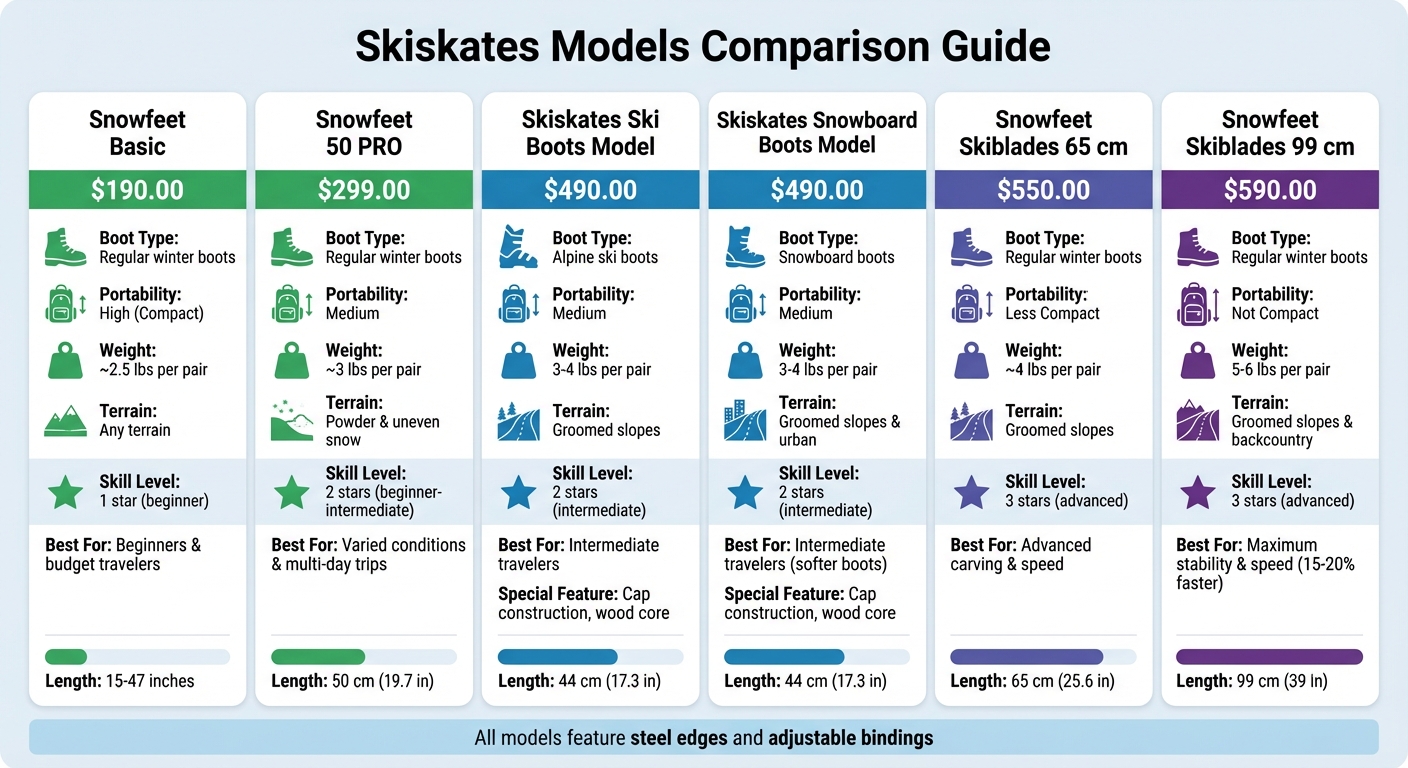
Skiskates Models Comparison: Features, Prices, and Best Uses
Choosing the right Skiskates model depends on your travel style and performance needs. Each option blends portability with functionality, catering to winter travelers of all skill levels. With prices ranging from $190.00 to $590.00, there's a model for everyone, from beginners to seasoned riders.
The Skiskates Ski Boots Model and Skiskates Snowboard Boots Model are both priced at $490.00 and measure 44 cm (17.3 in) in length. They share a cap construction and wood core but differ in bindings. The Ski Boots Model pairs with alpine ski boots, while the Snowboard Boots Model is compatible with snowboard boots, offering the added comfort of softer footwear. Both models are perfect for intermediate users on groomed slopes, whether you're hitting the resort or exploring snowy urban areas.
For those just starting out, the Snowfeet Basic ($190.00) is a budget-friendly option. These compact plastic skates come in lengths ranging from 15 to 47 inches and work with regular winter boots, eliminating the need for specialized gear. Lightweight and versatile, they handle a variety of terrains, from groomed slopes to off-trail snow, making them great for impromptu winter adventures.
Stepping up, the Snowfeet 50 PRO ($299.00) offers a 50 cm (19.7 in) length and upgraded plastic materials for improved grip and stability. This model excels in powder and uneven snow, making it a reliable choice for multi-day trips or areas with unpredictable conditions.
For advanced riders, the Snowfeet Skiblades come in two lengths: 65 cm ($550.00) and 99 cm ($590.00). The longer 99 cm version delivers up to 15–20% faster speeds, while both models provide excellent stability and carving precision. Despite their extended lengths - 65 cm (25.6 in) and 99 cm (39 in) - they remain portable enough to fit in a backpack. These skiblades are designed for experienced travelers tackling groomed slopes or backcountry trails.
Below is a quick comparison of the key details for each model:
| Model | Price | Length | Boot Type | Best For |
|---|---|---|---|---|
| Skiskates Ski Boots Model | $490.00 | 44 cm (17.3 in) | Alpine ski boots | Intermediate travelers on groomed slopes |
| Skiskates Snowboard Boots Model | $490.00 | 44 cm (17.3 in) | Snowboard boots | Intermediate travelers preferring softer boots |
| Snowfeet Basic | $190.00 | 15–47 in | Regular winter boots | Beginners and budget travelers on any terrain |
| Snowfeet 50 PRO | $299.00 | 50 cm (19.7 in) | Regular winter boots | Varied conditions and multi-day trips |
| Snowfeet Skiblades 65 cm | $550.00 | 65 cm (25.6 in) | Regular winter boots | Advanced users looking for carving and speed |
| Snowfeet Skiblades 99 cm | $590.00 | 99 cm (39 in) | Regular winter boots | Advanced users seeking maximum stability and speed |
Travel Tips for Skiskates
Packing and Transport
Skiskates are incredibly travel-friendly, easily fitting into a standard backpack. This makes them an excellent choice for impromptu winter getaways. To protect the steel edges, wrap each skiskate in soft clothing or padded sleeves. For better organization, pack the skiskates and detached boots separately in the main compartment of your bag. Their compact size allows them to slide in alongside other gear, staying well within carry-on size limits for most U.S. airlines.
When flying, keep skiskates away from heavier items to protect the bindings. If you're traveling with multiple pairs, consider using a dedicated ski bag for added security. On buses or trains, secure your skiskates in a slim tube or store them in your backpack, either overhead or under the seat. Thanks to their lightweight wood core, they're far less bulky than traditional skis. If needed, use bungee cords to keep them steady and prevent them from becoming a safety hazard during transit.
Once you're set for travel, a little maintenance will ensure your skiskates are always ready for action.
Maintenance on the Road
To keep your skiskates performing at their best, sharpen the steel edges daily using a diamond file - this helps maintain a strong grip on the snow. After each session, brush off any snow and debris from the bindings and lightly spray them with silicone to prevent rust. Store your skiskates in a dry bag, and at night, either hang them vertically using clips or lay them flat under the bed with the edges covered by towels.
Before hitting the slopes, check your bindings for a proper fit and test the forward pressure on flat snow to avoid any slippage. Carrying a compact multi-tool kit (under 1 lb) is a smart move for quick adjustments on the go, saving you a trip to the resort's repair shop. If you're using wood-core skiskates and encounter wet snow - common on the East Coast - apply wax mid-trip to maintain smooth performance.
With these maintenance steps, you can enjoy your skiskates no matter where your travels take you.
Usage Scenarios for Travelers
Skiskates' compact design makes them perfect for a wide range of activities, whether you're exploring urban landscapes or hitting the slopes at a resort. In cities like New York or Chicago, you can glide across plowed parks or frozen paths after a snowfall. Their side-to-side motion allows you to navigate around obstacles during short 30–60 minute sessions. For safety, stick to well-lit areas, wear a helmet, and always yield to pedestrians.
At ski resorts, skiskates shine as a lightweight backup option. Pack them in your backpack and switch to them for freestyle carving or quick laps on groomed runs when you want agility over speed. Their small size also means you won’t need a roof rack for day trips to resorts in places like Utah or Colorado. They perform best in temperatures between 20–32°F on packed snow with 2–6 inches of fresh coverage. However, they’re not ideal for deep powder, as their short length can cause them to sink. For backcountry trips, skiskates are great for traversing packed powder or open meadows. Pair them with snowshoes if you're venturing into deeper snow during hut-to-hut hikes.
Wherever your journey takes you, skiskates offer a versatile and convenient way to enjoy winter adventures.
Conclusion
Skiskates provide a sleek alternative for winter sports enthusiasts who want to avoid the hassle of bulky gear. Their compact design fits snugly into any backpack, making spontaneous winter outings a breeze without the need for heavy equipment.
What truly sets skiskates apart is their versatility. Unlike classic skis that require groomed trails or skate skis that depend on maintained lanes, skiskates handle nearly any snow surface with ease. From city parks to untouched backcountry meadows, they’re ready for action. Whether you’re gliding down resort slopes or navigating snowy trails on a quick getaway, this gear adapts effortlessly to your plans.
Another standout feature is how easy they are to pick up. With an intuitive side-to-side motion similar to hockey skating, skiskates require just basic balance and knee bends. You can skip the steep learning curve of traditional skiing and enjoy the added convenience of using your regular winter or snowboard boots.
These qualities make skiskates a great choice for frequent travelers. Their portability, adaptability, and user-friendly design mean you’ll spend more time enjoying winter adventures and less time worrying about equipment. With options ranging from the $190.00 Snowfeet Basic to the $590.00 Snowfeet Skiblades 99 cm, there’s something for every budget and skill level. Whether it’s a weekend escape or a snowy city adventure, skiskates make it easy to embrace the season without overcomplicating the experience. They bring the fun back to winter travel, letting you focus on the thrill of the journey.
FAQs
Are skiskates allowed as a carry-on item?
It’s unclear if skiskates are allowed as carry-on items. To avoid any issues, check with your airline about their specific size and weight rules for carry-on luggage before your trip.
Do I need brakes or leashes with skiskates?
When it comes to skiskates, there isn’t clear information about whether brakes or leashes are mandatory. To ensure you're using them safely, check the product instructions or reach out to the manufacturer for advice on recommended safety features and proper usage.
What safety gear should I wear on skiskates?
To stay safe while using skiskates, it's important to wear protective gear. This includes a helmet, wrist guards, knee pads, and elbow pads. These items can help minimize injuries from falls and make your time on the snow much safer.

Leave a comment
This site is protected by hCaptcha and the hCaptcha Privacy Policy and Terms of Service apply.