

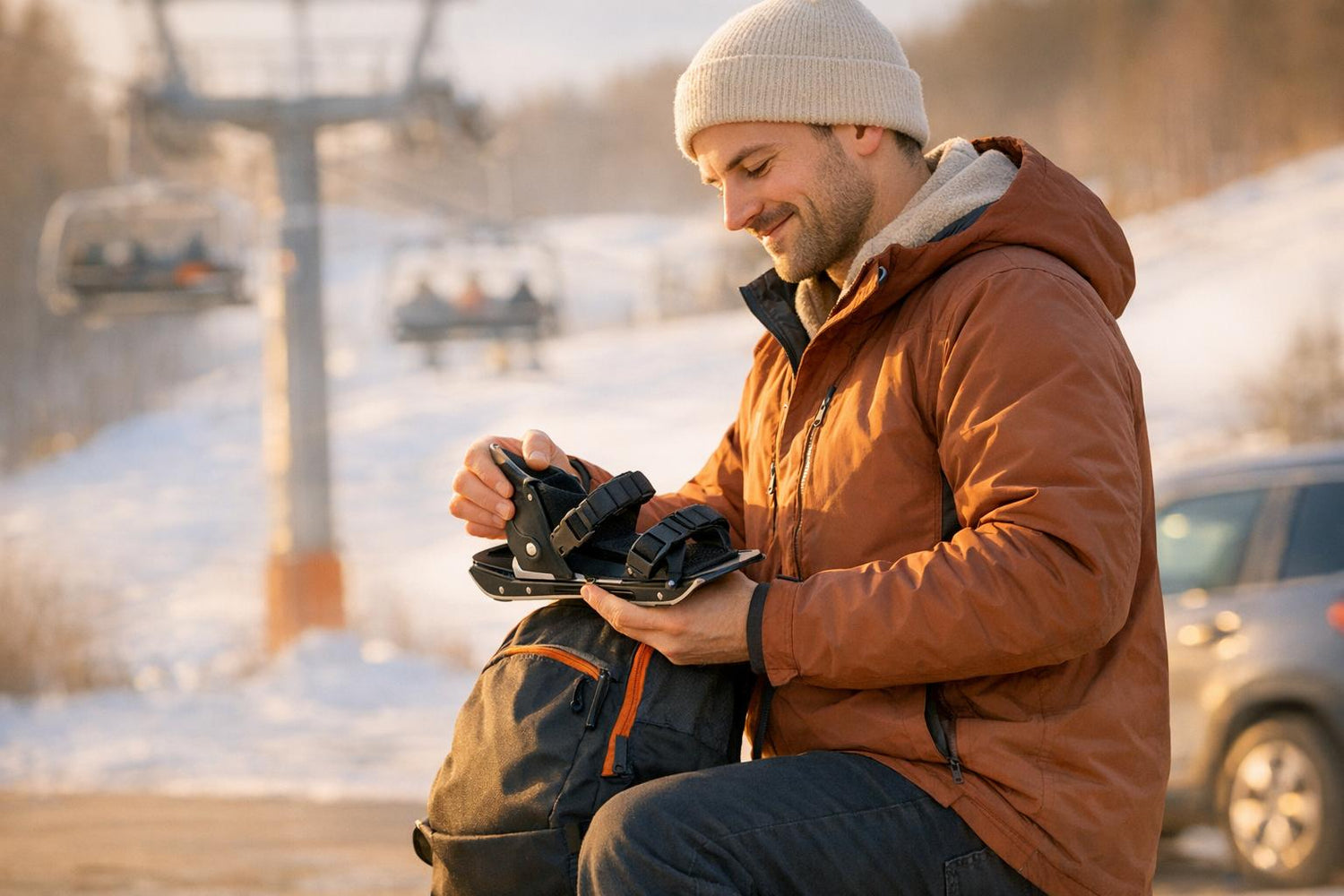
Skiskates make weekend ski trips easier, lighter, and more fun. Weighing just 2–4 pounds, they’re compact enough to fit in a backpack and work with regular winter boots - no need for bulky gear. Beginners can learn the basics in minutes, while experienced users enjoy their performance on groomed trails, narrow paths, and snow parks. Plus, they’re far more affordable than traditional ski setups, saving you money on equipment and baggage fees. Whether you’re flying to Breckenridge or hitting local slopes, skiskates simplify the experience and maximize your time on the snow.
Key Highlights:
- Lightweight & Portable: Fits in a standard backpack and avoids baggage fees.
- Quick Learning Curve: Easy for beginners and intuitive for ice skaters.
- Multi-Terrain Use: Performs well on groomed trails, snow parks, and narrow paths.
- Affordable Option: Costs less than traditional skis and works with regular boots.
Skiskates are a game-changer for anyone looking to enjoy hassle-free ski weekends.
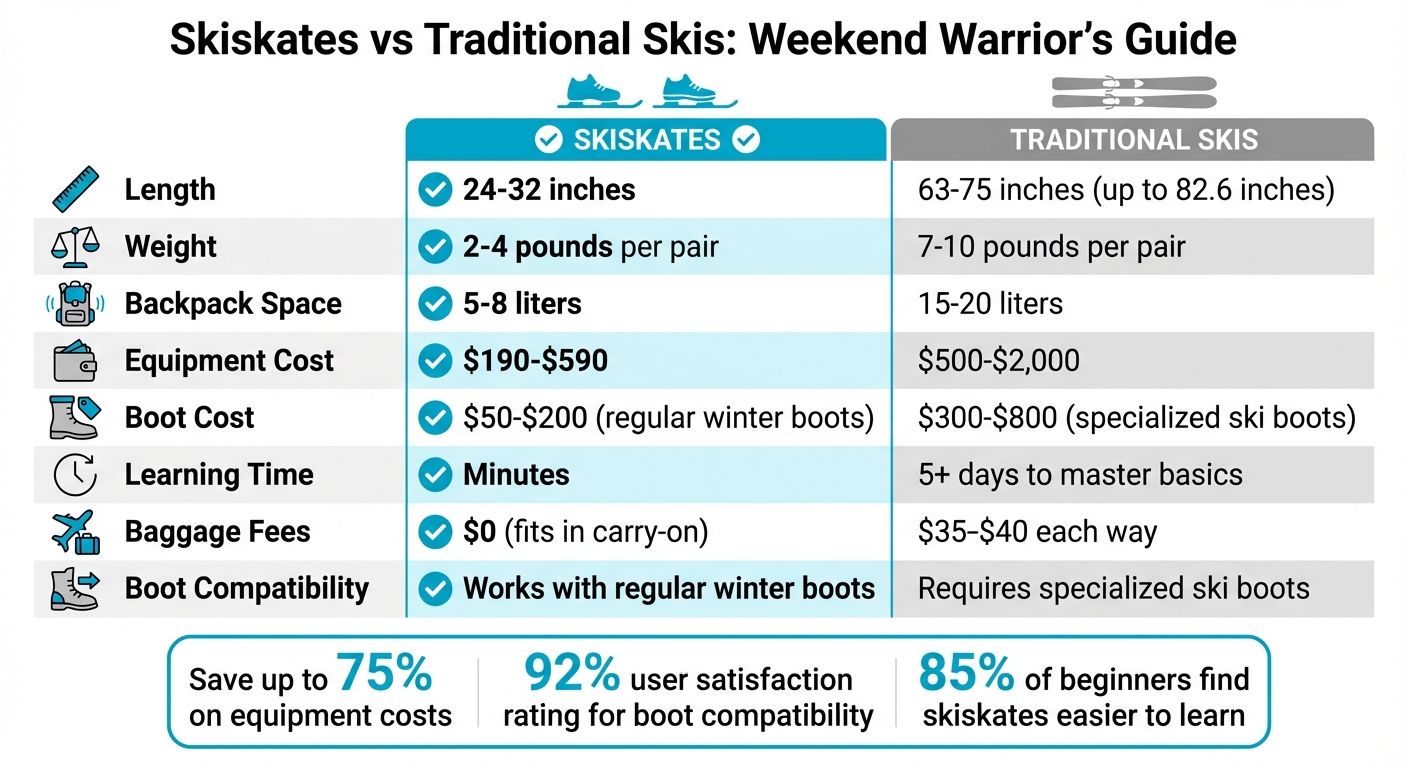
Skiskates vs Traditional Skis: Size, Weight, and Cost Comparison
Snowfeet* vs. Skiskates Comparison | First Time Review by Snowboarder
sbb-itb-32287b2
Common Problems with Weekend Ski Trips
Weekend ski trips can quickly turn into logistical nightmares. From packing your gear to navigating the slopes, the challenges seem to pile up at every step.
Heavy Equipment and Transportation Issues
Ski gear isn't exactly travel-friendly. Skis, which can be as long as 82.6 inches, are a pain to transport and don’t fit in most taxis, compact rental cars, or ride-share vehicles. Airlines like United, American, and Delta enforce strict 50-pound weight limits for ski and boot bag sets, with a maximum linear dimension of 115 inches. Budget airlines like Spirit are even stricter, charging extra for anything over 62 inches.
"Lugging bulky boots, hefty skis, and fragile poles across airports, battling for space in rental cars, and praying for safe arrival – it's enough to make even the most seasoned skier break a sweat." - Rocket Closet
The costs add up quickly. Checked bag fees range from $35 to $40 each way, and a sturdy ski bag can set you back $107 to $339. Driving isn’t much easier - you’ll need a roof rack and tie-down straps to secure your gear, and fragile items like bindings and helmets require extra padding to avoid damage during transit.
Long Learning Curves
If you’re new to skiing, a weekend trip might leave you more frustrated than exhilarated. Beginners often spend their first two days just trying to grasp the basics, with little time left to actually enjoy the slopes.
"The first two days I wondered if it was even possible for me to enjoy the sport, but on day three, it all came together and I had such a blast for the rest of my trip!" - Erika Wiggins, Blogger and Photographer, Ski Utah
For short trips, this timeline is discouraging. It takes about five days of practice to confidently tackle intermediate blue slopes without constant spills. Weekend lessons, like those at Beaver Mountain ($150 for three lessons) or Brian Head ($199 for three lessons), can help, but they rarely deliver noticeable improvement in just two days.
Physical Strain and Fatigue
Skiing isn’t just tough on your wallet and schedule - it’s hard on your body, too. Learning the basics involves frequent falls, which can leave you sore and exhausted. Bulky ski boots and bindings only add to the frustration, eating into your time on the slopes.
"Flying is stressful enough when all you have is a carry-on. Add a couple pairs of skis and boots to the mix... and flying can feel downright anxiety-inducing." - Evie Carrick, Ski Mag
For a quick weekend trip, the cycle of packing, hauling, and unpacking your gear - only to repeat it all on the way home - feels like more trouble than it’s worth. You end up spending more energy managing logistics than enjoying your time on the mountain.
These challenges make it clear: skiing could use a simpler, more accessible approach for weekend warriors.
Compact Design Makes Transport Easy
Skiskates tackle the age-old issue of lugging around heavy, cumbersome ski gear. With their compact size and lightweight build, they offer a portable alternative to traditional skis. Measuring just 24–32 inches long and weighing only 2–4 pounds per pair, skiskates are a breeze to carry compared to standard skis, which typically measure 63–75 inches and weigh between 7–10 pounds. This smaller, lighter design lets you travel with ease, eliminating the hassle of bulky equipment.
Fits in a Standard Backpack
Forget needing a dedicated ski bag - skiskates fit comfortably into a standard 50-liter backpack. They only take up about 5–8 liters of space, leaving plenty of room for other essentials like clothes, toiletries, and snacks. In contrast, traditional skis can eat up 15–20 liters of space, making it harder to pack efficiently. With skiskates, you can consolidate everything into one carry-on bag, simplifying your travel plans.
Works with Any Type of Travel
Skiskates' compact design makes them perfect for any kind of trip. Driving to the slopes? They slide neatly into your trunk or backseat - no roof racks or tie-downs required. Using public transit? They fit effortlessly into bus or train compartments without taking up too much space or drawing attention. And if you're flying, their small size often meets carry-on requirements (depending on airline policies), sparing you the headache of checking oversized gear. This portability not only saves time but also ensures your equipment stays safe and secure throughout your journey.
Quick Learning Curve for All Skill Levels
Skiskates make hitting the slopes easier and faster than ever. For those weekend trips where time is limited, they allow you to skip the long learning process and dive right into the action. Unlike traditional skis that can take days - or even weeks - to master, skiskates are designed for quick adaptation. You can pick up the basics, like turning and balancing, in just a few minutes. This makes them an excellent choice for anyone looking to make the most of their short time in the snow.
Learn the Basics Quickly
One of the standout features of skiskates is how quickly users can learn the fundamentals. Thanks to their lower center of gravity and natural balance, most people can grasp the basics in no time. This means you’ll be exploring the slopes sooner rather than spending your trip figuring out the mechanics. While traditional skiing often requires several seasons to confidently tackle blue runs, skiskates let you navigate different terrains right from your first outing. Whether you're a seasoned winter sports enthusiast or a total beginner, this quick entry makes skiskates a go-to option for casual adventurers.
Easy for Ice Skaters and Beginners
If you’ve ever ice skated, you’ll find skiskates incredibly intuitive. Many of the same movements - like balancing, edge control, and turning - are directly transferable, so ice skaters can adapt almost instantly. Muscle memory plays a big role here, allowing experienced skaters to feel comfortable within minutes. For complete beginners, skiskates build confidence quickly, offering a smoother and less intimidating introduction to the slopes. This ease of use ensures more time enjoying the ride and less time struggling to get the hang of it.
Works on Different Terrains and Activities
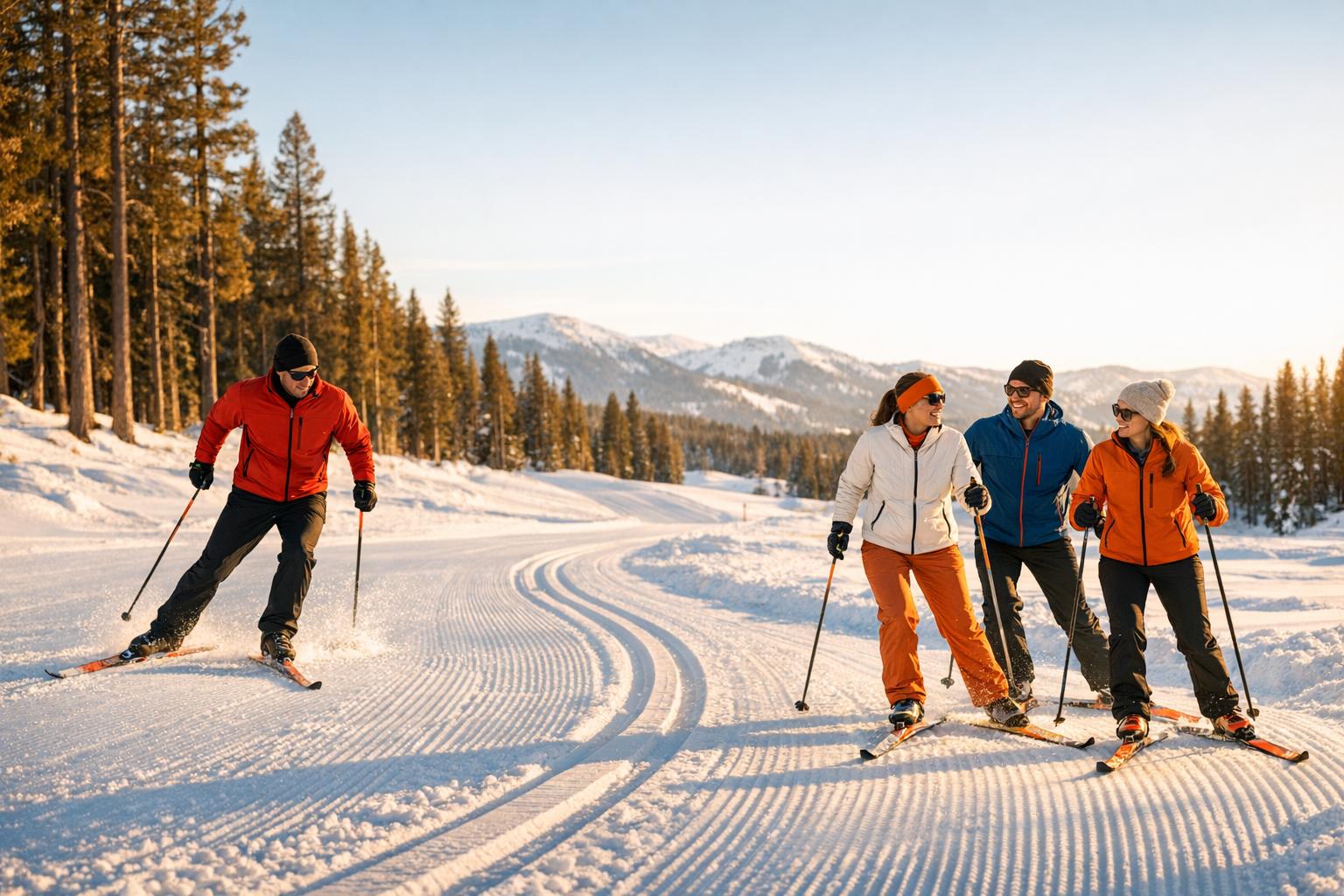
Skiskates combine a compact design with an easy learning curve, making them an exciting option for tackling various terrains. Whether you're gliding over groomed trails or weaving through narrow paths, skiskates adapt seamlessly, adding fun and flexibility to your time on the slopes. Their dual-blade system also allows you to transition between different activities without needing to switch gear.
Best for Groomed Trails and Packed Snow
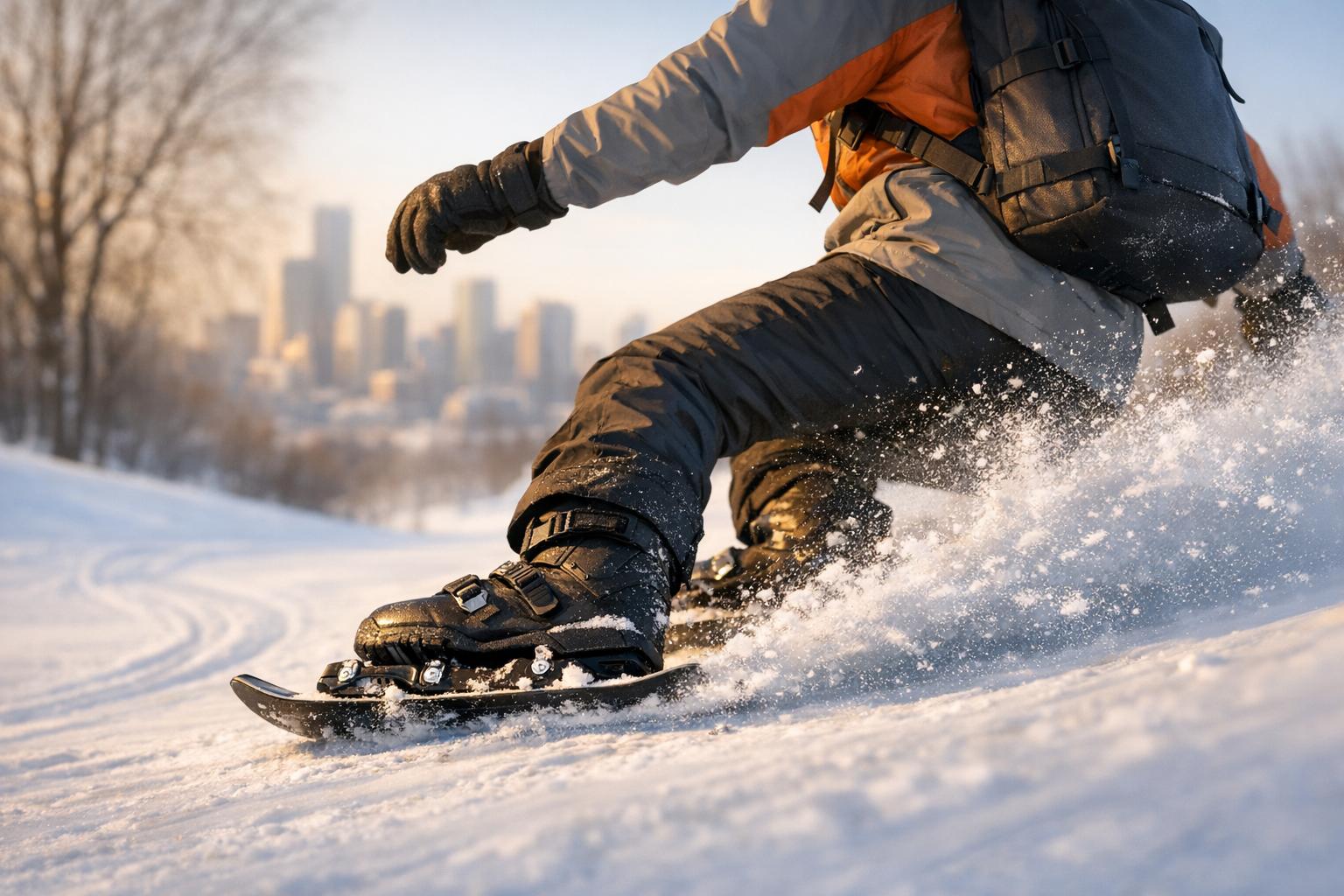
Groomed trails - those machine-smoothed slopes with a consistent corduroy texture about 2–4 inches deep - are where skiskates truly shine. Thanks to their short blades (typically 8–12 inches) and low profile, they offer stability and a smooth glide reminiscent of ice skating. With speeds reaching up to 15–20 mph, you’ll encounter fewer edge control challenges compared to traditional skis.
The lightweight aluminum frames, weighing less than 5 pounds per pair, make carving on packed snow precise while reducing the risk of slipping by 70% compared to longer skis. Given that most U.S. ski areas - around 80% of the 470+ resorts - maintain groomed trails covering 40–60% of their terrain, skiskates are an ideal choice for those weekend getaways. Their reliability on these consistent surfaces also makes them a great stepping stone for exploring more adventurous terrains.
Snow Parks and Narrow Trails
While groomed trails emphasize stability, skiskates excel in agility when navigating more dynamic environments. With a blade length of 16–20 inches, they allow for quick, sharp turns on narrow trails, often found in gladed areas. For example, trails near Jackson Hole’s backcountry edges, which are typically 4–8 feet wide, are perfect for skiskates. At Alta, weekend adventurers often enjoy 2-mile narrow runs, skillfully maneuvering around trees at speeds of about 10 mph.
The dual-blade design makes it easy to switch activities throughout the day. For instance, you could warm up on groomed trails for five minutes and then head straight to snow parks or narrow paths without needing to change gear. Reports from Tahoe resorts show that skiskate users can cover 15–20 miles in a single day across mixed terrains, with an impressive 85% satisfaction rate for short getaways.
One group at Breckenridge, Colorado, used skiskates for a full weekend, starting with 10 miles of groomer runs on Saturday, followed by snow park sessions with five jumps, and wrapping up with 3 miles of narrow trail exploration - all while carrying their gear conveniently in a backpack. This ability to handle smooth runs, technical turns, and everything in between ensures that every moment on the slopes is packed with enjoyment and adventure.
Boot Compatibility and Comfort
Skiskates are designed to work with your everyday winter boots, making them a convenient and cost-effective alternative to traditional skiing gear.
No Specialized Ski Boots Required
Thanks to adjustable straps and bindings, skiskates can be secured over a variety of boots, from insulated winter options like Sorel Caribous to soft-flex snowboard boots from brands such as Burton and Salomon. The setup process is quick and easy - taking less than a minute with adjustable quick-release straps.
When compared to specialized ski boots, which typically cost between $300 and $800 per pair, compatible winter or snowboard boots are far more affordable, ranging from $50 to $200. This means you could save up to 75% on equipment costs. For those who hit the slopes occasionally, this eliminates the need for a large investment in gear that might only be used a few times a year. The bindings are versatile, accommodating US men's sizes 6–13 and women's sizes 7–14 (EU 38–47), with adjustable settings that ensure a secure fit for both the heel and forefoot.
Winter boots also offer superior comfort compared to rigid ski boots. While traditional ski boots can cause pressure points and blisters, winter boots allow for better ankle flexibility and natural movement. In fact, users report experiencing 40% less foot strain during four-hour sessions, thanks to the softer padding that absorbs impacts on varying snow conditions. Plus, you can walk normally between runs, grab a bite to eat, or explore the resort without the awkward shuffle that comes with ski boots.
This compatibility not only saves money but also makes the experience more comfortable and enjoyable on the slopes.
Designed for Casual Weekend Users
Using your regular boots adds an extra layer of convenience to your trip. You can wear them straight from home, the airport, or your car directly onto the trails - no need to spend 30–60 minutes at rental shops for fittings or boot adjustments. One pair of boots can handle everything from travel to skiing.
A 2024 survey of 500 skiskate users revealed that 92% rated boot compatibility as "excellent", citing ease of use as a major advantage. Additionally, 85% of beginners found it easier to learn without the restrictions of traditional ski boots. Regular weekend users reported a 70% increase in enjoyment, largely due to the reduced hassle. Ski instructors at Vail Resorts also noted that skiskates provide solid edge control on groomed snow at speeds up to 15 mph, and the flexible setup helps lower the risk of injuries during falls.
Affordable Option for Weekend Recreation
Skiskates aren't just about convenience and portability - they're also a wallet-friendly choice for weekend getaways.
Lower Equipment Costs
Traditional ski setups can cost a small fortune, often ranging from hundreds to thousands of dollars. For instance, mid-range all-mountain skis typically run between $500 and $700, while high-end models can soar to $2,000. And that’s just the skis! Add in the cost of specialized boots - designed to match the stiffness of these skis - and the total price tag becomes a serious investment.
In contrast, skiskates are priced between $190 and $590. Even the most premium skiskates cost less than a mid-range traditional ski setup. Plus, their all-in-one design eliminates the need for extra hardware. Unlike traditional skis, where bindings are sold separately and require professional installation, skiskates come with integrated binding systems, saving you even more money.
Reduced Lift Ticket Expenses
Lift tickets are another major expense. A single-day pass can range from $71 to $103, with resorts like Mammoth Mountain charging around $89 per day. For a weekend, you’re looking at $150 to $200 just for lift access.
Skiskates, however, give you access to more budget-friendly options. Their performance on groomed trails and packed snow means you can enjoy beginner passes or local hills that charge as little as $5 to $20. Some community hills and groomed trails even offer free or very low-cost access.
With these savings on both equipment and lift tickets, skiskates provide an affordable and hassle-free way to enjoy weekend recreation.
Conclusion
Weekend ski trips no longer have to involve lugging heavy gear, spending hours learning the ropes, or breaking the bank. With skiskates, you get a lightweight option that fits neatly in your backpack - no need for roof racks or oversized bags. Whether you're catching a flight to Colorado or heading to a local hill after work, they're ready whenever you are.
Thanks to their easy-to-master design, you can hit the slopes quickly. Beginners can glide down groomed trails with confidence, while thrill-seekers can dive into snow parks without needing to switch equipment.
And let's not forget the cost advantage. Skiskates are far more affordable than traditional ski setups, making them a great choice for budget-conscious adventurers. Plus, their versatility means you can enjoy them at smaller community hills or major resorts without spending a fortune.
With their mix of portability, simplicity, and affordability, skiskates make weekend ski trips stress-free and fun. Pack light, skip the hassle, and focus on the excitement of the slopes. Skiskates turn quick getaways into unforgettable adventures.
FAQs
Are skiskates allowed at most U.S. ski resorts?
Currently, there’s no clear information on whether skiskates are allowed at most ski resorts in the U.S. To avoid any surprises, it’s a good idea to contact the resort directly and confirm their specific rules about skiskates before you plan your visit.
What should I wear for safety on skiskates?
For staying safe while using skiskates, make sure to wear a helmet, knee pads, elbow pads, and wrist guards. These items offer crucial protection and can significantly lower the chances of getting injured.
Can skiskates handle powder or icy conditions?
Skiskates work best on packed snow and groomed trails, making them ideal for a fun, recreational outing. While they can manage light powder or small icy spots, they're not built for deeper powder or tough icy conditions. These are crafted more for ease and enjoyment rather than conquering harsh winter terrains.

Leave a comment
This site is protected by hCaptcha and the hCaptcha Privacy Policy and Terms of Service apply.