

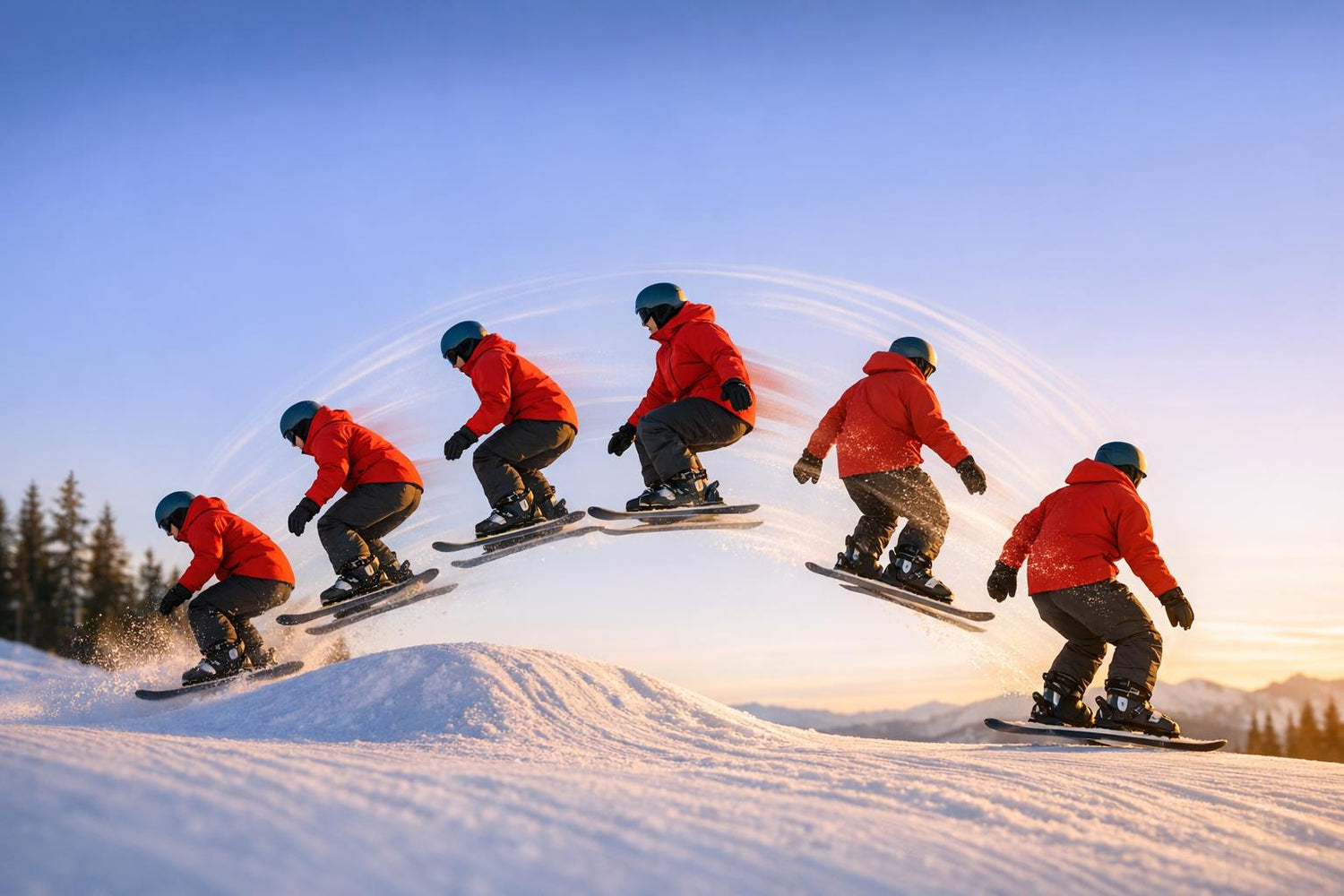
Skiskates are compact, lightweight alternatives to traditional skis, designed for freestyle enthusiasts looking to perform tricks and maneuvers with ease. Their twin-tip construction, short length, and soft flex make them perfect for spins, jumps, and ground tricks. Key features like adjustable bindings and compatibility with both ski and snowboard boots add convenience, while their portable design makes them easy to carry.
Key Highlights:
- Twin-tip design: Enables riding forward and backward for smooth landings.
- Short and lightweight: Improves agility and reduces fatigue during tricks.
- Adjustable bindings: Compatible with ski and snowboard boots for flexibility.
- Soft flex: Absorbs impact during landings and enhances control.
Top Models:
- Skiskates Ski Boots Model ($490): Optimized for ski boots, with a wood core for natural flex and steel edges for better grip.
- Skiskates Snowboard Boots Model ($490): Designed for snowboard boots, offering enhanced lateral movement and softer flex.
- Snowfeet 50 PRO ($299): Budget-friendly option for beginners, durable for park riding and trick progression.
Whether you're a beginner or an advanced rider, skiskates offer an easy way to learn freestyle basics or refine advanced techniques like switch riding, spins, and aerial tricks.
Design Features That Support Freestyle Riding
Twin-Tip Construction
The twin-tip design is a game-changer for freestyle riding. With identical shapes at both the front and tail, skiskates allow you to ride backward (switch) just as easily as you move forward. This symmetry is a huge confidence booster when you're landing tricks, spinning, or hitting rails, as it ensures smooth transitions no matter which direction you're facing.
Short Length and Lightweight Build
Freestyle performance isn’t just about symmetry - it’s also about size and weight. Skiskates are designed to be roughly 4 inches shorter than the rider's height, giving you better control and agility on the slopes. This compact size makes rotations and spins feel effortless. Plus, the lightweight build minimizes fatigue, especially during extended sessions, and gives you more freedom for aerial tricks.
The lighter weight also helps with absorbing shocks during landings. Pair that with a softer flex pattern, and you’ve got equipment that offers a natural rebound for jumps and makes ground tricks feel smooth and responsive. The design also allows quick sideways movements, perfect for sharp stops and precise edge control.
Adjustable Bindings and Flex Patterns
One standout feature of skiskates is their adjustable bindings, which are compatible with both ski and snowboard boots. They’re also tool-free, so you can make adjustments on the fly. The flex pattern - essentially how much the skiskates resist when you lean forward - plays a big role in trick performance. Softer flex settings (around 60–80) are ideal for freestyle riders, offering better shock absorption and ankle mobility during jumps.
"Freestyle/Park Skiers: Often prefer slightly softer boots for flexibility and shock absorption during jumps and tricks." – Vertical Addiction
It’s worth noting that flex can change with temperature. Cold weather can stiffen plastic components, which might alter how your skiskates feel on the mountain. Choosing the right flex for your skill level not only helps you maintain control but also keeps fatigue at bay during long runs. These adjustable features make it easier to tackle a variety of freestyle tricks with confidence and precision.
sbb-itb-32287b2
Best Skiskates Models for Freestyle Riding
Skiskates Ski Boots Model
The Skiskates Ski Boots Model, priced at $490.00, is tailored for those who prefer ski boots. It features adjustable, tool-free bindings, allowing you to fine-tune your stance effortlessly while on the slopes. This design ensures secure landings and smooth transitions for rail slides.
What sets this model apart is its handmade European craftsmanship, built with a sustainable wood core, steel edges, and cap construction. The wood core provides a natural flex, making it ideal for butters and ground tricks, while the steel edges deliver the grip needed for sharp turns and precise rail work. Its compact design makes it easy to carry, and the lightweight build helps reduce fatigue during extended sessions.
If you’re looking for a model designed for snowboard boots, the next option offers a unique fit and improved lateral control.
Skiskates Snowboard Boots Model
Also priced at $490.00, the Skiskates Snowboard Boots Model is designed specifically for riders who prefer snowboard boots. The bindings are engineered to accommodate the wider and softer structure of snowboard boots, providing excellent ankle support and flexibility - key elements for pulling off aerial tricks and landing switch.
Like the Ski Boots Model, this version features premium construction, but it’s optimized for freestyle riders with enhanced lateral movement and softer boot flex. This combination allows for better control during spins and rotations, while also ensuring smoother landings. The tool-free adjustment system makes it easy to tweak your setup on the fly, letting you adapt to different terrains or trick styles without slowing down.
For a more budget-friendly option, take a look at the next model.
Snowfeet 50 PRO
The Snowfeet 50 PRO, priced at $299.00, offers an affordable way for riders to dive into freestyle riding. Built with durable, high-performance materials, this model is designed to withstand the rigors of park riding and trick progression.
At this price, you’re getting gear that can handle repeated impacts and edge work, making it perfect for developing skills like spins, jumps, and switch riding. Its solid construction ensures reliable performance across various snow conditions, while the compact design makes it easy to transport and store - great for riders who want to focus on improving their freestyle moves without breaking the bank.
10 Freestyle Ski Drills for Beginner To Advanced Skiers
Freestyle Techniques You Can Perform with Skiskates
Skiskates, with their compact and agile design, open up a world of freestyle possibilities for riders, offering the precision needed to pull off a variety of tricks.
Switch Riding and Spins
The shorter length of skiskates reduces swing weight, making spins and 180-degree rotations smooth and manageable. To get started, keep your weight centered and your knees bent. When initiating a spin, maintain a wide stance for stability, then bring your legs together as you rotate to enhance speed and control. Use your front foot as a pivot while your rear foot guides the spin. For rail or box pivots, slightly extend your legs to "unweight" yourself - this reduces friction and keeps the skiskates gliding smoothly without lifting off the surface.
When riding switch, focus on staying on your uphill edges to avoid catching an edge. Begin by practicing the wheelie position - shift your weight over the tails, keeping your hips low and back. This position helps build the core strength and balance needed for advanced switch maneuvers like butters.
These foundational spin techniques pave the way for more advanced aerial tricks.
Jumps and Aerial Tricks
Nailing jumps begins with proper preparation before leaving the ground. Avoid crouching too much at the lip of the ramp; instead, let the ramp do the work for you. Professional freeskier Paddy Graham advises:
"A lot of people attempting their first jumps instinctively crouch down and jump off the end of the ramp. Let the ramp do the work and stay solid as you take off."
Your head position is crucial for controlling spins in the air. Graham emphasizes:
"To perfect a jump and maintain full control as your body spins, it's all about your head position. Always keep your head up and your eyes forward."
Looking down at the ground can disrupt your balance, leading to awkward landings. For smooth landings, keep your weight centered or slightly forward. Use your legs to absorb the impact by squatting as you touch down, then push back up to regain stability. Practice landing with both skiskates parallel and perpendicular to the slope to improve your balance. Start with simple grabs, like the Safety Grab, before moving on to more advanced aerial moves.
Once you’ve mastered aerial control, you can channel that balance into creative ground tricks.
Butters and Ground Tricks
Skiskates’ natural flex and short length make them ideal for ground tricks. One of the most fundamental moves is the wheelie. To perform it, shift your hips low and back over the tails, engage your core to keep your shoulders aligned over your hips, and keep your feet close together for side-to-side stability.
"Wheelies are not only stylish but extremely practical!" – Ollie Barbour, Ski Addiction
The switch butter 180 combines multiple skills into one fluid motion. Start by riding switch with a wide, staggered stance. Initiate a 180-degree spin, and at the halfway point, lean your hips back over the tails to lift the noses. As you complete the rotation and face forward, pull your feet back under your center of gravity to avoid landing in a backseat position.
For surface pivots and slashes, the key lies in managing pressure effectively. Slightly extend your legs during the pivot to reduce pressure and ensure smooth, controlled rotations.
Benefits of Skiskates for Freestyle Riding
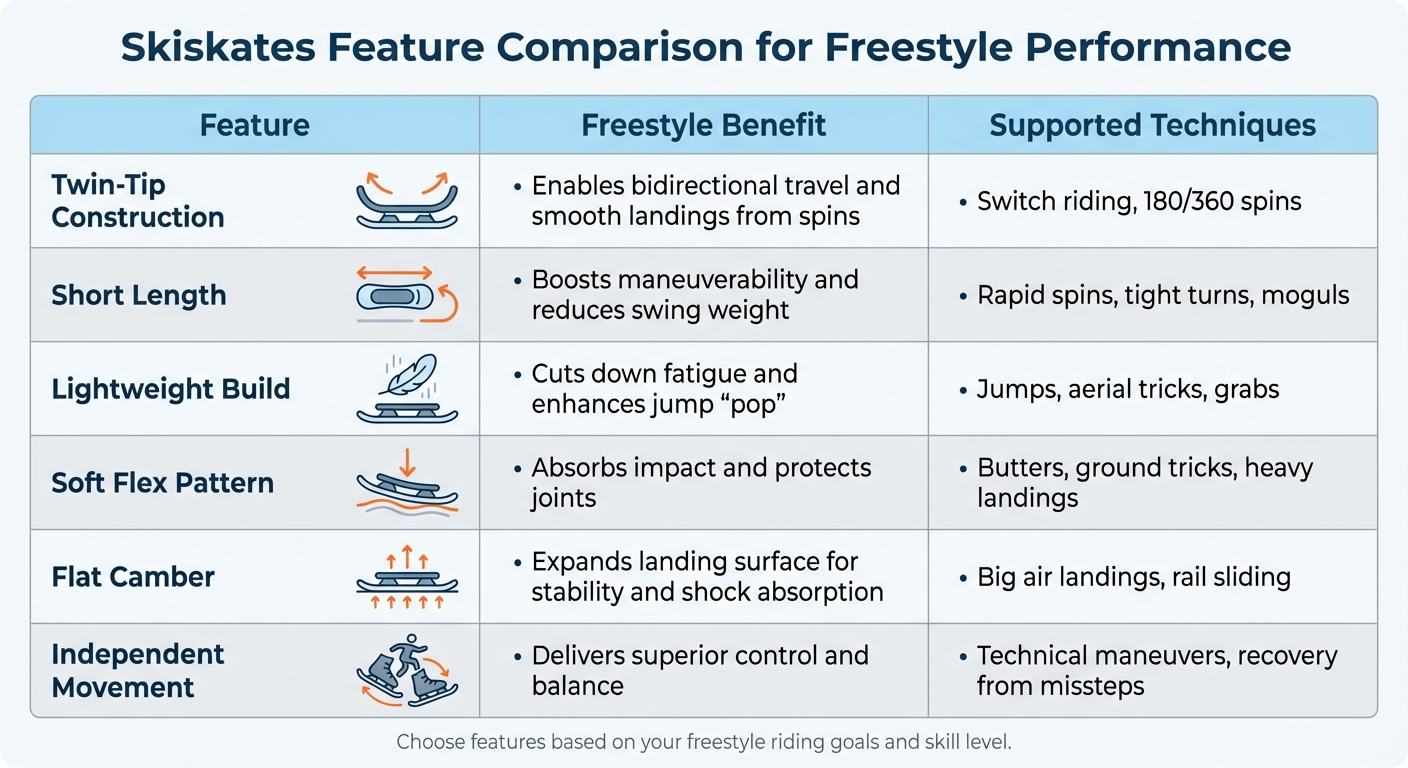
Skiskates Feature Comparison for Freestyle Performance
Skiskates bring a fresh twist to freestyle riding with their clever design and performance-focused features.
Their compact and lightweight build reduces swing weight, making spins smoother, stops quicker, and edge control sharper. This design gives riders the agility they need to nail technical tricks with confidence.
Another standout? Portability. Unlike bulky ski gear, Skiskates fit snugly into a backpack, making them easy to carry wherever your freestyle adventures take you.
The independent leg movement they offer is a game-changer. It allows for precise control and balance, crucial for pulling off technical maneuvers and bouncing back smoothly from off-balance landings. This feature also helps maintain momentum, especially on flat terrain.
To top it off, their aerodynamic positioning reduces air resistance, making speed-focused freestyle runs more efficient and helping riders hit impressive speeds.
Feature Comparison Table for Freestyle Performance
| Feature | Freestyle Benefit | Supported Techniques |
|---|---|---|
| Twin-Tip Construction | Enables bidirectional travel and smooth landings from spins | Switch riding, 180/360 spins |
| Short Length | Boosts maneuverability and reduces swing weight | Rapid spins, tight turns, moguls |
| Lightweight Build | Cuts down fatigue and enhances jump "pop" | Jumps, aerial tricks, grabs |
| Soft Flex Pattern | Absorbs impact and protects joints | Butters, ground tricks, heavy landings |
| Flat Camber | Expands landing surface for stability and shock absorption | Big air landings, rail sliding |
| Independent Movement | Delivers superior control and balance | Technical maneuvers, recovery from missteps |
Altogether, these features give freestyle riders the tools they need to push boundaries with precision and ease.
How to Improve Your Freestyle Skills on Skiskates
If you're looking to take your freestyle moves to the next level, targeted drills are your best friend. Skiskates, with their compact and nimble design, make it easier to refine your technique and expand your trick list.
Start with switch riding, which is essentially skiing backward. This is the foundation for nearly all freestyle tricks. Keep your skiskates parallel and practice scanning your surroundings by looking over both shoulders. This habit is key for spotting landings and planning your moves. Once you’re comfortable riding switch, you’ll be ready to tackle spins and more creative park lines. From there, work on smooth transitions into jumps.
When it comes to jumps, start small. Begin with table-top jumps and focus on straight airs to build confidence. Keep your weight centered as you approach the jump. Professional freeskier Paddy Graham offers this tip:
"Keep your weight quite central, or even a little bit forward, and use your power to do a squat, hit the snow and then stand back up again, because otherwise you run the risk of falling over".
For spins, remember to keep your head up - looking down can throw off your balance. Spot your landing before you touch down, and let the ramp do the work by staying firm at the jump lip. Once you’ve nailed straight airs, progress to 180-degree spins, and then work toward 360s. With consistent practice, most beginners can master these rotations within about six months.
Don’t underestimate off-snow training - it can really help. A trampoline is a fantastic tool for practicing aerial grabs and body positioning. As Graham suggests:
"For freestyle skiing the best practice off the slopes is to go on a trampoline and bounce around and get used to being in the air and grabbing your feet and putting your body in different positions".
For rail and box tricks, a balance board is a great way to train at home. It strengthens your core and improves stability, which is essential for sliding features.
When practicing on rails and boxes, start simple. Use a wide, flat stance and begin with plastic boxes that are level with the ground. Focus on sliding straight before attempting boardslides or progressing to narrower metal rails. The short length of skiskates makes it easier to learn these moves, as they provide quick feedback and reduce swing weight, helping you build muscle memory for each trick.
Conclusion
Skiskates are designed to bring freestyle fun and precise control to the slopes. With their twin-tip design, compact size, and lightweight build, they offer excellent maneuverability for spins, jumps, and ground tricks. The dual-edge setup adds stability for landings and sharp precision when tackling rails or boxes.
Their softer flex patterns help absorb impact, providing the rebound needed for aerial moves while reducing strain on your joints. Plus, on flat terrain, you can keep your momentum going without the hassle of unstrapping.
As Kinky Mitts perfectly puts it, "The slopes are our canvas, and the tricks are our masterpieces." Skiskates embody this freestyle spirit, allowing riders to showcase their creativity. They’re also beginner-friendly, making it easier for newcomers to get started.
For those looking to try something new in winter sports, skiskates offer a refreshing way to interact with the snow. Handmade in Europe using sustainable materials, they feature adjustable, tool-free bindings compatible with both ski and snowboard boots. Prices range from $190.00 to $490.00, giving riders a mix of portability, control, and freestyle-focused design. Whether you're a seasoned rider or just starting out, skiskates open up new possibilities to explore your limits on the slopes.
FAQs
What size skiskates should I get?
The right skiskate size depends on factors like your height, weight, and skill level. As a general rule, pick a size that falls between your chin and nose when standing upright. From there, you can adjust based on your experience and riding style to get the best balance of control and maneuverability.
Do I need ski boots or snowboard boots for skiskates?
No, you don’t need ski boots or snowboard boots to use skiskates. They’re made to work with regular winter boots or sturdy shoes that provide good ankle support and fit snugly. Just make sure your footwear offers enough stability for safe and enjoyable use.
Are skiskates safe to use in terrain parks and on rails?
When it comes to using skiskates in terrain parks or on rails, there isn't much detailed information available about their safety. It's crucial to prioritize your well-being by carefully assessing the conditions, mastering proper techniques, and wearing the right protective gear. This becomes especially important when you're trying tricks or navigating challenging features.


Leave a comment
This site is protected by hCaptcha and the hCaptcha Privacy Policy and Terms of Service apply.