

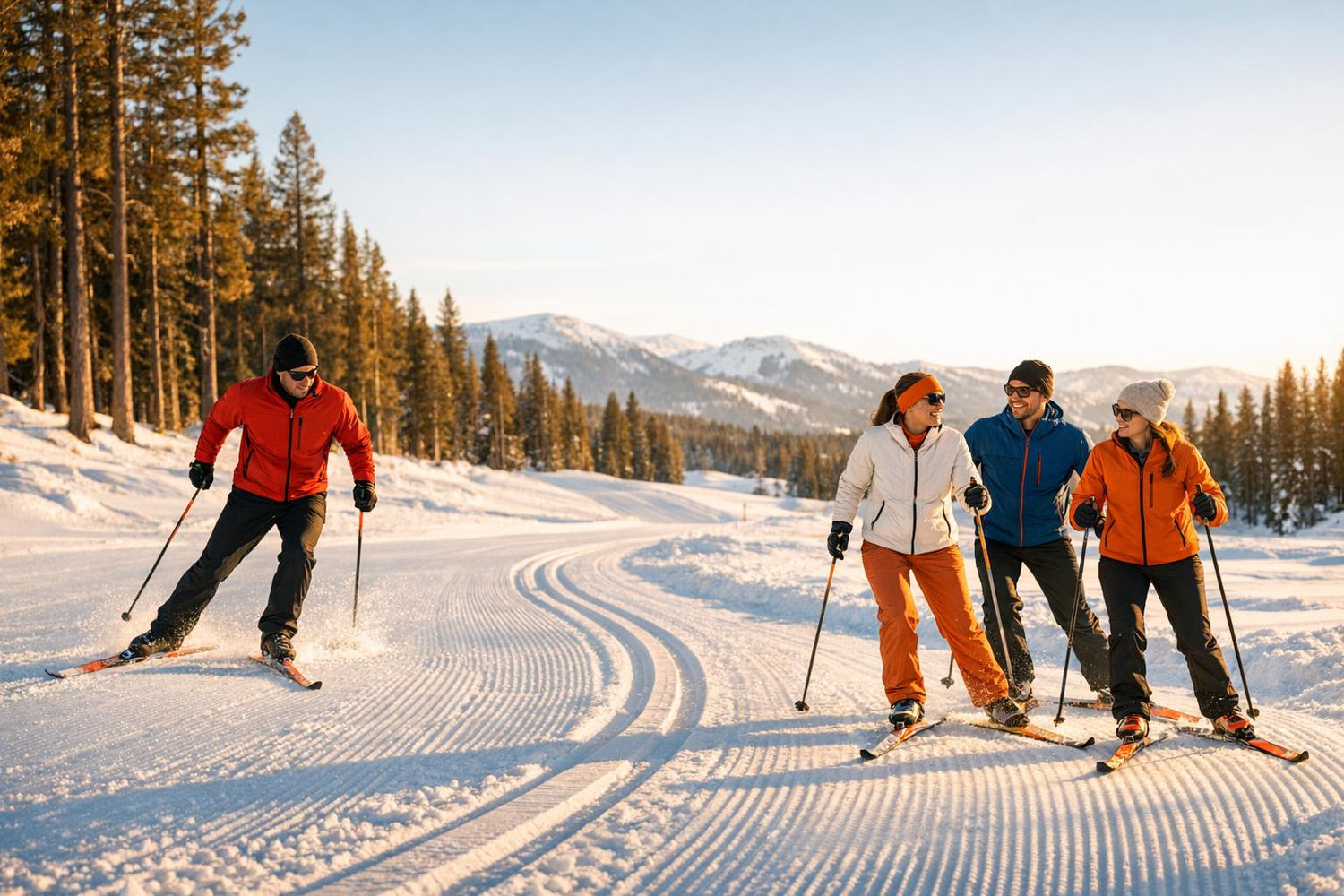
Skiskating is a dynamic winter activity that combines skiing and skating, offering fun for all skill levels. But is it better solo or with friends? Here’s the quick answer:
- Solo Skiskating: Gives you freedom to choose your pace, focus on personal improvement, and enjoy quiet time in nature. It’s great for skill-building but requires self-discipline and extra safety precautions.
- Group Skiskating: Adds social energy, shared memories, and safety in numbers. It’s ideal for learning from others and enjoying the camaraderie, but scheduling and skill-level differences can be tricky.
Quick Overview:
- Solo: Flexible, self-paced, focused practice, but less social and higher safety risks.
- Group: Social, motivating, safer, but less flexible and harder to coordinate.
Ultimately, your choice depends on your goals - whether you want personal growth or shared experiences. Why not try both for a balanced experience? Keep reading for a deeper dive into the pros and cons of each approach.
Skiskating Alone: Benefits and Drawbacks
Benefits of Solo Skiskating
Skiskating alone gives you full control over your experience - timing, pace, and location are entirely up to you. Jeff Schmuck, Editor at Forecast Ski, captures this perfectly:
"Hitting the slopes by yourself is a freeing experience. You can ski when you want, where you want and how you want. It's just you, alone on the slopes, embracing the peace, tranquility and beauty of nature."
This autonomy can speed up skill improvement. Practicing solo allows you to focus on specific techniques, such as edge pressure or weight shifts, for short, deliberate intervals (2–5 minutes). This kind of focused practice is key to refining motor skills. World Champion and Coach Yuka Sato highlights the importance of fundamentals:
"Basic skating skills are absolutely essential. They form the foundation of everything we do on the ice... These fundamentals create the base from which every jump, spin, and movement emerges."
Skating alone can also help you tap into a "flow state" - a mental zone where you're deeply focused, challenges match your abilities, and distractions fade away. Studies show that regular practice can even lead to physical changes in the brain, like an increase in the size of the vestibular cerebellum, which plays a role in balance and coordination. To get the most out of solo sessions, aim for 2–3 sessions per week, each lasting 30–45 minutes.
Beyond skill-building, solo skiskating offers mental clarity. It helps sharpen focus and quiet distracting thoughts. A simple pre-session breathing exercise - three slow breaths while balancing on one foot - can help you center yourself and start your session with focus.
Still, while solo skiskating has its perks, it also comes with some notable challenges.
Drawbacks of Solo Skiskating
The biggest concern when skating alone is safety. Without a partner, you're entirely responsible for yourself if something goes wrong. This means staying extra aware of your surroundings and taking precautions since there’s no one to assist in case of an accident.
Another downside is missing out on the social buzz that comes with group sessions. You won’t get to share the thrill of "party shredding" - the collective energy, cheers, and camaraderie that make skiing with friends so memorable. And let’s not forget the après-ski tradition of swapping stories over drinks, which many consider a highlight of the sport.
Finally, solo skiskating requires a lot of self-discipline. Without the external motivation of a group, it’s easier to cut sessions short or avoid challenging yourself on tougher terrain.
sbb-itb-32287b2
The Benefits of Skiing Solo
Skiskating with Friends: Benefits and Challenges
Group skiskating offers a completely different vibe compared to solo sessions, adding a social and motivational layer to the experience.
Social and Motivational Benefits
Skiskating with friends transforms a solo activity into a shared adventure, where the energy of the group can push you to try harder and improve faster. As one skater, Rikomatic, explains:
"Being among awesome people who are willing to share knowledge, encourage me, and to help solve problems has been a huge part of why I've stuck with rhythm skating for so long."
- Rikomatic
When you skate with others, you learn by watching and imitating, and you can get immediate feedback from your peers. This kind of hands-on, social learning can make up a significant portion - 50% to 80% - of your session time.
Safety is another big advantage of skating in a group. Friends can help you navigate tricky terrain, point out hazards, and assist if someone falls or has equipment trouble. Plus, group outings often cut costs. Whether it’s sharing travel expenses, park passes, or even swapping gear, skating with friends can save money. And let’s not forget the fun tradition of gathering afterward to share stories from the day.
That said, skating with a group isn’t without its challenges.
Challenges of Group Skiskating
One of the biggest hurdles? Scheduling. Unlike solo skating, where you can hit the slopes whenever you want, group outings require syncing everyone’s availability. This can make it harder to skate as often as you’d like.
Another tricky aspect is balancing skill levels within the group. Beginners (Levels 2–4) usually stick to groomed green trails, while advanced skaters (Levels 7–9) prefer steeper, more challenging runs. Finding terrain that suits everyone can be tough. On top of that, the social element, while fun and motivating, can sometimes pull focus away from actual skating. Without a clear plan, it’s easy to spend more time chatting than practicing those tricky maneuvers.
Group skiskating is a mix of camaraderie and compromise, offering both unique rewards and a few logistical hurdles.
Solo vs Group Skiskating: Side-by-Side Comparison
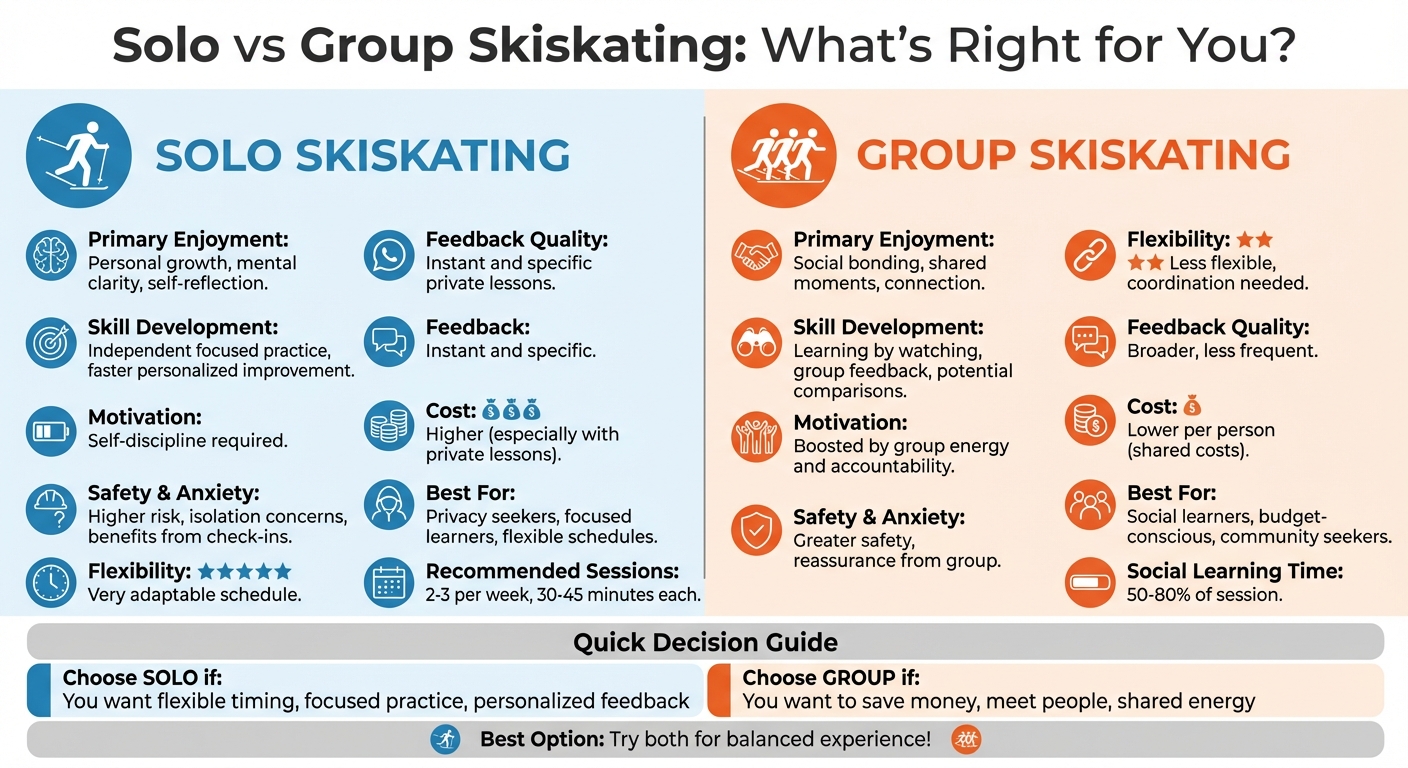
Solo vs Group Skiskating: Complete Comparison Guide
Take a look at the pros and cons of solo and group skiskating side by side:
Comparison Table
| Factor | Solo Skiskating | Group Skiskating |
|---|---|---|
| Primary Enjoyment | Personal growth, mental clarity, and time for self-reflection | Social bonding, shared moments, and a sense of connection |
| Skill Development | Independent, focused practice tailored to your pace; faster, personalized improvement | Learning through watching others and group feedback; potential for unhealthy comparisons that might affect confidence |
| Motivation | Relies on self-discipline and personal commitment | Boosted by group energy and shared accountability |
| Safety & Anxiety | Higher risk of feeling isolated or worrying about injuries; benefits from occasional check-ins | Greater sense of safety and reassurance from being part of a group |
| Flexibility | Very adaptable to your schedule | Less flexible due to the need to coordinate with others |
| Feedback Quality | Instant and specific feedback | Broader, less frequent feedback |
| Cost | Often higher, especially with private lessons | Generally lower per person, as costs are shared |
Both solo and group skiskating offer their own perks, catering to different preferences and goals. As roller skater and mental health advocate Mel Blackwood wisely said, "Comparison is the thief of joy". Whether you prefer the introspective nature of solo sessions or the lively atmosphere of group outings, there's something rewarding in either path.
How to Choose What's Right for You
Self-Assessment Tips
Deciding between solo and group skiskating depends on your personal goals and preferences. Each option offers a distinct experience, whether you're aiming for focused skill-building or the excitement of social interaction. It's all about what aligns best with your priorities - whether that's honing techniques quickly or enjoying the camaraderie of a group.
Your personality can guide this choice. If you value privacy, prefer tailored feedback, or want the flexibility to choose your terrain based on your mood, solo sessions might be your best fit. As Tyler Hall explains:
"Private ski lessons offer faster learning and skill development through personalized, one-on-one instruction, tailored feedback, and a customized learning experience focused on your specific goals and challenges."
On the flip side, group skiskating is ideal if you're looking to save money, meet new people, or thrive in a shared, energetic atmosphere.
Skill level also matters. Beginners often benefit from the focused attention of solo sessions, while intermediate and advanced skaters might enjoy mixing solo practice for technical improvement with group sessions for exchanging tips and tricks.
Practical considerations like scheduling and flexibility play a role too. Solo skiskating gives you full control over timing, while group sessions offer the fun of shared experiences. Hannah Cooperrider, Senior Manager of Experiences & Programs, highlights this dynamic:
"Group lessons bring the stoke and love for skiing and riding into focus. What you learn is as important as who you learn it with."
Once you've identified your style and goals, the next step is finding gear that enhances your experience and performance.
Product Recommendations
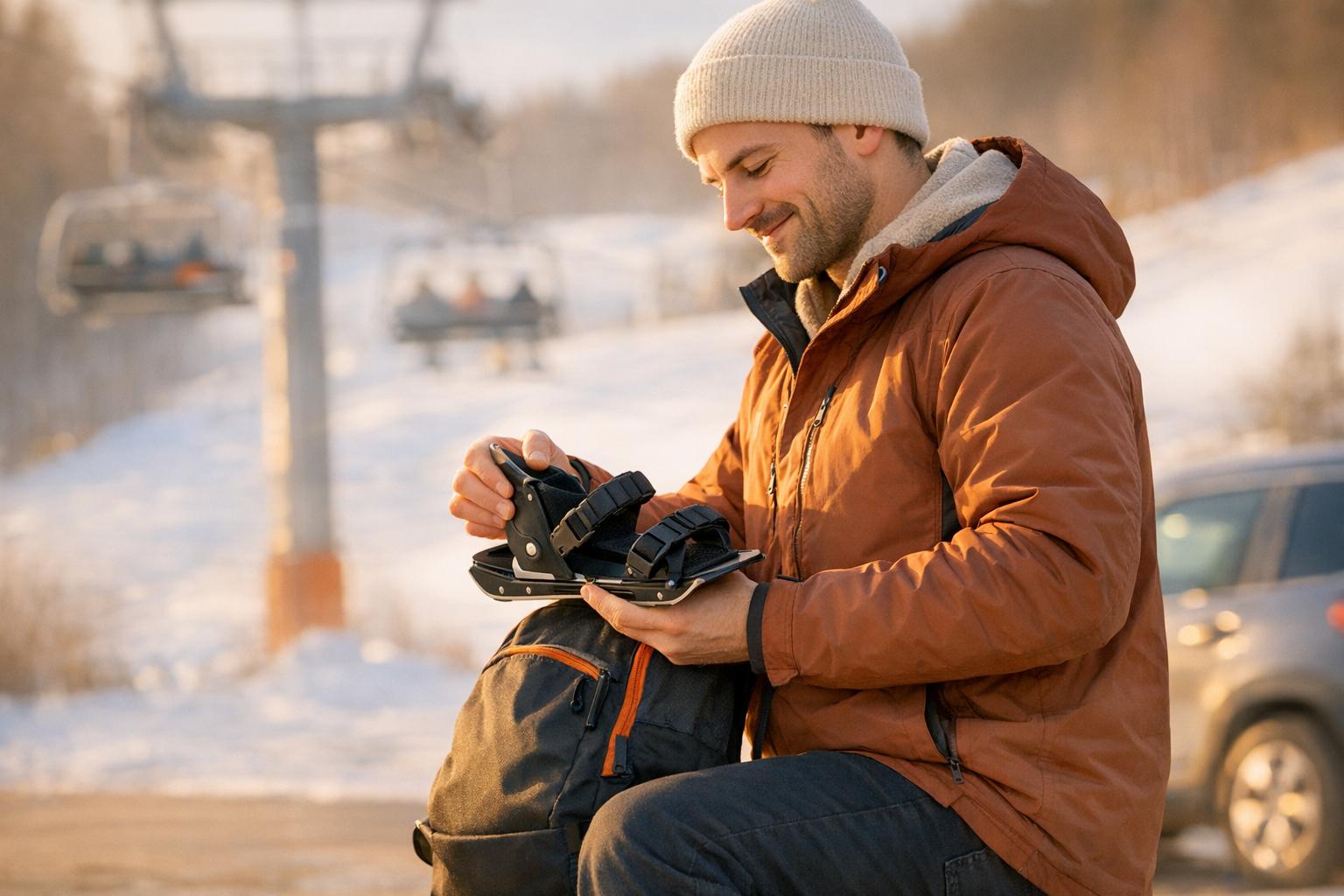
The right gear can make all the difference. For beginners venturing into solo skiskating, the Snowfeet Basic ($190.00) is a great choice. Its compact and lightweight design is easy to use, helping you build confidence at your own pace. Plus, it’s small enough to fit in a backpack.
If you’re drawn to group skiskating or enjoy social sessions at the snow park, the Snowfeet Skiblades 65 CM ($550.00) offers enhanced stability, making it perfect for playful trick sessions with friends. Its longer design provides better control while keeping the experience fun.
For advanced solo skiskaters aiming to refine their skills on varied terrains, the Snowfeet Skiblades 99 CM ($590.00) is a top-tier option. It’s built with premium materials and features the longest design, ideal for serious progression. Meanwhile, intermediate group skiskaters looking for a balance of performance and value should check out the Snowfeet 50 PRO ($299.00). It’s durable and versatile, making it a practical choice for shared adventures.
Conclusion
Choosing between solo and group skiskating ultimately comes down to your personal goals and the distinct experiences each option provides. Solo skiskating offers the freedom to set your own pace, choose your terrain, and skate on your schedule. On the other hand, group skiskating brings the excitement of shared energy, teamwork, and the joy of learning together.
Solo skiskating lets you enjoy a meditative focus and self-paced improvement - it's just you, the slopes, and the thrill of carving your path. In contrast, group sessions are all about the camaraderie, laughter, and collective "stoke" that make every outing unforgettable.
Why choose one when you can enjoy both? Spend some time exploring the mountain solo to embrace the quiet focus and personal growth it offers. Then, switch it up by joining friends or a group to share the fun and motivation that comes with skating together. Alternating between the two can keep your skiskating experience fresh and exciting.
No matter your preference, having the right gear is key. Whether you're starting out with the Snowfeet Basic or tackling advanced slopes with the Snowfeet Skiblades 99 CM, you'll be ready to make the most of every session. With Skiskates designed for all styles, you're equipped to explore every angle of this dynamic sport. Find your rhythm, hit the slopes, and enjoy the ride!
FAQs
Is it safe to skiskate alone?
When heading out for a solo skiskating session, it’s important to prioritize safety. Pay close attention to factors like the weather forecast, trail conditions, and your own skill level. These elements can significantly impact your experience and safety.
Additionally, always inform someone about your plans - where you’re going and when you expect to return. This simple step can be crucial in case of an emergency.
How do I handle different skill levels in a group?
Managing different skill levels in a group means creating an environment where everyone feels involved and gains something valuable from the experience. One way to achieve this is by grouping participants with similar abilities, ensuring activities remain enjoyable and balanced. For groups with mixed skill levels, private lessons can be a great solution, offering tailored pacing and individual support. Taking the time to assess skill levels beforehand and adjusting activities to match those abilities can make the experience rewarding for everyone involved.
What gear is best for solo vs group skiskating?
For solo skiskating, go with shorter, stiffer skis to enhance agility and precision. Pair these with lightweight poles and comfortable boots that let you concentrate on refining your technique and building skills.
For group skiskating, consider slightly longer, more flexible skis for better stability. Use standard-length poles and boots designed for all-day comfort, ensuring an enjoyable experience during social outings. While the equipment may seem similar, solo setups emphasize control, whereas group setups lean toward balance and ease for longer, shared sessions.

Leave a comment
This site is protected by hCaptcha and the hCaptcha Privacy Policy and Terms of Service apply.