

If you're a snowboarder looking for a new way to enjoy the slopes, skiskates might be the perfect fit. These compact, backpack-friendly mini skis combine skiing's glide with skating's agility. Designed to work with snowboard boots, skiskates offer a smooth transition for snowboarders thanks to their edge control and balance skills. Here’s what you need to know:
- What are skiskates? Mini skis (under 20 inches long) with steel edges and wood cores. They’re compatible with snowboard boots and great for terrain parks or groomed runs.
- Key differences from snowboarding: Skiskates require a forward-facing stance, independent foot movement, and a centered balance. They allow tighter turns and different stopping techniques.
- Models and pricing: Options range from $190 to $590. The $490 snowboard-boot-compatible model is ideal for tricks and resort slopes.
- Who should try them? Snowboarders with strong edge control will find skiskates intuitive and fun for carving, jumps, or casual rides.
Skiskates offer a fresh challenge for snowboarders, blending familiar skills with a new style of movement. Whether you’re hitting the terrain park or enjoying groomed trails, they’re a lightweight, portable option to expand your snow-riding experience.
Snowfeet* & Skiskates Complete Guide | All you need to know about Skiskating
sbb-itb-32287b2
Skiskates vs. Snowboards: Key Differences
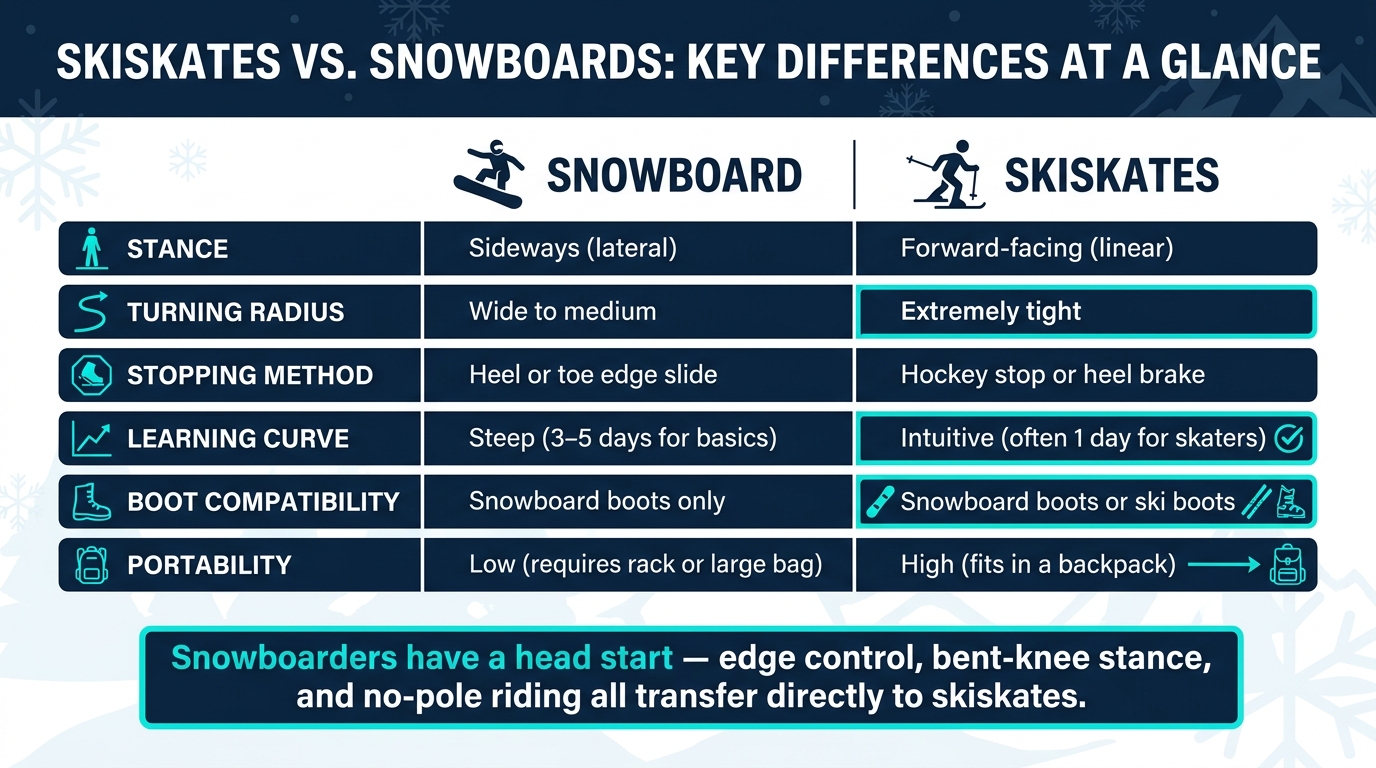
Skiskates vs. Snowboards: Key Differences at a Glance
How Skiskates Work
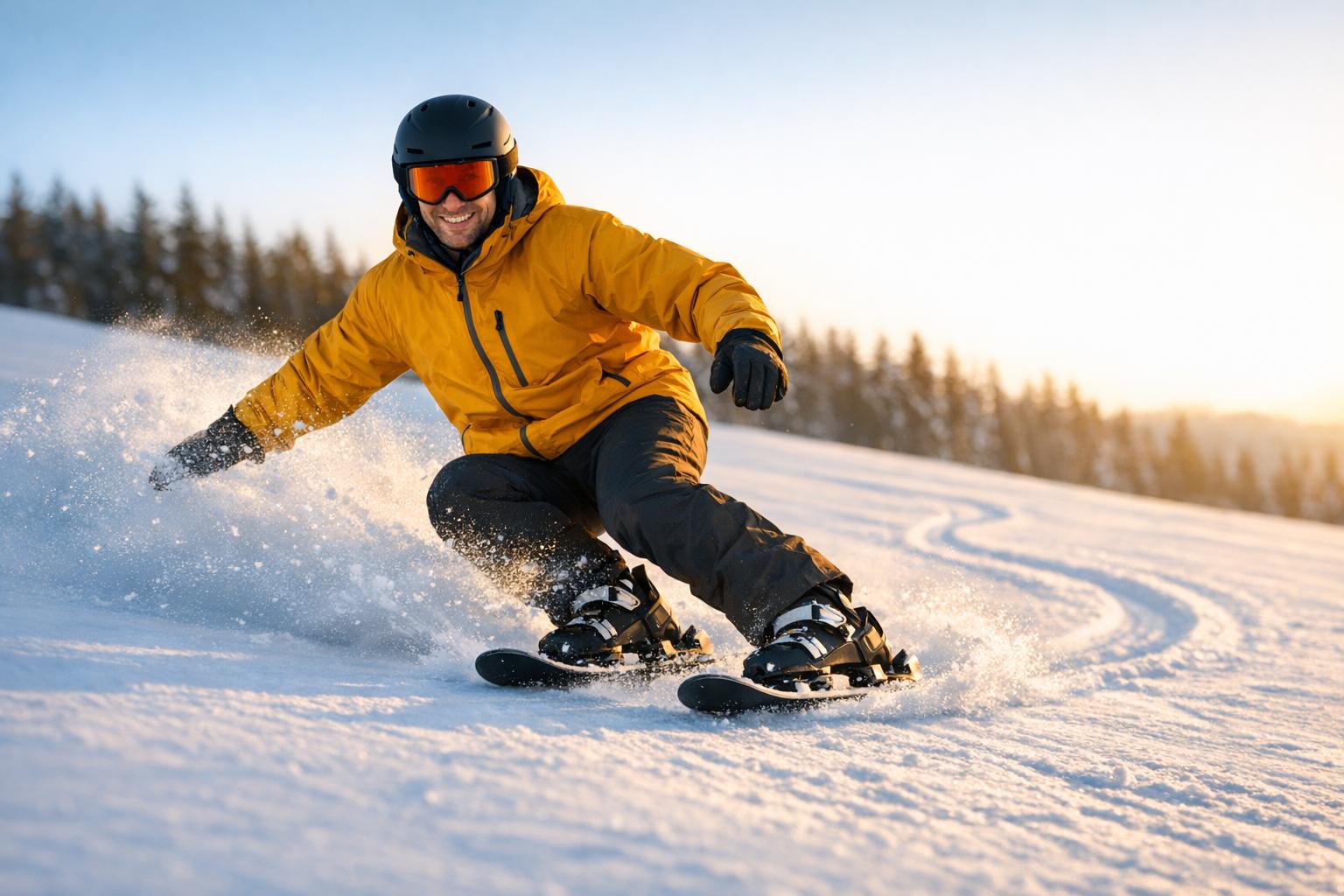
Skiskates are essentially two compact mini skis, each measuring less than 20 inches (about 50 cm) long - roughly a third of the length of an average snowboard. Unlike snowboards, which bind both feet to a single board, skiskates operate independently under each foot. They’re designed to work with standard snowboard boots, so there’s no need for special footwear. With steel edges and a wood core, skiskates provide solid grip and control on packed snow and groomed trails. However, their unique design calls for a different approach to riding.
Differences in Technique and Feel
The way you ride skiskates is distinct from snowboarding, largely due to their design. For starters, transitioning from a snowboard to skiskates involves a shift in stance. Snowboarders ride sideways, but skiskates require a forward-facing position - similar to walking or ice skating - which changes how you interact with the slope.
Turning is another area where the two differ. Snowboarders carve wide arcs by shifting their weight between the heel and toe edges of a single board. Skiskates, on the other hand, allow for independent foot movement. With a slight tilt of your ankles, you can pivot each skiskate, enabling incredibly tight turns.
Stopping also takes some adjustment. While snowboarders rely on sliding a single edge to stop, skiskaters need to coordinate both feet to slide in unison. Some skiskates even feature a heel brake, which isn’t something you’ll find on a snowboard.
One critical consideration: skiskates demand a more centered stance. A snowboard’s longer edge provides more room for weight shifts and balance recovery. With skiskates, leaning too far forward or backward can quickly throw you off balance, making it essential to stay centered over your arches.
Snowboards vs. Skiskates: Side-by-Side Table
| Feature | Snowboard | Skiskates |
|---|---|---|
| Stance | Sideways (lateral) | Forward-facing (linear) |
| Turning Radius | Wide to medium | Extremely tight |
| Stopping Method | Heel or toe edge slide | Hockey stop or heel brake |
| Learning Curve | Steep (3–5 days for basics) | Intuitive (often 1 day for skaters) |
| Boot Compatibility | Snowboard boots only | Snowboard boots or ski boots |
| Portability | Low (requires rack or large bag) | High (fits in a backpack) |
Choosing the Right Skiskates Model
Now that you know the differences, let’s dive into the best skiskate options designed with snowboarders in mind.
Skiskates Models for Snowboarders
Here’s the good news: you can use your current snowboard boots with these models. Skiskates offers models equipped with snowboard boot bindings that are compatible with your existing gear. According to Snowfeet:
"Snowboard bindings give you more flexibility while performing all kinds of tricks, they're super comfortable and you can walk with them anywhere without a problem."
There are two main types of skiskates to choose from. The shorter models, ranging from 44 to 50 cm, deliver that "skating on snow" experience. They’re perfect for spins, jumps, and quick turns, offering unmatched agility. On the other hand, the longer skiblades (65–99 cm) provide greater stability and a feel closer to skiing, making them ideal for carving down groomed trails at higher speeds.
Here’s a quick breakdown of the current models and their pricing:
- Snowfeet Basic - $190 | A beginner-friendly option for backyard fun and small hills.
- Snowfeet 50 PRO - $299 | Built with a fiberglass core, it’s versatile and great for beginners.
- Skiskates Snowboard Boots Model - $490 | Features a wood core, perfect for resort slopes, parks, and tricks.
- Snowfeet Skiblades 65 CM - $550 | Offers more stability and is popular in snow parks.
- Snowfeet Skiblades 99 CM - $590 | Designed for carving and light powder, with added stability.
How to Pick the Best Model for You
Start by checking your boots. Models with snowboard boot bindings are the easiest to transition to and accommodate US sizes 6–14.5, ensuring they fit most riders.
Next, think about where you’ll be riding. If you’re hitting groomed runs, terrain parks, or side hits, the Snowfeet 50 PRO or the Skiskates Snowboard Boots Model are solid picks. If you’re new to skiskates and want better front-to-back balance, the longer 99 cm Skiblades provide more stability without the bulk of traditional skis.
"Shorter means easier to control and less likely to cross tips when compared to longer skis." - Snowfeet Store
Shorter skiskates are fantastic for maneuverability, but they require precise balance and edge control. For snowboarders with strong edge control, the 44 cm wood-core model excels on slopes. If you’re still adjusting to the forward-facing stance, the 50 cm fiberglass model offers a smoother learning curve. The table below summarizes these options for a quick comparison.
Skiskates Models Compared: Table
| Model | Length | Boot Compatibility | Best For | Starting Price |
|---|---|---|---|---|
| Snowfeet Basic | ~40 cm | Winter shoes / Snowboard boots | Sledding hills, backyard | $190 |
| Snowfeet 50 PRO | 50 cm | Ski or Snowboard boots | Beginners, groomed runs | $299 |
| Skiskates Snowboard Boots Model | 44 cm | Snowboard boots | Resort slopes, parks, tricks | $490 |
| Snowfeet Skiblades 65 CM | 65 cm | Ski or Snowboard boots | Snow parks, side hits | $550 |
| Snowfeet Skiblades 99 CM | 99 cm | Ski or Snowboard boots | Carving, light powder, stability | $590 |
Transferring Your Snowboard Skills to Skiskates
Body Position Adjustments
Switching from snowboarding to skiskating requires a noticeable shift in how you position your body. On a snowboard, you ride sideways, but on skiskates, you face forward. This change influences your balance, field of vision, and how you recover from wobbles.
Morgan Engel, a CSIA Level 4 instructor, emphasizes the importance of the "athletic stance":
"A proper ski stance and posture stems from what I'd call the 'athletic stance'. To me this stance is quite universal with most sports."
To achieve this stance, bend slightly at your ankles, knees, and hips, keeping your shins in contact with the boot tongue. This forward shin contact ensures your weight stays just ahead of your heels, which is crucial for maintaining control. Tilt your pelvis forward and keep your arms slightly out in front of you to help with quick reactions and balance in all directions.
Once you’ve nailed this stance, your first runs will help you put these adjustments into practice.
Your First Runs on Skiskates
Start on a groomed, gentle slope. Begin by gliding straight to get used to the forward-facing stance before practicing the wedge. The wedge, or snowplow, is a braking technique where you point your skates' tips together, push your heels outward, and let friction slow you down. This method replaces the heel-edge braking used in snowboarding and lays the groundwork for linking turns by shifting your weight between skates.
Once straight gliding and the wedge feel natural, you can start building confidence on these beginner slopes, using your snowboarding experience to ease the learning curve.
How Snowboard Skills Speed Up Learning
If you’re a snowboarder, you have a solid head start. Your edge control skills transfer well to skiskating, as the muscle memory for engaging and releasing edges maps smoothly onto skiskating movements. Plus, you're already used to riding without poles, which simplifies the adjustment process. Freestyle instincts like air awareness, landing absorption, and terrain reading also carry over seamlessly. The biggest change is learning to move each leg independently instead of in sync, as you would on a snowboard.
Snowboard Skills vs. Skiskates Skills: Table
Here’s a quick comparison of snowboarding skills and their skiskating equivalents, along with the key adjustments you'll need to make:
| Snowboard Skill | Skiskates Equivalent | Key Adjustment |
|---|---|---|
| Heel/Toe Edge Braking | Wedge (Snowplow) | Push heels outward to create friction instead of relying on one edge |
| Carving | Parallel Turns | Apply pressure with each leg independently instead of rocking edge-to-edge |
| Balance Recovery | Centering | Press shins forward into boots rather than leaning back |
| Freestyle / Jumps | Absorbing Impact | Use the athletic stance to "suck up" skates during landings |
| Leg Movement (Tandem) | Independent Leg Steering | Shift weight to one skate at a time for better control |
Where You Can Ride Skiskates
Skiskates are a versatile option for snowy adventures. Their compact and lightweight build makes them suitable for a variety of terrains, whether you're exploring a ski resort or heading to a nearby sledding hill. Let’s dive into how they perform in different settings.
Skiskates in Terrain Parks
If you enjoy hitting terrain parks, skiskates are a great fit. They let you tap into your air awareness and landing skills. Start small - try low boxes and smaller jumps before progressing to spins or riding switch as you gain confidence. For these sessions, softer boots with a flex rating between 60 and 90 are ideal. They offer the flexibility and shock absorption needed for smoother landings and more control.
Skiskates on Groomed Runs
Groomed runs are perfect for skiskates, especially if you're focusing on speed and carving. Their steel edges give you solid grip on packed snow, making clean, precise turns easier. If you're aiming for a more aggressive ride, stiffer boots with a flex rating of 110 or higher are recommended. These provide better power transfer and edge precision, letting you push your limits on the slopes.
Backcountry and Sledding Hills
The portability of skiskates makes them an excellent choice for backcountry adventures or even quick runs down a neighborhood sledding hill. If you’re comfortable with snowboarding, you’ll find it easier to adapt to varied terrains. In backcountry settings, always ride with a partner and keep your phone accessible for safety. For cold, hike-heavy outings, a midweight merino wool base layer (around 185 gsm) works well to manage moisture while keeping you warm during breaks and transitions.
Safety Tips and Resort Etiquette
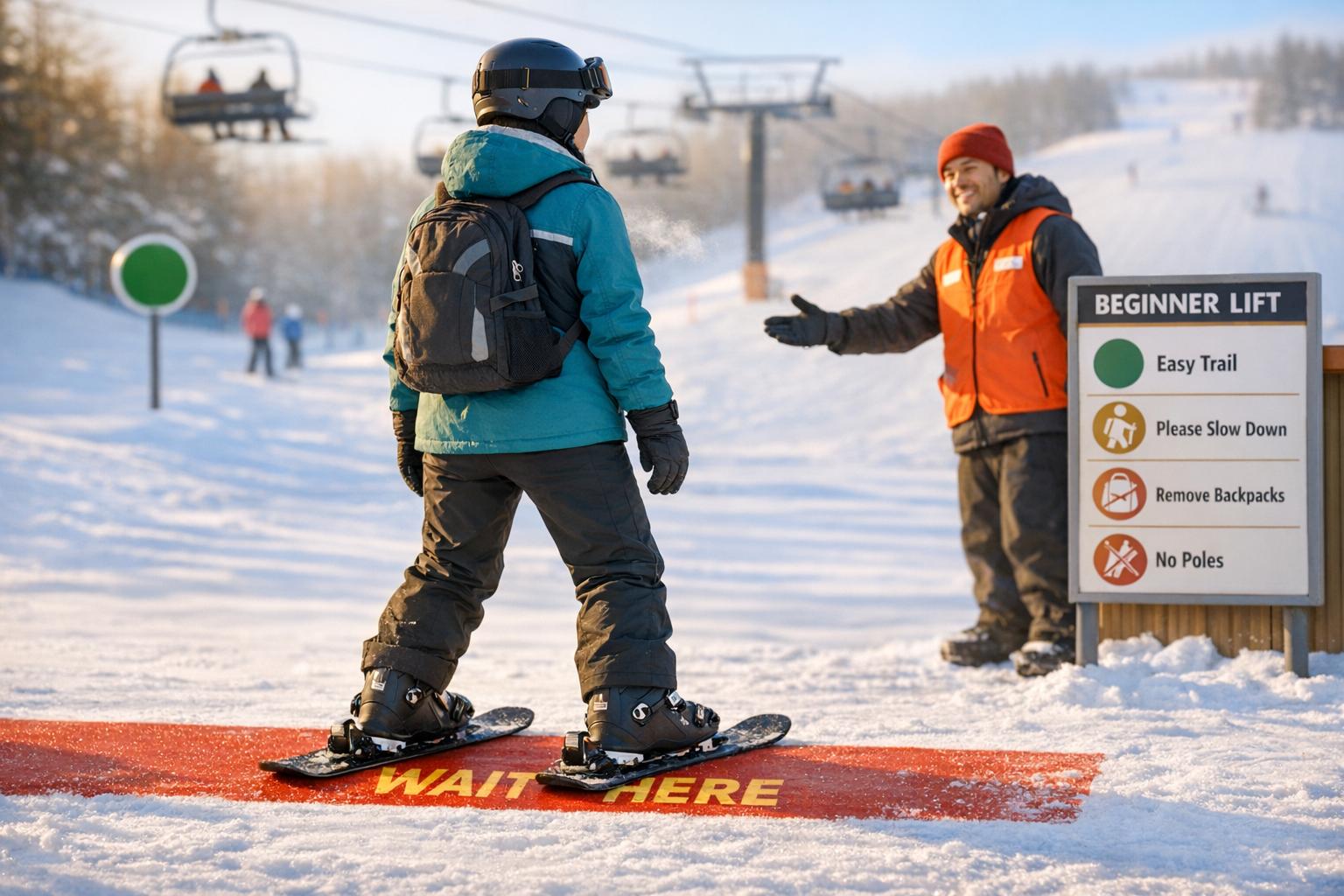
Before heading to a resort, familiarize yourself with safety rules and etiquette. Some resorts have restrictions on short-ski devices like skiskates, so check their policies in advance. Many resorts also require a leash or retention cord to prevent runaway skates, so be sure to have one handy.
When on the slopes, respect right-of-way rules. The downhill skier or rider always has priority. As Snowbasin Resort explains:
"The downhill skier or rider ALWAYS has the right of way. It's helpful to think of each skier or rider having a 15-foot bubble of space around them, never enter this space when you pass them." - Snowbasin Resort
Control your speed, especially in crowded areas or near blind spots like rollers. The National Ski Area Association emphasizes:
"Always stay in control. You must be able to stop or avoid people or objects." - National Ski Area Association
Conclusion: Why Skiskates Work for Snowboarders
Snowboarders have an advantage when it comes to picking up skiskates. Their experience with weight-shifting, maintaining a bent-knee stance, and riding without poles makes the transition smoother. As Fulkit Skateshop explains:
"Learning the basic fundamentals is relatively simple if you have some knowledge of board riding."
Skiskates stand out for their versatility - they're great for carving on groomed runs, tackling park features, or even venturing into backcountry trails. Plus, their compact size makes them easy to carry in a backpack.
A great example of this adaptability is the Skiskates Snowboard Boots Model ($490). Designed specifically for snowboarders looking to try skiskates, it features adjustable, tool-free bindings that work with your existing boots. This makes it a convenient and practical option for building on the skills you already have from snowboarding.
FAQs
Do I need poles to ride skiskates?
Skiskates don’t require poles for use. These short skis are specifically designed to combine skiing and skating techniques, making poles unnecessary for a smooth and enjoyable experience.
What’s the safest way to stop on skiskates at first?
To stop safely on skiskates as a beginner, focus on gradual braking techniques. Gently shift your weight backward and apply light pressure on your heels to slow down. Keep your balance steady and avoid any abrupt movements to minimize the chance of falling. It’s a good idea to practice on flat, safe ground before moving on to steeper slopes. Don’t forget to wear protective gear - like a helmet, wrist guards, and knee pads - for extra safety.
Will my ski resort allow skiskates?
Whether or not skiskates are permitted depends entirely on the rules of the ski resort you’re visiting. To avoid any confusion, it’s a good idea to reach out to the resort directly and confirm their policy. Rules can differ from one location to another, so checking ahead of time ensures there are no unexpected issues.

Leave a comment
This site is protected by hCaptcha and the hCaptcha Privacy Policy and Terms of Service apply.