

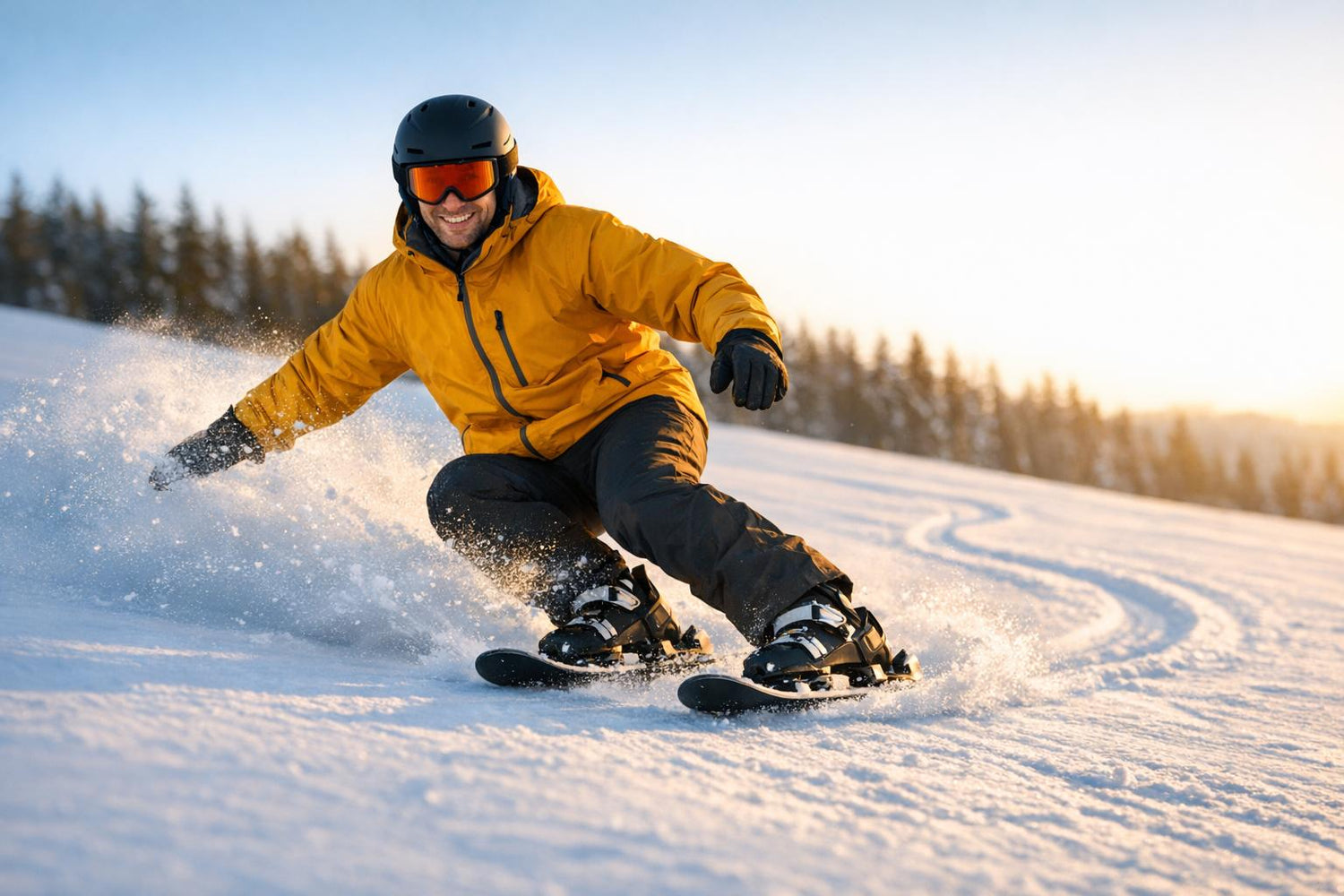
Skiskating offers a fresh way to move on snow, blending the mechanics of skiing with the lateral motion of ice skating. Using ultra-short skis, it emphasizes agility, fast direction changes, and a more dynamic experience compared to skiing. Here's what sets skiskating apart:
- Shorter Skis: Compact and easy to carry, skiskates allow for quick lateral movements and sharper turns.
- Adjustable Bindings: Provide more ankle mobility, unlike rigid ski bindings.
- Performance: Skiskates excel on groomed trails, snow parks, and sledding hills, but skiing is better for deep powder and backcountry terrain.
- Learning Curve: Beginners can pick up skiskating basics in just a few days, especially if they have skating experience.
While skiing is versatile and suited for various terrains, skiskating stands out for its agility and playful movement style. It’s a great choice for those seeking a lively, engaging snow sport.
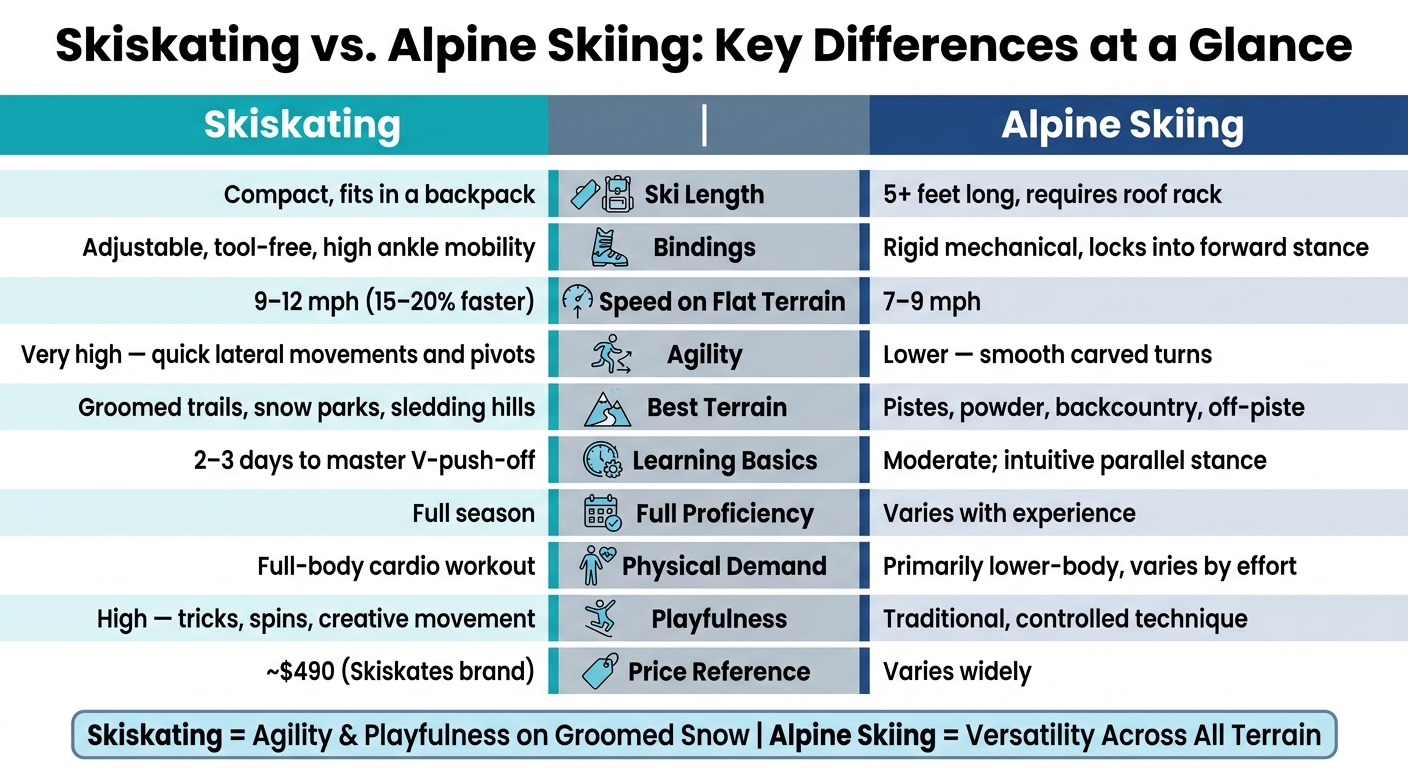
Skiskating vs. Alpine Skiing: Key Differences at a Glance
Equipment Design and Freedom of Movement
The equipment itself plays a huge role in reshaping how you move on the slopes. One of the most noticeable differences between skiskating and traditional skiing lies in what's strapped to your feet. Skiskates are significantly shorter than traditional skis, which can stretch over 5 feet long and often require bulky transportation solutions. This reduced size changes everything about how you maneuver.
Skiskates feature adjustable, tool-free bindings that work with both ski and snowboard boots. These bindings allow for greater ankle mobility, making it easier to pivot and perform lateral movements. Traditional skis, on the other hand, come with rigid bindings that lock you into a forward-facing stance, emphasizing straight-line control but limiting side-to-side flexibility.
The shorter length of skiskates also means less surface contact with the snow, giving them a quick and responsive feel. Carrie McCusker, a Level 2 TrainingPeaks coach, explains it well:
"Skis for skate skiing are shorter and stiffer to facilitate quick, lateral movements, contrasting with the longer and more flexible skis used in classic skiing."
Here's a quick breakdown of how skiskates compare to traditional skis:
| Feature | Skiskates | Full-Length Skis |
|---|---|---|
| Length | Compact; fits in a backpack | Long; requires roof rack or large carrier |
| Bindings | Adjustable, tool-free; no rigid lock-in | Rigid mechanical bindings |
| Ankle Mobility | High; ideal for pivoting and lateral movement | Limited; optimized for forward power transfer |
| Movement Style | Lateral sweeps and pivots | Linear stride or fixed V-pattern |
| Portability | Easy to carry | Bulky and cumbersome |
These differences in design are what give skiskating its dynamic, playful edge. Traditional skiing rewards precision and a fixed stance, while skiskating thrives on adaptability, encouraging you to interact with the terrain in a more fluid, reactive way. It’s a style that invites creativity, making every run feel like a new adventure.
sbb-itb-32287b2
On-Snow Performance: Agility and Terrain Range
The compact design of skiskates makes them incredibly responsive, allowing for quick weight shifts and sharp turns. This means you can change direction mid-run without the lag you’d experience with full-length skis. That kind of instant reactivity is a game-changer on varied terrain.
This responsiveness shines in areas where maneuverability takes priority. Skiskates are perfect for snow parks, hiking trails, and sledding hills - places where their agility outperforms the longer, sweeping movements typical of traditional skis.
Agility is the standout feature here. The shorter length of skiskates makes lateral movements and weight shifts much quicker, which leads to smoother edge transitions and more precise turns. This is especially useful on tight or uneven terrain, where control is crucial.
When it comes to speed on flat or rolling terrain, skiskates hold an edge. They’re 15–20% faster than traditional skis, with an average speed of 9–12 mph compared to 7–9 mph. This advantage comes from their efficient V-pattern push-off, which mimics the motion of ice skating.
These features make skiskating feel more dynamic and playful than traditional skiing. To give you a better sense of how the two compare, here’s a breakdown of their performance across different types of terrain:
| Terrain | Skiskates | Full-Length Skis |
|---|---|---|
| Groomed ski runs | Agile and fast; great for carving short turns | Excellent; designed for long, sweeping arcs |
| Snow parks | Perfect for spins, jumps, and riding backward | Usable but less nimble |
| Sledding hills | Easy to control; compact design fits tight spaces | Awkward due to their length |
| Hiking trails (snow-packed) | Handles uneven surfaces with ease | Less practical; limited adaptability |
| Ungroomed backcountry | Best on packed or groomed snow | Better for soft, unpredictable surfaces |
That said, there is one area where traditional skis maintain an advantage: ungroomed backcountry terrain. Their longer length distributes weight more evenly, making them better suited for deep powder or rough, unpredictable snow. On the other hand, skiskates are at their best on packed or groomed surfaces - the type of terrain most recreational skiers are likely to encounter.
Learning Curve and Skill Progression
Skiskating's charm lies in how quickly beginners can pick up the basics. Most people master the V-shaped push-off in just 2–3 days, though reaching a higher level of skill usually takes an entire season. This quick start stands in contrast to the slower, more methodical learning process of traditional skiing.
If you’ve done ice or inline skating before, you’ll likely find skiskating’s lateral movements easier to grasp. On the other hand, alpine skiing relies on a linear, parallel stance that feels more natural - almost like walking - and benefits from prior experience in similar activities.
That said, beginners often face challenges, like unlearning the habit of rolling through the ball of the foot. Instead, skiskating requires rolling through the inner edge, which can take focused practice to master.
"Skate skiing, while exhilarating, poses a steeper learning curve due to its need for balance and coordination in the side-to-side motion." - Carrie McCusker, Level 2 TrainingPeaks Coach
Here’s a breakdown of how learning milestones compare between classic alpine skiing and skiskating:
| Milestone | Alpine Skiing (Classic) | Skiskating |
|---|---|---|
| First Movement | Parallel stance, similar to walking | V-shaped push-off with inner edge roll |
| Basic Control | Intuitive and immediately approachable | Typically developed within 2–3 days |
| Terrain Adaptability | Can be practiced on a variety of slopes | Best performed on wide, groomed trails |
| Full Proficiency | Skill progression varies with experience | Generally achieved over a full season |
| Physical Demand | Primarily lower-body focused | Engages full-body strength and cardio fitness |
These milestones complement the earlier discussion on equipment and performance, emphasizing skiskating's dynamic and energetic appeal.
The shorter, stiffer skis used in skiskating - like those from Skiskates priced at $490 - offer more control during lateral movements. Their compact design provides a less intimidating way to dive into snow sports, making them an appealing choice for newcomers.
Pros and Cons
Skiskating and alpine skiing each bring their own set of strengths and challenges, making the choice between them depend on your goals, fitness level, and the type of terrain you prefer. Here's a side-by-side comparison to clarify the key differences:
| Criterion | Skiskating | Alpine Skiing |
|---|---|---|
| Speed | Faster on flat terrain once you master the technique | High speeds on descents, relying on gravity |
| Terrain Range | Works best on wide, groomed trails | Versatile - handles pistes, powder, and off-piste |
| Ease of Learning | Steeper learning curve; requires balance and coordination | Moderate; easier to pick up in controlled environments |
| Agility | Very high; shorter skis allow quick lateral movements | Lower; focuses on smooth, carved turns |
| Physical Demand | Full-body workout with strong cardio engagement | Varies; can range from casual to intense depending on effort |
| Playfulness | Highly playful; encourages tricks and creative movement | More traditional, emphasizing controlled technique |
One of skiskating's standout features is its energy and spontaneity. The side-to-side motion keeps your whole body engaged, and the shorter Skiskates (priced at $490) make experimenting with movements more accessible, without being tied to a rigid stance.
Alpine skiing, however, shines in its versatility. Whether you're carving down groomed runs, floating through powder, or exploring backcountry terrain, it adapts to a wide range of environments. This flexibility gives it an edge over skiskating, which primarily sticks to maintained trails, limiting when and where it can be enjoyed.
Conclusion
Skiskating adds a fresh twist to alpine skiing, bringing a lively, side-to-side rhythm that changes the way you enjoy the mountain. While alpine skiing emphasizes fast descents, skiskating introduces a lateral flow that turns each run into a dynamic full-body workout and an exciting chance to explore new movements.
With the gear and performance advantages already covered, consider adding skiskating to your repertoire. It’s a fun way to shake up your routine and experience the slopes from a whole new perspective.
FAQs
Do I need ski boots or snowboard boots for skiskating?
No, you don’t need ski boots or snowboard boots for skiskating. The shorter skis and the distinct technique used in skiskating make traditional ski or snowboard footwear unnecessary. This allows for more flexibility and easier movement.
What safety gear should I wear when skiskating?
When it comes to skiskating, wearing the right protective gear is a must to reduce the risk of injuries. Key items include a helmet, knee pads, wrist guards, and elbow pads. These essentials provide crucial protection during falls, helping you enjoy a safer and more confident experience on the slopes.
Are skiskates allowed at most U.S. ski resorts?
Skiskates are generally not allowed at most ski resorts in the U.S. They fall into a different category than traditional skis and often fail to meet the equipment standards specified in resort rules.

Leave a comment
This site is protected by hCaptcha and the hCaptcha Privacy Policy and Terms of Service apply.