

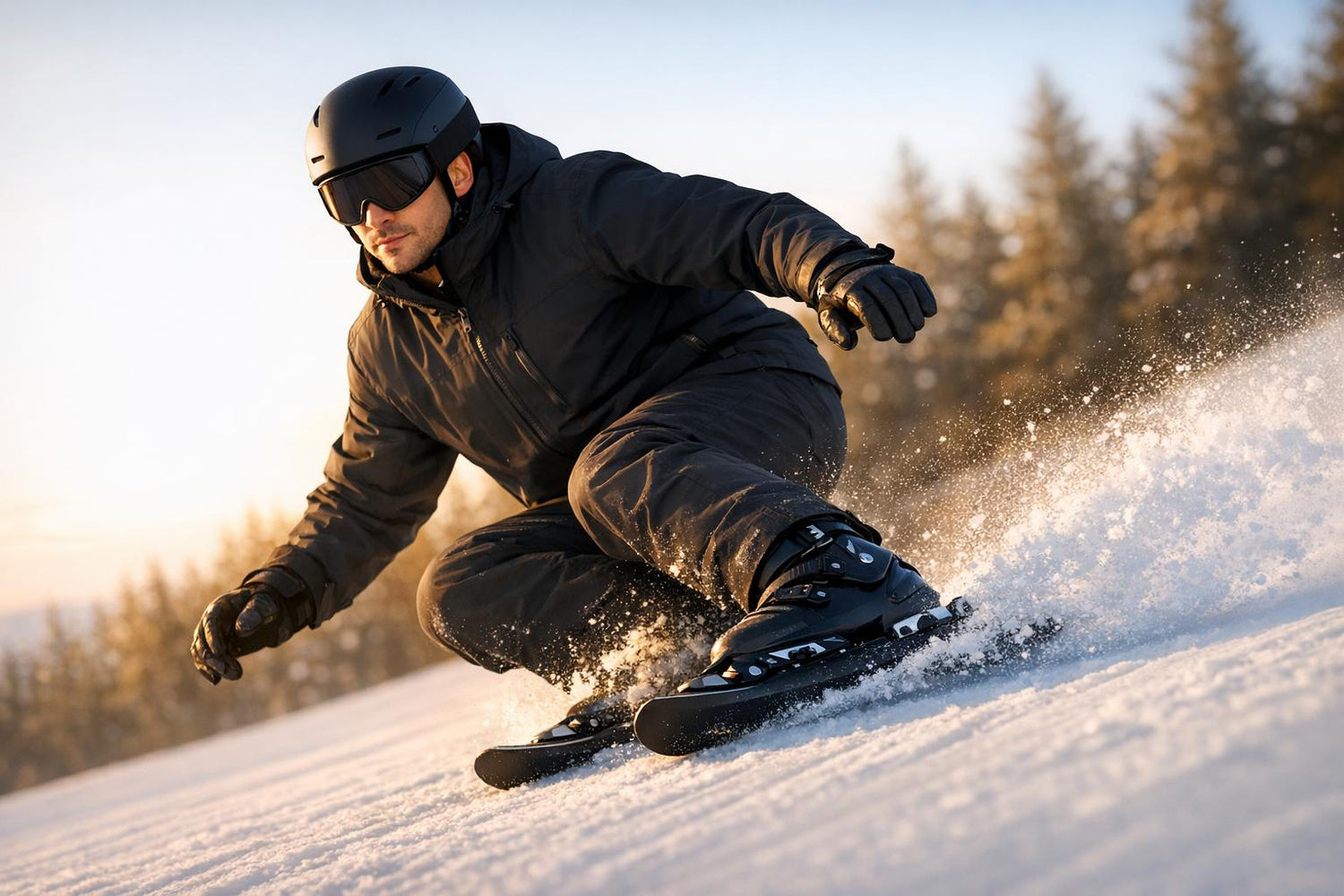
Rollerbladers face a tough challenge during winter when snow-covered trails halt their favorite activity. Skiskates solve this problem by offering a snow-based alternative that feels familiar.
Here’s why skiskates are a game-changer for rollerbladers:
- Familiar Movement: Skiskates mimic rollerblading techniques like carving turns, edge control, and stops.
- Quick Learning Curve: Rollerbladers can master skiskates in 2–4 sessions due to their existing skills.
- Compact and Lightweight: Easy to carry, they fit in a backpack, unlike bulky ski gear.
- Versatile on Snow: Perform well on groomed slopes, trails, and snow parks.
- Boot Compatibility: Adjustable bindings work with various boot types for flexibility.
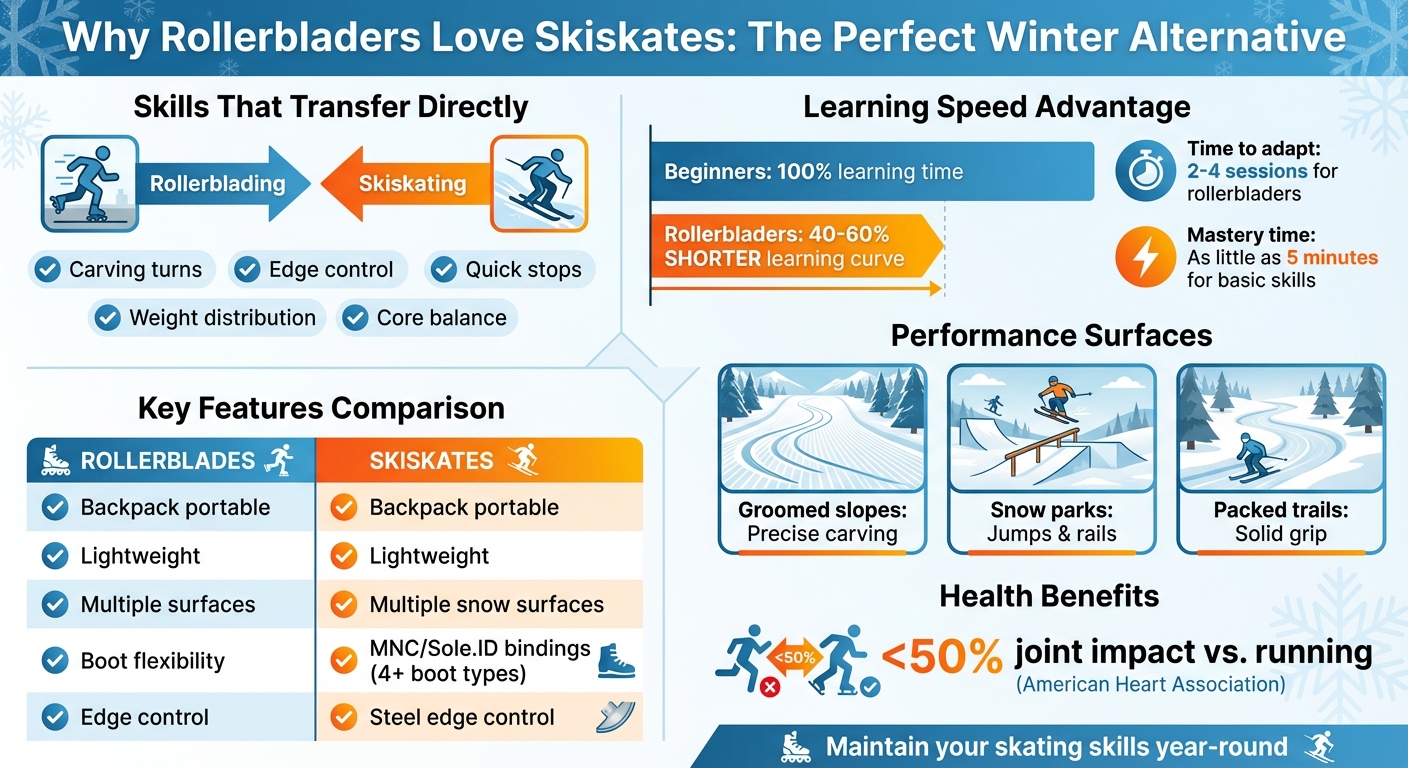
Rollerblading vs Skiskating: Skills Transfer and Learning Curve Comparison
How Skiskates Work Like Rollerblades
Movement Techniques That Transfer Directly
The skills you’ve mastered while rollerblading translate almost effortlessly to skiskates. That familiar side-to-side push, achieved by shifting your weight and controlling your edges, works just as well on snow. When it comes to sharp turns, the same principles apply - lean into your edges and rotate your torso. The main difference? You’re working with ski edges instead of wheels. Even quick stops are based on similar techniques, like the edge control and weight distribution used in T-stops on inline skates. This overlap makes the transition feel natural and intuitive.
Why Rollerbladers Learn Faster
If you’ve spent time rollerblading, you’ll find yourself picking up skiskating much faster. Studies suggest that rollerbladers have a 40–60% shorter learning curve compared to those starting from scratch. Your existing balance, core strength, and sense of spatial awareness give you a head start. Most rollerbladers can adapt to the weight distribution on snow in just 2–4 sessions.
Maneuverability on Snow
Skiskates’ compact design gives you the ability to make tight, precise turns, just like you do on inline skates. You can carve sharp corners, change directions quickly, and even side-step with ease for better positioning. The binding system enhances this experience, allowing for smooth weight shifts and natural ankle movement, giving you the responsive control you’re already used to.
sbb-itb-32287b2
Skiskates Features That Match Rollerblading Needs
Lightweight and Easy to Carry
Skiskates are incredibly light, making them easy to transport - similar to how you'd carry your inline skates. They fit perfectly into a standard backpack, so there’s no need to deal with oversized, heavy gear. Just pack them up and head out. If you’re used to throwing your rollerblades into a bag for a quick trip to the park, this portability will feel second nature.
Performance on Different Snow Surfaces
Rollerbladers know how to adjust for smooth pavement versus rough asphalt, and skiskates offer that same adaptability on snow. They glide effortlessly on groomed slopes for precise carving and handle snow parks with ease for jumps and rails. Even on packed trails, the steel edges provide solid grip, ensuring control across varying terrains. This versatility mirrors how inline skates shift seamlessly from bike paths to skate parks, keeping up with your every move.
Binding System for Different Boot Types
The Multi Norm Compatible (MNC) and Sole.ID bindings are designed to work with various boot types, including Alpine (ISO 5355), Touring (ISO 9523), GripWalk (ISO 23223), and Walk-to-Ride (WTR) soles. Whether you prefer ski boots or snowboard boots, you can choose what suits your comfort and riding style. Plus, the bindings adjust without tools, letting you switch boots in seconds. This functionality offers the same freedom of movement rollerbladers enjoy, allowing natural ankle flex for better control and precision on the snow. Up next, learn how to make the most of these features as a rollerblader trying out skiskates.
Getting Started with Skiskates as a Rollerblader
Starting on Easy Slopes
Begin on flat, open areas like stadium flats or the base of gentle slopes to get accustomed to the sensation of snow beneath your skates. The stance you use for rollerblading works perfectly here - keep your back straight and your knees slightly bent to lower your center of gravity, which improves balance. Push your knees forward to reduce the risk of falling backward. Practice stopping with the plow stop by pointing your toes inward and pushing your heels outward to form a wedge shape. This puts pressure on the inside edges and helps you slow down. Once you feel comfortable gliding and stopping, try skating in figure eights around two objects like water bottles. Gradually decrease the distance between them to refine your turning skills. Once you’ve nailed these basics, you’ll be ready to build on your existing techniques with confidence.
Using Your Rollerblading Experience
Your rollerblading skills, especially balance and edge control, translate directly to skiskates. Focus on fully shifting your weight from one skate to the other, keeping your nose and knee aligned over the active skate. This weight transfer is the same technique you use when carving on pavement. When you're ready to try tricks, start small - your rollerblading muscle memory will make the transition smoother. Always wear protective gear like a helmet, knee pads, and wrist guards when attempting new moves. Also, double-check that all bindings are secure before every session to avoid accidents. By building on these basics, you’ll stay confident and improve throughout the winter.
Maintaining Skills During Winter
Regular skiskate sessions are a great way to maintain your balance, edge control, and weight distribution during the colder months. The same core engagement you rely on for rollerblading - drawing your belly button toward your spine - stabilizes you on snow. Instead of losing progress during the winter, you’ll be reinforcing the same movement patterns you developed over the summer. This way, you’ll stay sharp and ready to hit the pavement again when spring arrives.
Conclusion
Smooth Transition from Rollerblades to Snow
If you're already skilled at rollerblading, you'll find picking up skiskates a breeze. Thanks to your existing balance and edge control, mastering skiskates can take as little as 5 minutes. The techniques are so similar that you're building on what you already know, not starting from scratch. This seamless crossover makes skiskates an appealing choice for rollerbladers looking to stay active during the colder months.
Thoughtful Design for Rollerbladers
Skiskates are crafted with rollerbladers in mind, prioritizing lightweight portability and precise control. High-performance models use durable, lightweight materials to ensure responsive handling on snow. Their compact size means you can easily toss them in a backpack, making them perfect for impromptu winter adventures - no bulky gear required. Adjustable bindings enhance versatility, accommodating various boot types and ensuring a snug, custom fit. These features make skiskates a practical and efficient tool for staying active during winter.
Staying Active Through the Seasons
Skiskates let you carry your skating skills into winter, keeping you active and engaged. By using familiar techniques and benefiting from their innovative design, you can transition from pavement to snow with ease. The American Heart Association highlights skating as an excellent aerobic activity, with inline skating causing less than 50% of the joint impact compared to running. With skiskates, groomed slopes, trails, and snowy hills become your new training ground. You'll maintain your fitness, sharpen your muscle memory, and be ready to hit the streets again when spring arrives.
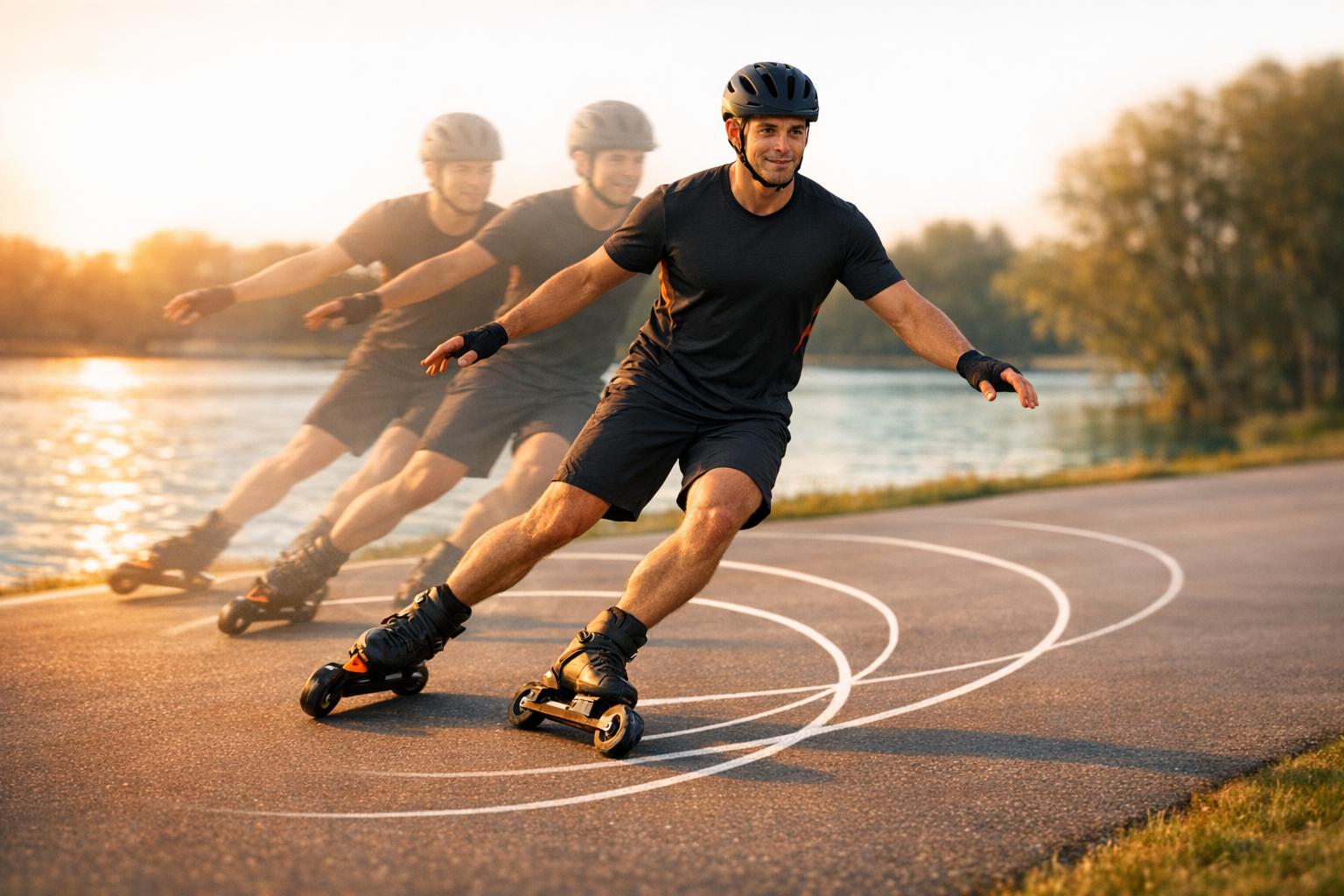
If You Can Rollerblade, You Can Ski (on Skiboards)
FAQs
Do I need ski boots to use skiskates?
No, you don’t need ski boots to use skiskates. These are specifically designed to work with regular footwear, so you can skip the hassle of specialized ski boots altogether.
What safety gear should I wear when skiskating?
To stay safe while skiskating, make sure to wear protective gear like a helmet, knee pads, elbow pads, and wrist guards. This gear is essential for reducing the risk of injuries if you fall or lose balance.
Where should a rollerblader practice skiskates first?
Practicing with skiskates should begin in safe, flat, and controlled spaces. Great options include skating rinks, skate-friendly parks, basketball or tennis courts, local park trails, or even your driveway or neighborhood streets. These areas offer the stability and space needed to build confidence and get the hang of skiskates before tackling more challenging terrains.


Leave a comment
This site is protected by hCaptcha and the hCaptcha Privacy Policy and Terms of Service apply.