

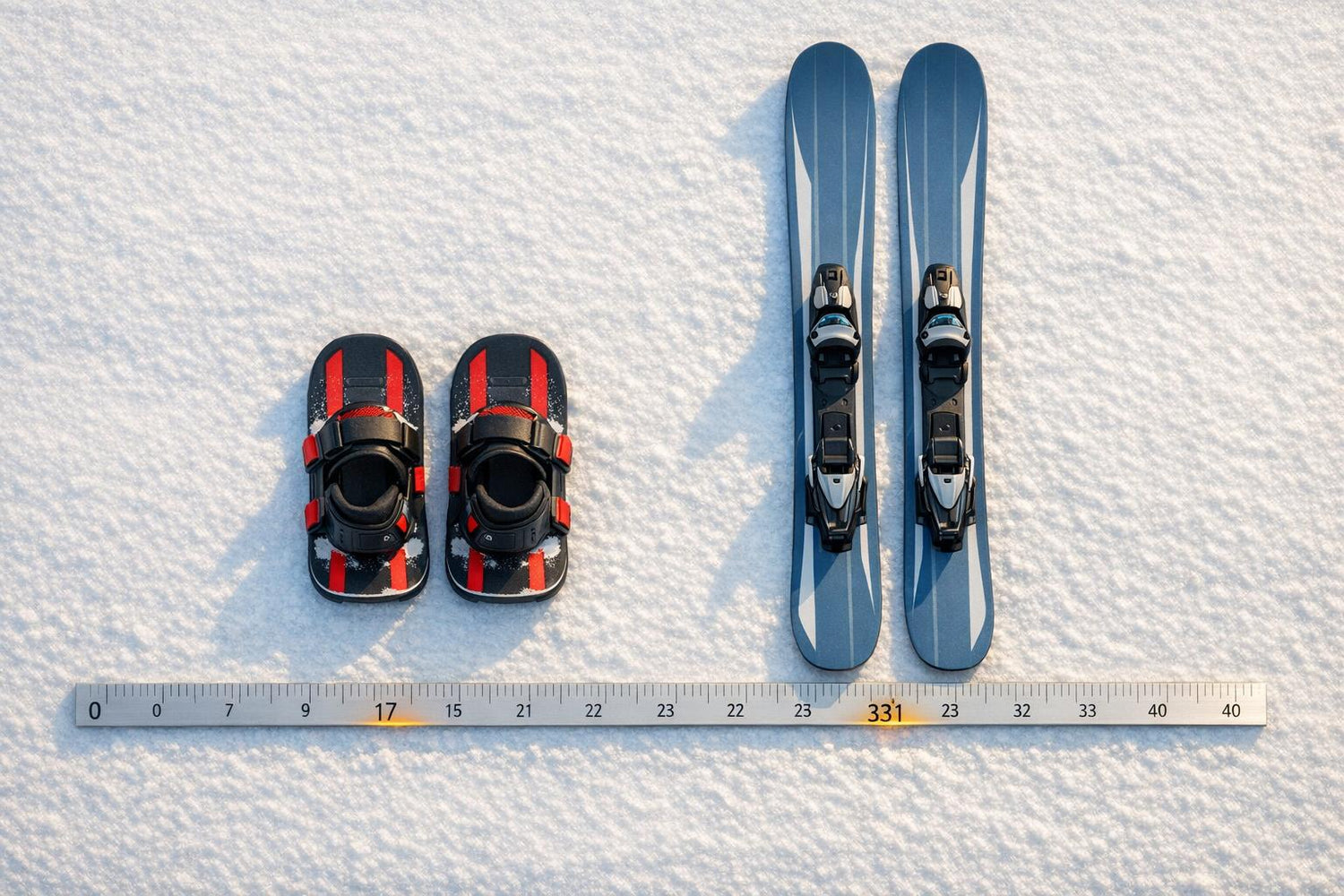
Skiskates and mini skis may look similar, but they deliver different experiences. Skiskates are shorter (17 inches) and feel like skating on snow, while mini skis are longer (26–39 inches) and combine skiing and skating traits. Here’s a quick breakdown:
- Skiskates: Compact, lightweight, and highly agile. They’re perfect for sharp turns, terrain parks, and narrow trails. They fit in a backpack and work well for casual users or those with skating experience. Best for moderate speeds but less stable on open slopes or deep powder.
- Mini Skis: Longer and more stable at high speeds. Ideal for groomed slopes and better flotation in powder. They require more space for turns and dedicated transport but offer a mix of control and speed.
Quick Comparison:
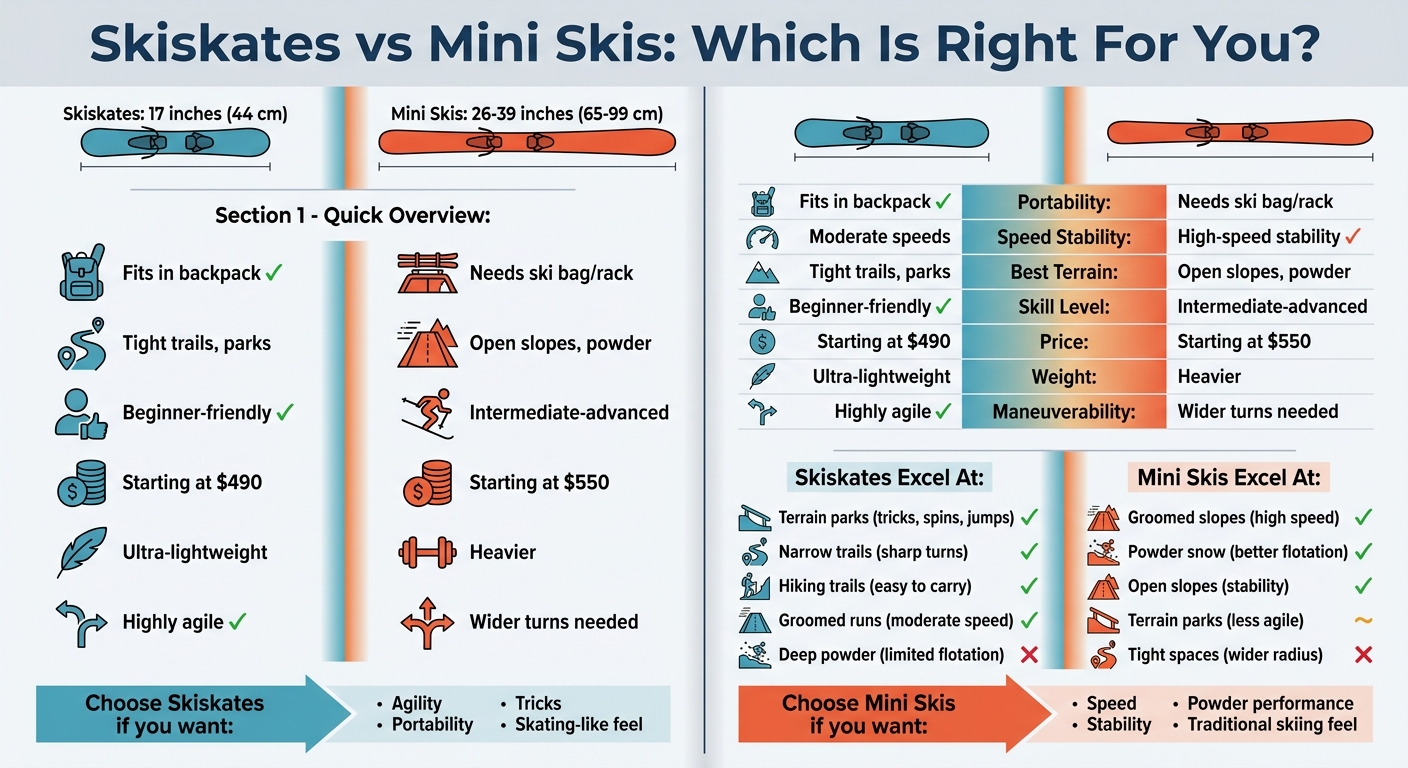
| Feature | Skiskates (17 inches) | Mini Skis (26–39 inches) |
|---|---|---|
| Portability | Fits in a backpack | Needs ski bag or rack |
| Speed Stability | Moderate speeds | High-speed stability |
| Terrain | Tight trails, parks | Open slopes, powder |
| Skill Level | Beginner-friendly | Intermediate to advanced |
| Price | Starts at $490 | Starts at $550 |
Choose skiskates for agility and portability or mini skis for speed and stability.
Skiskates vs Mini Skis: Complete Comparison Guide
Design and Construction Differences
Size and Length
Skiskates measure just 17 inches (44 cm) in length, while mini skis range from 26 to 39 inches (65–99 cm). This makes skiskates the most compact option. Their shorter size is ideal for navigating tight trails and executing sharp turns with ease. On the other hand, the slightly longer mini skis provide more stability, especially at higher speeds. These differences in size naturally influence their weight and how easy they are to transport.
Weight and Portability
Thanks to their compact size, skiskates are incredibly lightweight and easy to carry. You can fit them into a standard backpack, making them perfect for public transit or tossing into your car trunk without much effort. Mini skis, by comparison, usually need a dedicated ski bag or even a roof rack for transport. The portability of skiskates makes them a convenient choice for those who value ease of travel, while mini skis trade that convenience for greater stability on the slopes.
Material and Durability
Both skiskates and high-quality mini skis feature wood cores, which provide flexibility, energy return, and long-term durability. Hardened steel edges are another shared feature, essential for carving through hard-packed snow or icy surfaces. For the base, high-performance models of both types often use Sintered P-Tex, which absorbs wax better and resists scratches more effectively. Premium versions may also incorporate advanced materials like fiberglass for added stiffness and carbon fiber for extra responsiveness without adding weight. While both options use top-tier materials, skiskates prioritize agility, while mini skis emphasize even weight distribution for stability.
| Feature | Skiskates | Mini Skis |
|---|---|---|
| Length | 17 inches (44 cm) | 26–39 inches (65–99 cm) |
| Core Material | Wood Core | Wood or Foam Core |
| Edges | Steel Edges | Steel Edges |
| Portability | Fits standard backpack | Requires ski bag |
| Base Type | Typically Sintered | Sintered or Extruded |
sbb-itb-32287b2
Performance on Different Terrains
Maneuverability
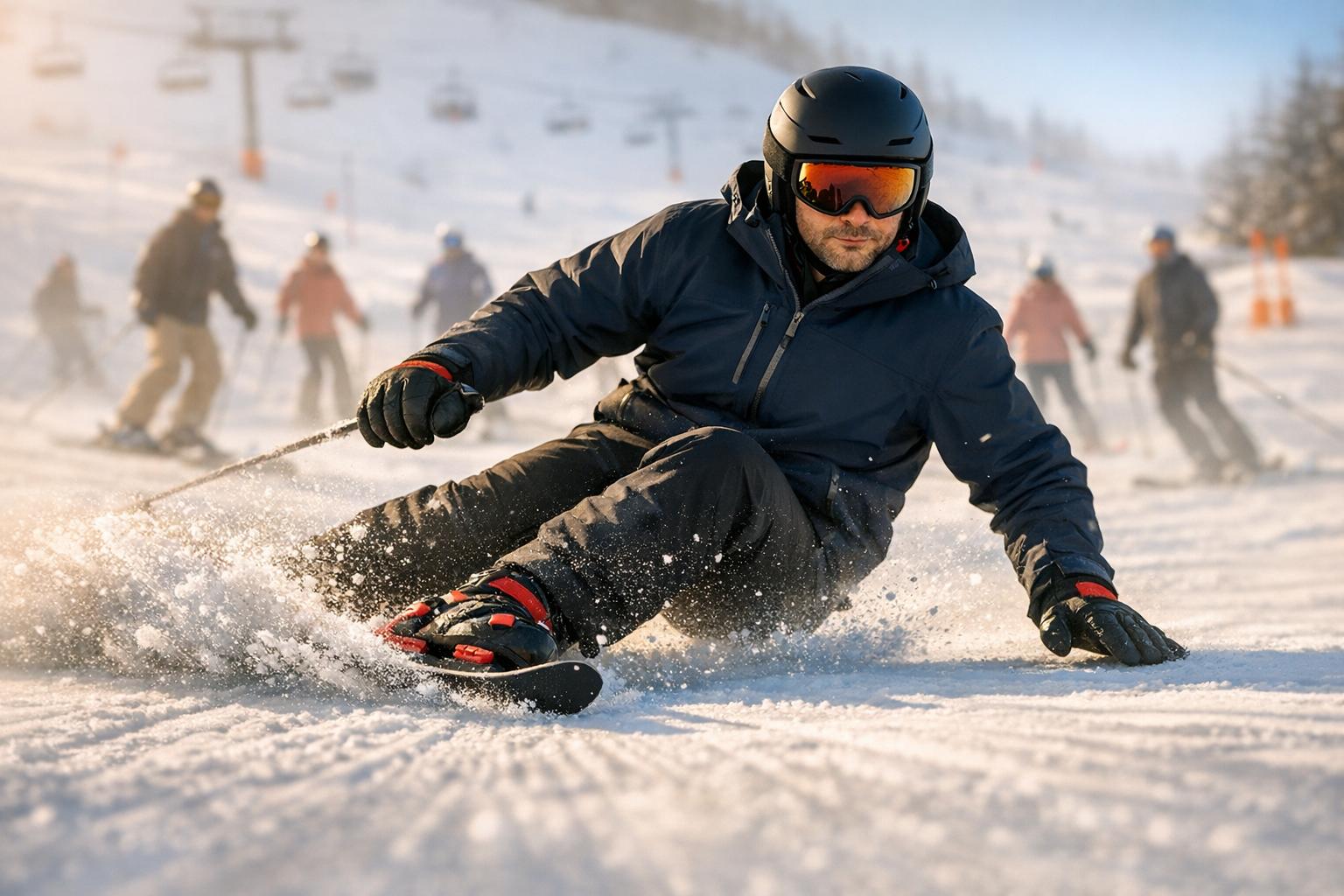
The compact design of skiskates makes them incredibly responsive, especially in tight spaces. Whether you're pivoting on the spot, weaving through narrow trails, or pulling off quick spins and jumps, skiskates let you move with ease. Their design also makes riding backward feel natural and smooth. Mini skis, while still agile compared to traditional skis, need more room for wider turns and arcs. They can't quite match the sharp, skate-like precision that skiskates bring to crowded terrain parks or winding forest paths.
Speed and Stability
When it comes to speed, mini skis shine on open slopes. Their extended edge contact provides excellent stability, especially during carving at higher speeds. On the other hand, skiskates trade off top-speed stability for a more playful and responsive feel. They thrive at moderate speeds, offering quick acceleration and a direct connection to the snow. These differences highlight how each option performs on various terrains.
Terrain Suitability
Skiskates are perfect for hiking trails, sledding hills, and terrain parks. Their lightweight and compact design make them easy to carry, especially when heading out for backcountry adventures. While they handle groomed runs well, their smaller size isn't ideal for deep powder, where width and flotation are key. Standard skiskates can feel tiring in such conditions because they lack the ability to stay afloat on top of deep snow. Mini skis, with their longer design, are better suited for traditional groomed slopes. They provide the stability and speed control that intermediate and advanced skiers often prefer.
| Terrain Type | Skiskates | Mini Skis |
|---|---|---|
| Groomed Slopes | Good for moderate speeds | Excellent stability at higher speeds |
| Terrain Parks | Highly maneuverable for tricks | Less agile for tight features |
| Hiking Trails | Easy to carry and use | Requires dedicated transport |
| Powder Snow | Limited flotation due to standard width | Better flotation with a longer edge |
| Narrow Trails | Excellent quick turns | Requires a wider turning radius |
Snowboarder tries Snowfeet* | Which Snowfeet* Short Ski is the Best? | Snowblades 44, 65, 99 Review

When to Choose Skiskates Over Mini Skis
Go for skiskates when you need something lightweight and highly portable. Measuring just 17 inches (44 cm) in length, skiskates are the most compact option out there - small enough to fit in your backpack for hiking trips. If you're heading into backcountry terrain and need to keep your gear light, skiskates are a smart choice. Their portability also makes them a standout in terrain parks.
Speaking of terrain parks, skiskates excel here. Their short length makes spins, jumps, and backward riding a breeze. As Brad Tolin puts it, "These ski blades are a blast to use. Super easy to control, quick to turn, and way more forgiving than traditional skis". The reduced length gives you the freedom to try tricks without the challenge of managing extra material.
Skiskates also shine in tight spaces where longer equipment struggles. Their compact design allows for quick pivots and sharp turns, making them perfect for casual downhill runs and navigating crowded slopes or mogul fields.
For those with a background in inline or ice skating, skiskates feel like a natural extension of those skills on snow. They offer a skating-like experience, unlike mini skis, which lean more toward traditional skiing techniques.
Choosing Based on Skill Level and Boot Compatibility
Skiskates aren't just about design and performance - they're also thoughtfully crafted to suit different skill levels and boot preferences.
Beginner-Friendly Features
Thanks to their compact 17-inch design, skiskates are incredibly easy to pick up, even for beginners. Most people can feel comfortable on the snow after just a few runs. Their lightweight and flexible build makes it simpler to turn and stop, requiring less physical effort compared to traditional skis. This shorter length gives new users a sense of control right from the start.
If you’ve ever tried ice skating or inline skating, using skiskates will feel natural. The movement is similar, which means you can skip the steep learning curve often associated with skiing. Their design is forgiving, helping you build confidence without the hassle of bulky, hard-to-manage equipment. These user-friendly features tie back to the agility and ease discussed in their overall design.
Boot Compatibility
Skiskates come equipped with adjustable, tool-free bindings that work with standard ski or snowboard boots. This makes them as convenient as they are versatile. Adjusting the bindings is quick and doesn’t require any special tools, so whether you’re gearing up at a resort or out in the backcountry, setup is a breeze. This flexibility is perfect for those who want to spend less time fiddling with equipment and more time enjoying the slopes.
Conclusion
Choosing between Skiskates and mini skis comes down to your riding style and the terrain you prefer. Skiskates offer a quick, skating-like experience, perfect for sharp turns, tricks, and navigating tighter spaces. On the other hand, mini skis deliver a mix of skiing stability and skating agility, making them a great choice for speed and open slopes.
Skiskates shine on groomed runs, snow parks, and narrow trails. Their compact size - just 17 inches (44 cm) - makes them easy to carry in a backpack, ideal for spontaneous outings. Mini skis, ranging from 26 to 39 inches (65–99 cm), have a larger surface area that supports higher speeds while still being trick-friendly.
With prices starting at $490.00 for Skiskates and $550.00 for mini skis, both options are designed for quick learning and solid performance on packed snow and groomed trails. Whether you prefer the ice-skating feel of Skiskates or the balanced versatility of mini skis, either choice promises a fun way to elevate your winter sports adventures.
FAQs
Which is easier to learn: skiskates or mini skis?
Mini skis, like skiskates, are a great option for beginners because their shorter length makes them easier to control and more forgiving on the slopes. This added maneuverability helps newcomers feel more confident as they learn the basics. On the other hand, skate skiing can be tougher to pick up due to its steeper learning curve, which might feel intimidating for those just starting out. Mini skis offer a more approachable way to dive into winter sports.
What boots and bindings do skiskates and mini skis use?
Skiskates and mini skis are equipped with snowboard-style bindings that are adjustable to ensure a snug and secure fit for your boots. These bindings are designed to keep your boots firmly in place, providing the stability you need. The boots themselves are crafted to complement these bindings, offering a balance of flexibility, support, and control. Built for winter sports, they are typically insulated and waterproof, making them reliable for maintaining safety and performance on different terrains.
Can skiskates or mini skis handle deep powder?
Skiskates are designed to excel in agility, making them perfect for navigating various terrains with ease. However, their shorter length makes them less suited for deep powder. On the other hand, mini skis, with their longer build, provide improved floatation and stability in deeper snow. Ultimately, performance in powder depends on the specific size and design of each option. While skiskates focus on maneuverability, mini skis are the go-to choice for tackling deeper snow conditions.

Leave a comment
This site is protected by hCaptcha and the hCaptcha Privacy Policy and Terms of Service apply.