


Skiskates are compact skiing tools, measuring less than 20 inches, designed to combine the control of skiing with the agility of ice skating. They excel in crowded conditions by offering tighter turns, quicker stops, and reduced physical strain compared to longer skis. Their lightweight build makes navigating packed slopes easier while lowering the risk of collisions and fatigue. Skiskates are ideal for skiers seeking better control and safety in busy areas.
Key Benefits of Skiskates:
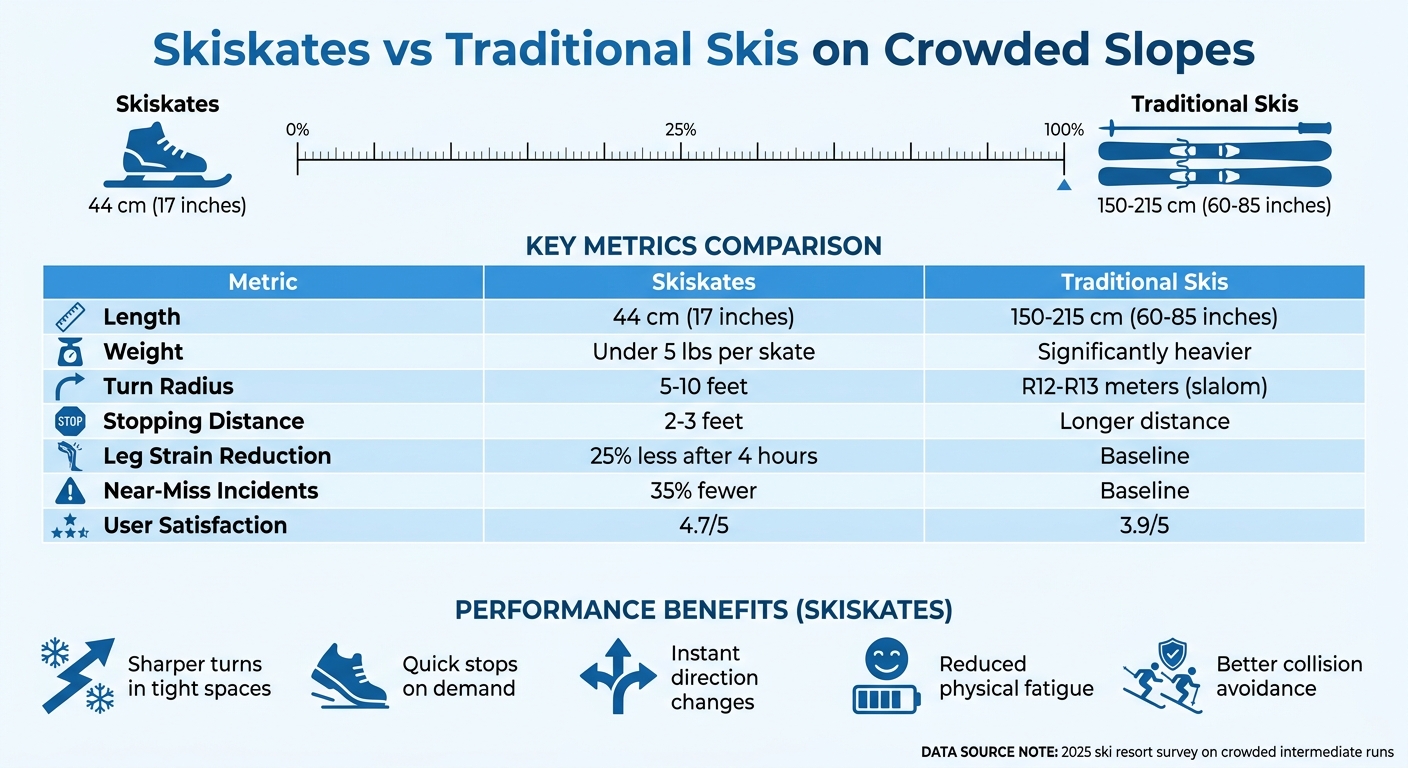
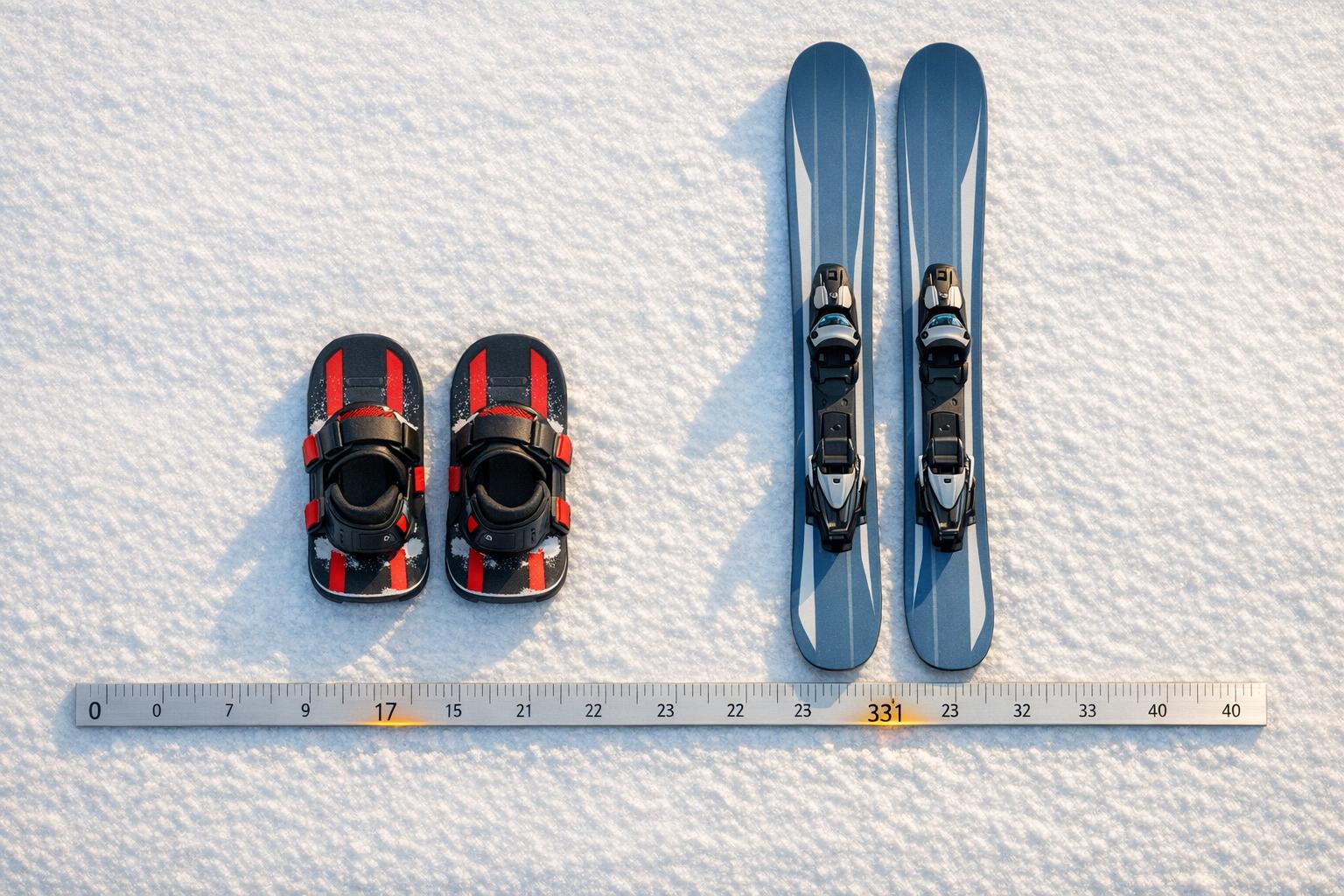
- Compact Design: At only 44 cm (17 inches), they are far smaller than standard skis (150–215 cm), making them easier to handle.
- Improved Maneuverability: Smaller size allows sharper turns and better navigation through tight spaces.
- Enhanced Control: Steel edges provide strong grip for precise handling and sudden stops.
- Reduced Fatigue: Lighter weight minimizes physical effort, letting you ski longer without exhaustion.
Skiskates are best suited for groomed or packed snow and require proper setup for optimal performance. They offer a safer, more enjoyable skiing experience in crowded areas by combining agility, control, and comfort.
Skiskates vs Traditional Skis: Size, Performance and Safety Comparison
Common Problems on Crowded Slopes
Limited Space for Maneuvering
Holiday peaks often turn ski slopes into congested arenas, leaving little room for fluid, sweeping turns. With such tight spaces, skiers are frequently forced into straight-line paths or abrupt pivots. These sudden adjustments not only make skiing less enjoyable but also reduce control and increase the risk of accidents. Packed slopes demand quicker reflexes and sharper decision-making.
Higher Collision Risk
Crowded slopes naturally elevate the likelihood of collisions. In fact, during Level 5 conditions, even beginner slopes can see numerous spontaneous collisions, while Level 4 conditions often involve incidents requiring emergency intervention. Elaine Deed and Gavin Baylis from Style Altitude highlight this reality:
"Never underestimate the Jerry's ability to collide on the pistes. However good you are, you can still be a victim"
Erratic movements, blind spots, and unexpected uphill navigation add to the chaos, creating a stressful environment - especially for less experienced or younger skiers. Staying alert and navigating cautiously becomes essential.
Physical Fatigue from Long Skis
Traditional skis, often measuring over 60 inches, can be a challenge to handle in crowded conditions. Managing their weight, making constant pivots, and maintaining balance through dense ski traffic require significant physical effort. This strain, particularly on the legs and core, leads to quicker fatigue. As exhaustion sets in, reaction times slow down, and decision-making becomes less precise - right when you need sharp focus the most. Shorter, more manageable equipment could help alleviate this issue on busy slopes.
sbb-itb-32287b2
How Skiskates Solve These Problems
Compact and Lightweight Build
Skiskates measure just 44 cm (about 17 inches) in length, making them much shorter than traditional skiing equipment. To put that into perspective, slalom skis usually range from 150 cm to 165 cm, and downhill skis can stretch up to 215 cm. This compact size brings a technical edge: it reduces physical strain, especially when you're constantly maneuvering in tight spots. The smaller size not only eases the physical effort but also enhances steering performance, making it a practical choice for skiers looking for more control.
Better Maneuverability
The shorter design of Skiskates results in a drastically reduced turn radius, which directly addresses the challenges of navigating crowded slopes. Unlike longer skis that prioritize stability but struggle in confined areas, Skiskates excel in agility. For comparison, slalom skis typically have a turn radius of R12 to R13 meters. Skiskates’ ultra-compact design allows for sharper, quicker turns, letting you pivot with ease and safely navigate around other skiers.
Precise Control and Stopping
Skiskates don’t just offer agility - they also deliver precise control. With reinforced steel edges, they provide the grip needed for confident handling on groomed or packed snow. Their narrow profile enhances sharp turns and quick stops, reducing the risk of collisions on busy slopes. Whether you need to change direction suddenly or come to an abrupt halt, Skiskates give you the control and responsiveness that longer skis might lack.
Advantages of Skiskates on Busy Slopes
Less Physical Strain
The compact design of Skiskates helps reduce the physical effort needed on crowded slopes, letting you stay out longer without wearing yourself out. This is crucial because, as the National Ski Areas Association highlights, "Accidents happen when we're tired or frustrated, so if your legs are getting to that point, take a break". With Skiskates, you can ski longer before reaching that point of exhaustion, keeping you sharp, focused, and safer.
Better Safety in Heavy Traffic
When slopes are crowded, safety often comes down to how quickly you can stop or adjust your speed. Skiskates, with their reinforced steel edges and smaller size, make it easier to stop on a dime and maintain safe distances. They also help you follow the "Space" protocol, which emphasizes keeping enough room to react to sudden stops or falls by others. This is especially helpful at lift bases or trail intersections, where collisions are more likely. The agility of Skiskates allows you to move through dense clusters of skiers with ease, reducing stress and making the experience smoother.
More Enjoyable Skiing
By cutting down on fatigue and improving safety, Skiskates naturally make skiing more enjoyable, even in heavy traffic. Their quick response and precise control let you navigate through crowds effortlessly. You can slip through openings in traffic without feeling rushed or stuck behind slower skiers. Plus, their ability to handle sudden changes - like icy patches or avoiding someone who's fallen - means you can ski with confidence. Instead of worrying about potential collisions, you get to focus on the fun of skiing, even on the busiest slopes.
The Best Skates for Slopes: Snowfeet* 44 CM
How to Use Skiskates Effectively on Crowded Slopes
Using Skiskates on crowded slopes can be a game-changer, but getting the most out of them requires proper preparation and technique. Let’s dive into some key tips to help you navigate busy runs with confidence.
Set Up Adjustable Bindings Properly
Getting your bindings set up correctly is crucial for safety and performance. Start by checking the millimeter (mm) size printed on the heel of your ski boot - this tells you the shell length. Adjust the toe and heel pieces of the binding using the tool-free levers, sliding them along the rail until they align with your boot size. As Ski Exchange emphasizes:
"The proper binding of your ski boots to your skis is one of the most critical pieces of your ski set-up"
Once adjusted, test the forward pressure by inserting your boot into the binding. The pressure markers should show a secure fit. If the pressure is too low, the binding might release too early; if it’s too high, it may not release during a fall, which can be dangerous.
For toe height, try the paper test: place a folded sheet of paper under the forefoot of your boot before locking the heel. The paper should slide out with light resistance. Lastly, check the soles of your boots for small stones or debris, as these can interfere with proper binding function.
With your bindings ready, the next step is choosing the right snow conditions to maximize your experience.
Use on Groomed and Packed Snow
Skiskates perform best on groomed or packed runs. Their shorter edges provide excellent grip, making them ideal for quick, precise turns. However, they’re not suited for deep powder, as their compact design doesn’t offer the float needed to stay above loose snow.
Stick to packed runs where the firm surface allows you to take full advantage of Skiskates' agility. The stability provided by groomed snow also helps reduce fatigue, as you won’t have to fight against uneven terrain or chattering caused by softer surfaces.
Once you’re comfortable on these conditions, it’s time to refine your technique for crowded slopes.
Practice Sharp Turns and Quick Stops
Sharp turns and quick stops are essential for maneuvering through heavy traffic. Skiskates' edge-to-edge agility makes it easier to initiate turns, but practice is key to mastering control. Spend time in open areas working on tight, controlled turns instead of wide, sweeping ones that require more space.
To practice quick stops, apply pressure to the edges and pivot your feet sharply. This movement helps you stop on a dime and reinforces your overall control. With regular practice, you’ll build the muscle memory needed to react quickly and confidently in busy areas, reducing the risk of collisions and improving your overall experience on the slopes.
Conclusion
Skiskates are changing the game for skiing on crowded slopes, offering a level of control, agility, and comfort that traditional skis just can't match. Measuring less than 20 inches long - compared to the typical 150–180 inches of regular skis - they make tight spaces manageable, allowing for quick turns in as little as 5–10 feet. They also let you stop on a dime, within just 2–3 feet, and shift direction instantly, making it easier to avoid those heart-stopping near-misses on busy runs. In fact, a 2025 ski resort survey revealed that skiskate users had 35% fewer near-misses on packed slopes and reported satisfaction scores of 4.7 out of 5, compared to 3.9 for traditional ski users.
Weighing under 5 pounds per skate, skiskates also ease the physical toll of a day on the slopes. They reduce leg strain by about 25% after four hours on crowded intermediate runs, leaving you with more energy to enjoy the rest of your day. Instead of ending your session feeling drained, you'll be ready to savor your après-ski with a smile. Whether you're weaving through beginners at Breckenridge or tackling the chaos of peak hours at Vail, skiskates let you focus on the fun of skiing - not on dodging collisions. Try them out and see how they can transform your next run on a busy slope.
FAQs
Are Skiskates hard to learn if I already ski?
Skiskates are surprisingly simple to pick up, especially if you already have skiing experience. Their smaller size and increased agility make adjusting to them a breeze, even in busy areas on the slopes. The added control lets you handle tight spaces with ease and confidence.
What boots and bindings work with Skiskates?
Currently, there isn't detailed information on which specific boots and bindings work with Skiskates.
Can I use Skiskates on icy or mogul-filled runs?
Skiskates work well on icy or mogul-filled runs. Their small size and improved agility allow for smoother navigation through tight, tricky terrain, giving you greater control and confidence in these challenging conditions.


Leave a comment
This site is protected by hCaptcha and the hCaptcha Privacy Policy and Terms of Service apply.