


Skiskating is a fast-paced winter activity that blends technique and speed. To get started, you’ll need the right gear to ensure smooth movement, safety, and fun. Here’s what you’ll need:
- Short Skis: Lightweight, stiff, and designed for lateral movements. Options like the Snowfeet Basic ($190) are great for beginners, while advanced skaters may prefer Skiblades 99 CM ($590) for precision and speed.
- Boots: Ski boots with rigid ankle support and stiff soles are ideal for control and energy transfer.
- Bindings: Adjustable bindings that fit snugly with your boots are essential for stability.
- Poles: Choose poles that reach between your chin and nose, with materials like aluminum or carbon fiber depending on your budget and preferences.
- Safety Gear: A helmet, gloves, and goggles are must-haves for protection and comfort.
Proper maintenance, like drying your gear after use and sharpening blades, extends the life of your equipment. With the right setup, skiskating becomes an enjoyable and efficient way to glide through winter landscapes.
How to Use Snowfeet* Skiskates 44 CM | Skates for Snow | Mini Ski | Snowblades | Snowskates
Short Skis for Skiskating
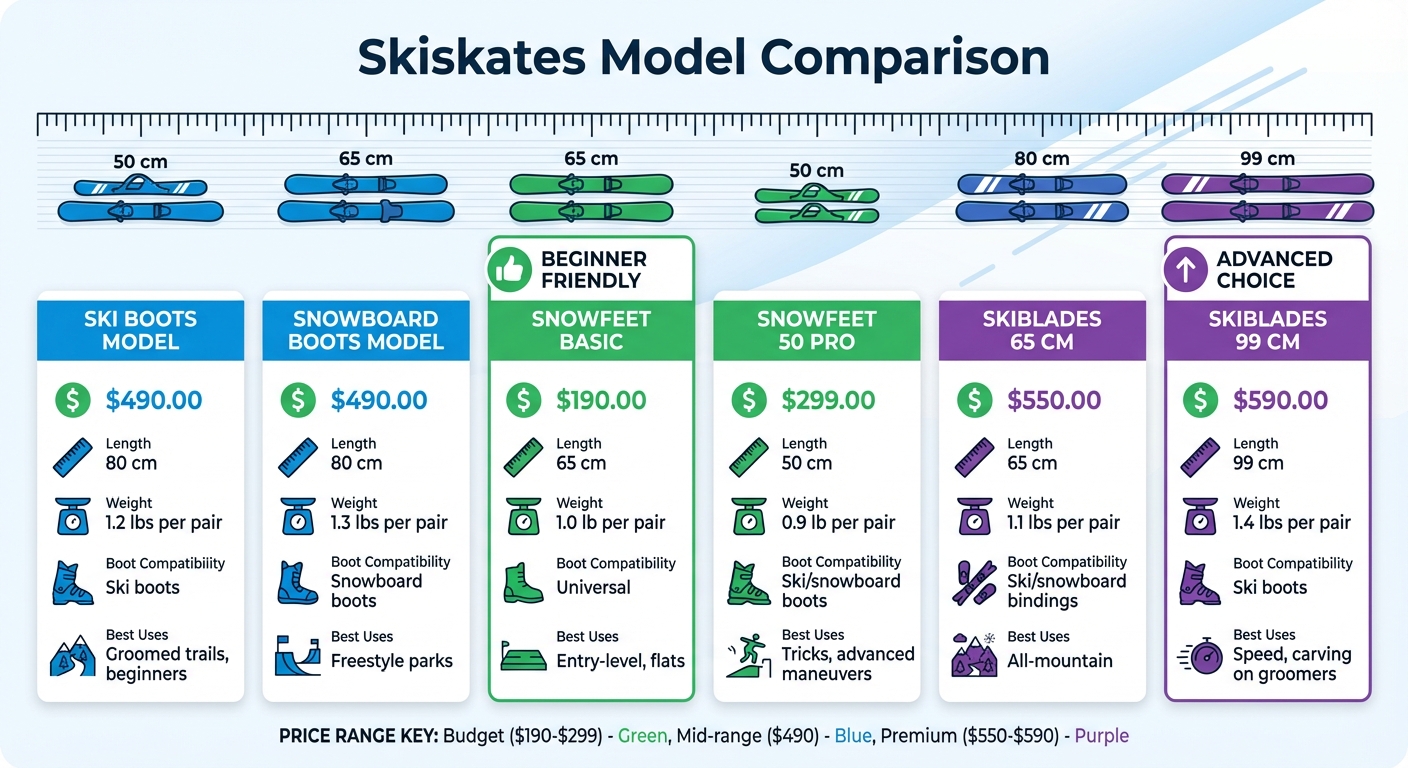
Skiskates Model Comparison: Specs, Prices, and Best Uses
Skiskates are built specifically for the unique demands of skiskating, emphasizing lateral movements and quick edge transitions. Compact and lightweight, they cater to agility and precision. Unlike traditional cross-country skis that prioritize glide, Skiskates are equipped with full steel edges that wrap around the entire sidecut. This design ensures precise carving and a solid grip, even on icy or hard-packed snow.
The materials used in their construction directly impact their performance. Skiskates feature a wood-core cap design reinforced with fiberglass and carbon fiber laminates. This combination provides stiffness while keeping the weight low, ensuring the ski maintains the right flex for skating motions and sharp turns. The smooth, wax-optimized base enhances responsiveness, mimicking the mechanics of ice skating and allowing for instant reaction to weight shifts. To help you find the perfect match for your needs, here's a comparison of key Skiskates models.
Skiskates Model Comparison
Take a look at how the different Skiskates models compare:
| Model | Price | Length | Weight (per pair) | Boot Compatibility | Best Uses |
|---|---|---|---|---|---|
| Ski Boots Model | $490.00 | 80 cm | 1.2 lbs | Ski boots | Groomed trails, beginners |
| Snowboard Boots Model | $490.00 | 80 cm | 1.3 lbs | Snowboard boots | Freestyle parks |
| Snowfeet Basic | $190.00 | 65 cm | 1.0 lb | Universal | Entry-level, flats |
| Snowfeet 50 PRO | $299.00 | 50 cm | 0.9 lb | Ski/snowboard boots | Tricks, advanced maneuvers |
| Skiblades 65 CM | $550.00 | 65 cm | 1.1 lbs | Ski/snowboard bindings | All-mountain |
| Skiblades 99 CM | $590.00 | 99 cm | 1.4 lbs | Ski boots | Speed, carving on groomers |
How to Pick the Right Skiskates Model
Choosing the right Skiskates comes down to your skill level, the terrain you'll be tackling, and your personal goals. For those just starting out, the Snowfeet Basic ($190.00, 65 cm) offers a great introduction with its balanced design, ideal for learning on groomed, flat terrain. If you're an intermediate skater looking for a versatile option, the Ski Boots Model ($490.00, 80 cm) delivers stable performance across various snow conditions.
For thrill-seekers aiming to explore terrain parks or master tricks, the Snowfeet 50 PRO ($299.00, 50 cm) stands out with its enhanced maneuverability. Meanwhile, advanced skaters focused on speed and carving will appreciate the Skiblades 99 CM ($590.00, 99 cm), whose longer design provides exceptional stability and precision on open groomed runs.
Lastly, make sure to pair your Skiskates with the right boots. For example, if you already own snowboard boots, the Snowboard Boots Model is a perfect fit. Matching your gear ensures you get the most out of your skiskating experience.
Boots and Bindings for Skiskating
Boots and bindings are the critical link between you and your Skiskates, directly influencing your control, power transfer, and safety. When your boots fit properly, every movement you make translates seamlessly to your skis. On the flip side, a poor fit can lead to sloppy control and even increase your risk of injury.
As REI Expert Advice puts it:
"Comfort should be your number one concern when selecting any ski boot".
Comfort is key, but it’s not the only factor. For skiskating, you’ll want boots with rigid ankle support to help with lateral push. A stiff sole is also essential - it reduces flex, ensuring your energy transfers efficiently to the ski’s edge. Additionally, your heel should stay securely locked in place to maintain control, especially during turns and transitions.
Skiskates bindings are designed with a tool-free adjustable system, making them compatible with both ski and snowboard boots. The adjustable rails slide to match your boot’s sole length, and once you step in, the binding should snap closed and hold your boot firmly at both the toe and heel. The fit should be snug to provide the stability you need. Now, let’s break down the differences between ski and snowboard boots to help you decide which works best for skiskating.
Ski Boots vs. Snowboard Boots
Ski boots are built with a hard plastic shell and have a flex rating that ranges from 50 (soft) to 130 (very stiff). They’re designed for maximum ankle support, featuring high, rigid cuffs and a secure fit achieved through four metal buckles and a power strap.
Snowboard boots, on the other hand, are made from softer materials like synthetic fabrics or leather. They have cushioned outsoles that resemble hiking boots, making them more comfortable for walking. Beginner snowboard boots typically cost between $200 and $300. However, their flexibility can be a drawback for skiskating, where firm ankle support and effective energy transfer are essential.
For skiskating, ski boots are the better choice. Their stiff construction handles twisting forces more effectively and prevents unwanted flexing. If you’re deciding between the two, prioritize boots that offer strong ankle support and a rigid sole - these features are crucial for both control and safety.
How Skiskates Bindings Work
Your choice of boots is only part of the equation - bindings play an equally important role. Skiskates bindings feature an integrated rail system that adjusts to your boot’s length. Both the heel and toe pieces slide along tracks, and the adjustment process is tool-free. Simply loosen the mechanism, slide the pieces into position, and lock them in place. This design accommodates both the rigid soles of ski boots and the cushioned outsoles of snowboard boots.
When stepping into the binding, it should snap closed easily and hold your boot securely at both the toe and heel. If the fit feels loose, readjust the rails until the boot fits snugly. A secure fit is vital because it ensures your weight shifts translate precisely into edge control.
Manual bindings are often preferred over automatic systems for skiskating. They’re easier to operate in deep snow, less prone to icing in cold conditions, and provide a more reliable connection overall. Before heading out, take a moment to check your bindings. Temperature changes and repeated use can sometimes cause minor shifts, so ensuring they’re properly adjusted will help you stay in control.
sbb-itb-32287b2
Poles for Skiskating
Poles play a key role in your skiskating performance, providing the propulsion you need to glide efficiently. In fact, they can account for up to 100% of your forward movement. Beyond propulsion, they also help you maintain a dynamic posture, keeping your hips, knees, and ankles slightly flexed for smoother transitions and turns.
When tackling uphill sections, poles are indispensable. Techniques like the Herringbone or V1 rely on poles to establish a 3-1 push-off rhythm, allowing for better energy transfer. A stiffer pole is especially important here, as it minimizes energy loss by reducing flex, ensuring more of your effort translates into forward motion. Let’s dive into how to select the right poles to elevate your skiskating experience.
Choosing the Right Pole Length and Material
The length of your poles is critical for effective skiskating. A good rule of thumb is to pick poles that reach somewhere between your chin and nose. For a more precise fit, use this formula: height in centimeters x 0.89. For instance, if you're 173 cm tall, you’ll need poles around 154 cm.
Material and design also matter. Here’s a quick breakdown of your options:
- Aluminum poles: Affordable, priced between $20 and $50 per pair, but heavier.
- Composite poles (carbon/fiberglass blends): Cost $40 to $170, offering a balance of weight and durability.
- Premium carbon fiber poles: Lightweight but less durable, with prices ranging from $160 to $600.
Accessories can further enhance your poles’ functionality. Look for harness straps to evenly distribute pressure, cork grips for better insulation in cold weather, and baskets suited to your terrain - smaller baskets for groomed trails and larger ones for softer snow.
Safety Gear and Setup Tips
Protective Equipment
When it comes to skiskating, a well-fitted helmet is a must-have. It can lower the risk of head injuries by up to 60%. Helmets featuring a Multi-directional Impact Protection System (MIPS) and certifications like ASTM or CE are worth considering. For instance, the Smith Scout helmet is priced at about $85 without MIPS and $105 with MIPS. But as Cotswold Outdoor wisely points out:
"The most expensive helmet won't protect you if it doesn't fit properly."
To ensure a proper fit, try shaking your head while wearing the helmet - it should stay snugly in place. Avoid buying a size too large with the intention of "growing into it"; a secure fit is crucial for safety.
In addition to helmets, insulated, waterproof gloves are important for maintaining warmth and grip. High-quality options, like the Black Diamond Kingpin gloves, are priced around $90. For eye protection, goggles are essential to shield against wind, snow, and glare. Entry-level models, such as the Smith Frontier, start at about $40. If you plan to skate on natural ice, ice rescue picks are indispensable safety tools. Worn around your neck, these picks cost between $10 and $27.50. Outdoor educator Luc Mehl emphasizes their importance:
"Wear a pair of ice rescue picks around your neck - these are the safety belts of the ice world."
Taking care of your protective gear is just as important as wearing it. Proper maintenance ensures it remains reliable when you need it most.
Setting Up and Caring for Your Equipment
Regular maintenance is key to keeping your gear in top shape and ensuring your safety. After each skating session, take the time to thoroughly dry your blades and boots. Air out boot liners for at least 24 hours to ensure they dry completely, and loosely buckle your boots during storage to help the plastic retain its shape. Store all your equipment in a cool, dry, and dark place. Avoid concrete floors, which can attract moisture, and never leave your gear in a car where temperature fluctuations can cause damage.
To keep your skates performing well, sharpen the blades roughly every 30 miles. When walking off the ice, always use blade guards to protect the edges. A little care goes a long way in extending the life of your equipment and keeping you safe on the ice.
Conclusion
Selecting the right gear tailored to your skill level and the terrain you plan to tackle is key. For beginners, skis that match your height and poles that reach chin level are a great starting point. More experienced skiers, on the other hand, often benefit from skis about 10 cm longer than their height and taller poles for added leverage.
Jann Guenther, Owner of Gear West Ski and Bike, offers this advice:
"Most importantly, get a ski that fits your desired way of skiing. There is a ski for everybody, but one ski can't do it all."
The right combination of equipment not only enhances performance but also addresses safety needs, creating a setup that works seamlessly for you.
Investing in quality gear pays off. As Nordic Ski Lab explains:
"the quality of your gear will affect the ease of learning and the joy of skiing"
To keep your equipment in top shape, always dry it thoroughly after every session. A well-maintained setup ensures both safety and peak performance out on the snow.
FAQs
What makes ski boots different from snowboard boots when it comes to skiskating?
Ski boots for skiskating are crafted to meet the unique demands of the skating motion. They feature a snug fit, lightweight materials, and just the right amount of flexibility to ensure smooth, controlled movements. This design prioritizes comfort and precision, making them ideal for skate skiing techniques.
On the other hand, snowboard boots are bulkier and more rigid, focusing on stability and control for snowboarding. While perfect for their intended purpose, these boots are not suitable for skiskating, as they lack the flexibility and specialized features needed for effective performance in this activity.
How can I take care of my skiskating gear to make it last longer?
To keep your skiskating gear in top condition and make it last longer, regular care and maintenance are essential. Begin by checking your skis, bindings, boots, and poles for any signs of wear or damage - like scratches, dents, or loose screws - both before and after each use. Spotting and fixing minor issues early can save you from bigger headaches later.
Make sure to sharpen your edges and apply wax to your skis occasionally. This helps maintain smooth gliding and keeps your performance at its best. When you're not using your gear, store it in a cool, dry spot to prevent any material from breaking down. Steer clear of exposing your equipment to extreme temperatures, as this can weaken its components over time.
With regular inspections, proper cleaning, and smart storage, your skiskating gear will stay dependable and ready for your next adventure.
How do I choose the best skiskates for my skill level?
Choosing the right skiskates comes down to your skill level, body measurements, and the terrain you want to tackle. If you're a beginner, shorter and more stable skiskates are a great choice. They're easier to handle, require less upkeep, and are designed to help you gain confidence on the snow. For advanced skaters, longer skiskates offer better speed and smoother glide, making them ideal for those looking to push their limits.
Your height and weight also play a key role in selecting the right pair. Lighter users or those new to skiskating may find shorter models more manageable, while longer skiskates are better suited for heavier individuals or those with more experience. Also, double-check that your boots and bindings are compatible with the skiskates you choose - this ensures a secure and comfortable fit. By prioritizing ease of use, stability, and your personal goals, you'll set yourself up for an enjoyable and safe time on the snow.


Leave a comment
This site is protected by hCaptcha and the hCaptcha Privacy Policy and Terms of Service apply.